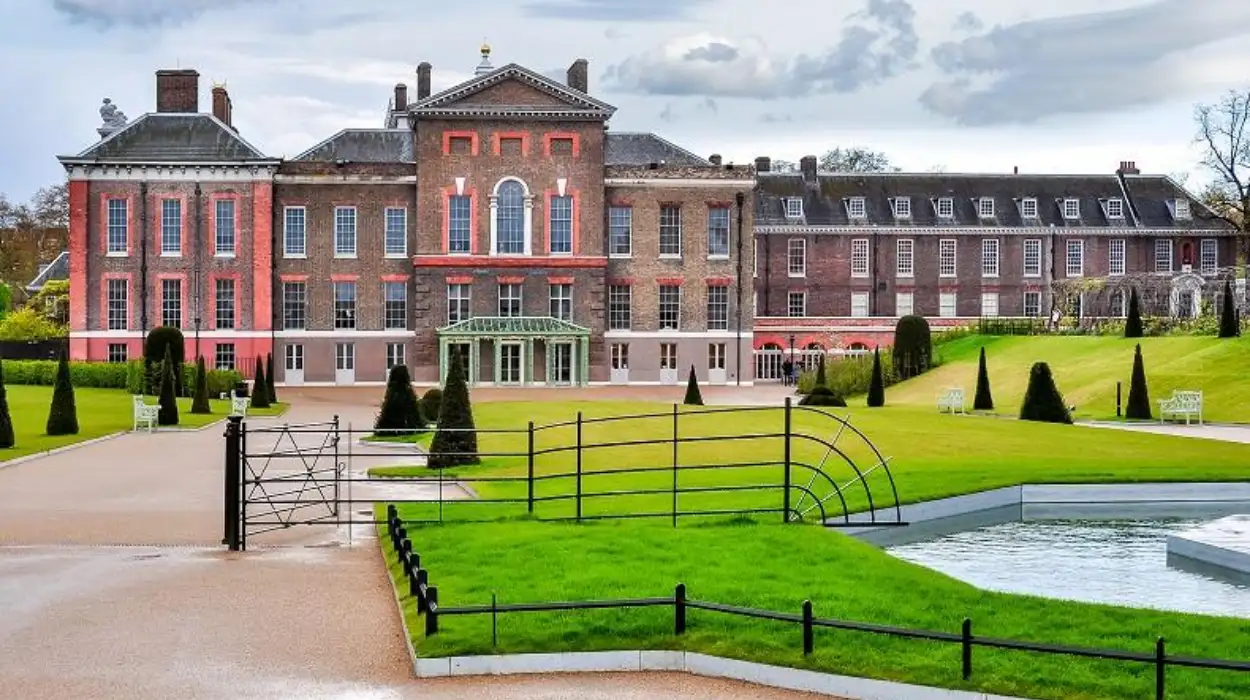
Kensington developed from a small rural settlement west of the City of London into one of Britain’s most prestigious residential districts through aristocratic landownership, royal patronage, planned estate development, architectural investment, and metropolitan expansion. Its transformation accelerated after Kensington Palace became a royal residence in 1689.
- What was Kensington before it became a prestigious London district?
- How did great country houses establish Kensington’s elite identity?
- Why did Kensington Palace transform the status of Kensington?
- How did the royal court encourage wealthy residential growth?
- How did Georgian Kensington develop its distinctive architecture?
- How did nineteenth-century London turn Kensington into a major residential district?
- How did Queen Victoria strengthen Kensington’s royal identity?
- How did architecture and wealth reinforce Kensington’s prestige?
- How did Kensington survive war and twentieth-century change?
- How is Kensington’s historic character protected today?
- Why does Kensington remain one of London’s most prestigious residential districts?
- What does Kensington’s development reveal about London’s wider history?
- Frequently Asked Question
The history of Kensington explains why the district became closely associated with monarchy, wealth, architecture, diplomacy, and elite residential life. Its development was not the result of one event. It followed several connected historical processes: the establishment of great country estates, the arrival of the royal court, the construction of planned squares and terraces, nineteenth-century urban growth, and the preservation of its historic built environment.
Kensington occupies an important position in the historical geography of west London. Before intensive urban development, the area consisted of small settlements, agricultural land, manorial estates, gardens, and large private houses. Over time, London expanded westward and absorbed this formerly semi-rural landscape.
The survival of Kensington Palace, Holland House, historic squares, Victorian terraces, garden developments, and conservation areas provides physical evidence of this transformation. Historic England records more than 1,200 heritage assets in Kensington and Chelsea dating from the post-medieval period between 1540 and 1901, demonstrating the exceptional concentration of surviving historic fabric in the area.
What was Kensington before it became a prestigious London district?
Kensington began as a rural parish and collection of small settlements outside historic London. Agricultural land, manorial estates, parish institutions, and country houses defined its landscape before royal patronage and nineteenth-century urban expansion transformed it into a dense and prestigious residential district.
Kensington was historically separate from the built-up core of London. Its position west of the City placed it beyond the crowded commercial and political centre while remaining accessible through major roads leading toward Westminster, Hammersmith, and the western counties.
The area developed around ancient routes, including the road now represented by Kensington High Street and Notting Hill Gate. The Royal Borough of Kensington and Chelsea identifies the Kensington Palace Conservation Area as originating from two small medieval settlements located along these historic routes.
The medieval and early modern landscape remained predominantly rural. Fields, gardens, farms, manor lands, and large private estates occupied much of the territory. This low-density environment made Kensington attractive to wealthy landowners seeking residences close enough to London for political and commercial access while remaining separated from urban congestion.
Landownership played a decisive role in Kensington’s development. Large estates allowed aristocratic families to control extensive areas over long periods. When London expanded, these landowners could determine the pattern, density, architecture, and social character of new residential development.
This estate structure became one of the foundations of Kensington’s later prestige. Development occurred through planned building schemes rather than uncontrolled subdivision. Landowners and developers created squares, terraces, crescents, gardens, and streets designed for affluent residents.
How did the early manor landscape shape Kensington?
The manorial system established patterns of concentrated landownership that survived into later centuries. Large estates provided the land on which aristocratic houses, landscaped grounds, and eventually planned residential neighbourhoods were constructed.
Historic England records that Sir Walter Cope had acquired the four manors making up Kensington by 1610: St Mary Abbot’s, Earl’s Court, West Towne, and Knotting Barns. This concentration of land illustrates the importance of estate ownership in shaping Kensington’s early landscape.
The transition from agricultural territory to prestigious suburb therefore followed a clear geographical process. Private estates first attracted wealthy residents. Royal patronage increased the area’s status. Roads improved access. Developers then converted estate land into planned residential neighbourhoods as London’s population expanded.
How did great country houses establish Kensington’s elite identity?
Large country houses established Kensington as an aristocratic landscape before it became fully urban. Residences such as Holland House attracted powerful landowners and political figures, creating an elite social geography that later supported prestigious residential development across the expanding district.
Holland House was one of the most important early symbols of Kensington’s elite status. Sir Walter Cope built the house, originally known as Cope’s Castle, during the early seventeenth century. The property stood within a vast private estate that dominated a substantial section of western Kensington.
The Royal Borough of Kensington and Chelsea describes Holland House as one of the first great houses built in Kensington. Its estate once covered approximately 500 acres, extending across a large area of what later became densely developed west London.
The house later passed into the ownership of Henry Rich, who became the first Earl of Holland. The estate subsequently acquired the name Holland House and developed strong associations with aristocratic politics and national cultural life.
During the eighteenth and nineteenth centuries, Holland House became an important social and intellectual centre. Historic England records its association with the Fox family and describes how the third Lord Holland and his household made the residence a centre of political, literary, and social activity from the late eighteenth century.
Its visitors and associations reflected Kensington’s growing national importance. The district was no longer simply a rural parish near London. It had become a landscape inhabited by influential families whose political, cultural, and economic networks extended across Britain and the wider empire.
Why did aristocratic estates influence later residential development?
Aristocratic estates controlled large, contiguous areas of land. This allowed owners to release land gradually and impose coordinated architectural patterns when urban development became economically attractive.
Estate development shaped many parts of nineteenth-century London. Kensington followed this wider metropolitan model. Landowners and developers could establish residential squares, regulate building designs, and preserve communal gardens for residents.
Edwardes Square provides an important example. Historic England records that development began through an agreement in 1811 allowing Louis Leon Changeur to build on approximately 4.5 hectares of the Kensington estate south of Kensington High Street. The planned development included a central communal garden surrounded by residential roads.
An Act of Parliament in 1819 provided for paving, cleansing, lighting, watching, watering, and planting Edwardes Square. These arrangements demonstrate how residential prestige depended not only on individual houses but also on planned public and semi-private infrastructure.
Why did Kensington Palace transform the status of Kensington?
Kensington Palace transformed the district because the arrival of William III and Mary II in 1689 brought the monarchy, court officials, servants, architects, and associated investment into the area, permanently connecting Kensington with royal residence and national political power.
The decisive turning point in Kensington’s history occurred in 1689. William III and Mary II acquired Nottingham House, a suburban mansion that stood beside Kensington Gardens, and converted it into a royal palace.
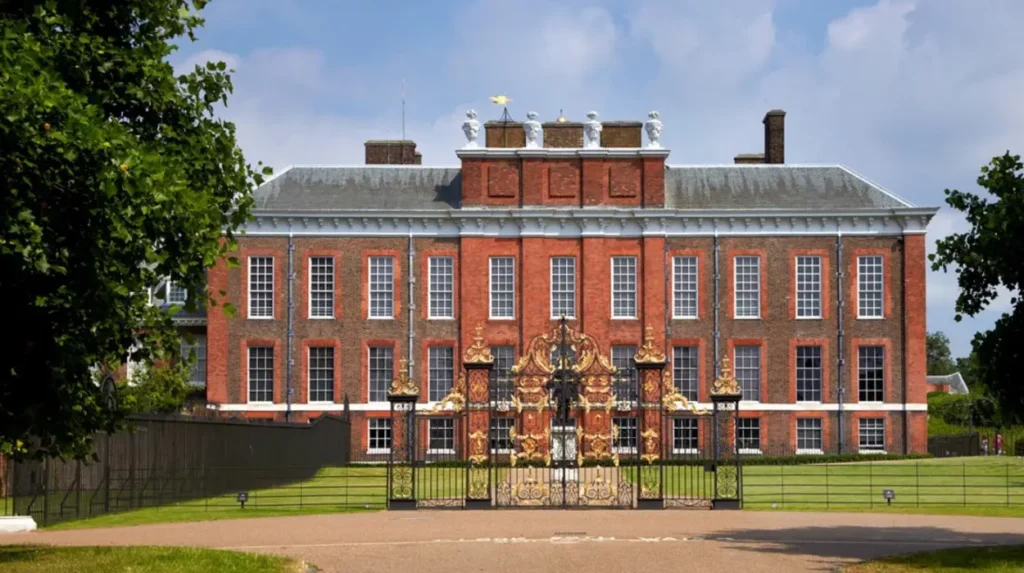
Historic England records that the building was originally constructed in 1661 for Sir Heneage Finch, first Earl of Nottingham. William III purchased it in 1689 and commissioned major additions designed by Sir Christopher Wren between 1689 and 1695.
The choice of Kensington reflected practical royal requirements. Whitehall Palace stood in the heavily built centre of London. William III sought healthier surroundings while maintaining access to government and Parliament.
Historic Royal Palaces explains that William III and Mary II selected Kensington because it provided a suburban retreat with easier conditions than central London while remaining accessible to Westminster. The royal couple moved into the completed palace on Christmas Eve 1689.
The arrival of the court immediately altered Kensington’s social and economic position. Royal households required servants, officials, suppliers, builders, and accommodation. The presence of monarchy also increased the attractiveness of nearby residences for courtiers and wealthy families seeking proximity to royal society.
How did Sir Christopher Wren change Kensington Palace?
Sir Christopher Wren was one of England’s most important architects of the late seventeenth century. His work at Kensington transformed a relatively modest house into a functioning royal residence.
The redevelopment included major new architectural elements and ceremonial spaces. The Royal Borough of Kensington and Chelsea records additions including the Clock Court, the South Front, and the 96-foot Long Gallery.
The palace therefore established a permanent architectural landmark at the centre of Kensington’s emerging identity. Its presence distinguished the district from many other suburban settlements around London.
Royal residences create geographical prestige because they concentrate political visibility, ceremonial activity, employment, and elite social networks. Kensington experienced each of these effects.
How did the royal court encourage wealthy residential growth?
The royal court encouraged wealthy residential growth by making Kensington desirable for courtiers, officials, aristocrats, and affluent families. Proximity to Kensington Palace combined social prestige with practical access to royal institutions, accelerating demand for high-status houses and planned residential streets.
Kensington’s social geography changed after 1689. Before the palace, the area contained country houses and rural settlements. After the royal acquisition, residence near Kensington gained direct association with the monarchy.
Court society created demand for accommodation. Officials and aristocratic families required houses within reasonable travelling distance of the palace. Servants and commercial suppliers also moved into the surrounding area.
Kensington Square benefited from this transformation. The establishment of the palace increased the attractiveness of nearby residential areas and strengthened Kensington’s reputation as a desirable location for affluent households.
The prestige created by royal proximity continued across later centuries. Even when reigning monarchs ceased using Kensington Palace as their principal residence, the association between Kensington and royalty remained embedded in the district’s identity.
Historic Royal Palaces records that George II was the last reigning monarch to use Kensington Palace as a principal royal residence. After his death in 1760, no reigning monarch slept regularly at the palace for almost 70 years.
The decline of the palace as the main royal court did not remove Kensington’s prestige. The district had already developed an elite residential identity supported by aristocratic estates, established architecture, and proximity to central London.
How did Georgian Kensington develop its distinctive architecture?
Georgian Kensington developed through aristocratic estate planning, royal architectural investment, landscaped gardens, and expanding suburban housing. Formal proportions, terraces, squares, private gardens, and carefully controlled streets created a built environment associated with wealth, order, and high social status.
The eighteenth century strengthened Kensington’s architectural identity. Royal investment continued at Kensington Palace under successive monarchs, while private estates developed their own houses and landscapes.
Queen Caroline, the wife of George II, played a significant role in the development of Kensington’s royal landscape. Historic Royal Palaces records her influence over palace gardens and court life.
The Royal Borough of Kensington and Chelsea also records major landscape works associated with the royal gardens, including projects connected with Charles Bridgeman and the development of the Serpentine, the Basin, the Grand Vista, and the Broad Walk.
These improvements linked architecture with landscape. Kensington’s prestige depended on access to gardens and open space as well as the quality of individual houses.
This relationship remained central to later residential development. Garden squares and landscaped communal spaces became important features of elite London neighbourhoods.
What role did Holland Park play in Kensington’s development?
Holland Park preserved the legacy of one of Kensington’s largest historic estates while later becoming an important public landscape.
Historic England records that the Holland House estate covered almost 202 hectares during the late seventeenth century. The estate stretched across a large section of Kensington before later development reduced its rural extent.
The grounds evolved through several landscape phases. Historic England identifies eighteenth-century involvement by William Kent and Charles Hamilton and later nineteenth-century remodelling.
The estate demonstrates a wider pattern in Kensington’s history: private aristocratic landscapes eventually became surrounded by urban development, while selected historic spaces survived as protected landscapes and public amenities.
How did nineteenth-century London turn Kensington into a major residential district?
Nineteenth-century London transformed Kensington through population growth, improved transport, speculative building, estate planning, and middle-class expansion. Former fields and estates were converted into terraces, squares, villas, apartment buildings, cultural institutions, and increasingly dense urban neighbourhoods.
The nineteenth century was the period when Kensington became physically integrated into the expanding metropolis. London’s rapid growth created intense demand for housing beyond the older central districts.
Major roads already connected Kensington with Westminster and western London. New transport systems increased accessibility and supported larger residential populations.
Estate development converted open land into planned neighbourhoods. The surviving architecture of squares, terraces, crescents, and villas demonstrates the scale of this transformation.
Historic England’s record for Edwardes Square illustrates the transition. By 1789, ribbon development along the main road through Kensington had reached Earl’s Court Road. Beyond this point, much of the landscape remained open, with fields behind roadside development.
During the early nineteenth century, developers increasingly targeted this available land. Edwardes Square emerged from one of these speculative schemes, demonstrating how planned residential development advanced across former estate territory.
Why were squares and communal gardens important?
Squares provided an architectural and social framework for affluent residential districts. Houses faced organised communal spaces rather than industrial yards or commercial streets.
Communal gardens also reinforced exclusivity. Residents gained access to controlled green environments within an increasingly crowded metropolis.
Edwardes Square remains an important surviving example of this model. Historic England describes its early nineteenth-century communal garden as an integral part of the wider residential development.
This pattern spread across Kensington through different developments. The combination of substantial houses, landscaped gardens, and planned streets helped establish the district’s enduring residential character.
How did Queen Victoria strengthen Kensington’s royal identity?
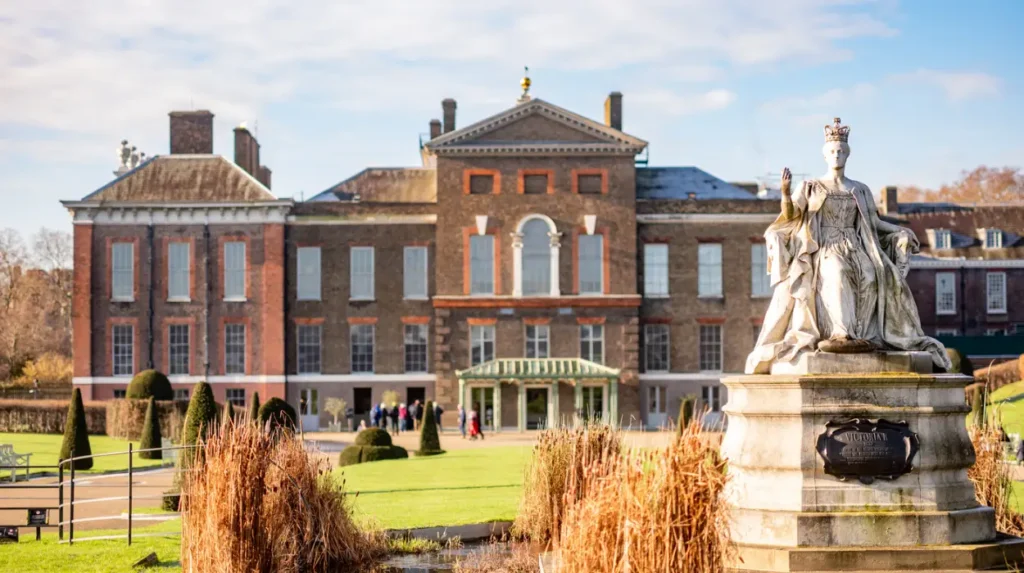
Queen Victoria strengthened Kensington’s historical importance because she was born at Kensington Palace in 1819 and spent her childhood there until becoming queen in 1837, permanently linking the district with one of Britain’s longest and most influential reigns.
Victoria’s connection gave Kensington a central place in British royal history. Her childhood at Kensington Palace became part of the national history of the monarchy.
Historic Royal Palaces records that Victoria spent her childhood at Kensington Palace and left the palace for Buckingham Palace after her accession in 1837.
Her reign lasted from 1837 until 1901. During that period, London expanded dramatically and the British Empire reached its greatest geographical extent.
Kensington therefore developed as a major residential district during the same century in which Victoria became one of the most recognisable figures in British public life.
The association between the palace and Victoria continued to increase Kensington’s symbolic importance. Her birthplace became a nationally significant royal site rather than simply a former suburban residence.
The palace also retained royal functions after Victoria’s departure. Members of the extended royal family occupied apartments there, preserving the district’s continuing connection with monarchy.
Historic Royal Palaces describes the nineteenth-century palace as increasingly occupied by members of the extended royal family, including Princess Louise and Princess Beatrice.
How did architecture and wealth reinforce Kensington’s prestige?
Architecture and wealth reinforced Kensington’s prestige through large houses, coordinated terraces, private gardens, cultural institutions, and estate-controlled development. High construction standards and desirable locations near royal and landscaped spaces created a durable association between Kensington and affluent residential life.
Prestige became physically visible through the built environment. Kensington developed streets characterised by substantial residential buildings rather than predominantly industrial infrastructure.
Architectural style also communicated status. Georgian proportions, Victorian ornament, Italianate influences, stucco façades, red-brick developments, and later mansion blocks created a varied but consistently high-value urban landscape.
The concentration of heritage assets demonstrates the historical importance of this architecture. Historic England records 1,207 listed entries in Kensington and Chelsea dating from the post-medieval period between 1540 and 1901, compared with three recorded medieval entries and 127 twentieth-century entries in the heritage timeline.
This distribution reflects the period of intensive architectural development that accompanied Kensington’s transformation into an urban district.
Prestige also depended on location. Kensington offered proximity to Westminster and central London while retaining access to parks and gardens. This combination remained attractive to wealthy residents.
The district developed a strong residential economy based on property, private estates, professional households, diplomatic residents, and cultural institutions.
How did Kensington survive war and twentieth-century change?
Kensington survived twentieth-century change through adaptation, rebuilding, continued royal association, and heritage protection. War damaged important buildings, including Holland House, but preservation policies and public ownership protected major historic landscapes and architectural landmarks for future generations.
The twentieth century brought major challenges to Kensington’s historic environment. Urban pressure, changing residential patterns, war damage, and redevelopment threatened elements of the older landscape.
The Second World War caused severe destruction across London. Holland House suffered particularly significant damage during the Blitz.
Historic England records that firebombs severely damaged Holland House in September 1940. Post-war negotiations eventually resulted in public acquisition of the estate, and part of the grounds opened to the public in 1953.
The survival of the estate demonstrates an important change in attitudes toward historic landscapes. Large private properties that had once symbolised aristocratic privilege increasingly became protected public heritage.
Kensington Palace also continued its royal role during the modern period. Historic Royal Palaces records that the palace became home to later generations of the royal family, including Princess Margaret and Diana, Princess of Wales.
These associations renewed public attention and ensured that Kensington remained internationally recognised as a royal residential district.
How is Kensington’s historic character protected today?
Kensington’s historic character is protected through listed-building legislation, conservation areas, local planning controls, heritage institutions, and public stewardship. These systems preserve significant architecture, historic landscapes, streetscapes, gardens, and royal landmarks while allowing the district to remain an active urban community.
Modern Kensington contains several layers of history within a dense metropolitan environment. Medieval settlement patterns survive in historic routes. Early modern estates survive in fragments. Georgian and Victorian development dominates many streets. Royal buildings remain active symbols of national history.
Conservation policy protects this accumulated historic environment.
The Royal Borough of Kensington and Chelsea maintains conservation areas covering important parts of the borough. These include Kensington Palace Conservation Area, Kensington Square Conservation Area, Kensington Court Conservation Area, Brompton Conservation Area, and Colville Conservation Area, each reflecting different phases of urban development.
Kensington Palace itself is designated Grade I, the highest category of statutory protection for buildings of exceptional interest. Historic England identifies its seventeenth-century origins and the major architectural campaigns undertaken after its acquisition by William III.
Holland Park also preserves the remains of the historic Holland House estate. Its gardens and surviving architectural fragments connect the modern district with the Jacobean, Georgian, Victorian, and wartime periods of Kensington’s history.
Why does Kensington remain one of London’s most prestigious residential districts?
Kensington remains prestigious because its modern identity rests on centuries of accumulated royal, aristocratic, architectural, cultural, and geographic advantages. Kensington Palace, historic estates, protected streets, major museums, gardens, and central west London location continue to reinforce its international status.
The modern reputation of Kensington cannot be separated from its historical development. Property values and contemporary prestige rest partly on physical and cultural assets created across several centuries.
Its royal identity began with the transformation of Nottingham House into Kensington Palace in 1689. Its aristocratic identity developed through estates such as Holland House. Its residential identity expanded through Georgian and Victorian planned development.
Its architectural identity survived because substantial portions of the historic environment received legal protection.
Its cultural importance expanded through the development of major institutions in neighbouring South Kensington, while Kensington Gardens and Holland Park preserved access to significant green spaces.
These factors operate together. Kensington is not prestigious because of one palace or one architectural style. Its status developed through a long interaction between monarchy, landownership, urban planning, wealth, architecture, landscape, and heritage preservation.
To experience this historic district in person today, consult our comprehensive [Discover Kensington’s Best Museums, Gardens, and Royal Attractions in One Memorable Visit] for itineraries and visiting parameters.
What does Kensington’s development reveal about London’s wider history?
Kensington’s development reveals how London absorbed rural settlements through royal influence, aristocratic landownership, planned housing, transport expansion, and metropolitan growth. Its surviving buildings and landscapes provide a concentrated record of the processes that created modern London’s prestigious western districts.
Kensington provides an important case study in London’s expansion. The district moved from rural parish to aristocratic landscape, from royal suburb to planned residential neighbourhood, and from private estate territory to a protected part of the modern metropolis.
Its development also demonstrates the influence of landownership on urban form. Large estates allowed coordinated development over long periods. This produced recognisable neighbourhoods rather than random patterns of construction.
The royal court supplied another major force. Kensington Palace gave the district national importance and attracted elite residents.
Nineteenth-century population growth supplied the economic pressure for urbanisation. Developers converted fields and estate land into housing while preserving gardens and architectural order in selected developments.
Twentieth-century preservation supplied a final protective layer. Listed-building status, conservation areas, public ownership, and heritage management preserved many of the structures created during earlier phases.
Kensington therefore remains a historical document written into the urban landscape.
Its roads record ancient routes. Its palace records the Stuart and Georgian monarchy. Holland Park records aristocratic estate history. Its squares record planned residential development. Its Victorian streets record metropolitan expansion. Its conservation areas record modern efforts to preserve the accumulated heritage of London.
The development of Kensington into London’s prestigious royal residential district was a process spanning centuries. Rural geography created the original setting. Aristocratic estates established elite landownership. Kensington Palace introduced royal power in 1689. Georgian and Victorian development created the residential fabric. Queen Victoria strengthened the district’s national symbolism. Modern conservation protected the physical evidence of these historical transformations.
That combination explains Kensington’s enduring significance. The district remains one of the clearest examples of how monarchy, wealth, architecture, planning, and preservation shaped the historical geography of London.
Frequently Asked Question
When did Kensington become a royal residential district?
Kensington became closely associated with the British monarchy in 1689, when King William III and Queen Mary II purchased Nottingham House and transformed it into Kensington Palace.