Key Points
- Labour Reclaims Seat: The Labour Party has successfully won back a council seat in the Regent’s Park ward of Camden, following a dramatic by-election triggered by the immediate resignation of an ineligible Green Party councillor.
- Marginal Victory: Labour candidate Nanouche Umeadi won the poll with 576 votes (32%), narrowly defeating the Green Party’s Alice Brown, who secured 482 votes (27%)—a thin winning margin of just 94 votes.
- Independent Vote-Splitting: Independent candidate Mohammad Junayd Khan placed a strong third with 407 votes (23%), effectively splitting the anti-Labour electorate and dampening the Green Party’s chances of maintaining the seat.
- Low Turnout: Out of the eligible local electorate, the registered voter turnout stood at a modest 21.93%, reflecting quiet summer polling across the North London borough.
- Minor Parties Trail: The Conservative Party’s Vladimir Chorniy took fourth place with 137 votes (8%), closely followed by Reform UK’s Beverley Martin with 123 votes (7%), while the Liberal Democrats’ Henry Potts finished last with 51 votes (3%).
- Background to the Poll: The snap election was necessitated after the Green Party’s Muhammed Abu Naser, who swept the seat during an historic wave in the May local elections, resigned after being deemed legally disqualified due to his employment as a local council school teacher.
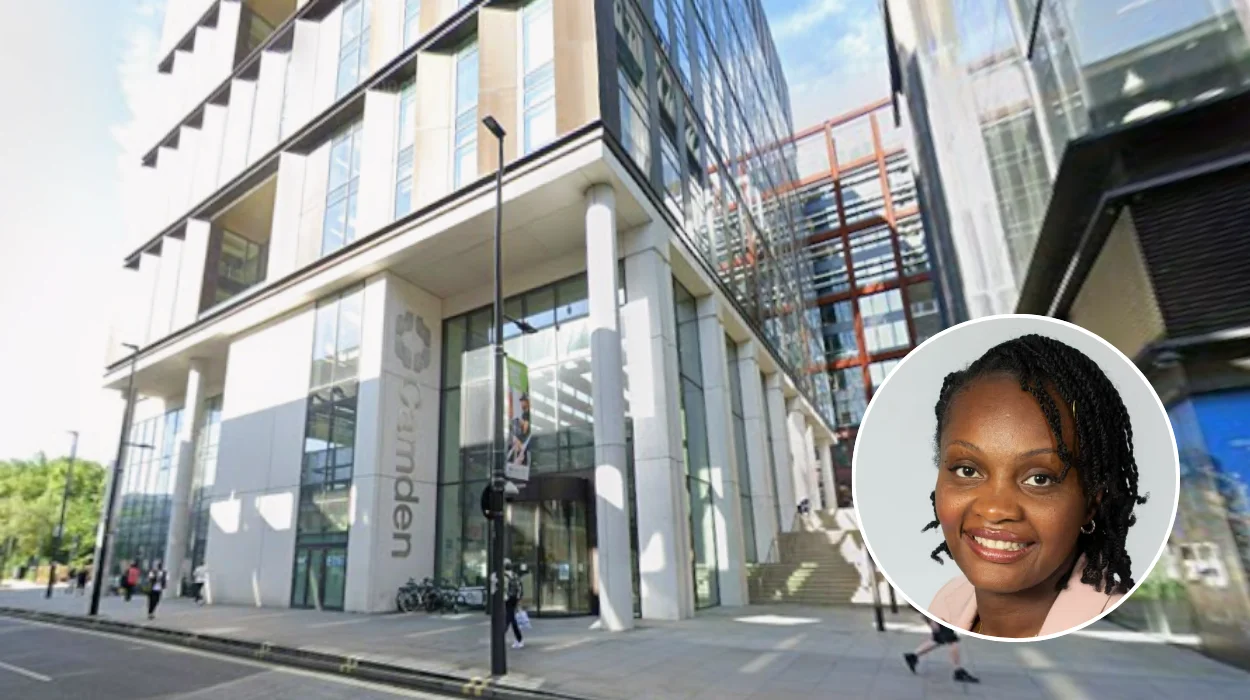
London (Extra London News) July 10, 2026 – The Labour Party has successfully reclaimed a pivotal council seat in Camden Council after a newly elected Green Party politician was forced to resign over statutory employment disqualifications, triggering an expensive and highly contested summer by-election. Nanouche Umeadi, a seasoned Labour politician who suffered a surprising defeat in her previous Kilburn ward seat during the regular local authority elections in May, made a successful political comeback by securing victory in the Regent’s Park ward on Thursday, 9 July 2026. Umeadi captured 576 votes, representing 32% of the total ballots cast, according to official figures certified by Camden Council’s returning officer.
- Key Points
- Why was the Camden Regent’s Park by-election triggered?
- How did individual candidates perform in the voting figures?
- What role did the Independent candidate play in the Labour victory?
- How does this result impact the wider balance of power in Camden Council?
- What are the immediate reactions from the political parties?
The Green Party fell agonizingly short of holding onto the seat they won just two months prior. The Greens’ substitute candidate, architect and retrofit specialist Alice Brown, finished in a very close second place with 482 votes, capturing 27% of the total vote share. The final margin of victory was a mere 94 votes, illustrating a stark shift in political fortunes following the original comprehensive clean-sweep victory achieved by the environmentalist party in May.
Political analysts have noted that the narrow Labour victory was substantially enabled by a strong showing from Independent candidate Mohammad Junayd Khan, who finished in third place with a robust 407 votes (23%). Local reporting confirms that Khan’s independent campaign effectively divided the anti-Labour and progressive vote blocks, which had previously united behind the Green banner during the spring council elections. The remaining votes were distributed among minority national parties, with Vladimir Chorniy of the Conservative and Unionist Party placing fourth with 137 votes (8%), Beverley Janet Martin of Reform UK placing fifth with 123 votes (7%), and Henry William Windle Potts of the Liberal Democrats finishing at the bottom of the ballot with just 51 votes (3%).
Why was the Camden Regent’s Park by-election triggered?
The extraordinary mid-summer local election became necessary after a bureaucratic oversight invalidated the historic results of the May local elections. As reported by Local Democracy Reporter Josef Steen of The Fitzrovia News, the initial vacancy occurred following the immediate post-election resignation of the Green Party’s original successful candidate, Muhammed Abu Naser. Naser had triumphed in May as part of a historic political shift in North London, which saw the Green Party replace the Liberal Democrats as the official main opposition group inside the Camden Council chamber.
However, Naser’s tenure was cut short before it could effectively begin. As detailed by Josef Steen in The Fitzrovia News, Naser works professionally as a teacher at one of Camden’s maintained schools. Because school staff in maintained institutions are technically classified as direct council employees, Naser was legally prohibited from serving as an elected official under Section 80 of the Local Government Act 1972. This strict statutory framework bars anyone holding paid municipal employment from taking an opposition or ruling seat within the exact same local authority. Upon recognizing the legal barrier, Naser stepped down, prompting Camden Council to authorize a snap by-election at an estimated public cost of £30,000 to local taxpayers.
How did individual candidates perform in the voting figures?
The final certified figures released by Camden Council’s electoral division outline a highly fragmented electorate in Regent’s Park. The formal declaration of results provided a precise breakdown of how the 21.93% of participating residents distributed their ballots among the six political hopefuls:
| Candidate | Political Party | Total Votes Received | Percentage Share |
| Nanouche Umeadi | Labour Party | 576 | 32% |
| Alice Amelia Brown | Green Party | 482 | 27% |
| Mohammad Junayd Khan | Independent | 407 | 23% |
| Vladimir Chorniy | Conservative Party | 137 | 8% |
| Beverley Janet Martin | Reform UK | 123 | 7% |
| Henry William Windle Potts | Liberal Democrats | 51 | 3% |
According to the official declaration sheet from the Camden Council press room, a total of 13 ballots were rejected by the counting staff. Eleven of those rejected papers involved voters selecting more candidates than they were legally entitled to, while two ballots were left entirely unmarked or declared void due to ultimate uncertainty. No ballots were rejected for containing identifying marks or lacking official security stamps.
What role did the Independent candidate play in the Labour victory?
The political narrative surrounding this by-election centers heavily on the impact of Independent candidate Mohammad Junayd Khan. Political commentators looking across the local landscape observed that the progressive, anti-establishment vote in Camden had consolidated solidly behind the Greens in May, allowing them to unseat prominent sitting Labour figures, including former council leader Nasim Ali, planning committee chief Heather Johnson, and cabinet member Nadia Shah.
However, with Khan entering the race as an unaligned Independent voice, that unified front fractured. As observed by local political trackers, Khan managed to attract a significant portion of the electorate—specifically 407 voters who were dissatisfied with the traditional Labour establishment but chose not to back the Green substitute, Alice Brown. Because Khan carved out nearly a quarter of the active electorate, the threshold for victory was drastically lowered, allowing Labour’s Nanouche Umeadi to sneak through the middle and reclaim the seat on a reduced 32% plurality, despite a combined anti-Labour majority of 68% across the board.
Explore more Camden News:
Salman Rushdie Defends Free Speech at Liberatum Award Ceremony: London 2026
Camden Welcomes Vagrancy Act Repeal Ending Homelessness Criminalisation: London 2026
How does this result impact the wider balance of power in Camden Council?
While the single-seat victory provides a psychological boost to the local Labour branch, it takes place against a backdrop of severe structural losses sustained earlier in the year. Prior to this by-election, the Green Party had executed an unprecedented political surge across London. As reported by national journalists covering municipal trends, the Green Party’s expanded presence in Camden had completely transformed the borough’s traditional political architecture.
Even without counting the invalidated seat of Muhammed Abu Naser, the Greens successfully gained nine new councillors during the spring elections. Combined with an additional elected member from the local Camden People’s Alliance, the environmentalist party succeeded in supplanting the Liberal Democrats to become the official borough opposition. The wider political context in London had seen senior Labour figures voicing severe anxieties about their electoral vulnerability. As documented by political correspondent Toby Helm in The Guardian, London Mayor Sadiq Khan had explicitly warned party bosses that Labour faced an “existential threat” from progressive and green defectors, cautioning that a failure to unite progressive voters risked repeating historical collapses.
Though Labour’s slim majority remains intact under the newly appointed council leader, Councillor Sagal Abdi-Wali—who took over the top post after former leader Richard Olszewski lost his seat to the Greens—the tight 94-vote margin in Regent’s Park indicates that the ruling party remains under immense pressure from its left flank in metropolitan strongholds.
What are the immediate reactions from the political parties?
The immediate fallout from the Regent’s Park declaration has brought a mixture of relief and reflective caution from the primary campaigns. Representatives from the local Labour party welcomed Nanouche Umeadi’s return to the chamber, framing it as a validation of their local service and a quick correction of May’s setbacks. Campaign workers noted that Umeadi’s previous experience as a public servant would allow her to immediately address ward issues without a transition period.
Conversely, Green Party figures expressed disappointment at missing the seat by under 100 votes but emphasized the resilience of their core support. Green organizers argued that achieving 27% of the vote under by-election conditions, with a completely new candidate in Alice Brown, proves that their historic gains in May were not a temporary fluke. Meanwhile, supporters of Independent Mohammad Junayd Khan celebrated his third-place finish as a historic achievement for a non-party candidate in Camden, viewing the 407 votes as a clear sign that a sizable portion of the local community desires an independent voice completely free from national party whips and platform mandates.