
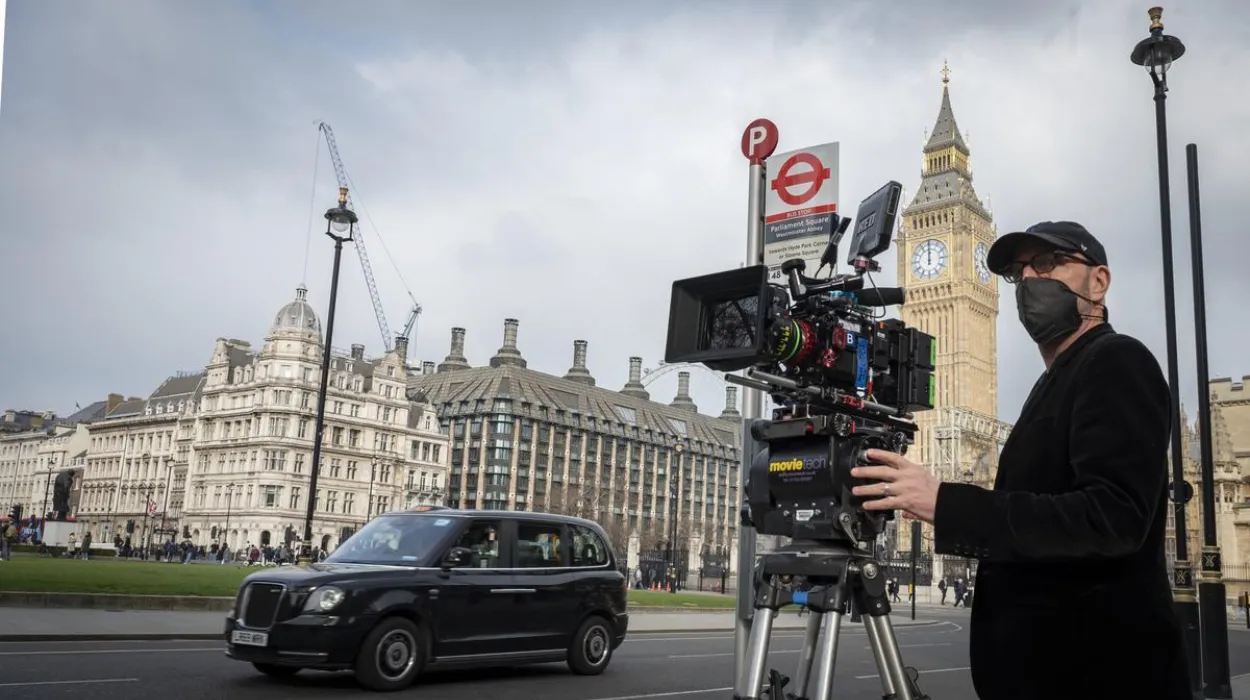
London has shaped global film history for more than 125 years through pioneering film production, internationally recognised studios, historic cinemas, influential filmmakers, technological innovation, and architectural landmarks that continue to serve as filming locations. The city’s contribution extends from the birth of British cinema in the nineteenth century to modern streaming productions distributed worldwide.
- Why has London become one of the world’s most important film cities?
- How did London’s film industry begin?
- How did London’s film studios influence global cinema?
- Why has London appeared in so many famous films?
- Which London landmarks have become iconic cinematic locations?
- How did London shape the James Bond film series?
- How did the Harry Potter films strengthen London’s cinematic identity?
- How has London contributed to filmmaking technology?
- How did London’s cinemas influence public culture?
- How is London’s cinematic heritage preserved today?
- What economic and cultural impact does London’s film industry have today?
- Why does London’s film history remain globally significant?
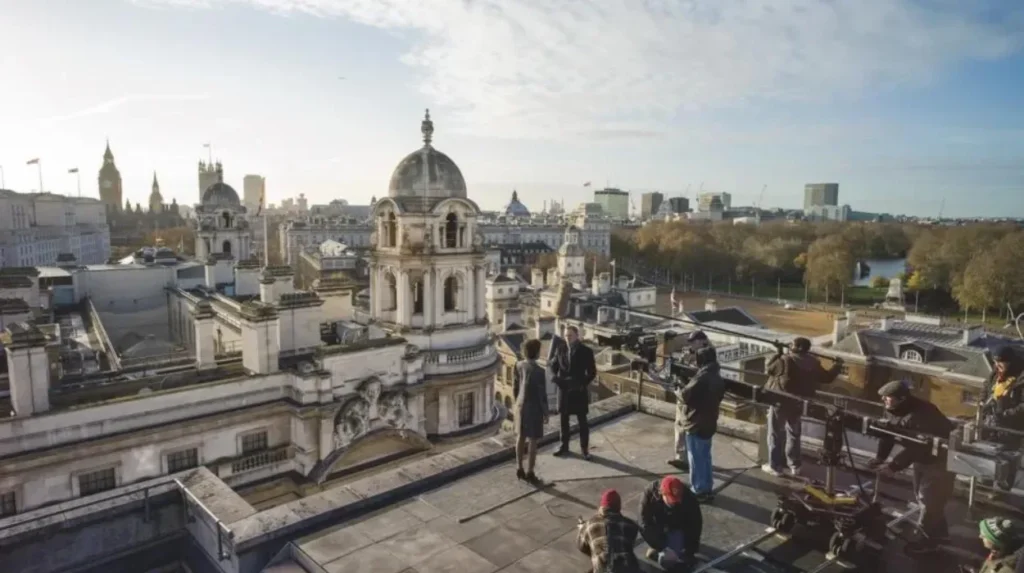
As one of the world’s leading film capitals, London combines historic streets, royal architecture, Victorian engineering, modern skyscrapers, medieval monuments, and purpose-built studios within a relatively compact metropolitan area. This diversity has enabled filmmakers to recreate numerous countries and historical periods without leaving Greater London.
Today, London’s cinematic heritage attracts millions of visitors annually. Historic filming locations remain active public spaces, while internationally renowned studios continue producing award-winning films and television programmes. This combination of living history and contemporary production makes London one of the most significant centres in global cinema.
To experience many of these famous filming locations in person today, consult our comprehensive [Best Film Locations to Explore in London Featured in Famous Movies and Television] for itineraries and visiting parameters.
Why has London become one of the world’s most important film cities?
London became one of the world’s leading film cities because it combined early filmmaking innovation, globally recognised architecture, skilled creative industries, advanced studio infrastructure, government support, and international investment into a continuous production ecosystem that has operated successfully since the late nineteenth century.
London’s film industry developed alongside the emergence of cinema itself. Following the first commercial film exhibitions during the 1890s, British filmmakers established production companies across London and its surrounding counties. Early audiences embraced moving pictures, creating demand for permanent cinemas and professional film production.
The city’s political importance also influenced filmmaking. As the capital of the United Kingdom, London became a centre for government information films, wartime documentaries, and internationally distributed newsreels. These productions documented major historical events while advancing filmmaking techniques.
London’s architectural diversity became another defining advantage. Medieval churches, Georgian squares, Victorian railway stations, Edwardian theatres, twentieth-century government buildings, and modern financial districts provided authentic settings for productions covering numerous historical periods.
Accessibility also strengthened London’s position. International airports, railway networks, technical suppliers, costume departments, visual effects companies, and experienced crews created a complete production environment that attracted filmmakers from Europe, North America, Asia, and Australia.
Government support further accelerated industry growth through tax incentives, investment programmes, and preservation of cultural institutions dedicated to British cinema.
How did London’s film industry begin?
London’s film industry began during the 1890s through experimental moving-picture exhibitions, early production companies, permanent cinemas, and technical innovation that transformed scientific demonstrations into commercial entertainment and established Britain’s national film industry.
Early moving pictures
Cinema emerged shortly after advances in photography and mechanical projection.
In 1896, moving-picture exhibitions appeared in London theatres and music halls. Audiences witnessed projected films lasting only seconds or minutes, yet these screenings demonstrated the commercial potential of cinema.
Inventors including Robert W. Paul contributed significantly to early British filmmaking. His cameras and projectors helped establish domestic production independent of foreign manufacturers.
Expansion during the Edwardian era
During the early twentieth century, permanent cinemas replaced temporary exhibition venues.
London neighbourhoods increasingly supported dedicated picture houses that screened short documentaries, dramas, comedies, travel films, and newsreels.
Production companies also expanded into larger facilities capable of constructing indoor sets and controlling lighting conditions.
Silent cinema
Silent films dominated production before synchronised sound technology became commercially practical.
London became a centre for literary adaptations, historical dramas, and documentary filmmaking, reflecting Britain’s theatrical traditions and imperial connections.
How did London’s film studios influence global cinema?
London’s major studios established international standards in production design, cinematography, costume creation, visual effects, and large-scale filmmaking while producing influential films distributed across every inhabited continent during the twentieth and twenty-first centuries.
Ealing Studios
Founded in 1902, Ealing Studios remains the world’s oldest continuously operating film studio.
Its productions became internationally recognised after the Second World War through the famous Ealing comedies, which combined social observation with humour.
These films influenced comedy filmmaking worldwide.
Pinewood Studios
Although located outside central London in Buckinghamshire, Pinewood forms an essential part of London’s production ecosystem.
Established in 1936, Pinewood developed into one of Europe’s largest studio complexes.
Its sound stages hosted numerous internationally successful productions including James Bond films, Star Wars entries, historical epics, and modern streaming series.
Shepperton Studios
Shepperton Studios opened in 1931.
Its facilities supported feature films, television dramas, visual effects production, and international co-productions.
The studio continues expanding to meet growing demand from global streaming platforms.
Elstree Studios
Several studio facilities around Elstree became associated with British and international filmmaking.
Productions ranging from classic dramas to science fiction franchises utilised these stages for decades.

Why has London appeared in so many famous films?
London appears frequently in international films because its historic landmarks, recognisable skyline, architectural variety, transport infrastructure, and cultural symbolism immediately communicate location, history, prestige, and global identity to audiences worldwide.
Directors use London because viewers immediately recognise its landmarks.
This recognition strengthens storytelling without extensive explanation.
Historic districts also provide authentic environments that reduce reliance on artificial sets.
Modern districts present financial centres, luxury developments, and contemporary architecture suitable for thrillers, science fiction, and political dramas.
The city’s multicultural communities also support stories reflecting diverse societies.
Combined with experienced production crews and efficient transport, these qualities make London exceptionally practical for large productions.
Which London landmarks have become iconic cinematic locations?
Numerous London landmarks achieved international cinematic recognition because filmmakers repeatedly selected authentic historic locations that visually represent British history, monarchy, government, transport, religion, and urban life across multiple generations of audiences.
Westminster
The Palace of Westminster and the surrounding parliamentary district frequently appear in political dramas, historical films, and action productions.
Its Gothic Revival architecture represents British democracy worldwide.
Tower Bridge
Completed in 1894, Tower Bridge has become one of cinema’s most recognisable engineering landmarks.
Its distinctive bascules frequently appear in opening sequences establishing London.
St Paul’s Cathedral
Designed by Sir Christopher Wren after the Great Fire of London, St Paul’s Cathedral appears in historical dramas, royal narratives, and disaster films.
Its dome dominates London’s skyline.
Trafalgar Square
Constructed during the nineteenth century, Trafalgar Square represents national identity through monuments, fountains, and public gatherings.
It frequently appears during celebrations, protests, and action sequences.
The British Museum
The museum’s classical architecture has provided settings for adventure films, historical narratives, and educational productions.
The River Thames
The Thames connects many cinematic landmarks.
Boat sequences, panoramic aerial photography, bridges, and embankments frequently establish London’s geographical identity.
How did London shape the James Bond film series?
London became central to the James Bond franchise because the city’s government institutions, intelligence associations, luxury districts, transport infrastructure, and historic architecture matched the fictional world of international espionage created by Ian Fleming.
James Bond represents one of Britain’s most successful cultural exports.
Many films feature recognisable London locations including Whitehall, Westminster, the Thames, and government buildings associated with intelligence agencies.
Production facilities around London also enabled extensive studio work alongside location filming.
Bond films helped reinforce London’s global image as a sophisticated international capital combining tradition with technological innovation.
Their worldwide success introduced millions of viewers to London’s landmarks across more than six decades.
How did the Harry Potter films strengthen London’s cinematic identity?
The Harry Potter film series strengthened London’s cinematic identity by transforming railway stations, markets, bridges, streets, and historic buildings into internationally recognised destinations connected with one of modern literature’s most successful adaptations.
Several London locations became permanently associated with the Harry Potter franchise.
King’s Cross Station inspired the fictional Platform 9¾.
Leadenhall Market influenced the visual design of Diagon Alley.
Millennium Bridge appeared dramatically during the opening of Harry Potter and the Half-Blood Prince.
Australia House provided interiors representing Gringotts Wizarding Bank.
These locations now attract international tourism connected directly with literary and cinematic heritage.
How has London contributed to filmmaking technology?
London contributed substantially to filmmaking technology through camera innovation, sound recording, production design, colour processes, visual effects, digital animation, and internationally respected post-production companies serving global film industries.
British engineers improved projection systems during cinema’s earliest decades.
Studio workshops refined production design techniques used internationally.
Sound recording advanced rapidly during the transition from silent films.
Later developments included sophisticated miniature effects, animatronics, computer-generated imagery, digital compositing, and advanced colour grading.
Modern visual effects companies based in London contribute to major international productions spanning fantasy, science fiction, historical drama, and animation.
Universities and specialist film schools continue educating technicians, editors, cinematographers, and directors.
How did London’s cinemas influence public culture?
London’s cinemas transformed public culture by making films accessible to mass audiences, supporting social interaction, encouraging artistic innovation, and establishing cinema as one of Britain’s most influential forms of cultural expression throughout the twentieth century.
Purpose-built cinemas became important community institutions.
Large picture palaces welcomed thousands of visitors daily during cinema’s golden age.
Neighbourhood cinemas provided affordable entertainment for local communities.
Film festivals expanded appreciation for international cinema.
Independent cinemas promoted experimental filmmaking alongside commercial releases.
Historic cinema buildings also represent significant architectural heritage deserving preservation.
Many continue operating after careful restoration.
How is London’s cinematic heritage preserved today?
London preserves its cinematic heritage through conservation programmes, historic building protection, museum collections, film archives, educational institutions, restoration projects, and continued use of historic locations within contemporary film production.
National archives preserve original film negatives, production documents, posters, scripts, photographs, and technical equipment.
Museums interpret cinema history through permanent exhibitions.
Historic studios continue adapting to changing production methods while protecting significant buildings.
Local authorities also safeguard listed landmarks regularly used for filming.
Educational organisations document oral histories from directors, actors, technicians, designers, editors, and producers.
Digital restoration ensures historic films remain accessible to future generations.
What economic and cultural impact does London’s film industry have today?
London’s film industry generates billions of pounds in economic activity through production spending, employment, tourism, education, technology, and international investment while strengthening Britain’s cultural influence across global media markets.
The creative industries contribute substantially to the United Kingdom’s economy.
Film production supports employment across numerous sectors, including construction, transport, hospitality, catering, costume manufacture, visual effects, education, legal services, and tourism.
Film-induced tourism represents another major benefit.
Visitors frequently travel specifically to experience famous filming locations.
Museums, guided walking tours, historic houses, theatres, and public landmarks benefit from continued international interest generated through cinema.
Streaming platforms have increased production demand, encouraging further investment in studio expansion throughout Greater London and neighbouring counties.
This sustained activity ensures London’s film industry remains globally competitive.
Why does London’s film history remain globally significant?
London’s film history remains globally significant because the city continuously combines historical continuity, creative innovation, international collaboration, architectural diversity, educational excellence, and cultural preservation within one of the world’s most influential filmmaking ecosystems.
Few cities have contributed to cinema across every major historical period.
London participated in the birth of film, the silent era, the introduction of sound, wartime documentary production, post-war studio expansion, blockbuster filmmaking, digital visual effects, and modern streaming production.
Its landmarks remain instantly recognisable.
Its studios continue producing internationally successful films.
Its educational institutions develop future filmmakers.
Its archives preserve cinema history for researchers.
Its architecture continues providing authentic settings spanning nearly two thousand years of urban history.
This combination explains why London remains central to both historical scholarship and contemporary filmmaking. As cinema evolves through emerging technologies, London’s historic streets, world-class studios, preserved landmarks, and creative workforce continue connecting the city’s remarkable past with the future of global storytelling.
Why is London important in global film history?
London is important in global film history because it became one of the earliest centres of cinema, developed major film studios, supported influential filmmakers, and provided internationally recognised locations used in thousands of productions.