Chelsea is one of London’s most recognisable cultural districts. Its identity developed through several centuries of artistic settlement, literary activity, architectural change, royal patronage, fashion innovation and youth culture. The area became associated with painters and writers during the nineteenth century before emerging as an international centre of fashion during the 1960s and punk culture during the 1970s.
- How did Chelsea become one of London’s major artistic and cultural districts?
- Why did so many famous artists and writers choose Chelsea?
- How did Victorian Chelsea create the foundations of its bohemian identity?
- How did the King’s Road transform Chelsea into a global fashion destination?
- Why was Mary Quant important to Chelsea’s fashion history?
- How did fashion change Chelsea’s international reputation?
- Why did Chelsea become central to Swinging London in the 1960s?
- How did punk culture reshape Chelsea during the 1970s?
- How did Chelsea’s fashionable image change during the 1980s and later decades?
- What historic places still preserve Chelsea’s artistic and fashionable identity?
- What does Chelsea’s history reveal about the relationship between art, fashion and place?
- Why does Chelsea’s artistic and fashionable heritage remain historically important today?
- Frequently Asked Question
Chelsea’s cultural reputation did not emerge from one institution or one generation. It resulted from a sequence of historical changes that transformed a riverside village into a fashionable metropolitan district. Royal connections shaped its early geography. Artists and writers established creative communities. Victorian development provided studios and houses for cultural workers. Independent boutiques changed British fashion. Music and youth movements then gave the King’s Road global recognition.
The history of Chelsea therefore explains why the district remains associated with art, design and fashion. Its historic buildings, streets and institutions preserve evidence of these transformations. The modern identity of Chelsea continues to depend on a cultural foundation built over centuries.
How did Chelsea become one of London’s major artistic and cultural districts?
Chelsea became a major artistic and cultural district because its riverside setting, proximity to central London, residential development and concentration of studios attracted generations of painters, writers, designers and performers from the nineteenth century onward.
Chelsea developed beside the River Thames in what was originally a separate settlement west of the City of London. Its position provided access to London while retaining a distinct residential environment. Before modern urban expansion connected the area fully to the wider metropolis, Chelsea contained gardens, houses, institutional estates and riverside properties.
This physical environment became important to its cultural development. Creative professionals required accommodation, workspace and access to patrons, publishers, galleries and audiences. Chelsea provided these conditions during the nineteenth century, when London experienced rapid population growth and major urban expansion.
The district also possessed strong royal and aristocratic connections. The Manor of Chelsea had long been associated with influential landowners, while the Royal Hospital Chelsea, founded by King Charles II and designed by Sir Christopher Wren, established one of the area’s most important architectural and institutional landmarks.
The King’s Road provided another connection between Chelsea and royal history. The route originated as a private royal road associated with Charles II and travel between royal residences. It later developed into one of London’s most influential commercial and cultural streets. Its transformation from a restricted royal route into a public urban thoroughfare created the geographical framework for later artistic and fashion activity.
Chelsea’s cultural identity therefore developed through the interaction of geography and urban growth. The area was close enough to central London for cultural exchange while retaining streets and properties capable of supporting residential and professional communities.
By the nineteenth century, this environment attracted increasing numbers of artists. Studios appeared in streets including Tite Street, Glebe Place and Manresa Road. The concentration became sufficiently significant for the district around King’s Road and Church Street to acquire the description of Chelsea’s “Latin Quarter,” reflecting its association with artistic and bohemian life.
Why did location matter to Chelsea’s cultural development?
Chelsea’s riverside position provided a combination of accessibility and residential space. Artists could maintain connections with London’s commercial and cultural institutions while working outside the most densely developed central districts.
The Thames also shaped Chelsea’s physical character. Cheyne Walk and other riverside streets became associated with substantial houses occupied by prominent residents. The area’s architecture created a visible connection between domestic life, professional activity and cultural production.
This pattern continued as London expanded. Chelsea was absorbed into the metropolitan urban area, but its streets retained distinctive architectural forms. Georgian houses, Victorian terraces, artists’ studios and institutional buildings preserved a built environment that supported the district’s historical identity.
Today, heritage protection remains important to this landscape. The Royal Borough of Kensington and Chelsea states that 70 per cent of the borough lies within conservation areas, demonstrating the scale of historic environmental protection across the wider borough.
Why did so many famous artists and writers choose Chelsea?
Artists and writers chose Chelsea because the district offered affordable nineteenth-century accommodation, purpose-built studios, access to London’s cultural economy and a concentrated community of creative professionals who established an enduring artistic network.
Chelsea became strongly associated with artistic residence during the nineteenth century. Painters, writers, illustrators and designers lived and worked within the district, creating professional networks that reinforced Chelsea’s reputation.
The artistic community included major figures connected with British and international art. Joseph Mallord William Turner, Dante Gabriel Rossetti, James McNeill Whistler, John Singer Sargent, Augustus John and Walter Sickert were among the artists associated with Chelsea at different periods. The Chelsea Art Society identifies the mid-nineteenth century as the period when artists including Rossetti and Turner helped establish the pattern of creative settlement later continued by Whistler, Sickert, Augustus John and Sargent.
Writers also contributed to the district’s identity. Thomas Carlyle lived in Chelsea for decades, and the area became associated with literary figures including George Meredith, Algernon Charles Swinburne and Leigh Hunt. Their presence connected Chelsea to Victorian intellectual and publishing culture.
The significance of this concentration extended beyond individual celebrity. Creative communities function through shared infrastructure. Studios provide workplaces. Clubs provide professional networks. Galleries provide exhibition opportunities. Publishers connect writers with readers. Shops and restaurants create meeting places.
Chelsea developed these forms of infrastructure over time.
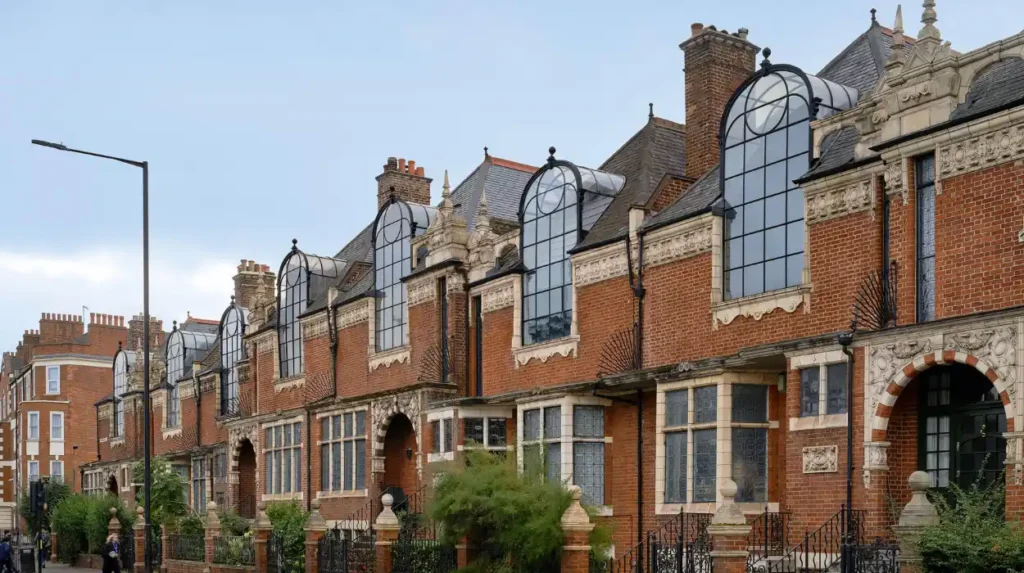
How did purpose-built studios change Chelsea?
The growth of professional artistic practice changed Chelsea’s architecture. During the later nineteenth century, artists increasingly occupied specialised studio houses rather than working solely in conventional domestic properties.
Purpose-built studios provided large workspaces and controlled natural light. They also allowed artists to receive clients and patrons within buildings designed for professional activity.
Tite Street became particularly associated with artists’ residences and studios. Whistler’s presence helped establish the district’s reputation for purpose-built studio houses, while other artists followed the broader pattern of professional settlement.
The development demonstrated an important historical change. Art was becoming increasingly organised as a specialised profession requiring dedicated spaces, public exhibition and commercial networks.
Chelsea therefore became more than a place where individual artists happened to live. Its streets increasingly contained the physical infrastructure of cultural production.
What role did Chelsea’s artistic institutions play?
Institutions converted individual activity into long-term cultural continuity. One important example is the Chelsea Arts Club.
The club was founded in 1890 by artists living and working in Chelsea. Its members initially used premises at 181 King’s Road before purchasing property at 143–145 Old Church Street in 1901. The organisation remains associated with that historic location.
The Chelsea Arts Club represented the institutional side of Chelsea’s creative culture. Artists could meet, organise exhibitions and develop professional relationships.
The Chelsea Art Society provides another example of continuity. Founded in 1910, it survived both World Wars and was revived after the Second World War in 1946. Its history demonstrates that Chelsea’s artistic identity depended on organisations as well as famous residents.
These institutions preserved networks across generations. Artists changed, architectural styles changed and commercial conditions changed, but organised cultural activity continued.
How did Victorian Chelsea create the foundations of its bohemian identity?
Victorian Chelsea created its bohemian identity through artistic migration, literary residence, specialised studio construction and expanding cultural networks that concentrated creative professionals within a distinctive riverside neighbourhood of rapidly growing metropolitan London.
The term “bohemian” historically described unconventional communities of artists, writers and other creative workers. In Chelsea, this identity developed through actual patterns of residence and employment rather than through a single cultural event.
Victorian London was the world’s largest urban centre for much of the nineteenth century. The city contained publishers, theatres, galleries, wealthy patrons and national institutions. Chelsea offered access to these opportunities while developing a distinctive residential culture.
The area’s creative population included painters, writers and designers working within the expanding Victorian cultural economy.
This was also an era of architectural experimentation. New houses and studios reflected the requirements of professional artists. Decorative interiors, specialist workrooms and distinctive façades became part of the area’s physical character.
Chelsea’s artistic reputation also connected with wider movements in British design. The Arts and Crafts movement, which sought to raise the cultural status of decorative arts and emphasised skilled production and materials, became an important force in late nineteenth-century British culture. The Arts and Crafts Exhibition Society was founded in London in 1887 and helped establish new public recognition for ceramics, textiles, metalwork and furniture.
Chelsea participated in this wider transformation by concentrating artists and designers within one urban environment.
How did Chelsea’s architecture preserve artistic history?
Buildings provide physical evidence of cultural activity. Chelsea’s historic houses and studios preserve the locations where residents worked, met and developed professional careers.
Architectural preservation therefore has direct historical value. A studio house explains how an artist worked. A historic street reveals patterns of urban development. An institutional building records the location of organised cultural activity.
Conservation areas protect this wider context. Preservation is not limited to individual monuments. Streetscapes, building relationships and historic urban layouts also provide evidence of cultural development.
The wider Royal Borough continues to manage museums and cultural institutions connected with artists’ houses and historic architecture. This reflects the continuing importance of domestic and professional buildings as records of London’s cultural history.
How did the King’s Road transform Chelsea into a global fashion destination?
The King’s Road transformed Chelsea into a global fashion destination when independent boutiques, youth consumers and experimental designers used the street during the twentieth century to introduce new clothing styles and redefine British fashion culture.
The King’s Road occupies a central position in Chelsea’s historical identity. Its earlier royal association gave the street symbolic importance, but its twentieth-century commercial development made it internationally famous.
By the mid-twentieth century, the King’s Road had become a location where independent businesses could sell new ideas directly to consumers. This model was important because fashion changed from a system dominated by established couture houses into a broader youth-oriented commercial culture.
The 1960s accelerated this transformation.
Young consumers possessed increasing cultural influence. Fashion became closely connected with music, photography, design and youth identity. Boutique retailing provided an environment where clothing could be presented as part of a complete visual culture.
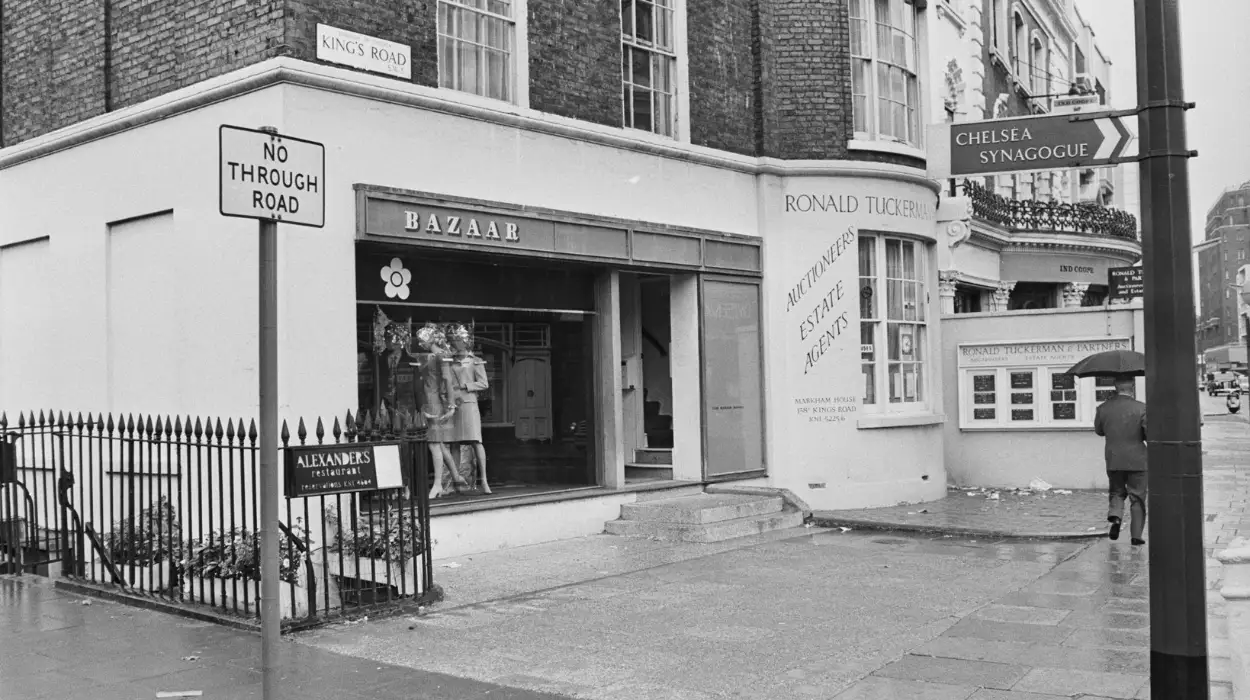
The Victoria and Albert Museum identifies King’s Road boutiques, including Mary Quant’s Bazaar, as central elements in the fashion and cultural transformation associated with Swinging London.
Why was Mary Quant important to Chelsea’s fashion history?
Mary Quant was a British fashion designer whose work became strongly associated with youth-oriented fashion in the 1960s. Her Bazaar boutique on the King’s Road became one of the most important symbols of Chelsea’s fashion revolution.
The significance of Bazaar extended beyond one shop. It represented a new retail model aimed at younger consumers who wanted contemporary clothing outside traditional formal fashion structures.
Boutiques allowed designers to control presentation, merchandise and visual identity. Window displays, interior design and clothing became connected elements of the same cultural experience.
The King’s Road therefore became a public display space for fashion change. New designs appeared directly on the street before being reproduced through magazines, photography and international media.
The cultural importance of the period was recognised internationally. In April 1966, Time magazine described London as “The Swinging City,” reflecting the city’s growing global influence in youth culture, fashion and popular creativity. The V&A identifies King’s Road boutiques as part of this transformation.
How did fashion change Chelsea’s international reputation?
Fashion transformed Chelsea from a historically significant London district into an internationally recognised cultural symbol.
Tourists, journalists and photographers connected the King’s Road with new British style. The area became associated with modern clothing, youth culture and commercial experimentation.
This international reputation produced a lasting identity. Later generations continued to associate Chelsea with fashionable retailing even after individual boutiques closed or changed ownership.
The historical process demonstrates how commercial spaces can become cultural landmarks. A shop sells products, but a concentration of influential shops can redefine the identity of an entire street.
The King’s Road’s heritage documentation explicitly connects the area with major cultural movements including Victorian Arts and Crafts, Swinging London, punk and the Sloane Rangers of the 1980s.
Why did Chelsea become central to Swinging London in the 1960s?
Chelsea became central to Swinging London because its boutiques, designers, musicians and young consumers created a concentrated cultural environment where fashion, music, photography and changing social attitudes became internationally visible.
Swinging London describes the cultural prominence of London during the 1960s, particularly in fashion, music, media and youth culture.
Chelsea played a specific role because the King’s Road provided a concentrated location for independent fashion businesses. The street connected retail activity with cafés, clubs and creative networks.
The 1960s also changed the relationship between age and consumer culture. Young people became an increasingly important market for clothing, recorded music and entertainment.
Fashion became faster. Designers responded to contemporary music and street style. Consumers expected frequent visual change.
Chelsea provided a physical environment where these developments became visible.
The King’s Road was therefore not simply a shopping street. It became a location where new cultural identities were publicly performed through clothing, movement and commercial design.
To experience this historic cultural landscape in person today, consult our comprehensive [Best Things to Do in Chelsea for Art, Shopping, and Riverside Walks Today] for itineraries and visiting parameters.
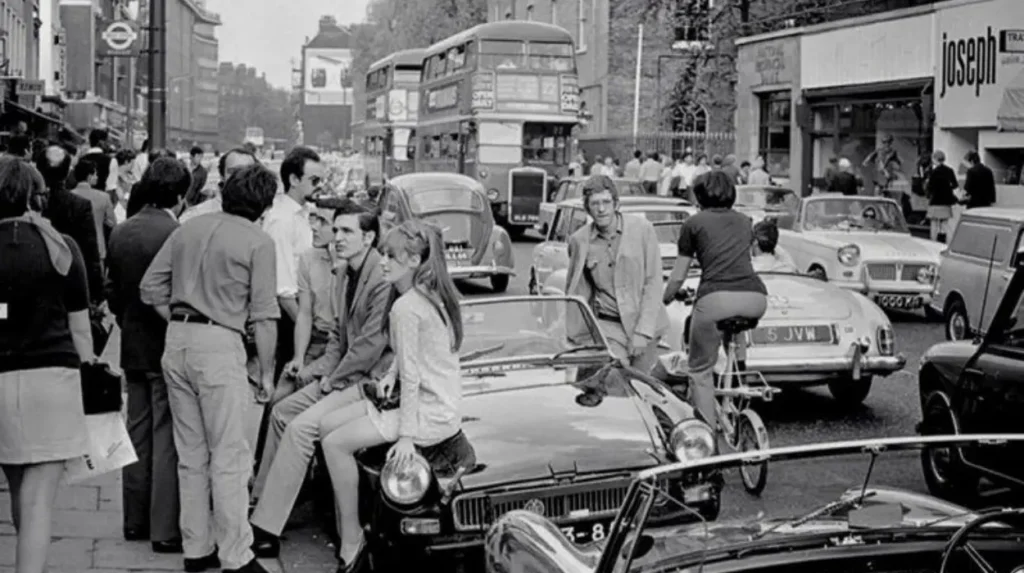
How did music strengthen Chelsea’s cultural identity?
Music connected Chelsea’s fashion culture with wider youth movements. Musicians moved through the same streets, shops and social spaces as designers and consumers.
This interaction strengthened the King’s Road’s public identity. Clothing and music increasingly formed parts of the same youth culture.
The King’s Road’s historical record includes associations with musicians and music businesses, demonstrating how the street continued to attract creative industries beyond fashion. The heritage trail identifies Swan Song Records at 484 King’s Road and records its connection with Led Zeppelin from 1974.
The significance lies in continuity. Chelsea’s nineteenth-century artistic networks developed into twentieth-century networks involving designers, musicians, photographers and commercial innovators.
The professions changed, but the underlying mechanism remained similar: cultural workers concentrated in a distinctive urban environment.
How did punk culture reshape Chelsea during the 1970s?
Punk culture reshaped Chelsea during the 1970s when radical fashion, independent retail, graphic design and confrontational youth identity made the King’s Road an internationally recognised centre of British countercultural style.
The 1970s introduced a major new phase in Chelsea’s cultural history. Punk challenged the visual conventions of established fashion and popular culture.
The King’s Road became strongly associated with this movement through businesses and designers who used clothing and retail space to communicate radical cultural identities.
Vivienne Westwood became one of the most important figures associated with this transformation. Her work on the King’s Road helped establish fashion as a central medium of punk expression.
Punk clothing used deliberately disruptive forms. Garments, typography, accessories and shop interiors became instruments of visual communication.
The cultural significance of Chelsea therefore expanded again. During the 1960s, the area had become associated with colourful youth fashion. During the 1970s, it became associated with deliberate provocation and anti-establishment style.
The King’s Road’s own historical interpretation identifies punk as one of the defining movements in the street’s development.
What was the historical importance of Vivienne Westwood’s Chelsea work?
Vivienne Westwood was a British fashion designer whose work became internationally associated with punk and later developments in contemporary fashion.
Her Chelsea activity demonstrated the relationship between local experimentation and global influence.
Designs created and displayed within a relatively small commercial district entered international fashion culture through media coverage, music and changing consumer behaviour.
This process reinforced Chelsea’s reputation as a place where established conventions could be challenged through design.
The King’s Road’s cultural history therefore contains several connected fashion phases: royal association, nineteenth-century creative settlement, 1960s boutique culture and 1970s punk experimentation.
Each phase added a new layer to the district’s identity.
How did Chelsea’s fashionable image change during the 1980s and later decades?
Chelsea’s fashionable image changed during the 1980s as youth counterculture gave way to a highly visible affluent lifestyle identity, while the district retained fashion retail, cultural institutions and historic associations with creative innovation.
The 1980s introduced another transformation.
Chelsea became associated with the “Sloane Ranger” identity, a term connected with affluent young people and a distinctive style associated with areas around Sloane Square and west London.
This represented a significant shift from the rebellious visual culture of punk.
Chelsea remained fashionable, but the public image increasingly incorporated wealth, social status and luxury consumption.
The change demonstrates that cultural identity is not fixed. Places accumulate different meanings as economic and social conditions change.
The King’s Road itself continued to evolve. Independent businesses existed alongside larger commercial retailers. Historic buildings acquired new uses. Former cultural venues changed function.
The street nevertheless retained its historical association with creativity.
Its heritage trail records these layers directly, linking Victorian artistic culture, 1960s fashion, punk and later social identities within one geographical narrative.
What historic places still preserve Chelsea’s artistic and fashionable identity?
Chelsea’s artistic and fashionable identity survives in historic streets, studio buildings, cultural clubs, the King’s Road, Cheyne Walk and preserved institutions that retain physical evidence of the district’s centuries-long creative development.
Modern Chelsea contains extensive evidence of its cultural history.
The King’s Road remains the most visible example. Its shops have changed, but the street retains its historical role as a centre of fashion and commercial culture.
The Chelsea Arts Club remains at Old Church Street, preserving an institutional connection with the artistic community established in 1890.
Historic streets including Cheyne Walk and Tite Street preserve the residential and architectural context associated with writers and artists.
The Royal Hospital Chelsea provides evidence of the district’s earlier royal and institutional history.
These locations demonstrate an essential feature of Chelsea’s heritage: its cultural identity developed through overlapping historical layers rather than replacement of one era by another.
Why is preservation important to Chelsea’s cultural future?
Preservation protects evidence.
Without historic buildings, researchers lose direct information about where cultural figures lived and worked. Without streetscapes, visitors lose the geographical context that explains how creative communities developed.
Heritage protection also supports education. Students can connect historical records with physical places. Cultural tourists can understand how architecture, commerce and social networks shaped artistic production.
For genealogical researchers, historic neighbourhoods provide additional context for family histories. Electoral records, property records, parish documents and local archives become more meaningful when connected with surviving streets and institutions.
The Royal Borough’s extensive conservation framework reflects the importance of protecting historic environments across Kensington and Chelsea.
What does Chelsea’s history reveal about the relationship between art, fashion and place?
Chelsea’s history reveals that art, fashion and place develop together when creative communities, specialised buildings, commercial opportunities and public audiences remain concentrated within an identifiable urban environment over successive generations.
Chelsea’s history demonstrates a consistent historical pattern.
Creative people settled in the district because of location and opportunity. Their presence attracted institutions and businesses. These institutions strengthened professional networks. Commercial spaces then translated creative work into public culture.
The nineteenth-century artist’s studio and the twentieth-century fashion boutique performed different functions, but both connected production with public visibility.
Chelsea’s identity therefore developed through cultural infrastructure.
Artists required studios.
Writers required publishing networks.
Designers required shops.
Musicians required recording and performance networks.
Consumers required accessible streets and commercial spaces.
Chelsea provided these elements at different periods.
The result was a durable cultural identity recognised far beyond London.
Why does Chelsea’s artistic and fashionable heritage remain historically important today?
Chelsea’s artistic and fashionable heritage remains important because the district documents major changes in British art, urban development, design, youth culture and fashion while preserving institutions and streets that connect contemporary London with these historical transformations.
Chelsea remains historically important because its cultural development represents several major transformations in British society.
The district records the professionalisation of artistic life during the nineteenth century.
It records the development of specialised creative institutions.
It records the expansion of youth-oriented consumer culture during the 1960s.
It records the international influence of British fashion.
It records the visual and commercial impact of punk during the 1970s.
It also records the continuing relationship between heritage and urban change.
The history is therefore broader than Chelsea itself. The district provides a concentrated case study of how London became a global centre for cultural production.
Chelsea’s modern identity continues to depend on this accumulated history. Art galleries, fashion businesses, heritage organisations and historic streets operate within an environment shaped by earlier generations.
The district’s cultural identity was built through identifiable historical stages: royal geography, artistic settlement, Victorian professionalisation, boutique fashion, Swinging London, punk and later luxury culture.
These stages remain visible in the built environment and institutional landscape.
Chelsea’s remarkable artistic and fashionable identity is therefore not simply a reputation. It is the result of documented historical processes that transformed a Thames-side settlement into one of Britain’s most influential cultural districts.
From nineteenth-century artists’ studios to the boutiques of Mary Quant and the radical fashion associated with Vivienne Westwood, Chelsea repeatedly connected local places with national and international cultural change.
That continuity explains why Chelsea remains essential to the history of London art, British fashion and modern urban culture. Its streets preserve the evidence of how creative communities form, how commercial spaces influence cultural movements and how historical identity continues to shape the present.
Frequently Asked Question
Why is Chelsea famous for art and culture?
Chelsea became famous for art and culture because generations of painters, writers, designers and creative professionals lived and worked in the area. Its artistic community expanded during the nineteenth century and established Chelsea as one of London’s leading cultural districts.