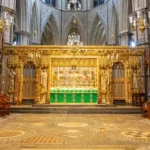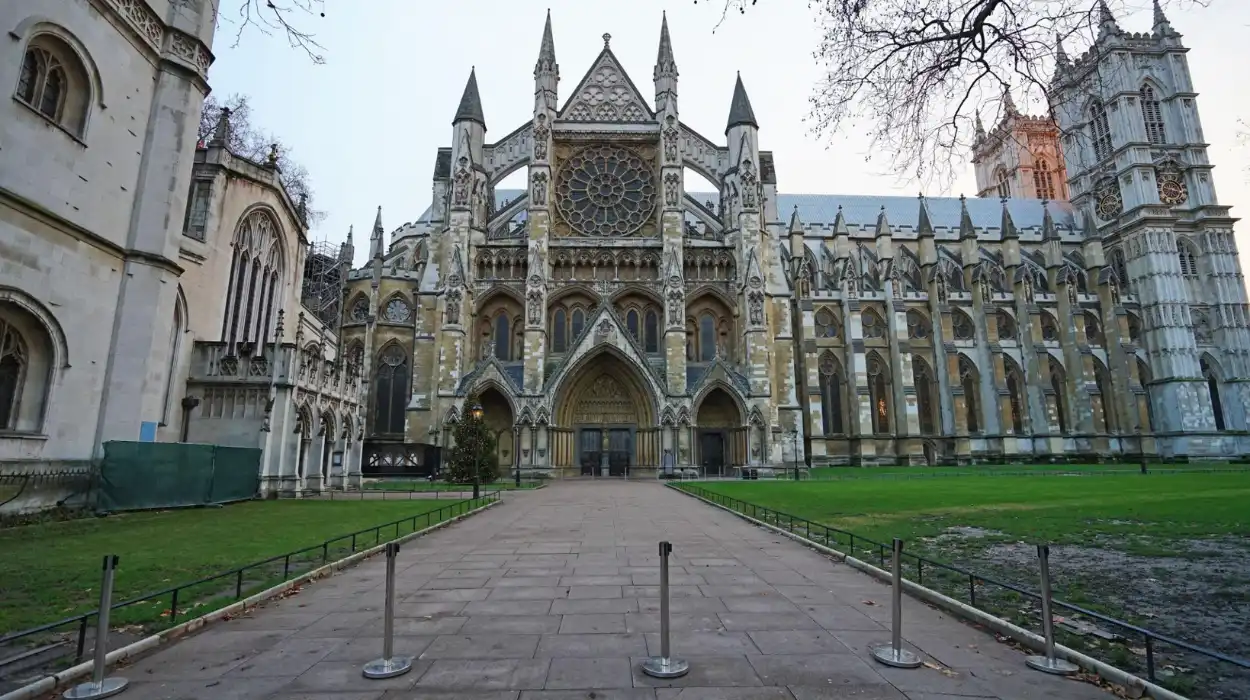
Westminster Abbey stands at the centre of British national identity. Located in the City of Westminster in London, the abbey has served as a royal church, coronation venue, burial site, and architectural landmark for nearly one thousand years. Officially known as the Collegiate Church of Saint Peter at Westminster, it has witnessed the rise and fall of dynasties, constitutional transformations, religious reforms, and major national ceremonies.
- Why is Westminster Abbey one of the most important historic buildings in Britain?
- How did Westminster Abbey begin?
- Why did Westminster Abbey become the coronation church of English and British monarchs?
- What architectural features make Westminster Abbey unique?
- Who is buried in Westminster Abbey?
- How did Westminster Abbey influence British political and religious history?
- What role does Westminster Abbey play in modern Britain?
- How has Westminster Abbey been preserved for future generations?
- What is the lasting legacy of Westminster Abbey?
The abbey occupies a unique position in British history. Every English and later British monarch since 1066, with only a few exceptions, has been crowned within its walls. Kings, queens, statesmen, scientists, military leaders, writers, and cultural figures are buried or commemorated there. As a UNESCO World Heritage Site, Westminster Abbey remains one of the most significant historic buildings in Europe and a symbol of continuity across centuries of change.
Why is Westminster Abbey one of the most important historic buildings in Britain?
Westminster Abbey is Britain’s most significant ceremonial church because it has hosted coronations since 1066, contains royal tombs spanning nearly one thousand years, preserves exceptional medieval architecture, and functions as a national site of remembrance, worship, and heritage.
The importance of Westminster Abbey derives from its dual role as both a religious institution and a national monument. Unlike many cathedrals, it is not the seat of a bishop. Instead, it operates as a Royal Peculiar, meaning it reports directly to the monarch rather than a diocesan authority.
Its influence extends across political, religious, cultural, and architectural history. Coronations conducted within the abbey establish the legitimacy of monarchs. Royal weddings celebrated there connect the institution to modern public life. State funerals and national memorial services reinforce its role in collective remembrance.
The abbey also preserves an extraordinary historical record. More than 3,000 individuals are buried or commemorated within its walls and grounds. These individuals include monarchs, for example Edward the Confessor, Henry III, and Elizabeth I; scientists, for example Isaac Newton and Charles Darwin; and writers, for example Geoffrey Chaucer and Charles Dickens.
As a result, Westminster Abbey functions simultaneously as a church, mausoleum, archive, museum, and national symbol.
How did Westminster Abbey begin?
Westminster Abbey originated as a Benedictine monastery during the early medieval period and gained national importance under King Edward the Confessor, whose construction programme established the foundation for the royal and religious significance that continues today.
The origins of Westminster Abbey date to the tenth century. Historical records indicate that a Benedictine monastic community existed on Thorney Island, a low-lying area beside the River Thames.
The abbey’s transformation occurred under King Edward the Confessor. Edward ruled England from 1042 to 1066 and sought to establish a grand royal church near his palace at Westminster. Construction began around 1045 and reflected continental Romanesque architectural influences.
Edward completed much of the church before his death in January 1066. He was buried there shortly afterward. His burial transformed the abbey into an important pilgrimage destination.
The king was later canonised as Saint Edward the Confessor in 1161. His shrine became one of medieval England’s most important religious destinations. Pilgrims travelled from across the kingdom to visit the site, increasing Westminster’s influence and wealth.
The abbey’s connection to Edward the Confessor remains central to its identity. His shrine still occupies a prominent position within the church.
Why did Westminster Abbey become the coronation church of English and British monarchs?
Westminster Abbey became the coronation church after William the Conqueror’s coronation in 1066 established a precedent that linked royal legitimacy with the sacred setting of Edward the Confessor’s church and its growing national prestige.
On 25 December 1066, William I, known as William the Conqueror, was crowned in Westminster Abbey.
This event followed the Norman Conquest and represented a crucial political act. By choosing Edward the Confessor’s church, William connected his rule to the previous English monarchy and strengthened his claim to the throne.
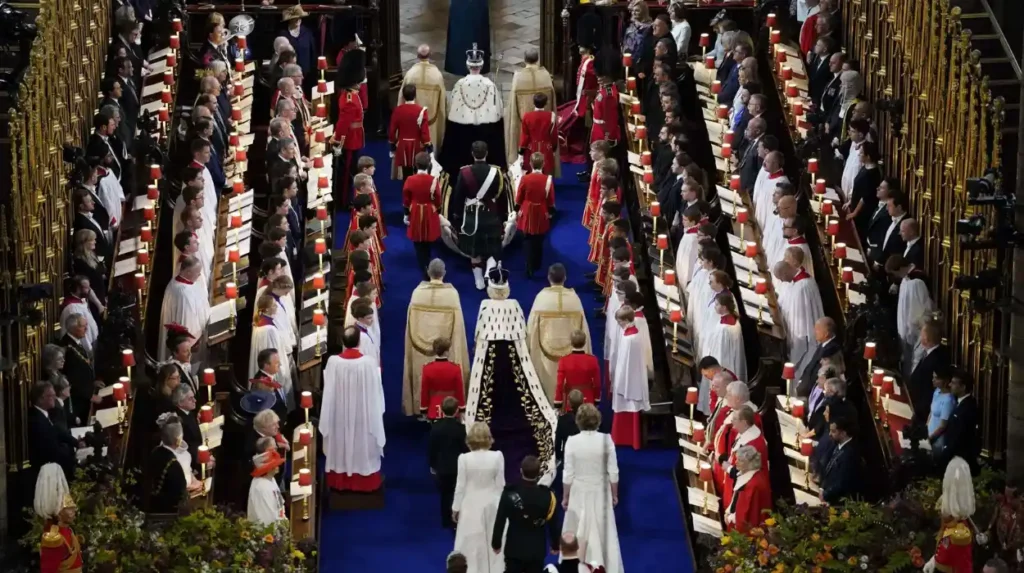
The coronation established a tradition that endured for nearly one thousand years. Since 1066, every coronation has taken place at Westminster Abbey except for 2 monarchs, Edward V and Edward VIII, who were never crowned.
The ceremony centres on the Coronation Chair, commissioned by King Edward I in 1296. The chair originally housed the Stone of Scone, an important Scottish symbol of monarchy.
Coronation rituals evolved through multiple eras, for example the medieval period, the Tudor era, and the modern constitutional monarchy. Despite changes, the essential elements of anointing, crowning, and oath-taking have remained remarkably consistent.
The coronation of King Charles III in 2023 demonstrated the continuing relevance of these traditions in the twenty-first century.
What architectural features make Westminster Abbey unique?
Westminster Abbey is one of the finest examples of Gothic architecture in Europe, combining medieval engineering, religious symbolism, royal patronage, and centuries of additions that illustrate the development of English architectural history.
The present structure owes much to King Henry III. In 1245, Henry initiated a major rebuilding project that replaced much of Edward the Confessor’s Romanesque church.
Inspired by French Gothic cathedrals, Henry commissioned a structure characterised by pointed arches, ribbed vaults, flying buttresses, and large stained-glass windows.
The resulting church became one of England’s earliest and most influential Gothic buildings.
Several architectural elements stand out.
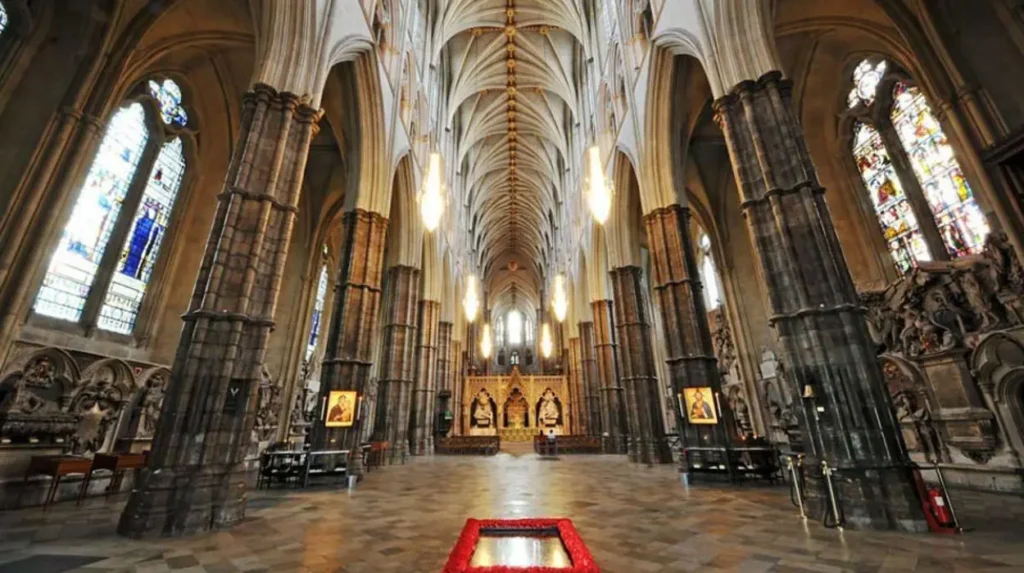
The nave reaches impressive heights and demonstrates advanced medieval engineering. The Chapter House features one of England’s most important surviving medieval tiled floors. The Lady Chapel, officially known as the Henry VII Chapel, contains elaborate fan vaulting regarded as a masterpiece of late Gothic design.
The abbey’s towers, completed in the eighteenth century by architects including Sir Christopher Wren and Nicholas Hawksmoor, illustrate how later generations continued to shape the building.
Architectural historians frequently identify Westminster Abbey as a visual record of English design across multiple eras, for example medieval Gothic, Tudor craftsmanship, and Georgian completion.
Who is buried in Westminster Abbey?
Westminster Abbey contains the graves and memorials of monarchs, political leaders, military figures, scientists, and writers, making it one of the world’s most important burial sites and a unique record of British national history.
Royal burials form the foundation of the abbey’s significance.
More than thirty monarchs are buried there. These include Edward the Confessor, Henry III, Edward I, Edward III, Richard II, Henry V, Edward VI, Mary I, Elizabeth I, and Mary Queen of Scots.
The abbey also contains important non-royal burials.
Sir Isaac Newton was buried in 1727. His monument reflects the growing prestige of scientific achievement during the Enlightenment. Charles Darwin was buried nearby in 1882, symbolising the recognition of scientific inquiry within national life.
Poets’ Corner contains memorials and graves associated with literary figures. These individuals include Geoffrey Chaucer, Edmund Spenser, Alfred Lord Tennyson, and Charles Dickens.
Military leaders, explorers, physicians, politicians, and reformers are also commemorated.
The diversity of those honoured reflects changing definitions of national achievement. Medieval recognition focused primarily on monarchy and religion. Later centuries expanded commemoration to include science, literature, exploration, and public service.
How did Westminster Abbey influence British political and religious history?
Westminster Abbey influenced British political and religious development by serving as a ceremonial centre for monarchy, a witness to constitutional change, and a prominent institution during major religious transformations across centuries.
The abbey’s history intersects with virtually every major period of British history.
During the Middle Ages, it benefited from royal patronage and monastic influence. During the Tudor period, the English Reformation transformed the religious landscape. King Henry VIII dissolved monasteries across England during the 1530s.
Westminster Abbey survived because of its royal importance.
In 1540 it briefly became a cathedral before later receiving its distinctive status as a Royal Peculiar.
The abbey witnessed political crises and transitions. Monarchs celebrated victories, marriages, and state ceremonies there. Funeral services marked the deaths of national leaders.
Throughout the constitutional developments of the seventeenth century, including the English Civil War and the Glorious Revolution, the abbey remained a visible symbol of continuity.
National commemorations expanded during later centuries. Memorials recognised military sacrifices from conflicts including the Napoleonic Wars, the First World War, and the Second World War.
One of the most significant additions was the Tomb of the Unknown Warrior, installed in 1920. It honours unidentified British soldiers killed during the First World War and has become a focal point of national remembrance.
What role does Westminster Abbey play in modern Britain?
Westminster Abbey remains an active church and national ceremonial venue that hosts royal events, state occasions, commemorative services, educational programmes, and millions of visitors while preserving nearly one thousand years of heritage.
The abbey continues to function as a place of worship. Daily services, religious festivals, and special ceremonies maintain its ecclesiastical role.
Its national functions remain equally important.
Major royal weddings have taken place there, including the marriage of Prince William and Catherine, Princess of Wales in 2011.
State funerals and memorial services attract global audiences. These events demonstrate how Westminster Abbey continues to connect historical traditions with contemporary public life.
Educational outreach programmes engage students, researchers, and heritage specialists. Archives, manuscripts, and architectural studies support ongoing scholarship.
Visitor numbers frequently exceed one million annually, making the abbey one of London’s most visited historic sites.
To experience this historic landmark in person today, consult our comprehensive Visiting Westminster Abbey: What to See Inside This Iconic Landmark for itineraries and visiting parameters.
The abbey’s continued use distinguishes it from many historic monuments. It remains a living institution rather than a preserved relic.
How has Westminster Abbey been preserved for future generations?
Westminster Abbey survives through continuous conservation, archaeological research, structural monitoring, and heritage management programmes that protect its architecture, collections, and historical significance for future generations.
Preservation efforts have been ongoing for centuries.
Medieval builders conducted repairs after fires and structural damage. Later generations restored stonework, stained glass, roofing systems, and monuments.
Modern conservation combines traditional craftsmanship with scientific analysis.
Specialists monitor environmental conditions that affect stone decay, metal corrosion, and manuscript preservation. Archaeological investigations contribute new understanding of the abbey’s development.
Important discoveries continue to emerge. Excavations and surveys have revealed evidence relating to earlier structures, monastic life, and construction phases.
UNESCO designated Westminster Abbey a World Heritage Site in 1987 alongside the Palace of Westminster and Saint Margaret’s Church. This recognition highlights its global cultural significance.
Conservation projects often focus on multiple priorities, for example structural stability, visitor management, and historical authenticity.
The challenge involves balancing public access with long-term preservation. Millions of visitors interact with a building originally designed for medieval worship. Heritage professionals therefore employ advanced conservation strategies while maintaining historical integrity.
What is the lasting legacy of Westminster Abbey?
Westminster Abbey’s enduring legacy lies in its unique combination of royal tradition, architectural excellence, religious significance, historical continuity, and national memory, making it one of the most influential heritage sites in the world.
Few buildings encapsulate the history of a nation as comprehensively as Westminster Abbey.
Its walls record the evolution of monarchy, religion, government, science, literature, and public remembrance. Coronations link contemporary monarchs to traditions established nearly one thousand years ago. Tombs and memorials preserve the achievements of generations that shaped Britain and influenced global history.
The abbey also demonstrates the value of cultural preservation. Successive generations invested resources, expertise, and political support to maintain the site. Those efforts allow modern visitors and researchers to engage directly with the physical remains of the past.
For historians, Westminster Abbey provides evidence of medieval kingship, Gothic architecture, religious transformation, and national identity. For educators, it offers a tangible framework for teaching British history. For visitors, it presents one of the clearest connections between the modern world and nearly a millennium of historical development.
From the reign of Edward the Confessor in the eleventh century to contemporary royal ceremonies, Westminster Abbey has remained at the centre of British public life. Its significance extends beyond London and beyond Britain. It stands as a global symbol of historical continuity, cultural heritage, and the enduring relationship between memory and place.
Nearly one thousand years after its rise to prominence, Westminster Abbey continues to define how the story of Britain is remembered, preserved, and understood.
What is Westminster Abbey?
Westminster Abbey is a historic royal church in London that has served as the coronation church of English and British monarchs since 1066. It is also a major burial site, place of worship, and UNESCO World Heritage Site.