Kensington is one of London’s most important cultural and historic districts. Its museums, gardens, monuments, and royal residences form a concentrated record of British monarchy, Victorian architecture, scientific development, artistic education, and landscape design. The area developed from a suburban royal retreat into an internationally recognised centre of culture during the nineteenth century.
- Why is Kensington one of London’s most important cultural and historic districts?
- How did Kensington Palace become a major royal residence?
- What is the historical importance of Kensington Gardens?
- Which royal and Victorian landmarks define Kensington Gardens?
- How did the Great Exhibition of 1851 transform South Kensington?
- Why is the Victoria and Albert Museum central to Kensington’s history?
- What makes the Natural History Museum a landmark of Victorian science?
- How did the Science Museum develop from Victorian technological education?
- What role does the Royal Albert Hall play in Kensington’s Victorian heritage?
- How can visitors understand Kensington as one connected historical landscape?
- Why does Kensington remain important for historical preservation and future research?
- What makes Kensington a complete destination for museums, gardens, and royal history?
- Frequently Asked Question
The modern identity of Kensington rests on two connected historical landscapes. The first is the royal landscape centred on Kensington Palace and Kensington Gardens. The second is South Kensington, where the legacy of the Great Exhibition of 1851 created a major concentration of museums, educational institutions, and cultural buildings.
Together, these places provide a chronological route through more than three centuries of British history. Visitors encounter the Stuart monarchy through Kensington Palace, Georgian landscape planning in Kensington Gardens, Victorian imperial ambition at the Victoria and Albert Museum, scientific collecting at the Natural History Museum, and technological education at the Science Museum.
The district also demonstrates how public institutions transformed London. Royal land became accessible public space. Private collections became national museums. Exhibition buildings developed into permanent educational institutions. Victorian architecture became protected heritage.
Why is Kensington one of London’s most important cultural and historic districts?
Kensington is historically important because it combines a royal palace, 107 hectares of historic gardens, major national museums, Victorian monuments, and educational institutions shaped by the Great Exhibition of 1851, creating one of Britain’s most concentrated cultural heritage landscapes.
Kensington developed in stages rather than through a single historical event. Its earliest importance came from royal residence and land ownership. Its international cultural importance expanded dramatically during the Victorian period, particularly after Prince Albert and other reformers promoted the Great Exhibition as a programme for education, industry, design, and scientific progress.
The district therefore contains several connected historical eras, including the Stuart monarchy, represented by William III and Mary II; the Georgian period, represented by Queen Caroline’s landscape planning; and the Victorian era, represented by the Great Exhibition, the Albert Memorial, and South Kensington’s museum complex.
The relationship between these eras remains visible in the modern landscape. Kensington Palace stands beside gardens originally shaped for royal use. Exhibition Road connects institutions created through Victorian cultural policy. The Royal Albert Hall and Albert Memorial preserve the public memory of Prince Albert’s influence on nineteenth-century Britain.
South Kensington became especially important after the Great Exhibition of 1851. The exhibition attracted an estimated six million visitors and generated a surplus that supported the development of educational and cultural institutions in the surrounding area. The Victoria and Albert Museum identifies this transformation as central to the history of its South Kensington site.
This concentration of institutions explains why Kensington remains significant for historians, educators, architectural researchers, genealogists, and cultural tourists. The district provides physical evidence of changes in monarchy, public education, collecting, urban planning, and national identity.
How did Kensington Palace become a major royal residence?
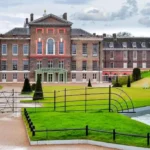
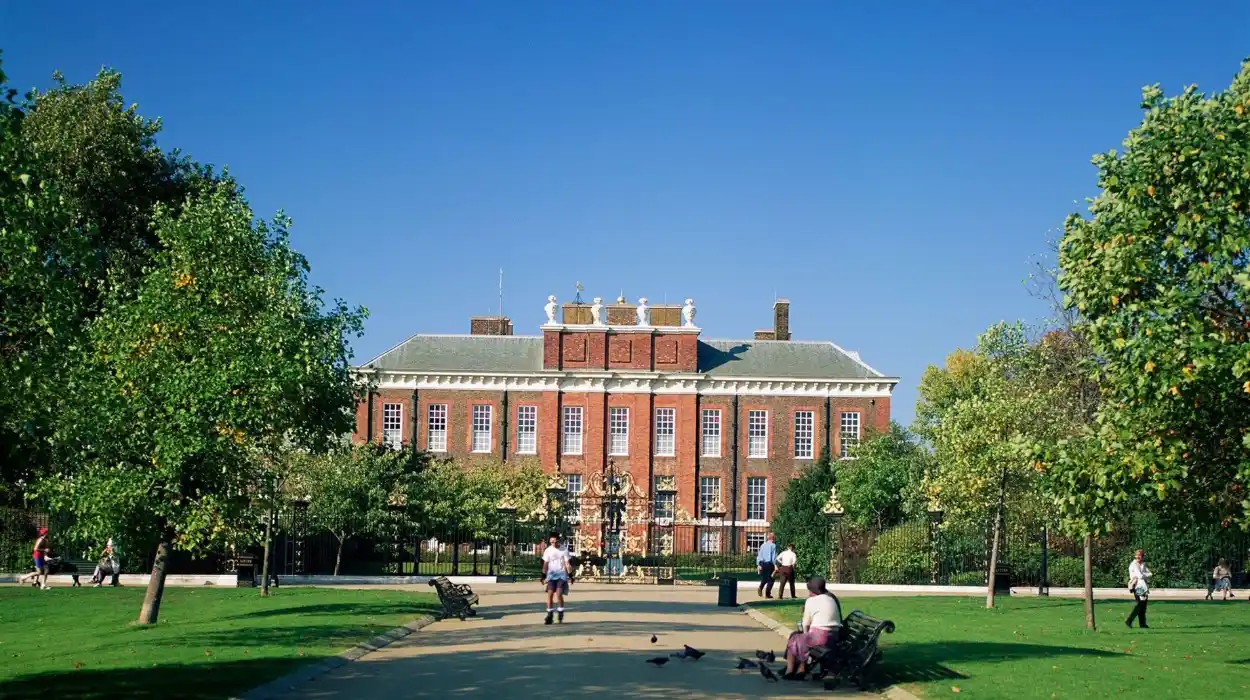
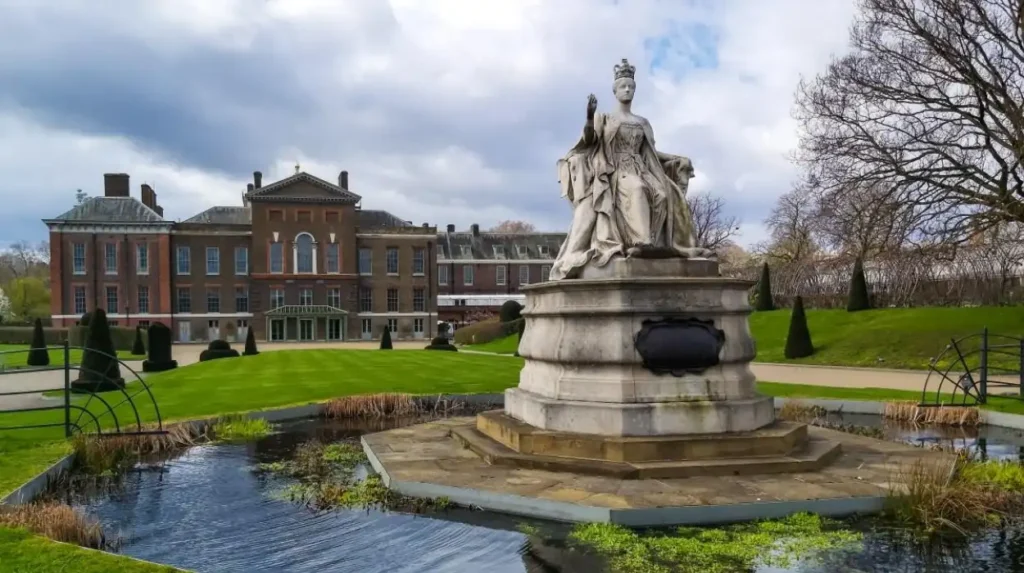
Kensington Palace became a major royal residence after William III and Mary II acquired Nottingham House in 1689 and transformed it into a palace, establishing a royal centre later associated with Stuart monarchs, Georgian rulers, and Queen Victoria’s childhood.
The site was originally occupied by Nottingham House, a relatively modest suburban mansion. William III and Mary II sought a residence away from the increasingly unhealthy conditions of central London while remaining close enough to government and Parliament.
In 1689, the royal couple commissioned Sir Christopher Wren to transform Nottingham House into Kensington Palace. The monarchs moved into the completed residence on Christmas Eve 1689. The decision permanently changed Kensington’s historical status.
The palace became particularly important during the Stuart and Georgian periods. Successive monarchs altered its architecture, interiors, and surrounding landscape. Royal residences were not simply private homes. They were administrative and ceremonial spaces where court life, political relationships, and dynastic succession operated.
Queen Caroline, the wife of George II, became especially influential in shaping both the palace environment and Kensington Gardens. Her interventions connected royal architecture with a changing approach to landscape design.
Kensington Palace is also closely associated with Queen Victoria. She was born at the palace in 1819 and spent her childhood there before becoming queen in 1837. Her personal connection gave Kensington a permanent place in the history of the British monarchy. Historic Royal Palaces identifies the building as a royal home shaped by Stuart and Georgian monarchs and later associated with Victoria and other members of the royal family.
The palace therefore preserves evidence of changing royal priorities. William III and Mary II required a practical retreat near London. Georgian monarchs developed the palace and gardens into a fashionable court environment. Victoria’s childhood transformed the site into a major location in the history of nineteenth-century monarchy.
What is the historical importance of Kensington Gardens?
Kensington Gardens are historically important because they evolved from royal hunting land into a formal palace landscape, Georgian designed park, Victorian commemorative setting, and public garden covering approximately 107 hectares beside Kensington Palace and Hyde Park.
Kensington Gardens originated as part of the wider landscape associated with Hyde Park. During the sixteenth century, the land formed part of King Henry VIII’s hunting territory.
The decisive transformation began in 1689. William III and Mary II established Kensington Palace beside the park and separated part of Hyde Park to create gardens associated with their new residence. Queen Mary introduced formal garden design influenced by Dutch traditions, including organised flower beds and structured planting.
The Georgian period introduced another major transformation. In 1728, Queen Caroline worked with landscape designer Charles Bridgeman to reshape the gardens. Their work reflected changing attitudes toward landscape architecture.
One of the most significant features was the creation of the Serpentine, an artificial body of water designed to appear more natural than earlier formal water features. The landscape also incorporated the ha-ha, a recessed boundary ditch that separated spaces without blocking views.
This design principle became historically significant because it replaced visible fencing with a concealed boundary. The landscape therefore maintained open visual perspectives while controlling movement between different areas.
Kensington Gardens also demonstrate changing access to public space. For much of the eighteenth century, the gardens remained closed to the general public. Public access expanded during the nineteenth century, although early rules regulated who could enter and how visitors were expected to behave.
The gardens now cover approximately 107 hectares, or 265 acres. Their landscape includes the Round Pond, formal avenues, the Italian Gardens, the Albert Memorial setting, and extensive tree-lined walks.
The historical importance of the gardens lies in this transformation from exclusive royal land into public heritage space. The physical landscape records changing relationships between monarchy, urban recreation, landscape architecture, and public access.
Which royal and Victorian landmarks define Kensington Gardens?
Kensington Gardens contain major royal and Victorian landmarks, including Kensington Palace, the Italian Gardens, the Albert Memorial, the Round Pond, and the Peter Pan statue, preserving evidence of monarchy, landscape design, commemoration, literature, and public recreation.
The Italian Gardens represent Queen Victoria’s nineteenth-century Kensington. Prince Albert gave the gardens to Queen Victoria as a reminder of Italian-style gardens associated with the royal family’s experiences on the Isle of Wight.
The gardens remain an important example of formal Victorian landscape design. Their fountains, stonework, and symmetrical arrangement contrast with the more naturalistic landscape principles introduced during the Georgian period.
The Albert Memorial provides another major historical landmark. Prince Albert died in 1861, creating a profound personal and political loss for Queen Victoria. The memorial was commissioned as a monumental tribute to his life and public work.
Architect Sir George Gilbert Scott designed the monument in an elaborate Gothic Revival style. The memorial presents Prince Albert holding a catalogue connected with the Great Exhibition of 1851, one of the projects most closely associated with his public career.
The Peter Pan statue represents Kensington’s connection with literary history. Author J. M. Barrie developed his association with the gardens through visits to the area, and a bronze statue of Peter Pan was installed in 1912.
These monuments represent different forms of historical memory. The Italian Gardens commemorate royal domestic life. The Albert Memorial commemorates a national figure connected with Victorian reform and culture. The Peter Pan statue preserves the relationship between London landscape and literary imagination.
The combination gives Kensington Gardens an unusual historical density. A visitor moves through royal history, landscape architecture, Victorian commemoration, and twentieth-century cultural heritage within one continuous public landscape.
How did the Great Exhibition of 1851 transform South Kensington?
The Great Exhibition of 1851 transformed South Kensington by generating financial resources and political momentum for museums and educational institutions, establishing a permanent cultural district dedicated to art, design, science, technology, and public education.
The Great Exhibition opened in Hyde Park in 1851. It displayed manufactured goods, industrial products, scientific developments, and cultural objects from Britain and other countries.
Prince Albert played a central role in supporting the exhibition, while civil servant Henry Cole helped develop its educational and organisational objectives. The exhibition demonstrated Victorian Britain’s confidence in industry, manufacturing, international trade, and technological progress.
The exhibition attracted approximately six million visitors. The Victoria and Albert Museum records that this represented an extraordinary scale of public participation for nineteenth-century Britain.
Its long-term significance extended beyond the temporary Crystal Palace structure. Financial resources and institutional planning helped establish a permanent cultural district in South Kensington.
The South Kensington Museum opened in 1857 and later developed into the Victoria and Albert Museum. Other institutions associated with the wider district included scientific, educational, and artistic organisations.
The result became one of Britain’s most significant examples of planned cultural infrastructure. Museums were positioned near educational institutions so that collections, teaching, research, and public learning could operate within the same geographical area.
This Victorian planning legacy remains visible along Exhibition Road. The Victoria and Albert Museum, Natural History Museum, Science Museum, Royal Albert Hall, and nearby educational institutions form a concentrated cultural landscape rooted in nineteenth-century reform.
To experience this historic cultural district in person today, consult our comprehensive [How Kensington Developed Into London’s Prestigious Royal Residential District] for itineraries and visiting parameters.
Why is the Victoria and Albert Museum central to Kensington’s history?
The Victoria and Albert Museum is central to Kensington because it developed from Victorian efforts to improve British design and manufacturing, becoming a national museum whose collection spans more than 5,000 years and over 2.8 million objects.
The institution was founded in 1852 as the Museum of Manufactures. It developed shortly after the Great Exhibition and reflected concerns about improving standards of British design and industrial production.
Henry Cole became one of the key figures in its early development. The museum changed names several times before becoming established at South Kensington.
It moved to its current area in 1857 as the South Kensington Museum. In 1899, Queen Victoria laid the foundation stone for new buildings, and the institution was renamed the Victoria and Albert Museum in honour of Victoria and Prince Albert.
The museum’s historical purpose distinguished it from institutions focused exclusively on fine art. Its collections addressed design, decorative arts, architecture, fashion, textiles, sculpture, and manufactured objects.
Today, the V&A describes its national collection as containing more than 2.8 million objects and representing more than 5,000 years of creativity.
The museum’s architecture also records its institutional history. Different buildings and extensions represent successive phases of Victorian and modern museum development.
For historians and researchers, the V&A provides evidence of changing attitudes toward craftsmanship and design. Its collections preserve objects that document domestic life, industrial production, artistic techniques, fashion, religious practice, and international cultural exchange.
The museum therefore remains directly connected to the original Victorian ambition behind South Kensington: public institutions should support education by making important collections available for study and interpretation.
What makes the Natural History Museum a landmark of Victorian science?
The Natural History Museum is a landmark of Victorian science because it opened in 1881 to house expanding national collections, combining Richard Owen’s scientific vision with Alfred Waterhouse’s Romanesque architecture and extensive natural-history decoration.
The museum’s institutional origins extend back to Sir Hans Sloane, whose collection of more than 71,000 items was acquired by Parliament after his death in 1753. The collection helped form the foundation of the British Museum.
By the nineteenth century, the natural history collections had grown beyond the available space. Scientific exploration and imperial collecting produced increasing numbers of specimens.
Sir Richard Owen, superintendent of the natural history departments, argued for a separate building. Owen is also historically associated with introducing the term “dinosaur” in scientific classification.
The project gained approval, and architect Francis Fowke initially won the design competition in 1864. After Fowke’s death in 1865, Alfred Waterhouse took responsibility for the architectural design.
Waterhouse created a distinctive building using terracotta, a material chosen partly for its resistance to London’s polluted Victorian atmosphere. The architecture combined Romanesque forms with extensive representations of plants and animals.
The museum opened on 18 April 1881.
Owen described his institutional ambition as a “cathedral to nature.” The phrase reflected the museum’s educational purpose. Natural history collections were intended to be accessible beyond elite scientific circles.
The building itself functions as part of the collection. Waterhouse incorporated representations of living and extinct species into the architectural decoration. Extinct species appear prominently on one side of the building and living species on the other, creating a physical classification system within the architecture.
The Natural History Museum therefore represents the relationship between Victorian science, public education, architecture, collecting, and scientific classification.
How did the Science Museum develop from Victorian technological education?
The Science Museum developed from institutions created after the Great Exhibition of 1851, preserving Britain’s industrial and scientific heritage while expanding the South Kensington cultural district’s original mission of technical education and public knowledge.
The history of the Science Museum is directly connected with the institutional changes created by the Great Exhibition.
The exhibition demonstrated the importance Victorian Britain placed on industrial production and technological development. Prince Albert and other reformers supported the creation of institutions that would improve education and encourage innovation.
Early scientific and technological collections operated within the wider South Kensington Museum environment. Machinery collections and educational objects gradually developed into a separate institutional identity.
The Science Museum’s own historical records trace its origins to the cultural and educational developments that followed the Great Exhibition and the establishment of the South Kensington Museum in 1857.
This development demonstrates an important historical process. Museums increasingly became specialised institutions.
Art and design collections developed along one path through the Victoria and Albert Museum. Natural science collections developed through the Natural History Museum. Technology, engineering, and scientific objects developed through the Science Museum.
These separate institutions remained geographically connected. Their proximity created a cultural ecosystem rather than isolated buildings.
The Science Museum therefore represents the technological dimension of Victorian South Kensington. Its historical foundation reflects the belief that scientific knowledge and industrial development required public education and accessible collections.
What role does the Royal Albert Hall play in Kensington’s Victorian heritage?
The Royal Albert Hall represents Victorian cultural ambition and Prince Albert’s educational legacy, forming part of the South Kensington development programme that connected public performance, scientific learning, artistic education, and national commemoration within one planned district.
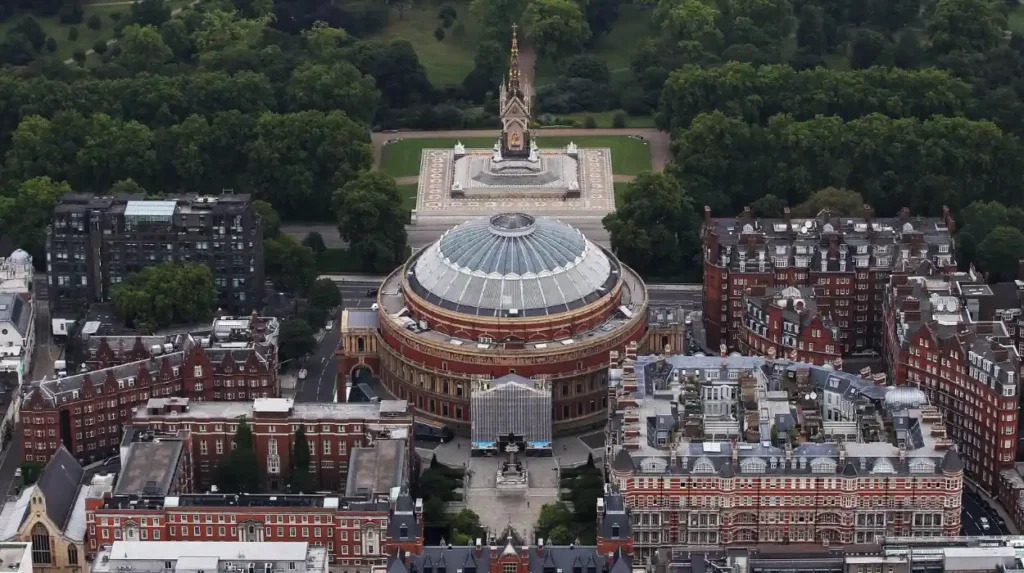
The Royal Albert Hall occupies a prominent position beside Kensington Gardens and the Albert Memorial. Its location reinforces the geographical relationship between royal commemoration and Victorian cultural development.
The hall was created during the wider programme of institutions associated with Prince Albert’s ambitions for public education and cultural improvement.
Its architectural presence transformed the northern edge of South Kensington into a monumental cultural setting. The building also established a permanent venue for concerts, ceremonies, lectures, and public events.
The relationship between the Royal Albert Hall and the Albert Memorial is historically significant. Both structures preserve Prince Albert’s legacy, but they perform different commemorative functions.
The memorial presents a monumental visual tribute. The hall represents the practical continuation of cultural and educational programmes associated with Victorian reform.
This combination illustrates a broader feature of nineteenth-century Britain: commemoration frequently combined architecture with institutional purpose.
The Royal Albert Hall remains part of Kensington’s wider historical landscape because it connects the royal history of the gardens with the museum and educational development of South Kensington.
How can visitors understand Kensington as one connected historical landscape?
Visitors can understand Kensington as one connected historical landscape by following its chronological development from royal residence and private gardens through Georgian landscape reform to Victorian museums, monuments, scientific institutions, and public cultural infrastructure.
The most effective historical interpretation begins with geography.
Kensington Palace represents the royal foundation of the district. Kensington Gardens show how royal land was redesigned across the Stuart, Georgian, and Victorian periods.
Moving east and south introduces the nineteenth-century transformation of South Kensington. The Great Exhibition created the political and institutional momentum that produced major museums and educational buildings.
This geographical progression also creates a chronological progression.
The late seventeenth century appears at Kensington Palace through William III and Mary II.
The eighteenth century appears through Queen Caroline and the landscape of Kensington Gardens.
The nineteenth century dominates South Kensington through the Great Exhibition, Prince Albert’s legacy, the Albert Memorial, the Victoria and Albert Museum, the Natural History Museum, and the Science Museum.
This sequence makes Kensington particularly useful for educational visits. The district demonstrates historical continuity through physical structures rather than disconnected historical descriptions.
Architectural preservation strengthens this value. Victorian buildings remain active institutions. Royal landscapes remain public spaces. Museums continue to preserve and interpret collections that originated in earlier systems of collecting and research.
The Natural History Museum also preserves historical evidence within its grounds and archives, including architectural plans associated with Richard Owen and Alfred Waterhouse. Its documented landscape history shows how even museum gardens changed through successive stages of construction, access, and public use.
Why does Kensington remain important for historical preservation and future research?
Kensington remains important for preservation and research because its surviving buildings, gardens, collections, archives, monuments, and royal spaces document changing British institutions while providing physical evidence for architectural, scientific, social, cultural, and genealogical research.
Kensington’s historical value extends beyond tourism.
Its museums preserve primary objects. Its archives preserve records. Its architecture preserves evidence of construction methods and institutional priorities. Its gardens preserve changing approaches to landscape management.
These resources support several research disciplines, including architectural history, represented by Sir Christopher Wren and Alfred Waterhouse; museum studies, represented by the development of public collections; and landscape history, represented by Queen Caroline’s redesign of Kensington Gardens.
Genealogical researchers also benefit from Kensington’s wider institutional history. Royal households, museum staff, architects, artists, scientists, civil servants, and construction workers formed communities connected with the district’s development.
The area demonstrates how historical preservation operates through continued use. Kensington Palace remains a royal historic site. Kensington Gardens remain accessible public landscape. Museums continue collecting, researching, conserving, and educating.
The long-term importance of Kensington therefore lies in continuity.
The district did not become a historical site after its institutions stopped functioning. Its major structures continue to perform cultural roles while preserving evidence of earlier periods.
The V&A continues its work around design and creativity. The Natural History Museum continues scientific research and public education. The Science Museum continues interpreting scientific and technological history. Kensington Gardens remain a major historic landscape within London.
This combination gives Kensington exceptional value for future historical research.
What makes Kensington a complete destination for museums, gardens, and royal history?
Kensington offers a complete historical destination because one connected district contains royal residences, historic gardens, Victorian museums, scientific collections, commemorative monuments, and cultural institutions that document Britain’s development from seventeenth-century monarchy through modern public education.
Kensington’s importance comes from connection.
Kensington Palace explains the royal origins of the area. Kensington Gardens explain how monarchy shaped London’s landscape. The Great Exhibition explains the Victorian transformation of nearby South Kensington.
The Victoria and Albert Museum records the development of art and design education. The Natural History Museum records scientific collecting and classification. The Science Museum records technological development and industrial knowledge.
The Albert Memorial and Royal Albert Hall preserve Prince Albert’s connection with Victorian cultural reform.
These places should therefore be understood as parts of a single historical system.
The system developed over centuries, but its central themes remain consistent: monarchy, education, public access, architecture, science, design, and preservation.
For history enthusiasts, Kensington provides a concentrated record of British historical change. For cultural tourists, it provides major national institutions within a connected urban landscape. For educators and students, it provides direct evidence of how museums, public parks, royal residences, and cultural institutions developed.
Kensington also demonstrates a fundamental change in London’s history. Land and institutions once associated primarily with royal privilege and elite collecting increasingly became accessible to wider audiences.
That transformation remains visible in every part of the district.
A royal hunting landscape became public gardens. A suburban mansion became a historic royal palace. Victorian collections became national museums. The legacy of a temporary international exhibition became a permanent cultural district.
For that reason, Kensington remains one of London’s clearest historical landscapes. Its museums, gardens, and royal attractions do not represent separate destinations. Together, they document the development of modern Britain’s cultural infrastructure across more than three centuries.
Frequently Asked Question
What historical periods are represented in Kensington?
Kensington represents several important periods, including the Tudor era through royal hunting grounds, the Stuart period through Kensington Palace, the Georgian era through landscape redesign, and the Victorian era through museums and monuments.