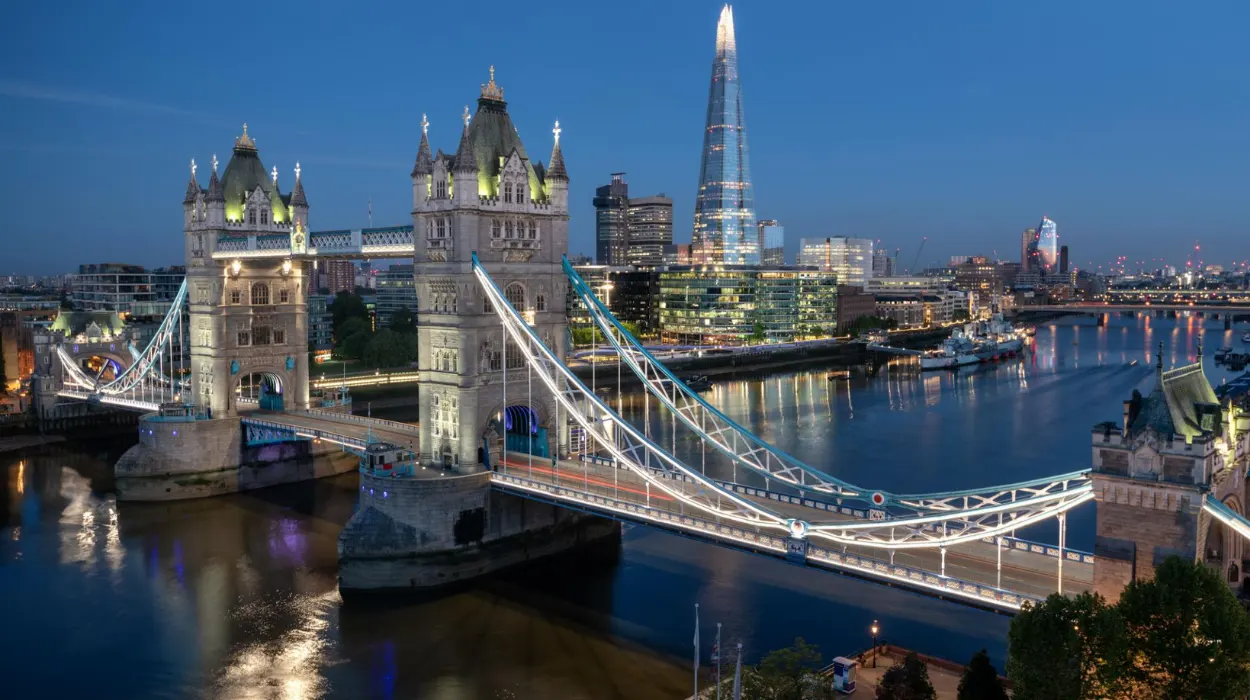
Walking across Tower Bridge combines Victorian engineering, panoramic Thames views, elevated glass walkways, and access to one of London’s most important historic landmarks. The experience allows visitors to explore the bridge both as a working transport structure and as a preserved piece of British heritage.
- What is the history behind Tower Bridge?
- How does Tower Bridge’s architecture reflect Victorian engineering?
- What can visitors see from the glass walkways?
- How do the views from Tower Bridge compare with other London viewpoints?
- What happens inside the Victorian Engine Rooms?
- How has Tower Bridge been preserved for future generations?
- Why does Tower Bridge remain important in modern London?
- What makes crossing Tower Bridge a meaningful historical experience today?
Tower Bridge stands among the most recognisable landmarks in London. Spanning the River Thames between the City of London and Southwark, the bridge functions as both a vital transport route and a major cultural attraction. Since opening in 1894, it has connected communities on both sides of the river while serving as a symbol of London’s industrial and architectural achievements.
Unlike many historic bridges, Tower Bridge offers two distinct visitor experiences. The first is the public roadway crossing used daily by pedestrians, cyclists, and vehicles. The second is the visitor attraction housed within the bridge’s towers and high-level walkways. Together, these experiences provide insight into Victorian engineering, urban development, and modern heritage conservation.
The bridge occupies a strategic location adjacent to the historic Tower of London. This position allows visitors to observe several centuries of London’s development from a single vantage point. The surrounding landscape includes modern skyscrapers, medieval fortifications, commercial docks, and residential districts.
For visitors seeking historical context before exploring the structure, consult our comprehensive The History of Tower Bridge: Victorian Engineering and London’s River Transformation for itineraries and visiting parameters.
Today, millions of visitors cross Tower Bridge annually, making it one of the most visited historic structures in the United Kingdom. Its combination of practical function and educational interpretation contributes to its enduring significance.
What is the history behind Tower Bridge?
Tower Bridge was constructed between 1886 and 1894 to improve river crossings in East London while preserving navigation along the Thames. Its bascule design allowed ships to pass while supporting growing road traffic during the Victorian era.
The need for a new Thames crossing emerged during the nineteenth century as London’s population expanded rapidly. By the 1870s, commercial activity east of London Bridge had increased substantially. Existing crossings struggled to accommodate growing numbers of workers, residents, and goods.
In 1877, the City of London Corporation established a special committee to examine potential solutions. More than fifty designs were submitted during the planning process. The selected proposal came from architect Sir Horace Jones and engineer Sir John Wolfe Barry.
Construction began in 1886. Approximately 432 workers participated in the project over eight years. The bridge required more than 11,000 tons of steel framework, which was subsequently encased in Cornish granite and Portland stone. These materials provided protection while creating the bridge’s distinctive appearance.
Tower Bridge officially opened on 30 June 1894. The ceremony was attended by the future King Edward VII and Queen Alexandra. The completed structure measured approximately 244 metres in length and featured two towers rising about 65 metres above the river.
Its innovative design allowed vessels to continue navigating London’s busy commercial waterways. This balance between transportation needs and maritime commerce reflected the economic priorities of late Victorian Britain.
How does Tower Bridge’s architecture reflect Victorian engineering?
Tower Bridge reflects Victorian engineering through its steel skeleton, Gothic Revival appearance, hydraulic lifting system, and combination of functionality and monumentality. The structure demonstrates how nineteenth-century engineers integrated industrial technology with civic architectural design.
Victorian Britain was a global leader in engineering and infrastructure development. Railways, ports, tunnels, and bridges transformed urban environments across the country. Tower Bridge emerged from this context of technological innovation.
The bridge’s structural framework consists primarily of steel. During construction, steel represented one of the most advanced building materials available. Its strength allowed engineers to create large spans capable of supporting substantial traffic loads.
Architecturally, the bridge adopts a Gothic Revival style. This design choice was intended to harmonise with the nearby Tower of London, a medieval fortress dating largely from the eleventh century onward. Decorative towers, pointed arches, and stone cladding help the bridge integrate with the historic setting.
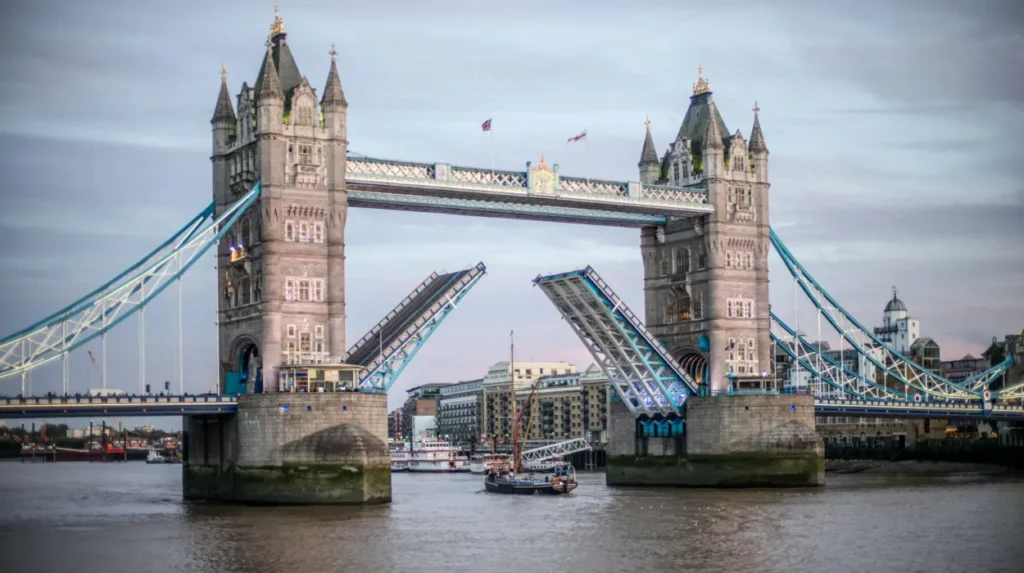
The bridge combines several engineering systems. Suspension elements support the approaches, while the central bascules open for river traffic. This hybrid design solved complex transportation challenges without obstructing navigation.
Victorian infrastructure projects frequently emphasised civic identity. Tower Bridge therefore functioned not only as transportation infrastructure but also as a statement of London’s status as a leading global city.
The bridge remains one of the most important surviving examples of nineteenth-century urban engineering in Europe.
What can visitors see from the glass walkways?
The glass walkways provide elevated views approximately 42 metres above the Thames, allowing visitors to observe river traffic, city landmarks, and the bridge roadway below. They offer a unique perspective unavailable from street level or nearby riverside locations.
The high-level walkways were originally designed to allow pedestrians to cross the river while the bascules were raised. However, they received limited public use and eventually closed in 1910.
During the twenty-first century, heritage restoration projects transformed the walkways into a major visitor attraction. In 2014, glass floor sections were installed to create a new viewing experience.
Visitors standing on the transparent panels can observe traffic moving beneath their feet. Cars, buses, cyclists, and pedestrians appear directly below, creating a dramatic visual connection between the bridge’s upper and lower levels.
The elevated position also provides extensive views across central London. Visible landmarks include the Tower of London, City Hall, riverfront developments, and major skyscrapers in the financial district.
The Thames itself becomes a focal point from this height. Visitors can observe river vessels, commuter services, tourist boats, and cargo traffic moving through one of the world’s most historically significant waterways.
The glass walkways additionally provide opportunities to understand the bridge’s engineering layout. Structural components, tower interiors, and mechanical features become more visible from the elevated observation areas.
How do the views from Tower Bridge compare with other London viewpoints?
Tower Bridge offers closer views of the Thames and historic riverfront than many elevated observation platforms. Its location combines medieval, Victorian, and modern landmarks within a compact visual landscape that illustrates London’s historical evolution.
London contains numerous observation points, including towers, monuments, and skyscrapers. Tower Bridge occupies a distinctive position among them because of its relatively low height and central riverside location.
Many modern observation decks emphasise panoramic citywide views. Tower Bridge instead focuses on detailed perspectives of London’s historic core. Visitors can examine architectural transitions spanning nearly one thousand years.
To the west, the skyline reflects London’s financial and governmental development. To the east, regenerated docklands illustrate modern economic transformation. Nearby medieval structures provide evidence of the city’s earlier phases.
The bridge also allows visitors to observe the Thames as an active transport corridor. Unlike static viewpoints, the river landscape constantly changes through vessel movements, tides, and weather conditions.
Photographers frequently value the location because it offers balanced perspectives of historic and contemporary London. This visual diversity contributes significantly to the bridge’s popularity among tourists, researchers, and educators.
The combination of river, architecture, infrastructure, and urban activity creates a comprehensive representation of London’s historical and geographical character.
What happens inside the Victorian Engine Rooms?
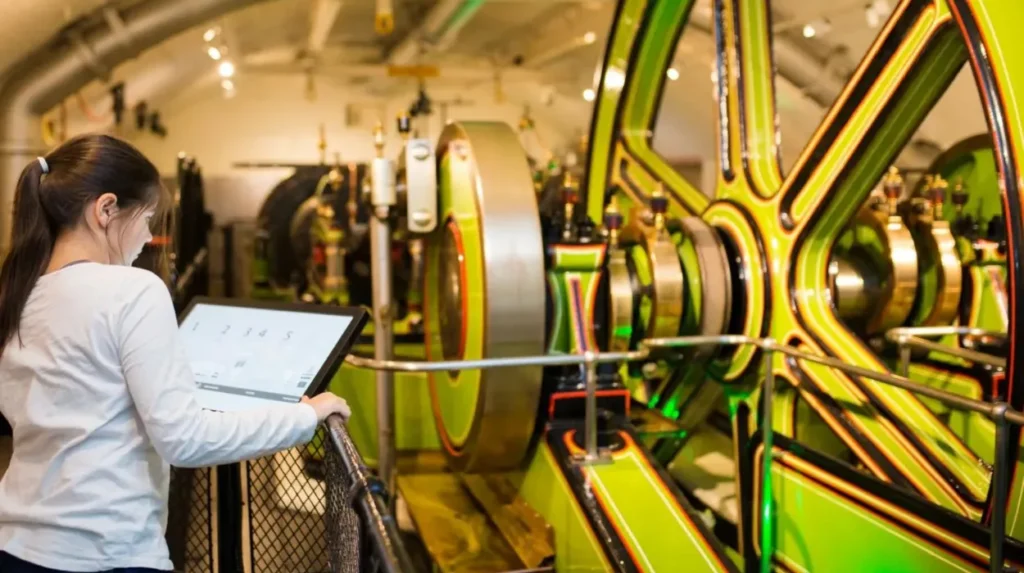
The Victorian Engine Rooms preserve the machinery that powered Tower Bridge’s original lifting mechanism. Visitors can examine steam-powered systems, hydraulic technology, and engineering equipment that operated the bridge from 1894 until the twentieth century.
The Engine Rooms form a critical part of the visitor experience because they explain how the bridge functioned mechanically. Without these facilities, the structure’s technological significance would be difficult to understand fully.
Originally, steam engines generated power for hydraulic accumulators. These systems stored pressurised water used to raise and lower the bridge bascules.
The machinery represented advanced engineering for its period. Operators could open the bridge efficiently while maintaining reliable transportation links across the river.
Steam-powered equipment remained in operation for decades. During the twentieth century, technological upgrades gradually modernised the bridge’s mechanical systems. In 1976, the original steam-driven hydraulics were replaced by electrically powered mechanisms.
Preservation efforts retained substantial portions of the historic machinery. Today, visitors can view engines, boilers, accumulators, drive shafts, and associated equipment.
Interpretive displays explain how these systems worked together. Educational materials also place the machinery within broader developments in Victorian industrial technology.
The Engine Rooms demonstrate the practical application of engineering innovation during an era when Britain invested heavily in infrastructure and industrial growth.
How has Tower Bridge been preserved for future generations?
Tower Bridge has been preserved through continuous maintenance, heritage protection, restoration projects, and public education initiatives. These efforts ensure the bridge remains operational while safeguarding its architectural, historical, and engineering significance.
Historic infrastructure requires ongoing conservation to remain functional and authentic. Tower Bridge presents particular challenges because it continues to serve modern transportation needs while attracting large numbers of visitors.
Regular maintenance addresses structural wear, environmental exposure, and operational requirements. Engineers inspect steel components, stone cladding, mechanical systems, and roadway surfaces.
Heritage conservation projects aim to preserve original materials whenever possible. Restoration work often involves detailed research into historic construction methods and architectural features.
The bridge benefits from legal protections that recognise its national importance. Heritage regulations guide alterations and ensure preservation standards remain consistent.
Several major restoration programmes have occurred during the bridge’s history. These projects have included repainting campaigns, mechanical upgrades, stone conservation, and visitor facility improvements.
Public interpretation also contributes to preservation. Educational exhibitions help visitors understand why historic structures deserve long-term protection. Increased awareness supports conservation funding and policy development.
Tower Bridge therefore functions as both a transportation asset and a living heritage resource.
Why does Tower Bridge remain important in modern London?
Tower Bridge remains important because it continues serving transportation, tourism, education, and heritage functions simultaneously. The bridge connects modern London with its Victorian past while remaining one of the city’s most internationally recognised landmarks.
More than a century after opening, Tower Bridge continues to accommodate daily traffic. Its bascules still open for qualifying vessels, preserving a historic operational tradition rarely maintained elsewhere.
The bridge contributes significantly to London’s tourism economy. Visitors from around the world recognise its distinctive profile and associate it with British history and culture.
Educational institutions frequently use the bridge as a case study in engineering, architecture, urban planning, and heritage management. Its preservation provides tangible evidence of Victorian innovation.
The structure also illustrates broader themes in London’s development. These themes include industrialisation, transportation expansion, river commerce, and urban growth. Examples include nineteenth-century dock expansion, twentieth-century infrastructure modernisation, and twenty-first-century heritage regeneration.
Researchers examining family histories often encounter records connected to the bridge’s construction workforce. Genealogical studies continue to reveal information about labourers, engineers, craftsmen, and administrators involved in the project.
Tower Bridge remains visually prominent in media, tourism campaigns, educational publications, and cultural events. This visibility reinforces its role as a symbol of London itself.
Its continued operation demonstrates that historic infrastructure can remain relevant when supported by effective conservation and adaptive management.
What makes crossing Tower Bridge a meaningful historical experience today?
Crossing Tower Bridge allows visitors to experience an operational Victorian landmark while observing London’s historical layers from a unique vantage point. The bridge connects engineering heritage, urban history, and contemporary city life within a single accessible location.
Many historic monuments exist primarily as preserved artefacts. Tower Bridge differs because it remains an active part of London’s transportation network. Visitors therefore experience history within a functioning environment rather than a purely museum setting.
Walking across the bridge reveals how Victorian planners responded to practical urban challenges. The structure continues performing the purpose for which it was originally designed, illustrating the durability of nineteenth-century engineering solutions.
The glass walkways add a modern interpretive dimension while preserving historical authenticity. Visitors gain perspectives that highlight both the original design and contemporary conservation efforts.
The surrounding landscape further enriches the experience. Medieval fortifications, Victorian infrastructure, twentieth-century redevelopment, and twenty-first-century architecture coexist within the same visual field.
This concentration of historical evidence makes Tower Bridge particularly valuable for heritage education. Visitors can observe connections between engineering, commerce, governance, and urban expansion.
As a result, walking across Tower Bridge offers more than scenic views. It provides direct engagement with one of Britain’s most significant engineering achievements and a deeper understanding of London’s transformation across successive centuries.
For historians, tourists, educators, preservationists, and students alike, Tower Bridge remains one of the clearest examples of how historic infrastructure can continue serving the public while preserving the legacy of the past.
Can you walk across Tower Bridge for free?
Yes. The roadway and pedestrian pathways on Tower Bridge are free to use. However, entry to the Tower Bridge Exhibition, including the glass walkways and Victorian Engine Rooms, requires a ticket.