Key Points
- Electoral Shifts: The London Green Party enters the 2026 local elections with historic momentum following record-breaking membership figures and a monumental Westminster by-election victory.
- Voting Timetable: Local council elections across all 32 London boroughs, alongside five directly-elected mayoral contests, are scheduled to take place on Thursday, 7 May 2026.
- Political Context: Independent political analysts project severe losses for the governing Labour Party, with smaller progressive and populist parties poised to capture hundreds of urban seats.
- Strategic Growth: The Greens are targeting structural expansions across key working-class and diverse constituencies, seeking to replicate their recent northern breakthrough on a metropolitan scale.
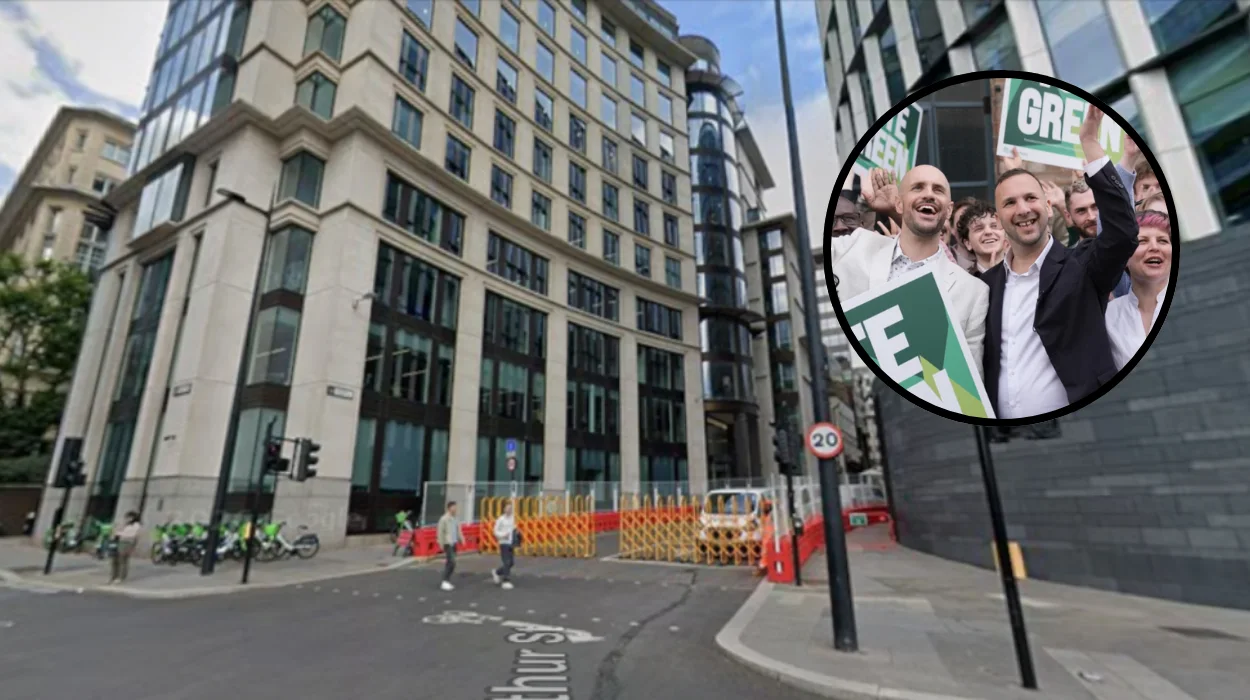
London (Extra London News) 23 May 2026 – The London Green Party has finalised its operational timeline and strategic candidate placements ahead of the highly anticipated 7 May 2026 local elections, positioning itself to mount an unprecedented challenge against the Labour Party’s traditional urban hegemony across the capital. Operating under a climate of growing electoral volatility, the party aims to significantly build upon its local government footprint during an election cycle that independent analysts predict could fundamentally reshape the municipal landscape of Greater London. With all 1,817 councillor seats across the capital’s 32 boroughs simultaneously up for contention, the upcoming vote serves as a critical litmus test for national political trends and local community dissatisfaction.
- Key Points
- When Are the London Local Elections Taking Place?
- How Did the Green Party Achieve Its Recent Historic Breakthrough?
- What Do the Electoral Projections Predict for London Councils?
- Why Is the Labour Party Facing Structural Jeopardy in the Capital?
- Where Are the Key Battlegrounds for the London Green Party?
- How Will the New Borough Boundaries Impact the Final Results?
- What Are the Broad Implications for National Governance?
When Are the London Local Elections Taking Place?
As confirmed by official administrative guidelines released by the Local Government Association, polling stations across every London borough will open to the public on Thursday, 7 May 2026. This comprehensive electoral event occurs alongside five directly-elected mayoral contests within the metropolitan area, including high-stakes executive races in Hackney and Lewisham. According to statutory notices published in the election timetable, the formal pre-election period—traditionally referred to as ‘purdah’—commenced across all participating local authorities following the publication of the official notice of election earlier this spring.
The regulatory framework governing broadcast media coverage during this vital democratic window was strictly delineated by national regulators. In a comprehensive guidance document published by Ofcom regarding Section Six of the Broadcasting Code, it was stated that
“The ‘election period’ commences on 30 March 2026 in the case of the English local and mayoral elections.”
This designation mandates that television and radio stations adhere to rigorous standards of proportional equity and neutral representation when covering candidate debates and party political broadcasts.
How Did the Green Party Achieve Its Recent Historic Breakthrough?
The aggressive expansion strategy adopted by the London Green Party is heavily informed by its landmark national breakthrough earlier this year in northern England. In a comprehensive report filed by the Al Jazeera Staff and Reuters wire services on 27 February 2026, it was revealed that the progressive organisation had secured its first-ever Westminster by-election victory in a historic blow to Prime Minister Keir Starmer’s governing administration. The victory in the Gorton and Denton constituency successfully overturned a massive, long-standing Labour majority.
Providing further local context to the surprising result, reporter Aysu Bicer of Anadolu Ajansı observed that Hannah Spencer, a local plumber and sitting Green councillor, managed to secure “a historic victory as the ruling Labour Party felt the sting of voters’ discontent.” The journalist further noted that Hannah Spencer successfully “overturned a 14,980-vote, almost 41% of all votes cast, Labour majority” to become the party’s first Member of Parliament in northern England. This pivotal outcome effectively relegated the Labour candidate to third place behind Reform UK, illustrating a broader fragmentation of traditional voter loyalty.
Explore More London Politics News
London 2026 Elections: Green Party & Reform UK Borough Wins
London local elections 2026 results: Labour loses ground, Reform wins Havering
What Do the Electoral Projections Predict for London Councils?
Political data analysts suggest that the municipal structures within Greater London are highly vulnerable to similar electoral shifts. According to a methodological briefing published by the independent data science group PollCheck, the 2026 local elections encompass 136 English councils, meaning approximately 5,000 individual seats are actively being contested across the country. Because the 32 London boroughs undergo ‘all-up’ elections—where every single council seat is vacated simultaneously—the potential for dramatic shifts in institutional control is significantly higher than in regions electing by thirds.
The historical data compiled by PollCheck highlights the growing difficulty of projecting these outcomes due to shifting voter baselines. Their statistical evaluations indicated that while traditional models faced inherent biases, the consolidation of progressive voters behind third-party options has intensified. In their technical overview, the authors at PollCheck remarked that
“Westminster polls systematically overstate the major parties and understate smaller ones in locals.”
To counteract this discrepancy, analysts are utilising a four-tier modelling system that integrates recent council by-election results, demographic data from the national census, and localised regional swings.
Why Is the Labour Party Facing Structural Jeopardy in the Capital?
The broader political implications of this metropolitan campaign point toward a severe contraction of the Labour Party’s urban base. Writing in a specialised electoral preview for the independent think-tank UK in a Changing Europe, Professor Michael Thrasher outlined the shifting dynamics confronting the major political entities. Professor Michael Thrasher observed that
“In the May 2025 local elections, the Conservatives collapsed in the English shires… Now, Labour has the spotlight, facing electoral jeopardy across London and the conurbations in the Midlands and the North.”
The analysis provided by the academic community suggests that national polling stagnation is directly translating into local government vulnerability. In his detailed evaluation for UK in a Changing Europe, Professor Michael Thrasher asserted that “current support hovers around 20%, making Labour councillors even in ‘safe’ seats vulnerable to defeat.” He further explained that while the two main traditional parties are partially insulated in certain regions where only a fraction of seats are contested,
“That still leaves all 32 London boroughs… where the scope for change is greatest because all the seats are in play.”
Where Are the Key Battlegrounds for the London Green Party?
The institutional expansion of the London Green Party has been supported by a substantial surge in its grass-roots infrastructure. According to updated internal demographic registries, the London regional branch of the party, which was originally founded in July 1990, saw its formal membership swell to approximately 40,000 active individuals by April 2026. This organisational growth has allowed the party to field a record number of candidates across diverse metropolitan wards, challenging opponents in working-class neighbourhoods where they previously lacked a structural presence.
The historical trajectory of this civic growth reflects a long-term transition from a single-issue pressure group into a mainstream municipal force. Academic documentation published in the OpenEdition Journals tracked this operational transformation over several decades, noting that for a considerable period after its initial 1974 inception, the party faced immense financial and systemic hurdles. The academic analysis within the journal indicated that
“The electoral deposit—at present £500 reimbursed with a minimum vote of 5%—has always been a sizeable financial barrier to Green progress.”
However, subsequent structural stabilisations enabled the party to broaden its reach, culminating in substantial seat accumulations across key metropolitan zones such as Tower Hamlets, Hackney, and Lambeth.
How Will the New Borough Boundaries Impact the Final Results?
An additional layer of administrative complexity influencing the 2026 local campaigns is the ongoing implementation of restructured ward boundaries across Greater London. As documented by official Parliamentary briefing papers on constituency boundary reviews, local government boundaries are periodically adjusted to ensure that each elected representative serves a balanced number of registered voters. In the United Kingdom, statutory provisions require that local government wards maintain a proportionate electorate relative to regional demographic shifts.
The transition to these modernised boundaries has created unique challenges for political strategists attempting to map historical voting patterns onto newly defined geographical areas. According to the analytical baseline established by PollCheck, the institutional restructuring means that many traditional strongholds have been dissolved or merged with neighbouring districts. This boundary fluidity, combined with the emergence of new independent slates and populist movements, has created an unpredictable environment where conventional local party machines can no longer guarantee the re-election of incumbent representatives.
What Are the Broad Implications for National Governance?
The culmination of the London borough elections is widely expected to exert significant pressure on the national leadership of both the Labour and Conservative parties. With the Green Party seeking to solidify its status as a major force in local government and Reform UK targeting working-class urban wards, the traditional two-party duopoly faces unprecedented fragmentation. The outcomes declared across London’s diverse boroughs will provide definitive data regarding whether the progressive breakthrough observed in the northern by-elections represents a temporary protest vote or a permanent realignment of British civic politics.