Extra London News brings you this comprehensive guide to St. Paul’s Cathedral, London’s iconic Anglican cathedral designed by Sir Christopher Wren and completed in 1710.
- What is St. Paul’s Cathedral?
- Where is St. Paul’s Cathedral located?
- What are the visiting hours and ticket prices for St. Paul’s Cathedral?
- How do you climb the dome at St. Paul’s Cathedral?
- What can you see from the top of St. Paul’s Cathedral dome?
- What is in the crypt of St. Paul’s Cathedral?
- Who is buried in St. Paul’s Cathedral crypt?
- What is the history of St. Paul’s Cathedral?
- Why visit St. Paul’s Cathedral for the dome climb and the crypt?
- Are there guided tours at St. Paul’s Cathedral?
- What are the best tips for visiting St. Paul’s Cathedral?
What is St. Paul’s Cathedral?
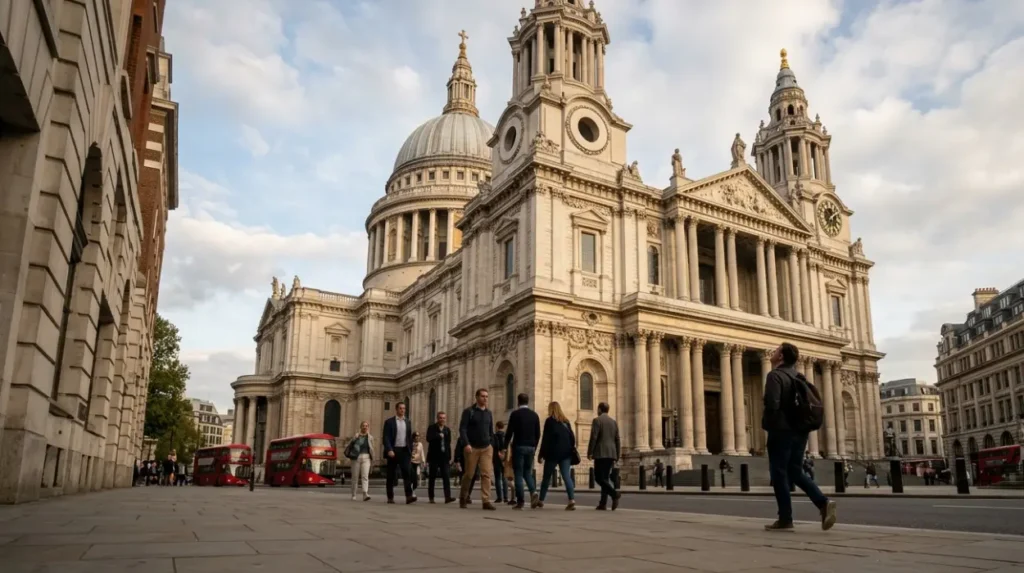
St. Paul’s Cathedral stands as the Anglican cathedral of the Diocese of London, located at Ludgate Hill in the City of London. Built between 1675 and 1710 by Sir Christopher Wren after the Great Fire of London in 1666, it measures 518 feet in length, 365 feet in height, and features a 278-foot outer dome inspired by St. Peter’s Basilica in Rome.
The cathedral serves as the seat of the Bishop of London and hosts daily worship, state events, and public visits. Its Baroque architecture includes a nave 121 feet wide, transepts 246 feet across, and three galleries within the dome: Whispering Gallery, Stone Gallery, and Golden Gallery. Construction cost equated to millions in modern terms, funded by a coal tax.
St. Paul’s Cathedral originated from a church founded in 604 AD by Bishop Mellitus, rebuilt after fires in 1087 and destroyed again in 1666. Wren submitted multiple designs, settling on the Warrant Design in 1675, blending classical and Gothic elements after clergy rejected his Greek Cross plan.
The structure endured World War II Blitz bombings in 1940-1941, with its dome guiding firefighters. Annual visitors exceed 1 million, generating revenue for maintenance. Future relevance includes ongoing restorations, ensuring endurance against urban pressures.
Where is St. Paul’s Cathedral located?
St. Paul’s Cathedral sits at St. Paul’s Churchyard, London EC4M 8AD, atop Ludgate Hill, the highest point in the City of London, near the River Thames and Millennium Bridge. Coordinates are 51.5139° N, 0.0983° W.
Accessibility includes St. Paul’s tube station on the Central Line, Blackfriars station via District and Circle Lines, and buses 4, 8, 25, 56. Pedestrian paths link to Fleet Street and Cannon Street. Parking is limited; use Barbican or Smithfield lots.
Proximity to landmarks: Tate Modern across Millennium Bridge (0.5 miles), Shakespeare’s Globe (0.7 miles), and Tower of London (1.5 miles). The site covers 2 acres, with the cathedral occupying 30,000 square feet in the crypt alone.
Location implications involve crowd management; arrive via Millennium Bridge for photos. Urban context places it amid financial district skyscrapers, contrasting its 365-foot height.
What are the visiting hours and ticket prices for St. Paul’s Cathedral?
St. Paul’s Cathedral opens for sightseeing Monday to Saturday 8:30 AM to 4:30 PM (Wednesdays from 10:00 AM), with last admission at 4:00 PM; dome access 9:30 AM to 4:15 PM. Sundays feature services only, no sightseeing. Closes for events.
Adult tickets cost £21 online, £26 on-site; concessions £18.50 for seniors/students, £10 children 7-17, free under 7. Family 2+2 at £52. Includes multimedia guide, dome climb, crypt. Book via official site for 10% discount.
Tickets grant full access: nave, quire, high altar, galleries (528 steps total), crypt. Audio guides in 12 languages. Guided tours £20 extra, 90 minutes. Validity one day; re-entry stamped.
Implications: Peak crowds 10 AM-3 PM; visit early. Revenue supports £40 million decennial restorations. Closures announced on website.
How do you climb the dome at St. Paul’s Cathedral?
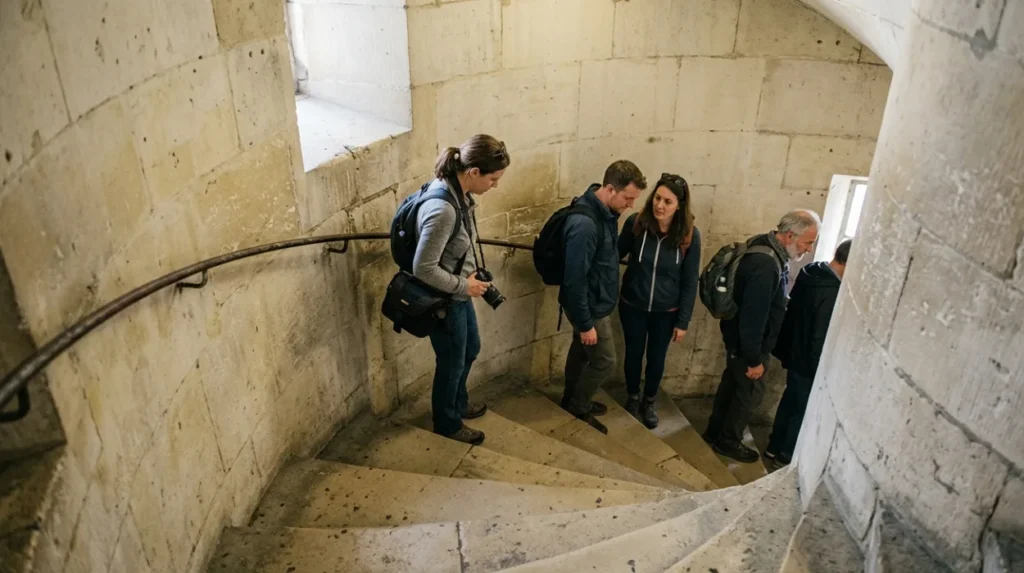
Climbing the dome requires 528 steps from the nave floor to the Golden Gallery, split into Whispering Gallery (257 steps), Stone Gallery (119 more), and Golden Gallery (152 final). Narrow spirals demand fitness; no lifts.
Process starts post-security: enter dome entrance near high altar. First 257 steps spiral to Whispering Gallery at 30 meters above floor, where whispers travel 30 meters via curved walls due to Wren’s acoustic design. View spans nave 158 meters long.
Continue 119 steps externally to Stone Gallery at 52 meters, circling base of outer dome with London skyline views. Final 152 steps in tight cone to Golden Gallery at 85 meters, 360-degree panorama encompassing St. Peter’s Basilica-inspired dome.
Examples: Whispering Gallery demonstrates acoustics; test by whispering to opposite wall. Stone Gallery offers photo ops of River Thames. Descend same path. Time: 45-60 minutes.
Implications: Not for claustrophobics or mobility-impaired; over 500 steps tire unfit. Survived Blitz, symbolizing resilience.
What can you see from the top of St. Paul’s Cathedral dome?
From the Golden Gallery, 360-degree views span 25 miles on clear days, including River Thames, Shard (1 mile south), Cannon Street skyscrapers, Houses of Parliament (2.5 miles west), Tower Bridge (1.5 miles east).
At 85 meters, spot Millennium Bridge, Tate Modern, City of London financial towers. Dome height 111 meters total; gallery circles 45-meter circumference. Plaques label landmarks.
Stone Gallery below shows dome engineering: inner dome 30 meters diameter, outer 50 meters, brick cone support. Whispering Gallery interior reveals Great West Door, American Memorial Chapel.
Examples: North views British Museum (2 miles); south Canary Wharf (4 miles). Weather affects visibility; best dawn/dusk. Implications: Orientation aid for London navigation; 1 million annual climbers.
What is in the crypt of St. Paul’s Cathedral?
The crypt, Europe’s largest at 30,000 square feet, houses tombs of Duke of Wellington, Admiral Lord Nelson, Sir Christopher Wren, Florence Nightingale, plus 900 memorials. Accessed via stairs from nave.
Divided into chapels: Order of St. Michael and St. George, St. Dunstan’s (war memorials), Royal British Legion. Wren’s tomb inscribed “Lector, si monumentum requiris, circumspice” (Reader, if you seek his monument, look around).
Nelson’s tomb in black sarcophagus from Wolfe’s grave, post-1805 Trafalgar. Wellington’s granite sarcophagus central. Nightingale Memorial honors Crimean War nurse. Trophy Room displays Wren models.
Examples: Duke of Wellington (1769-1852), Waterloo victor; Nelson (1758-1805), naval hero. Quiet reflection space. Implications: Funerary art reflects British history; free access included.
Who is buried in St. Paul’s Cathedral crypt?
Buried in the crypt: Sir Christopher Wren (1632-1723), architect; Admiral Horatio Nelson (1758-1805); Arthur Wellesley, Duke of Wellington (1769-1852); Florence Nightingale memorial (1820-1910). Over 200 military leaders.
Wren’s tomb central, simple slab. Nelson in sarcophagus with reliefs of Victory ship. Wellington under iron canopy, sword displayed. Others: John Howard (prison reformer), J.M.W. Turner painter.
Examples: Nelson died at Trafalgar; reburied 1806. Wellington defeated Napoleon at Waterloo 1815. Memorials include World War I/II figures like Captain Scott.
Implications: Crypt embodies national heroes; guided tours detail biographies. Annual services honor them.
What is the history of St. Paul’s Cathedral?
St. Paul’s Cathedral began in 604 AD, rebuilt 1087 post-fire, Gothic version completed 1240. Destroyed 1666 Great Fire; Wren rebuilt 1675-1710 in Baroque style.
Wren (professor turned architect) proposed Greek Cross (1670), rejected; Great Model (1673); Warrant Design approved 1675. Cost £747,000; 35 years construction.
Hosted Churchill funeral (1965), Prince Charles-Diana wedding (1981), Diamond Jubilee (2022). Blitz survivor 1940. Implications: Symbol of resilience; UNESCO tentative list.
Why visit St. Paul’s Cathedral for the dome climb and the crypt?
Visit for dome climb (528 steps, panoramic views) and crypt (30,000 sq ft, hero tombs) to experience Wren’s engineering, acoustics, and history in one site. Full ticket £21, covers both.
Dome reveals triple structure: inner painted, middle brick cone, outer lead. Crypt offers reflection amid memorials. 1.3 million visitors yearly pre-pandemic.
Examples: Climb tests endurance, rewards London vista; crypt educates on Nelson, Wellington. Combine with services for choral music. Implications: Enhances the London itinerary; educational for all ages.
Are there guided tours at St. Paul’s Cathedral?
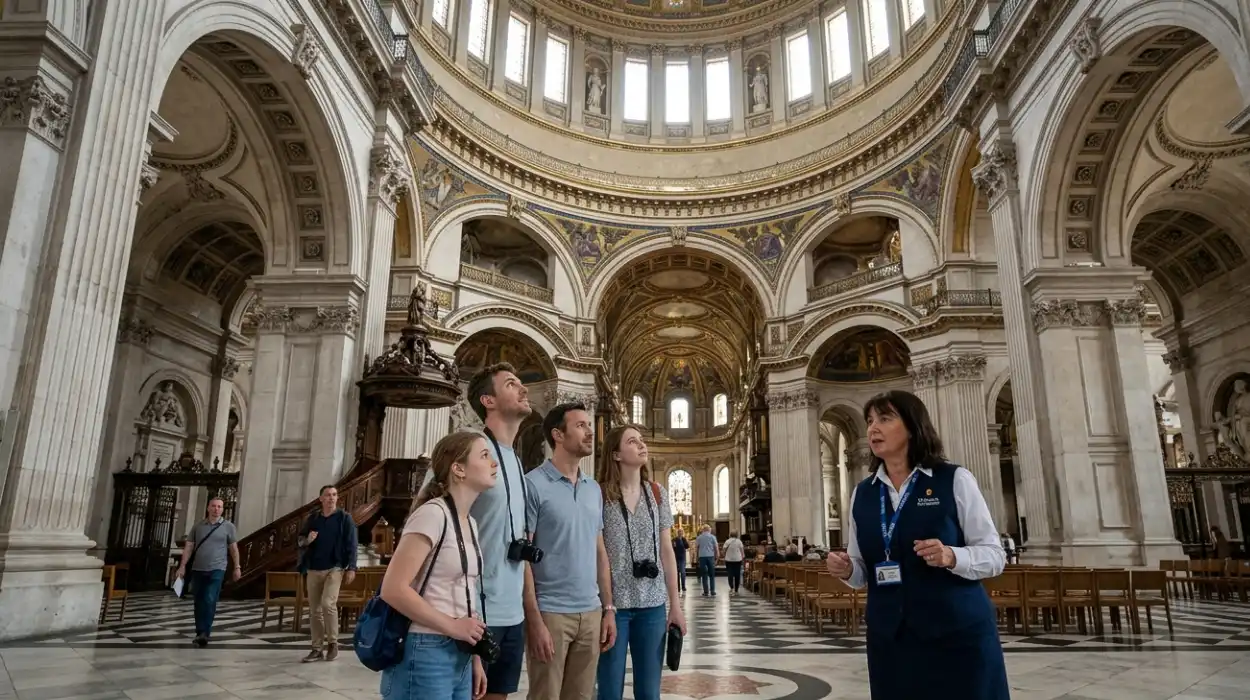
Guided tours run daily: foundation tours (90 minutes, £20) cover crypt, hidden areas; dome multimedia guides free in 12 languages. Blue Badge tours available.
Foundation tour accesses geometric staircase, library, and trove. Starts hourly 10:30 AM-3:30 PM. Groups 15 max. Audio guides detail Whispering Gallery physics.
Examples: Tour reveals Wren’s models, Blitz scars. Implications: Deeper insight than self-guided; book ahead for weekends.
What are the best tips for visiting St. Paul’s Cathedral?
Book online for £21, arrive early (8:30 AM), wear comfortable shoes for 528 steps, dress modestly, and allow 2-3 hours. Skip if claustrophobic.
Arrive via Millennium Bridge for views. Use an audio guide. Visit the crypt last for quiet. Check closures on stpauls.co.uk. Families: £52 ticket.
Examples: Early avoids queues (30 min peak). Hydrate pre-climb. Implications: Maximizes value; £40m restorations ongoing.
What is St. Paul’s Cathedral?
St. Paul’s Cathedral is the Anglican cathedral of London, designed by Sir Christopher Wren and completed in 1710 after the Great Fire of London. It is a major place of worship, a national event, and a tourist attraction.