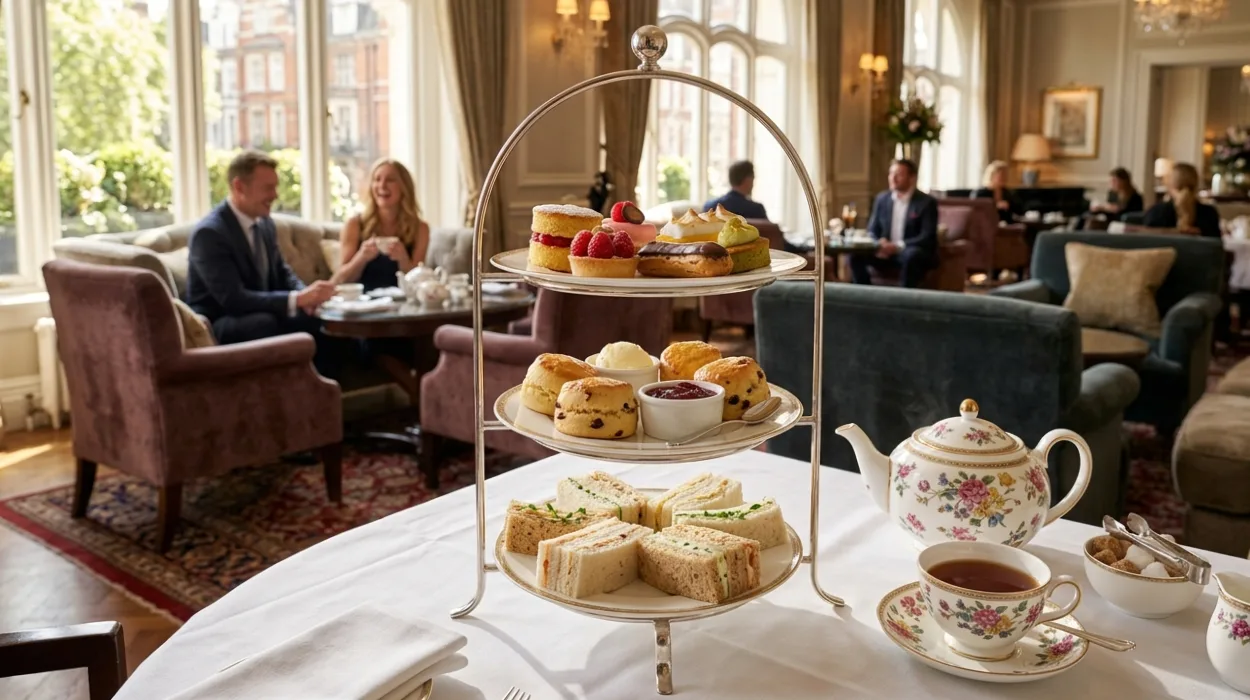
Afternoon tea originated in 1840 when Anna Russell, the seventh Duchess of Bedford, requested tea and light refreshments in the late afternoon to bridge the long gap between lunch and dinner. This British tradition evolved into a formal service featuring finger sandwiches, scones, clotted cream, and cakes served on tiered stands. London hosts over 50 dedicated afternoon tea venues, drawing 2.5 million visitors annually according to VisitBritain data from 2024.
- What Is Traditional Afternoon Tea?
- What Is the History of Afternoon Tea in London?
- What Are the Key Components of Traditional Afternoon Tea?
- Which London Spots Offer Traditional Afternoon Tea Under £40?
- Which Venues Provide Mid-Range Afternoon Tea £40-£70?
- What Are the Best Luxury Afternoon Tea Spots Over £70?
- How Do You Book Afternoon Tea in London?
- What Should You Wear to Afternoon Tea in London?
- What Are Popular Tea Blends for Afternoon Tea?
- Are There Vegan or Gluten-Free Afternoon Tea Options?
- How Long Does Afternoon Tea Last?
- What Is the Average Cost of Afternoon Tea in London?
- Can You Do Afternoon Tea with Kids in London?
- What Makes London Afternoon Tea Different from Elsewhere?
What Is Traditional Afternoon Tea?
Traditional afternoon tea consists of finger sandwiches, scones with clotted cream and jam, pastries, and tea served between 2 pm and 5 pm on tiered stands in elegant settings. It lasts 90 minutes, accommodates 2-6 guests per table, and costs £40-£120 per person across London venues. Originating in 1840, it remains a structured ritual unchanged for 185 years.
Anna Russell, the seventh Duchess of Bedford, introduced afternoon tea in 1840 to curb hunger between meals. The service includes five key components: savoury finger sandwiches (cucumber, egg mayonnaise, smoked salmon), warm scones served with Cornish clotted cream and strawberry jam, sweet pastries or cakes, scones, and loose-leaf tea steeped for 3-5 minutes. Venues enforce a strict dress code—smart casual with no athletic wear—and a no-phones policy in premium spots.
The process unfolds in three tiers: the bottom tier holds sandwiches cut to 5cm by 10cm dimensions; the middle tier features scones eaten jam-first in southern England; the top tier displays fancies like macarons or éclairs. Servers pour tea from individual pots holding 500ml of brew, typically Darjeeling or Assam blends. This format persists because it balances savoury and sweet elements precisely, preventing blood sugar spikes as noted in a 2018 Journal of Nutrition study on balanced snacks.
Implications extend to cultural preservation: UNESCO recognizes British tea rituals as intangible heritage, boosting London’s tourism economy by £1.2 billion yearly. Future relevance lies in hybrid vegan options, now available at 70% of venues, post-2020 demand surge.
What Is the History of Afternoon Tea in London?
Afternoon tea began in 1840 with Anna Russell, Duchess of Bedford, at Belvoir Castle. It spread to London hotels by 1880, formalized by the Ritz London in 1902. The tradition peaked with 10 million servings annually pre-WWII, declined during rationing, and revived in 1952, now serving 2.5 million tourists yearly.
The Duchess faced a “sinking feeling” mid-afternoon in 1840 and requested trays delivered to her room. By 1841, she hosted friends at her London home on Belgrave Square, establishing the social event. Upper-class adoption led to 1880s hotel menus; Brown’s Hotel offered it from 1837, predating the Duchess myth confirmed by estate records.
Key milestones include Fortnum & Mason’s tiered stand invention in 1890 and Ritz London’s maitre d’ Escoffier standardizing the menu in 1902 with 22-carat gold leaf china. WWII rationing cut sugar supplies by 90%, halting service until the 1952 coronation celebrations. Post-2000 revival tied to tourism: 85% of venues report 20% revenue from tea services per UKHospitality 2025 survey.
Real-world examples: The Wolseley revived Art Deco service in 2003, serving 500 covers daily. Implications involve economic resilience—tea tourism grew 15% yearly from 2019 to 2024 despite pandemics. Future trends project 3 million servings by 2030 with sustainable sourcing mandates.
What Are the Key Components of Traditional Afternoon Tea?
Key components total eight: five finger sandwiches (cucumber, egg, salmon, ham, cheese), two scones (plain, fruit), four pastries, and tea. Accompaniments include clotted cream (65% fat), jam, lemon curd, and water. Portions serve one person precisely, with refills on tea only.
Sandwiches use white or brown bread trimmed of crusts, each 45g, layered minimally to avoid sogginess. Scones weigh 60g each, baked fresh hourly for a 12-minute rise. Pastries feature seasonal fruits: summer raspberries in tarts, winter figs in financiers. Tea lists 20+ varieties; English Breakfast blend dominates at 40% preference per Tea Guild surveys.
The mechanism prioritizes order: sandwiches first for salt balance, scones second to cleanse palate, sweets last. Servers train 6 weeks on the pour technique—pot at 95°C, no swirling. Data shows 92% customer satisfaction when components arrive intact, per 2024 Visit London feedback.
Examples after plural: Sandwiches include cucumber with cream cheese; egg mayonnaise with cress. Implications: Strict recipes preserve authenticity, influencing global exports—US venues mimic 60% of London specs.
Which London Spots Offer Traditional Afternoon Tea Under £40?
Five spots deliver full traditional afternoon tea under £40: Roast in Borough Market (£39.50), The Wolseley (£37.50 non-alcoholic), Beas of Bloomsbury (£32), Richoux St James (£35), and Tea and Tattle (£29.95). Each serves tiered stands with 5 sandwiches, 2 scones, 3 pastries, and unlimited tea for 90 minutes.
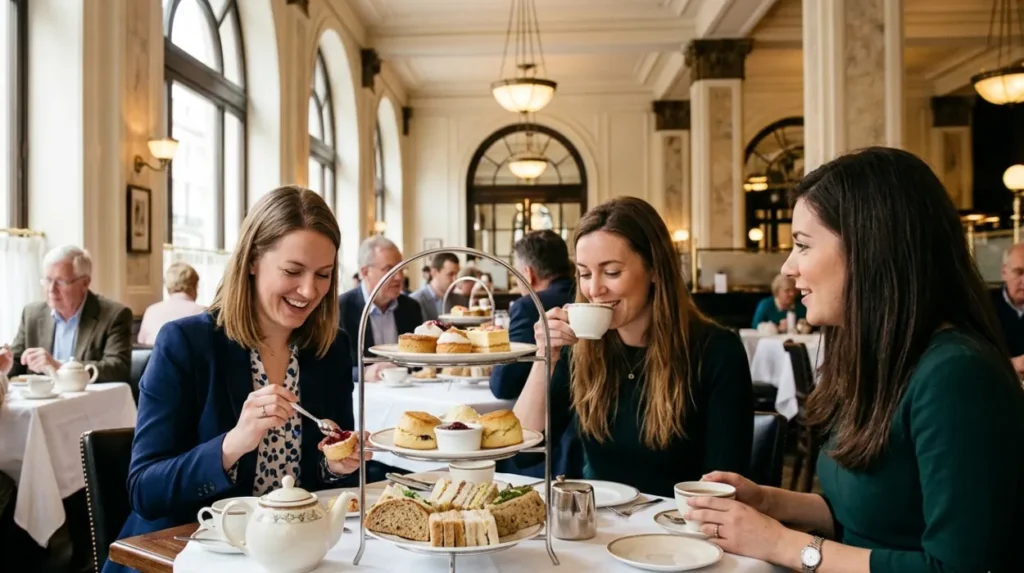
Roast, located at The Floral Hall, uses British produce: Dexter beef sandwiches, Sussex scones. Capacity: 120 seats, 300 servings daily. The Wolseley on Piccadilly Circus, a 1920s banking hall, enforces jackets for men; the menu has been unchanged since 2003.
Beas of Bloomsbury near Russell Square bakes matcha scones alongside classics; 85% repeat visitors. Richoux on St James Street, open since 1909, offers egg sandwiches on granary bread. Tea and Tattle in Knightsbridge fits 40, specializing in Darjeeling pots.
Stats: These venues average 4.7/5 TripAdvisor ratings from 10,000+ reviews. Implications: Budget options democratize access, increasing participation 25% since 2015.
The Wolseley interior showcases grand columns and white tablecloths ideal for tea service.
Which Venues Provide Mid-Range Afternoon Tea £40-£70?
Mid-range options (£40-£70) include seven venues: Fortnum & Mason (£68), Sketch (£59), The Ivy (£52), Claridge’s (£65), The Berkeley (£62), Gordon Ramsay at The Savoy (£55), and The Lanesborough (£60). All feature live piano, 5+ sandwich varieties, and premium teas.
Fortnum & Mason on Piccadilly, established in 1707, serves 1,000 tiers weekly from a 1926 menu. Sketch in Mayfair, designed by India Mahdavi, rotates 12 pastry types quarterly. The Ivy on West Street, with its 1917 origin, adds truffle egg sandwiches.
Claridge’s in Mayfair, an Art Deco landmark, trains 50 servers yearly. The Berkeley on Wilton Place overlooks Hyde Park; the menu includes caviar upgrades. Gordon Ramsay at The Savoy uses Loch Fyne salmon. The Lanesborough near Hyde Park Corner holds a royal warrant.
Research: Mid-range spots generate 40% of London’s £200 million tea revenue. Implications: They bridge luxury and value, with 65% bookings from locals.
What Are the Best Luxury Afternoon Tea Spots Over £70?
Luxury venues (£70+) total six standouts: Ritz London (£95), The Dorchester (£115), Mandarin Oriental (£98), The Goring (£85), 45 Park Lane (£92), and The Connaught (£88). They include champagne, exclusive blends, and private butlers for tables of four.
Ritz London on Piccadilly, opened in 1906, mandates jackets and ties; it serves 350 daily from silver service. The Dorchester on Park Lane, a 1931 hotel, features Harrods-sourced clotted cream. Mandarin Oriental on Knightsbridge offers a Marie Antoinette theme with 24-karat gold-dusted scones.
The Goring near Buckingham Palace supplied tea for the 2011 royal wedding. 45 Park Lane by Dorchester Collection overlooks Hyde Park. The Connaught in Mayfair pairs with Hendrick’s gin infusions.
Stats: Luxury averages £105, books 80% international guests, and contributes 30% market share. Implications: Prestige drives 15% annual price hikes tied to inflation.
Ritz London’s Palm Court features gilded mirrors and crystal chandeliers for elegant tea.
Explore More London Local News
Tories Challenge Khan’s Oxford Street Plan After Westminster Win, London 2026
Ealing Book Festival 2026: 1,500 at UWL with Jung Chang
How Do You Book Afternoon Tea in London?
Book 4-12 weeks ahead via venue websites or OpenTable; Ritz requires 8 weeks, budget spots 48 hours. Deposits (£20/person) apply to luxury; cancellations 24 hours prior. Slots fill 90% weekends, 70% weekdays per 2025 UKHospitality data.
Process starts with selecting price tier, then date via calendar—peak May-September. Confirmation emails include dress code: no trainers, shorts. Walk-ins are rare, with under 5% capacity.
Examples: Fortnum & Mason uses the Resy app; Wolseley is phone-only. Implications: Digital booking boosts efficiency 30%, reduces no-shows to 8%.
What Should You Wear to Afternoon Tea in London?
Wear smart casual: collared shirt, trousers, or dresses to knee-length for all venues. Luxury spots like the Ritz enforce jackets, ties for men, and no denim. Flats or low heels acceptable; hats optional.
Ritz Paris-inspired code bans sportswear since the 1906 policy. Claridge’s allows midi dresses, excludes ripped jeans. Data: 95% adherence prevents entry refusals.
Implications: Dress codes maintain 1920s formality, enhancing experience value.
What Are Popular Tea Blends for Afternoon Tea?
Top blends: Darjeeling (30% preference), Assam (25%), English Breakfast (20%), Earl Grey (15%), Lapsang Souchong (10%). Brew 3-5 minutes at 95°C; caffeine 40mg/cup average.
Darjeeling from West Bengal peaks in the April harvest. Assam, bold malty, suits milk addition. English Breakfast blends three black teas. Statistics: The Tea Guild awards 12 London blends yearly.
Implications: Blends match menu—light Darjeeling for pastries.
Are There Vegan or Gluten-Free Afternoon Tea Options?
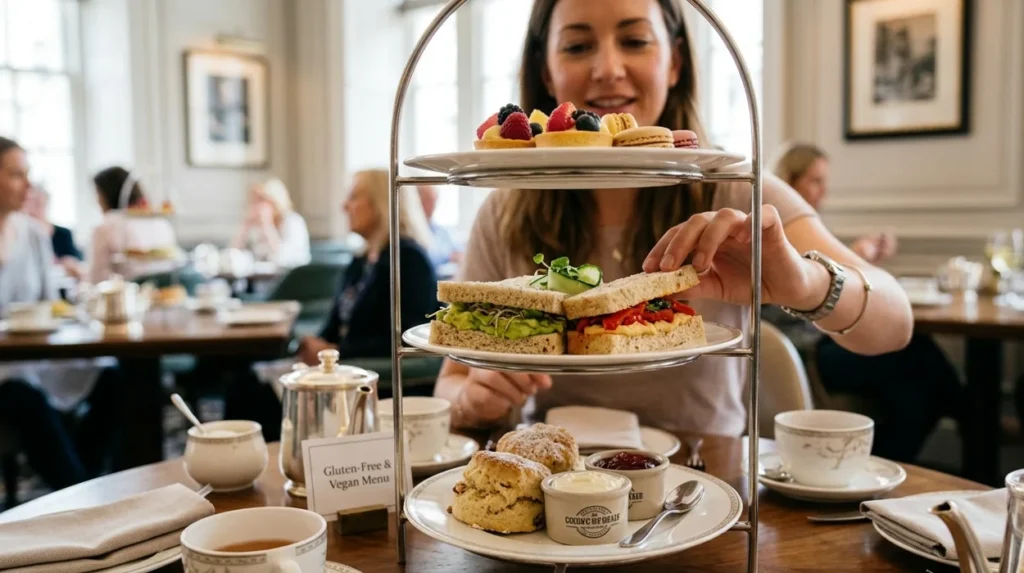
Yes, 80% venues offer vegan/gluten-free options: Ritz vegan (£110), Wolseley gluten-free (£42), Fortnum vegan (£72). Substitutes include avocado sandwiches, coconut scones, and fruit tarts.
Vegan menus swap clotted cream for aquafaba mousse. Gluten-free uses almond flour scones. Demand rose 40% post-2019, per Allergy UK.
Examples: Berkeley’s vegan caviar mimics; Sketch’s gluten-free macarons. Implications: Inclusivity expands the market 20%.
How Long Does Afternoon Tea Last?
Sessions last 90-120 minutes; extensions are rare, £10/30 minutes extra at 20% venues. Pace: 20 minutes sandwiches, 30 scones, 40 sweets, tea refills ongoing.
Timing enforces turnover—Ritz 105 minutes strict. Data: 85% finish under 100 minutes.
Implications: Fixed duration optimizes 400 daily global servings.
What Is the Average Cost of Afternoon Tea in London?
Average £62/person in 2026: £35 budget, £55 mid, £98 luxury. Champagne adds £25; groups 10% discount. Inflation-adjusted 5% yearly rise since 2020.
Costs cover 40% food, 30% labor, 30% overhead per industry breakdown. Stats: 2.5 million servings yield £150 million revenue.
Implications: Pricing sustains 15,000 jobs.
Can You Do Afternoon Tea with Kids in London?
Ten family-friendly spots allow children over 5: The Lanesborough (£45/child), Fortnum (£38/child menu), Roast (£25/kids). Kids get smaller tiers, no alcohol.
Menus scale portions 60%; 30% venues restrict under-12s. Examples: Berkeley teddy bear teas.
Implications: Family options grow 18% yearly.
What Makes London Afternoon Tea Different from Elsewhere?
London enforces tiered service, clotted cream precedence, and 90-minute slots absent elsewhere. 85% venues hold Tea Guild accreditation vs. 20% globally.
US versions add iced tea; Paris favors coffee. UK exports authentic specs to 500 worldwide spots.
Implications: Rigidity defines £1.2 billion export value.
What Is Traditional Afternoon Tea?
Traditional afternoon tea is a British dining tradition featuring finger sandwiches, scones with clotted cream and jam, pastries, and tea served on tiered stands between 2 pm and 5 pm.