Key Points
- Five Men Imprisoned: Five members of a sophisticated organised crime group (OCG) have been sentenced to a combined total of over 84 years in prison for their roles in a massive Class A drug importation scheme.
- Massive Seizure Value: The network smuggled over 300kg of cocaine and more than 60kg of heroin into the United Kingdom, carrying an estimated wholesale value of nearly £8 million, with total importations suspected to exceed one tonne.
- Kingston Man Sentenced: Dawid Gasiewski, 32, of Kingston, was handed a sentence of 14 years and four months after previously entering a guilty plea for his involvement in the operation.
- Network Ringleaders: Andrzej Walas, 48, received the highest sentence of 26 years, whilst co-conspirator Robert Francuz, 43, was sentenced to 21 years; both were convicted of multiple offences tied to drug importation.
- Sophisticated Infrastructure: The gang utilised legitimate commercial haulage routes, international heavy goods vehicles (HGVs), and a network of “ghost warehouses” across Slough and Daventry to covertly offload illicit cargo.
- International Recruitment: The syndicate relied on men flown into the UK directly from Poland to facilitate the manual unloading, repackaging, and mid-level distribution of the narcotics.
- Resilient Operations: Despite a major police disruption and multi-kilogram seizure in July and August 2024, the gang successfully resumed operations by March 2025 at a completely new site in Northamptonshire.
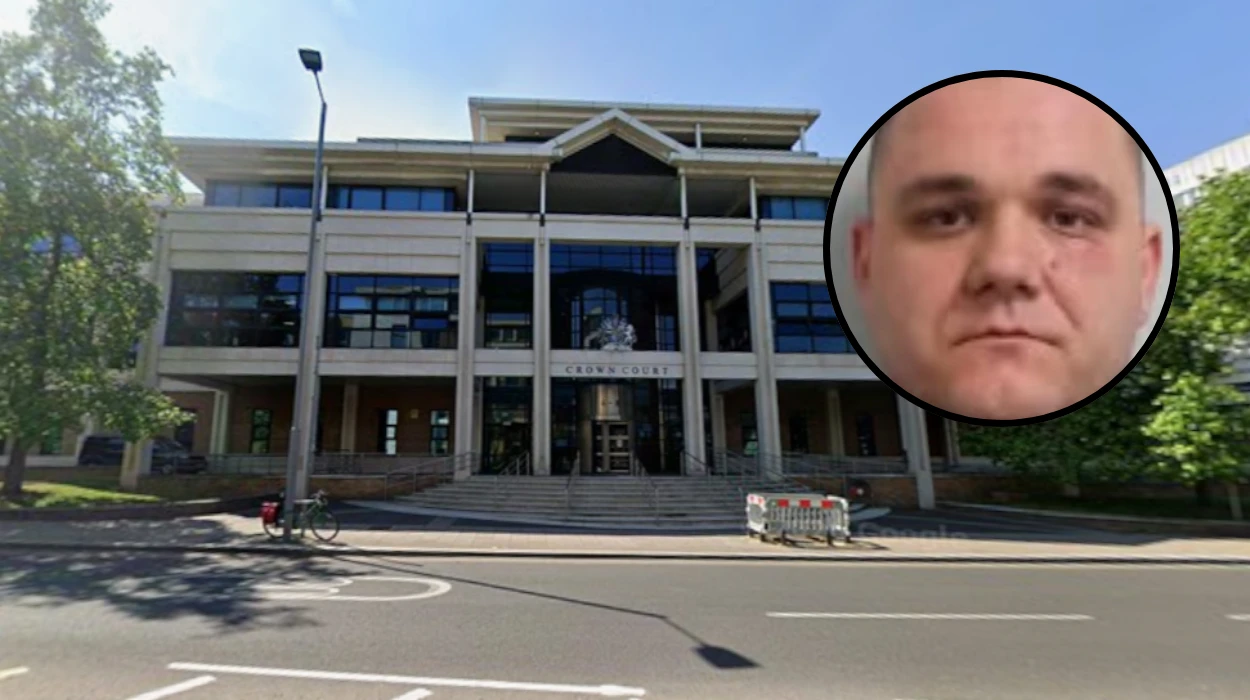
Kingston (Extra London News) May 22, 2026 – A Kingston resident has been jailed alongside four co-conspirators for his pivotal role in a massive international smuggling ring responsible for flooding the United Kingdom with millions of pounds worth of Class A drugs. Dawid Gasiewski, 32, of Kingston, was sentenced to 14 years and four months in prison at Kingston Crown Court on Thursday, May 21, following a relentless investigation by the Metropolitan Police Service. The multi-agency operation successfully dismantled an organised crime network that handled more than 300 kilograms of cocaine and over 60 kilograms of heroin, representing a total estimated wholesale value of almost £8 million. Law enforcement officials revealed that the network operated on a “gigantic commercial scale,” using coded communications, legitimate commercial logistics channels, and hidden warehouses to move illicit cargo from mainland Europe into British communities.
- Who Are the Individuals Sentenced at Kingston Crown Court?
- How Did the “Ghost Warehouse” Smuggling Operation Work?
- When Did the Metropolitan Police Investigation Begin?
- What Did Police Discover Inside the Slough Warehouse?
- How Did the Syndicate Adapt After the Slough Raid?
- What Occurred During the Final Police Intervention in Daventry?
- What Is the Total Estimated Scale of the Smuggling Network?
- How Has the Metropolitan Police Responded to the Verdicts?
Who Are the Individuals Sentenced at Kingston Crown Court?
The sentencing hearing at Kingston Crown Court brought to an end a complex legal saga involving five primary defendants, each serving distinct operational functions within the smuggling syndicate. The judicial outcomes varied significantly based on the level of involvement, prior pleas, and specific criminal charges brought against each individual.
According to formal court records released by the Metropolitan Police, the sentences handed down by the judiciary are structured as follows:
- Andrzej Walas, 48, of Slough, received the most severe penalty, with a sentencing order of 26 years in prison after being convicted of multiple offences related to the direct importation of Class A drugs.
- Robert Francuz, 43, of Hemel Hempstead, was handed a 21-year custodial sentence following convictions on corresponding drug importation charges.
- Dawid Gasiewski, 32, of Kingston, was ordered to serve 14 years and four months in prison, having entered an early guilty plea regarding his participation in the logistics of the plot.
- Jamie Allen, 29, of Birmingham, was sentenced to 13 years in prison after being convicted of conspiracy to supply Class A drugs and an additional charge of failing to disclose protected information.
- Jagjit Singh, 30, also of Birmingham, received a custodial sentence of 10 years and six months after entering a guilty plea ahead of trial proceedings.
Court updates further indicate that several other secondary individuals connected to the syndicate had already received separate sentences during earlier stages of the wider conspiracy judicial review.
How Did the “Ghost Warehouse” Smuggling Operation Work?
The criminal infrastructure devised by the network relied heavily on exploiting gaps within legitimate international commerce. Rather than relying on traditional, high-risk smuggling methods, the syndicate established a highly sophisticated system that mirrored legitimate corporate supply chain logistics.
As detailed in statements from Specialist Crime South detectives, the network utilised international heavy goods vehicles (HGVs) travelling along established commercial haulage routes originating in mainland Europe. These lorries, fully documented as carrying legitimate retail or industrial cargo, entered the United Kingdom through various commercial ports of entry.
Once past border controls, the transport vehicles deviated from their official manifest routes. They were directed to covert storage facilities—termed “ghost warehouses”—which had been leased under false pretences or operated entirely off the radar of local commercial authorities. The investigation highlighted two primary logistics hubs: an initial facility located in Slough, Berkshire, and a subsequent site established in Daventry, Northamptonshire.
Upon arrival at these covert sites, the legal cargo was temporarily bypassed so that the hidden bulk quantities of heroin and cocaine could be rapidly offloaded. To maintain operational security and minimise domestic footprints, the group relied significantly on labor dynamics involving men flown in from Poland specifically to assist with the physical unloading, inventory management, and repackaging of the narcotics.
Once the Class A substances were securely stored inside the ghost warehouses, the HGVs would return to their designated routes and proceed to their original, legitimate delivery destinations, leaving little to no immediate trail for standard transport audits. The offloaded drugs were subsequently processed, split into wholesale quantities, and distributed to regional mid-level dealers across London, the Midlands, and the surrounding home counties, frequently utilizing hire cars to obscure ownership during transit.
When Did the Metropolitan Police Investigation Begin?
The operational downfall of the syndicate followed a meticulous, multi-month surveillance campaign that commenced in the summer of 2024. As recorded in the official investigation timeline provided by the Metropolitan Police, the initial breakthrough occurred in July 2024.
Detectives monitoring regional criminal patterns observed what appeared to be a highly coordinated, suspicious exchange of unmarked boxes between vehicles stationed in Slough. Recognising the indicators of wholesale drug distribution, the Metropolitan Police activated regional enforcement partners to intercept the vehicles involved.
A tactical vehicle stop executed by officers from the West Midlands Regional Organised Crime Unit immediately validated these suspicions. A physical search of the stopped vehicles resulted in the direct seizure of five kilograms of cocaine and 25 kilograms of heroin. This initial recovery provided the intelligence foundation required to map out the broader distribution nodes of the gang, exposing an operation far larger than a simple localized drug ring.
What Did Police Discover Inside the Slough Warehouse?
Following weeks of continuous surveillance, data analysis, and tracking of heavy transport movements, law enforcement moved to strike a major blow against the syndicate’s primary southern hub.
On August 6, 2024, tactical units from the Metropolitan Police executed a coordinated search warrant at a commercial warehouse facility in Slough. The timing of the raid was calculated to coincide with the arrival of an international HGV that had recently crossed into the UK from mainland Europe.
The resulting search revealed a massive cache of narcotics waiting for repackaging. Officers discovered and catalogued approximately:
- 103 kilograms of high-purity cocaine
- 37 kilograms of wholesale heroin
Beyond the immediate physical evidence, forensic specialists seized localized closed-circuit television (CCTV) recording systems and mobile digital devices left at the scene. As documented by digital forensics teams, a subsequent analysis of these communication logs and surveillance histories revealed a consistent pattern of high-volume smuggling.
The records conclusively proved that the group had successfully executed at least 10 identical importations between May and August 2024. During these operations, the illicit cargo was routinely offloaded, unpacked, and disseminated into the domestic market through the use of highly secure, coded communication applications and pre-arranged, strictly timed collection checkpoints.
Explore More London Crime News
Drink-driver flees London club and pistol found 2026
Did Rielle Threaten Klaudia Glam Before Deadly Mayfair Crash? Argyll Street, 2026
How Did the Syndicate Adapt After the Slough Raid?
A defining characteristic of this organised crime group was its financial resilience and determination to maintain supply lines despite suffering severe logistical setbacks and million-pound product losses.
Following the August 2024 raid and the subsequent loss of their Slough warehouse, the surviving leadership of the gang temporarily suspended importations to evaluate security leaks. However, by March 2025, intelligence intercepts indicated that the network had fully resumed its smuggling operations.
To evade ongoing Metropolitan Police attention, the group shifted its entire geographic focus away from the home counties, establishing a completely new tactical hub further north in Daventry, Northamptonshire. This new site functioned under identical operational principles, utilizing fresh ghost warehouses to receive European transport links while attempting to decouple their activities from the compromised Slough logistics loop.
What Occurred During the Final Police Intervention in Daventry?
The operational life of the new Daventry facility proved short-lived as covert surveillance teams successfully tracked the migration of the criminal network. The definitive phase of the investigation culminated on April 7, 2025, when officers identified an international lorry originating from the Netherlands making an unscheduled, highly suspicious stop at the newly acquired Daventry site.
As outlined in the prosecution’s case evidence, the driver of the vehicle, identified as Dawid Gasiewski, proceeded to manually unload the heavy commercial cargo directly into the warehouse facility. Shorty thereafter, co-conspirator Jagjit Singh arrived at the location to oversee the reception and local assignment of the shipment.
Law enforcement units moved in swiftly to secure the site, catching the perpetrators mid-operation. A comprehensive search of the immediate scene resulted in the seizure of approximately 200 kilograms of cocaine from the transport vehicles and handling areas, while an additional 100 kilograms of cocaine were discovered hidden within the storage structures of the warehouse itself.
The enforcement operation continued throughout the day. Jamie Allen was intercepted and arrested by police units shortly after his arrival at the Daventry warehouse location. The following day, on April 8, 2025, coordinated strikes led to the successful arrests of the remaining operational coordinators, Andrzej Walas and Robert Francuz, effectively bringing the syndicate’s importation capabilities to a complete halt.
What Is the Total Estimated Scale of the Smuggling Network?
While the physical seizures across the timeline of the investigation netted nearly 400 kilograms of combined Class A substances, financial and digital intelligence suggests the true volume of drugs introduced by the syndicate was substantially higher.
An ongoing analysis of the group’s encrypted communication devices, transport manifests, and cross-border financial transactions led investigators to conclude that the network was regularly moving much larger quantities than those physically intercepted. Law enforcement specialists estimate that the conspiracy was responsibly tied to the successful importation of quantities comfortably exceeding one metric tonne of Class A drugs over its active lifespan.
How Has the Metropolitan Police Responded to the Verdicts?
Following the conclusion of the sentencing proceedings at Kingston Crown Court, leadership within the Metropolitan Police Specialist Crime command emphasized the structural importance of dismantling high-level distribution networks to protect local communities.
As formally reported by Detective Constable Leon Ure, of Specialist Crime South, the judicial outcomes represent a significant victory against organised illicit trade. Detective Constable Ure stated that:
“This case has centred on a criminal venture planned on a gigantic commercial scale which would have likely caused violence and destruction on our streets. These offenders organised a significant drug line into London and the surrounding counties over a prolonged period of time.”
Reflecting on the motivations driving law enforcement’s sustained focus on wholesale supply cartels, Detective Constable Ure further added:
“If people wonder why we are so relentless in going after those involved in drug supply, it’s because this criminality fuels violence and rips families and communities apart. We are very grateful to our partners for their assistance. Our coordinated response has resulted in the disruption of a major threat to public safety and has taken this group of criminals off our streets.”
The Metropolitan Police Service has re-affirmed its long-term strategic commitment to deploying advanced surveillance, cross-border intelligence assets, and inter-agency cooperation to aggressively target, disrupt, and prosecute organised criminal entities operating within the upper echelons of the international Class A drug trade.