Lincoln’s Inn stands among the most significant surviving legal and architectural estates in England. As one of the four historic Inns of Court, it has shaped the education of barristers, preserved centuries of legal tradition, and maintained an exceptional collection of medieval, Tudor, Georgian, Victorian, and modern buildings. Located between Holborn and the Strand in central London, Lincoln’s Inn combines working legal institutions with landscaped gardens, historic halls, libraries, chapels, and carefully preserved public spaces that reflect more than 600 years of continuous institutional history.
- Why is Lincoln’s Inn one of London’s most historically significant legal institutions?
- How did Lincoln’s Inn develop from a medieval legal community into a national institution?
- Which historic buildings define Lincoln’s Inn today?
- What architectural styles appear throughout Lincoln’s Inn?
- Why are Lincoln’s Inn Gardens historically important?
- How did guided walks become an important way to interpret Lincoln’s Inn?
- Which notable historical figures shaped Lincoln’s Inn?
- How has Lincoln’s Inn preserved its historic character in the modern era?
- What makes Lincoln’s Inn an enduring part of London’s cultural heritage?
Today, visitors explore Lincoln’s Inn to understand England’s legal heritage, appreciate its architecture, and experience one of London’s best-preserved historic precincts. Its guided walks and seasonal public access provide opportunities to examine buildings that continue serving their original legal functions while remaining important cultural landmarks.
Why is Lincoln’s Inn one of London’s most historically significant legal institutions?
Lincoln’s Inn has educated barristers, preserved English legal traditions, protected nationally important architecture, maintained historic gardens, and operated continuously since the medieval period. Its buildings, archives, and landscapes document more than six centuries of constitutional, judicial, educational, and architectural development within central London.
Lincoln’s Inn is one of the four historic Inns of Court responsible for educating and admitting barristers in England and Wales. The other Inns are Gray’s Inn, Inner Temple, and Middle Temple. Together, these institutions developed professional legal education centuries before formal university law schools became common.
The Inn emerged during the fourteenth century as lawyers settled outside the City of London near the Royal Courts. Documentary evidence confirms its existence by 1422, although legal communities occupied the area earlier. Throughout its history, Lincoln’s Inn remained an independent legal society governed by senior barristers known as Benchers.
Unlike many medieval institutions, Lincoln’s Inn survived political upheavals, religious reform, the English Civil War, the Great Fire of London, industrialisation, and the Second World War while maintaining its primary educational purpose.
Its continued legal role distinguishes it from many historic landmarks that function solely as museums. Students, practising barristers, judges, academics, and researchers still use many of the same buildings that have served legal education for centuries.
The estate covers approximately 11 acres within Camden and the City of Westminster, forming one of central London’s largest enclosed historic legal precincts.
Understanding this legal landscape also enriches broader exploration of London’s heritage. To experience this historic landmark in person today, consult our comprehensive [How Lincoln’s Inn Became One of England’s Historic Legal Centres] for itineraries and visiting parameters.
How did Lincoln’s Inn develop from a medieval legal community into a national institution?
Lincoln’s Inn evolved through gradual institutional development rather than a single foundation event. Medieval lawyers established chambers, formal governance expanded during the fifteenth century, educational traditions strengthened during the Tudor era, and continuous adaptation sustained national legal influence into the modern period.
The origins of Lincoln’s Inn remain partly uncertain because no surviving charter records an official foundation date. Historians generally agree that the institution emerged organically as professional lawyers established residential and educational communities close to Westminster’s royal courts.
The Inn probably derived its name from Henry de Lacy, 3rd Earl of Lincoln, whose London property occupied nearby land during the late thirteenth century.
During the fifteenth century, Lincoln’s Inn became increasingly organised. Benchers developed formal governance structures that regulated admissions, discipline, legal education, property management, and ceremonial activities.
By the Tudor period, legal education centred upon readings, lectures, debates, and practical exercises. Students learned directly from experienced barristers rather than through university faculties. This apprenticeship model became one of the defining characteristics of English common law education.
The sixteenth century marked substantial physical expansion. New residential chambers accommodated increasing numbers of students and practitioners as England’s legal system became more complex.
During the seventeenth century, distinguished members participated in constitutional debates surrounding Parliament, the Crown, and the evolution of common law. Several judges and legal scholars associated with Lincoln’s Inn influenced judicial precedents that continue affecting legal systems today.
The eighteenth and nineteenth centuries witnessed major architectural improvements, library expansion, and landscape redesign while preserving medieval institutional traditions.
Following bomb damage during the Second World War, restoration programmes carefully repaired damaged buildings using historically informed conservation techniques that balanced heritage preservation with modern legal requirements.
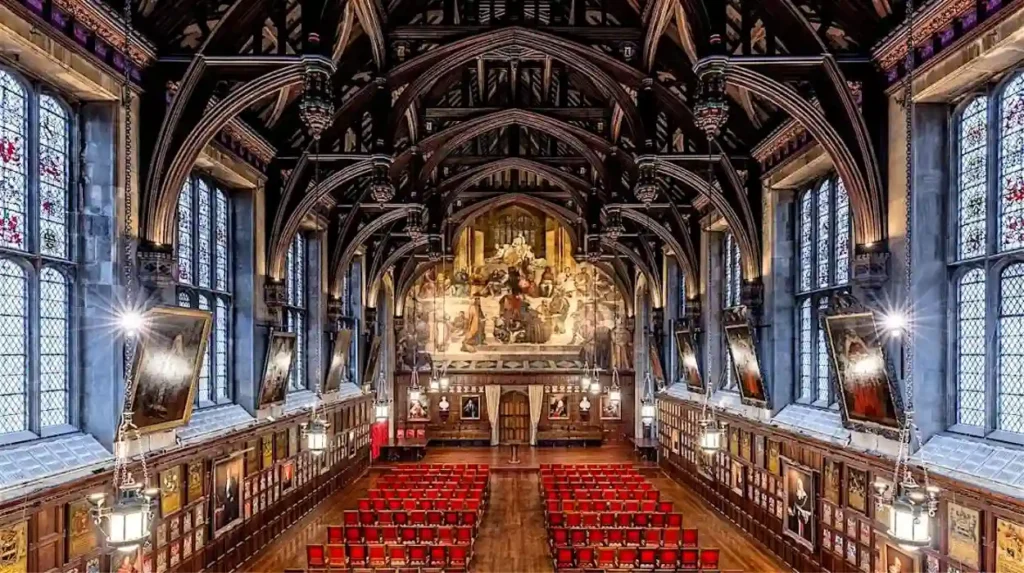
Which historic buildings define Lincoln’s Inn today?
Lincoln’s Inn contains one of Britain’s finest collections of legal architecture. Medieval structures, Tudor halls, Georgian chambers, Victorian libraries, and twentieth-century restoration projects collectively demonstrate continuous architectural evolution while preserving the institution’s historic identity and legal purpose.
The Great Hall remains Lincoln’s Inn’s architectural centrepiece. Constructed between 1843 and 1845 under architect Philip Hardwick, it replaced an earlier Tudor hall while respecting the site’s historic significance.
The hall displays Gothic Revival architecture through its vaulted timber roof, elaborate stone detailing, stained glass, heraldic decoration, and ceremonial layout. It continues hosting qualifying dinners, official ceremonies, lectures, and institutional events.
Adjacent to the Great Hall stands the nineteenth-century Library, also designed by Philip Hardwick. The library contains one of England’s most important specialist legal collections, including rare manuscripts, early printed books, historical statutes, and legal reports spanning several centuries.
The Chapel, completed in 1623 and designed by Inigo Jones, represents one of England’s earliest examples of classical ecclesiastical architecture. Although restored after wartime damage, it retains its historic proportions and continues serving the legal community.
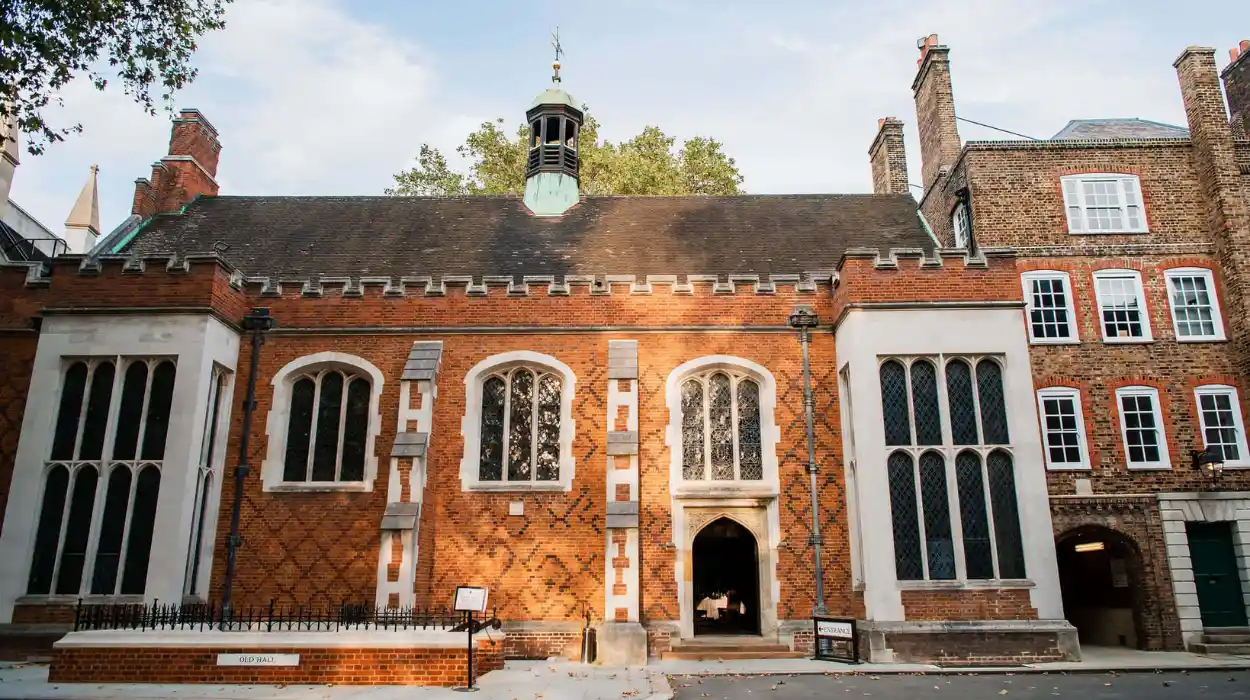
Old Buildings preserve elements dating from the sixteenth century, despite subsequent alterations. These brick structures illustrate how barristers traditionally lived and worked within residential legal chambers.
Stone Buildings, completed during the eighteenth century under architect Robert Taylor, introduced elegant Georgian architecture while providing expanded accommodation for practising barristers.
New Square demonstrates early nineteenth-century urban planning that balanced residential functions with landscaped open space. Its orderly arrangement reflects Georgian principles of proportion, symmetry, and civic design.
Together, these buildings illustrate changing architectural styles without disrupting Lincoln’s Inn’s historic institutional continuity.
What architectural styles appear throughout Lincoln’s Inn?
Lincoln’s Inn preserves medieval planning alongside Tudor, Jacobean, Georgian, Gothic Revival, and modern conservation architecture. These successive building phases demonstrate how England’s legal institutions adapted architecturally while maintaining functional continuity across more than six centuries of occupation.
Few locations in London display such a concentrated sequence of architectural development within a single institutional estate.
The surviving medieval layout established enclosed courts connected by controlled gateways. This arrangement reinforced security, privacy, and institutional identity.
Tudor architecture introduced red-brick construction, decorative chimneys, timber interiors, and improved residential accommodation for legal professionals.
Jacobean influences appear particularly within the Chapel through classical symmetry inspired by Renaissance architecture spreading across England during the early seventeenth century.
Georgian development emphasised mathematical proportion, restrained ornamentation, and improved urban organisation. Buildings from this period exhibit balanced façades, sash windows, and orderly spatial planning.
Victorian Gothic Revival transformed ceremonial spaces while expressing national pride in medieval traditions. The Great Hall exemplifies this approach through pointed arches, carved stone, elaborate timber roofs, and stained-glass windows celebrating legal history.
Post-war conservation introduced discreet structural reinforcement, improved services, and historically sensitive restoration. Modern interventions remain intentionally unobtrusive, allowing historic character to dominate the visitor experience.
The resulting architectural landscape documents changing construction methods, artistic preferences, and conservation philosophies across multiple historical periods.
Why are Lincoln’s Inn Gardens historically important?
Lincoln’s Inn Gardens preserve one of central London’s oldest institutional green spaces. Their historic design, mature trees, planned landscapes, and continuous maintenance illustrate evolving concepts of recreation, health, education, and urban environmental planning within a professional legal community.
Lincoln’s Inn Fields often receives greater public attention, but the private gardens within Lincoln’s Inn possess equally significant historical value.
Records indicate landscaped grounds existed by the sixteenth century. These gardens provided quiet environments where barristers studied, discussed legal matters, and escaped increasingly crowded city streets.
The renowned landscape architect Capability Brown contributed redesign work during the eighteenth century, introducing naturalistic planting that reflected changing landscape aesthetics across Britain.
Today, mature London plane trees, carefully maintained lawns, ornamental planting, and historic pathways preserve much of the estate’s traditional appearance.
Unlike decorative palace gardens, Lincoln’s Inn Gardens served practical institutional functions. They encouraged reflection, supported intellectual work, and enhanced residential quality for members living within the Inn.
Environmental historians recognise these landscapes as early examples of planned urban green infrastructure integrated into professional institutions.
Modern conservation programmes protect biodiversity while preserving historic planting layouts wherever documentary evidence permits.
The gardens also contribute significantly to London’s urban ecology by supporting bird populations, pollinating insects, and mature tree canopies within the densely developed legal district.
How did guided walks become an important way to interpret Lincoln’s Inn?
Guided walks connect architecture, legal history, conservation, and public education by explaining buildings within their historical context. Professional interpretation helps visitors understand centuries of institutional development while respecting the Inn’s continuing legal functions and restricted access arrangements.
Lincoln’s Inn remains an active legal institution rather than an open museum. Consequently, guided interpretation provides structured public access without disrupting legal activities.
Heritage guides explain architectural details often overlooked by independent visitors. Decorative carvings, heraldic symbols, memorials, inscriptions, and building phases reveal complex historical narratives not immediately visible.
Walking routes generally introduce visitors to the Great Hall, Chapel, New Square, Old Buildings, Stone Buildings, and selected garden areas depending upon institutional access arrangements.
Guides also explain traditions including admission ceremonies, qualifying dinners, educational customs, legal dress, and the continuing role of Benchers in institutional governance.
Many tours place Lincoln’s Inn within the wider legal landscape by examining nearby courts, legal publishers, historic chambers, and connections with Westminster.
Educational institutions frequently organise specialist visits for history students, architecture programmes, law faculties, and heritage organisations seeking deeper understanding of English legal development.
Interpretation increasingly incorporates archival research, digital visualisations, conservation evidence, and archaeological discoveries that enrich historical understanding beyond simple architectural description.
Which notable historical figures shaped Lincoln’s Inn?
Lincoln’s Inn educated influential lawyers, judges, politicians, scholars, and statesmen whose legal work shaped English constitutional development. Their careers demonstrate the Inn’s enduring contribution to judicial independence, legal education, parliamentary government, and the common law tradition.
Among Lincoln’s Inn’s distinguished members, Sir Thomas More remains internationally recognised for his legal scholarship, public service, and humanist learning during the Tudor period.
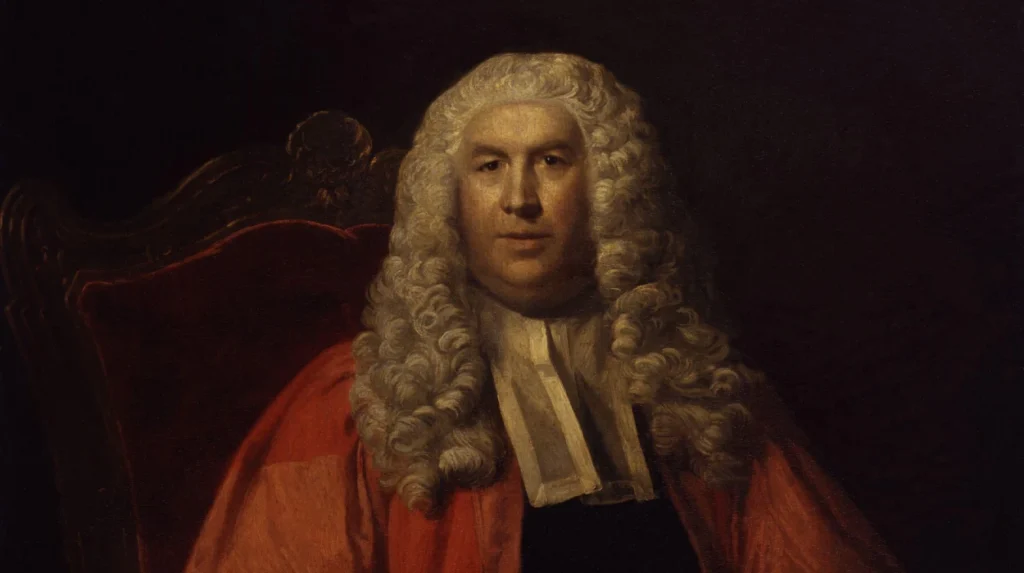
William Blackstone, whose Commentaries on the Laws of England became foundational legal texts across the English-speaking world, maintained close associations with the Inns of Court tradition.
Numerous Lord Chancellors, senior judges, Members of Parliament, colonial administrators, and legal reformers received education or professional training through Lincoln’s Inn across successive centuries.
The Inn also welcomed prominent legal historians, academics, and international jurists whose scholarship influenced comparative law and constitutional studies.
Memorials throughout the estate commemorate generations of members whose service extended beyond courtrooms into diplomacy, governance, education, scientific administration, and public policy.
Rather than celebrating individual achievement alone, these commemorations demonstrate how legal education contributed to broader institutional continuity within British public life.
How has Lincoln’s Inn preserved its historic character in the modern era?
Lincoln’s Inn balances active legal use with internationally recognised conservation standards. Restoration projects, heritage management, archival preservation, environmental stewardship, and careful public access ensure historic buildings remain functional while protecting their exceptional architectural and cultural significance.
Conservation at Lincoln’s Inn follows principles emphasising minimal intervention, historical accuracy, and long-term sustainability.
After extensive wartime bomb damage, architects restored affected buildings using surviving plans, photographs, original materials, and archaeological evidence whenever possible.
Historic masonry undergoes continuous monitoring to prevent structural deterioration caused by pollution, weathering, and age-related movement.
The Library protects rare manuscripts through controlled environmental conditions, specialist conservation treatments, and digitisation initiatives supporting scholarly access.
Traditional craftsmanship remains central to maintenance programmes. Skilled stonemasons, carpenters, glaziers, and conservation specialists repair historic fabric using techniques compatible with original construction.
Landscape management balances heritage objectives with biodiversity enhancement, climate resilience, and responsible tree preservation.
Modern accessibility improvements carefully integrate contemporary requirements without compromising historic architectural character.
These ongoing programmes demonstrate how living institutions preserve heritage through continuous adaptation rather than static museum preservation.
What makes Lincoln’s Inn an enduring part of London’s cultural heritage?
Lincoln’s Inn represents the continuous relationship between law, architecture, education, governance, and urban history. Its preserved buildings, landscapes, traditions, and archives provide exceptional evidence of England’s constitutional evolution while remaining an active centre of professional legal life.
Few historic institutions combine such extensive documentary evidence with continuous practical use across more than six centuries.
Its buildings illustrate changing architectural styles while maintaining coherent institutional identity.
Its archives preserve records valuable to historians, legal researchers, genealogists, architects, and conservation specialists studying London’s development.
Its educational traditions continue connecting modern barristers with practices established during the medieval and Tudor periods.
Its gardens demonstrate the historical importance of designed landscapes within professional communities.
Its conservation programmes provide nationally recognised examples of managing heritage within active working institutions.
Lincoln’s Inn also contributes significantly to London’s cultural tourism by offering carefully managed public engagement without sacrificing institutional integrity.
For educators, it provides a tangible environment for teaching constitutional history, architectural evolution, urban development, and legal education.
For researchers tracing historic legal families or professional lineages, the Inn’s archival collections preserve invaluable records documenting centuries of admissions, governance, and institutional life.
As London continues evolving, Lincoln’s Inn remains an exceptional example of how historic institutions sustain relevance through preservation, education, and continued professional purpose. Its buildings, gardens, and guided walks enable every generation to examine the enduring relationship between law, architecture, and the historical development of one of the world’s most influential legal traditions.
Is Lincoln’s Inn free to enter?
Entry to the outdoor grounds is generally free during public opening hours. However, guided tours, special events, or temporary exhibitions may require advance booking or an admission fee.