The London Underground, known as the Tube, serves 1.35 billion passengers annually across 272 stations and 250 miles of track. Extra London News provides this beginner’s guide to navigate the system efficiently using Transport for London (TfL) practices.
- What is the London Underground?
- How do you read a Tube map?
- What are Tube zones and why do they matter?
- How do you buy Tube tickets?
- What is the best way to pay for the Tube?
- How do you plan a Tube journey?
- How do you navigate Tube stations?
- Which Tube lines go where?
- What are Tube peak and off-peak times?
- How do you stand on escalators?
- How do you board and exit Tube trains?
- What should you do during disruptions?
- Are there accessibility features on the Tube?
- How does the Tube integrate with other transport?
- What are essential Tube etiquette rules?
- What apps help with the Tube?
- How has the Tube evolved historically?
- What future changes affect Tube users?
What is the London Underground?
The London Underground is a rapid transit system operated by Transport for London (TfL) with 11 color-coded lines, 272 stations, and nine fare zones covering central London and suburbs. It opened in 1863 as the world’s first underground railway, now carrying 3.5 million daily passengers pre-pandemic levels.
The system spans 250 miles of track, with 55% underground. TfL manages operations, fares, and maintenance. Lines include Bakerloo (brown), Central (red), Circle (yellow), District (green), Hammersmith & City (pink), Jubilee (grey), Metropolitan (magenta), Northern (black), Piccadilly (dark blue), Victoria (light blue), and Waterloo & City (turquoise). Examples: Bakerloo runs from Harrow & Wealdstone to Elephant & Castle; Victoria links Brixton to Walthamstow Central.
Central London falls in Zone 1, expanding outward to Zone 9. Historical context traces to 1863 when the Metropolitan Railway cut travel times from 60 minutes to 18 minutes between Paddington and Farringdon. Today, peak frequency reaches 36 trains per hour on busiest lines like Victoria. This structure enables seamless transfers at interchanges like King’s Cross St Pancras, serving six lines.
Implications include reduced road congestion, as Tube handles 75% of public transport trips in London. Future expansions like the Elizabeth Line integration boost capacity by 10%.
How do you read a Tube map?
Read the Tube map by identifying start and end stations, tracing color-coded lines between them, noting interchanges marked by circles, and checking direction via line ends. The iconic Harry Beck design from 1931 uses 45-degree angles for clarity across 402 stations including Overground.
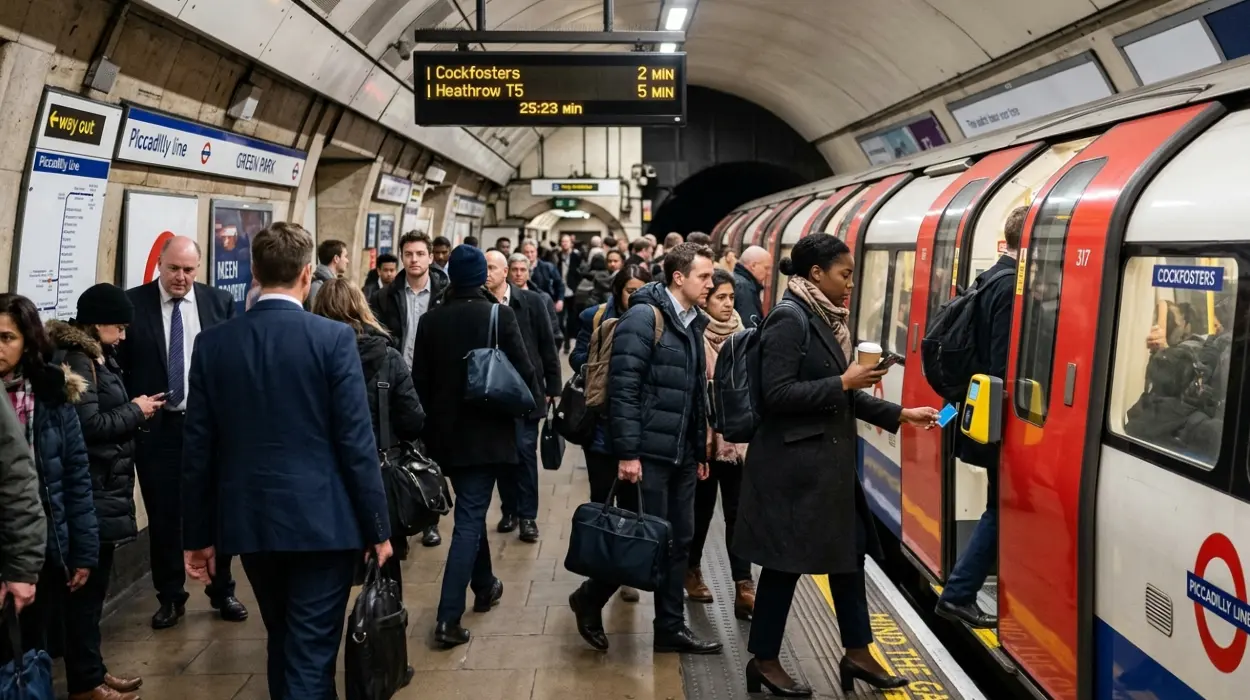
Maps appear on station walls, platforms, trains, and the TfL app. Locate your position using the red dot for current station. Follow lines to destination; white circles denote interchanges like Baker Street (Bakerloo, Circle, Jubilee, Metropolitan). Examples: From Heathrow (Piccadilly, dark blue) to Oxford Circus, follow Piccadilly westbound to Green Park, change to Victoria northbound.
Processes involve checking platform direction: eastbound, westbound, northbound, southbound listed at line termini. Digital screens show next stations. Data shows 90% of passengers use maps for navigation. Implications: Correct reading avoids 20% of wrong-platform errors reported by TfL.
What are Tube zones and why do they matter?
Tube zones divide London into nine concentric areas from Zone 1 (central) to Zone 9 (outer suburbs), determining fares based on entry and exit points. Zone 1 covers landmarks like Trafalgar Square; Zone 6 reaches Watford.
TfL sets zones for pricing: Zone 1-2 travel costs £2.80 peak off-peak with contactless. Mechanisms calculate distance via zones traveled. Examples: Bank to Waterloo (Zone 1) charges £2.50; Paddington (Zone 1) to Ealing Broadway (Zone 3) adds £3.20. Statistics: 70% of journeys stay within Zones 1-2.
Historical zoning began in 1981 for fare equity. Implications: Exiting wrong zone triggers maximum fare charge of £8.10. Use TfL journey planner to confirm zones before travel.
How do you buy Tube tickets?
Buy Tube tickets using contactless cards, Oyster cards, or paper tickets from machines; contactless and Oyster cap daily spending at £8.50 in Zones 1-2. Avoid single cash tickets at £6.70, the most expensive option.
Ticket machines accept cards, coins, notes at all stations. Oyster cards load credit electronically; Visitor Oyster for tourists includes £5-£50 credit. Processes: Insert card at machine, select pay as you go, top up. Examples: Daily cap Zones 1-3 at £8.90 saves 40% over singles.
TfL data shows 86% use contactless, reducing queues by 50%. Implications: Non-tapping doubles fares; children under 11 travel free with adult.
What is the best way to pay for the Tube?
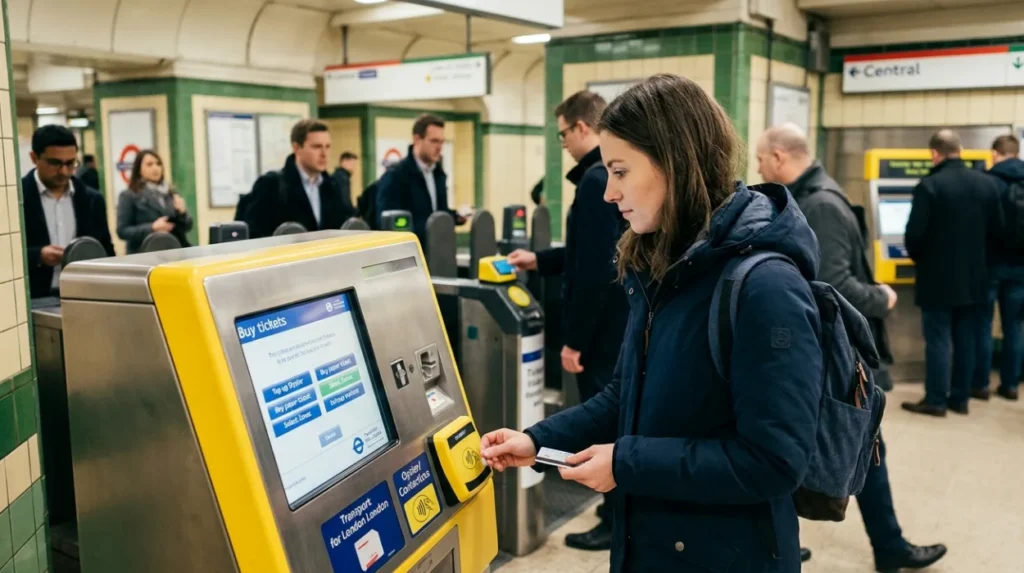
Use contactless bank cards or mobile payments like Apple Pay for lowest fares with automatic daily/weekly capping starting at £8.50 Zones 1-2. Oyster cards offer identical rates; avoid paper tickets.
Tap yellow reader entering and exiting; system tracks zones. Mechanisms deduct minimum fare, refund excess via capping. Examples: Monday-Sunday cap Zones 1-3 at £41.90. 2025 stats: 95% of payments contactless.
Implications: Foreign cards work without fees; set two-click for security. This cuts costs 50% versus singles for multi-trip days.
How do you plan a Tube journey?
Plan Tube journeys using TfL Go app or website: input start/end, select time, follow line colors and changes shown. Apps predict 5-30 minute waits.
Steps: Enter origin/destination, view step-by-step with platforms. Citymapper integrates buses. Examples: Covent Garden to Camden Town: Piccadilly to Leicester Square, Northern northbound, 12 minutes.
Data: 80% of users rely on apps, reducing errors 30%. Implications: Peak avoidance (7:30-9:30 AM, 5-7 PM) cuts delays.
London Underground stations feature clear signage directing passengers to platforms.
How do you navigate Tube stations?
Navigate stations by following overhead signs for line color, direction (northbound etc.), and platform numbers; use escalators standing right-side. Platforms list upcoming stations.
Entrances marked by red roundels. Inside, sort by line: Piccadilly platforms together. Processes: Exit train, follow interchange signs. Examples: At Embankment, District green signs lead to Circle yellow.
TfL reports 99% signage compliance. Implications: Far-end platforms less crowded, saving 2-3 minutes.
Which Tube lines go where?
11 lines serve specific routes: Bakerloo northwest-southeast, Central east-west, Circle/District loops, Victoria northeast-southwest, Piccadilly Heathrow-west/east. Jubilee loops east-west.
Metropolitan northwest, Northern south-north, Hammersmith & City east-west loop. Examples: Piccadilly hits Heathrow Terminals 2-5; Waterloo & City serves financial district weekdays.
Coverage: 402 stations total with National Rail. Implications: Interchanges like Liverpool Street (Central, Circle, Hammersmith & City, Metropolitan, Overground) connect 90% of London.
What are Tube peak and off-peak times?
Peak times run Monday-Friday 6:30-9:30 AM and 4-7 PM; off-peak all weekends, holidays, and other times with lower fares £2.80 vs £2.90 Zones 1.
Mechanisms adjust via time-based pricing. Examples: 8 AM Zone 1-2 £2.90; 10 AM £2.80. Stats: Peak carries 60% of traffic.
Implications: Off-peak avoids 20-minute delays; night Tube runs Fridays-Saturdays 23:59-5:00 AM all lines.
How do you stand on escalators?
Stand on the right side of escalators to let walkers pass left; hold railing, keep bags front. Rule applies all 202 stations with escalators.
Enforced since 1911 for efficiency. Examples: King’s Cross deepest at 90 feet, 6-minute escalator. Data: Reduces dwell time 15%.
Implications: Violations draw glares; lifts available at 90 step-free stations.
How do you board and exit Tube trains?
Board by queuing platform end away from doors, let alight first, move inside; exit via single file to way out signs. Doors open 45 seconds.
Trains arrive every 2-5 minutes peak. Processes: Front displays destination. Examples: Northern line Camden northbound shows Edgware/High Barnet.
TfL: 4 million daily alightings orderly. Implications: Rushing causes 10% delays.
What should you do during disruptions?
Check TfL status or app for delays, follow yellow-jacket staff, use alternative lines or buses via One More Journey feature. 85% resolved under 30 minutes.
Signals fail 5% peak. Examples: 2024 signal issue suspended Jubilee 1 hour; buses replaced.
Implications: Delay repay claims over 15 minutes via app; walk short gaps.
Are there accessibility features on the Tube?
89 stations offer step-free access via lifts; audio announcements, tactile paving guide visually impaired. Priority seats marked.
TfL Access for All upgrades 28 stations by 2030. Examples: Monument has key transfer lift. Stats: 12% passengers disabled.
Implications: App shows step-free routes; assistance books 24 hours ahead.
Step-free Tube stations include lifts at major interchanges.
How does the Tube integrate with other transport?
Tube connects to Elizabeth Line, Overground, DLR, buses, trams, National Rail at 70+ interchanges; Oyster works across all. Single tap covers journeys.
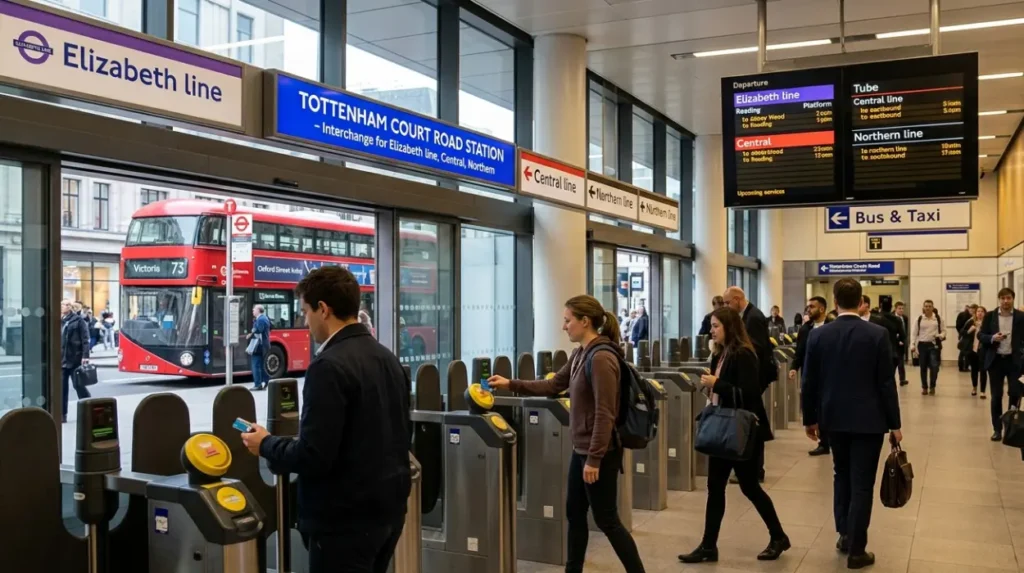
Examples: Tottenham Court Road links Elizabeth Line. Data: 40% multi-modal trips.
Implications: Hopper fare buses post-Tube free 1 hour.
What are essential Tube etiquette rules?
Let passengers off before boarding, stand clear doors, no eating/drinking, bags on lap, quiet zones on some trains. Bags max 82x30x30cm.
Posted signs enforce. Examples: Quiet carriages on the Metropolitan. TfL fines £80 for littering.
Implications: Compliance speeds 5% journeys.
What apps help with the Tube?
TfL Go, Citymapper, and Google Maps provide real-time routes, disruptions, and step-free; TfL Go is official with live maps. 10 million downloads.
Features: Arrival times to 1 minute. Examples: Citymapper suggests walking 10 minutes vs delayed Tube.
Implications: Offline maps save data; alerts push notifications.
How has the Tube evolved historically?
Tube opened 1863 steam-powered, electrified 1890, reached 402 stations by 2025 with air-conditioned 40% trains. World’s oldest metro.
Key events: 1905 first escalator, 1960s last steam. Stats: 5 billion passengers since inception.
Implications: Elizabeth Line 2022 added 1.1 million weekly capacity.
What future changes affect Tube users?
Four Lines Modernisation upgrades signals for 30% more trains by 2025; step-free to 100 stations by 2030. £3 billion investment.
Contactless extends to Gatwick. Examples: Piccadilly frequency doubles.
Implications: Reduces crowding 15%; app integration grows.
What is the London Underground?
The London Underground is a rapid transit system operated by Transport for London (London Underground). It has 11 lines, 272 stations, and connects central London with outer suburbs using nine fare zones.