Key Points
- Residents report traffic creeping back on streets.
- Council’s low-traffic neighbourhood scheme formally now banned.
- Drivers rerouting via residential roads despite restrictions.
- Local businesses divided over impact of LTN removal.
- Councillors face pressure for clearer 2026 transport plan.
Croydon (Extra London News) March 11, 2026 – Traffic is steadily creeping back on to residential streets that were previously restricted under Croydon’s now-banned low-traffic neighbourhood (LTN) scheme, prompting renewed debate among residents, traders and councillors over whether the policy’s removal has simply shifted congestion and pollution rather than resolving it.
- Key Points
- What is happening on Croydon’s former LTN streets in 2026?
- Why was Croydon’s LTN scheme banned and how has that shaped 2026?
- How are local residents responding to traffic’s return to banned LTN streets?
- How has the council justified banning the LTN and what alternatives are proposed?
- How are campaigners for and against LTNs framing the 2026 debate?
- What role do navigation apps and driver behaviour play on Croydon’s streets?
- How is road safety being affected on the ex-LTN streets?
- What does the creeping traffic mean for Croydon’s air quality and climate goals?
- How are schools and families adapting to the post-LTN environment?
Motorists are cutting through side roads that were once blocked by modal filters and camera-enforced restrictions, while some locals argue that scrapping the scheme has restored vital access, leaving the borough wrestling with competing demands for cleaner air, safer streets and economic vitality in 2026.
What is happening on Croydon’s former LTN streets in 2026?
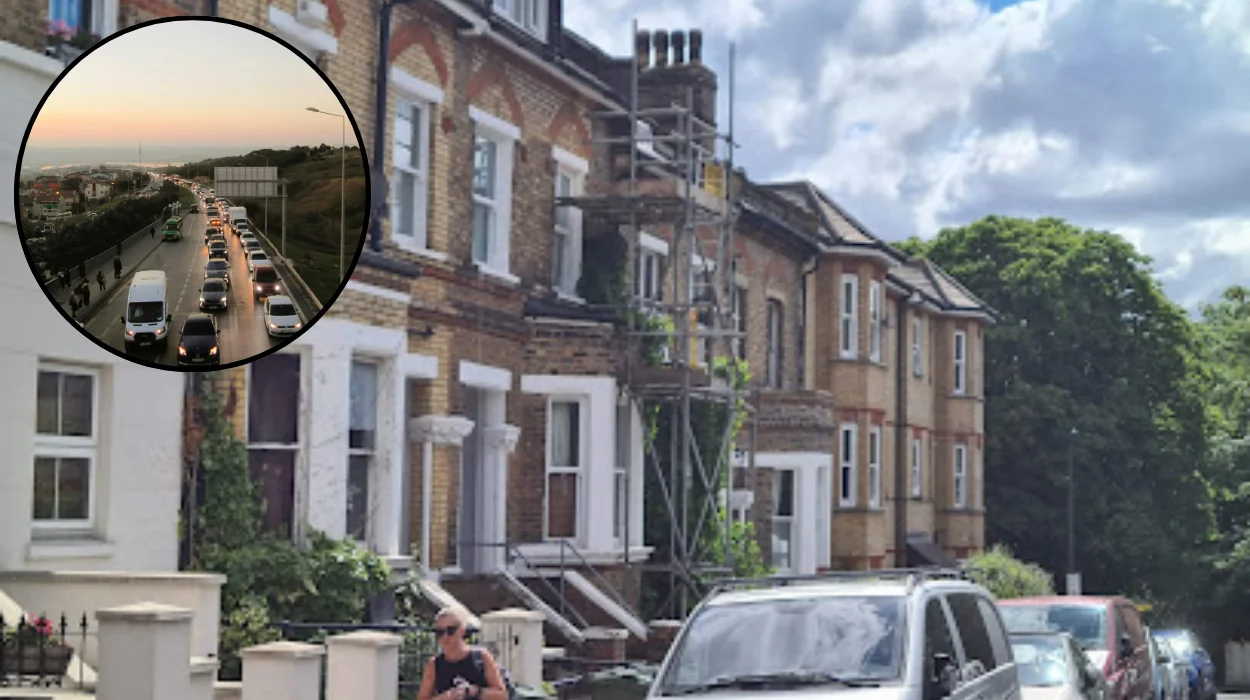
Former LTN streets in parts of Croydon, including key residential corridors that were once protected by bollards, planters or ANPR camera enforcement, are now experiencing a gradual but noticeable increase in through‑traffic at peak times. Residents who previously saw a sharp reduction in cars and delivery vans during the operation of the scheme are reporting longer queues at junctions, more aggressive driving by motorists attempting to bypass main road congestion, and a return of the engine noise and idling that had dipped while the restrictions were in force.
As the now-banned LTN has been fully stood down, signs that once warned of penalties for non‑resident drivers have either been removed or covered, while some physical filters have been taken out altogether, effectively reopening old rat‑runs. Pedestrians and cyclists who had begun to rely on quieter back streets for daily journeys have described feeling less safe and more exposed to fast-moving traffic since 2026 began, although others say the restored permeability is necessary for practical car access to homes, care responsibilities and local businesses.
Why was Croydon’s LTN scheme banned and how has that shaped 2026?
Croydon’s LTN scheme, introduced in the wake of national guidance promoting active travel and emissions reductions, became politically and socially contentious as some drivers and traders argued that it unfairly restricted access and displaced traffic onto already congested main roads. Opponents claimed that emergency services faced delays, carers and tradespeople struggled to carry out their work efficiently, and that the consultation process did not properly reflect the views of those most affected by road closures and camera restrictions.
Over time, pressure mounted on councillors from campaign groups, petitions and formal complaints, with critics insisting that congestion and pollution had worsened on boundary roads and that the scheme represented an ideologically driven experiment rather than a pragmatic solution.
When the LTN was finally banned, the decision was framed as a move to rebalance the needs of drivers, public transport users, pedestrians and cyclists, but the reappearance of creeping traffic on residential streets in 2026 suggests that underlying volume and behaviour issues remain unresolved, merely taking different forms based on the road layout of the day.
How are local residents responding to traffic’s return to banned LTN streets?
Residents who supported the LTN have described the return of traffic as a “step backwards”, emphasising that, during the scheme, children could walk and cycle more freely, noise levels were lower and air quality felt noticeably improved. Some households report going back to keeping windows closed during rush hour, avoiding front gardens at busy times, and planning school runs more cautiously due to increased vehicle movements and a perceived uptick in speeding on roads that had briefly felt like quieter, shared spaces.
By contrast, those who opposed the LTN have welcomed the ability to drive more directly to their homes, avoiding lengthy detours around filters, and say the removal of fines and confusing signage has reduced tension between locals and visitors.
Yet even among previous critics, there is frustration at being “stuck in the middle”, as the underlying congestion on main corridors through Croydon persists and navigation apps continue to channel drivers down any open side street that promises a marginally faster journey, turning residential roads back into pressure‑valves for wider network problems.
How has the council justified banning the LTN and what alternatives are proposed?
Council leaders have framed the decision to ban the LTN as a response to community feedback, concerns about equity and access, and the operational challenges highlighted during the scheme’s life. Officials have pointed to complaints from residents with mobility issues, carers, tradespeople and small businesses who said their journeys had become longer and more complex, while emergency services and bus operators raised worries about route flexibility and response times in a network constrained by physical filters and camera controls.
In 2026, the council is seeking to emphasise a broader transport and environmental strategy that goes beyond a single LTN, talking about targeted junction improvements, more reliable bus corridors, better cycling connections on strategic, rather than purely residential, routes, and stronger enforcement of speeding and dangerous driving.
Whether those alternatives will meaningfully address the creeping traffic on former LTN streets remains contested, particularly as campaigners for cleaner air and safer roads argue that, without robust restrictions in certain corridors, the sheer volume of vehicles will continue to spill into any available space.
How are campaigners for and against LTNs framing the 2026 debate?
Pro‑LTN campaigners in Croydon and beyond see the creeping return of traffic on previously protected streets as evidence that, without structural interventions, car use naturally expands to fill available road capacity. They argue that LTNs are not about punishing drivers but about rebalancing public space, protecting vulnerable road users and supporting national and local commitments to cut carbon emissions and improve public health through reduced air pollution.
Opponents, meanwhile, contend that banning the LTN was a necessary correction to what they characterise as a top‑down imposition that failed to account for the realities of daily life for many residents, especially those who rely heavily on vehicles.
They maintain that sustainable transport goals should be pursued through investment in reliable public transport, affordable alternatives, and better main-road infrastructure, rather than by closing local streets and issuing fines, and some have used the 2026 traffic patterns to push for a more comprehensive review of how navigation apps and freight routes are managed.
What role do navigation apps and driver behaviour play on Croydon’s streets?
Navigation apps play a significant role in directing drivers through Croydon’s road network, particularly at peak times when main roads are heavily congested. During the LTN’s operation, filters and camera restrictions forced routing algorithms to avoid certain residential corridors, redistributing traffic patterns and, in some cases, lengthening journeys but also protecting specific neighbourhoods from through‑traffic.
With the LTN banned, these digital tools now see previously closed streets as legitimate shortcuts, sending vehicles back through areas that had enjoyed a temporary respite. This dynamic underlines the challenge for local authorities: even if they design roads with a particular hierarchy in mind, real‑time data and driver behaviour can quickly undermine the intended balance, unless physical and legal constraints are robust enough to override the incentives created by time‑saving route suggestions.
How is road safety being affected on the ex-LTN streets?
On streets that were previously part of the LTN, residents have reported feeling that road safety has deteriorated as more vehicles return, especially during the school run and evening peak. Parents who had become accustomed to accompanying children along quieter pavements and across calmer junctions now speak of renewed anxiety about speeding cars, vans mounting the kerb to pass each other, and reduced visibility caused by parked vehicles lining reopened cut‑throughs.
Cyclists, who had used the former LTN network as a relatively safe low-speed corridor, are again weighing up whether to remain on those streets or divert to busier main roads with dedicated lanes, where such facilities exist.
The shift illustrates how quickly perceived and actual safety can change when traffic volumes rise, even if the official speed limits and signage remain unchanged, and reinforces arguments from campaigners who say that consistent physical calming measures are essential if modal shift is to be sustained.
What does the creeping traffic mean for Croydon’s air quality and climate goals?
The movement of traffic back onto residential streets has implications for local air quality, with pollutants such as nitrogen dioxide and fine particulate matter likely to increase near homes, schools and parks. While main roads may continue to bear the brunt of heavy traffic, any additional flows through side streets can expose more people, including children and older residents, to emissions at close quarters, undermining previous gains experienced during the LTN period.
From a climate perspective, the ban on the LTN sends a complex signal at a time when authorities are under pressure to reduce transport emissions as part of wider net‑zero strategies. Without measures that concretely suppress car journeys or shift them to cleaner modes, critics warn that local targets risk becoming aspirational rather than operational, with the creeping return of traffic serving as a visible reminder of how quickly patterns can revert if supportive infrastructure and restrictions are withdrawn.
How are schools and families adapting to the post-LTN environment?
Schools located in or near the former LTN zone are having to reconsider how they manage drop‑off and pick‑up times, with some reviewing staggered start and finish times, encouraging “park and stride” approaches, or lobbying for school streets and crossing patrols. Staff and governors who had seen benefits from quieter surrounding roads such as less chaotic gates and safer walking routes are now working with parents to mitigate the impact of increased traffic, often in the context of stretched budgets and limited enforcement capacity.
Families are adjusting daily routines, weighing the perceived safety of walking and cycling routes against the convenience and perceived security of driving, even when journeys are short. This recalibration of habits underlines how sensitive behaviour is to the immediate street environment: when traffic drops and space feels calmer, people are more inclined to choose active modes, but when congestion and driver frustration reappear, the incentives shift back towards car use, creating a feedback loop that reinforces the very pressures that prompted the original LTN.