Somerset House is one of London’s most significant cultural and architectural landmarks. Located on the north bank of the River Thames between the City of London and Westminster, it combines more than 250 years of architectural heritage with a year-round programme of exhibitions, festivals, public art, and educational activities. Today, it functions as an internationally recognised arts centre while preserving one of Britain’s finest examples of eighteenth-century Neoclassical architecture.
- Why is Somerset House one of London’s most important cultural destinations?
- What exhibitions can visitors expect at Somerset House?
- How does the architecture shape the visitor experience?
- What makes the Edmond J. Safra Fountain Court unique?
- Which seasonal events define Somerset House throughout the year?
- How does Somerset House preserve its historic significance while supporting contemporary culture?
- What can visitors discover beyond the main exhibitions?
- How does Somerset House contribute to London’s wider cultural landscape?
- What should visitors know before planning a visit?
Unlike many historic buildings that operate primarily as museums, Somerset House continues to evolve as an active cultural institution. Visitors experience historic courtyards, contemporary exhibitions, permanent collections, creative workspaces, seasonal installations, and public events within the same historic setting. This combination makes Somerset House an essential destination for tourists, historians, students, architects, and anyone interested in London’s built heritage.
Why is Somerset House one of London’s most important cultural destinations?
Somerset House combines nationally significant Georgian architecture, internationally recognised art exhibitions, historic public courtyards, educational programmes, and seasonal cultural events within one historic riverside complex. Its continuous adaptation demonstrates how heritage buildings remain relevant through conservation, public access, and contemporary cultural use.
Somerset House occupies a strategic location on the Strand overlooking the River Thames. The present building was largely constructed between 1776 and 1801 following designs by Sir William Chambers, one of Britain’s leading eighteenth-century architects. The site itself has served royal, governmental, scientific, naval, and cultural purposes for almost five centuries.
The building’s modern identity reflects careful preservation rather than reconstruction. Historic façades, ceremonial staircases, vaulted terraces, and symmetrical courtyards survive alongside modern exhibition galleries, artist studios, and event spaces.
Each year, hundreds of thousands of visitors attend exhibitions, outdoor festivals, concerts, film screenings, educational workshops, and seasonal attractions. This continuous public use preserves Somerset House as a living cultural institution instead of a static historic monument.
Its importance also extends beyond tourism. Creative organisations, artists, designers, charities, and technology innovators operate from offices within the complex, reinforcing Somerset House’s original role as a centre of public life.
To experience this historic landmark in person today, consult our comprehensive [The History of Somerset House: From Tudor Palace to Cultural Landmark] for itineraries and visiting parameters.
What exhibitions can visitors expect at Somerset House?
Somerset House presents changing exhibitions covering photography, digital art, design, architecture, fashion, contemporary culture, and interdisciplinary creative practice. Rotating exhibitions ensure repeat visits while maintaining international artistic relevance throughout the year.
Unlike traditional museums that focus on permanent collections, Somerset House operates primarily through temporary exhibitions.
The institution regularly collaborates with leading museums, galleries, universities, artists, photographers, and cultural organisations to present original exhibitions. These exhibitions frequently explore themes including climate change, identity, technology, migration, architecture, innovation, and visual culture.
Photography has become one of Somerset House’s strongest exhibition areas. International photographers have displayed documentary projects, portrait collections, environmental photography, and historical archives that examine social change.
Fashion exhibitions explore clothing as both artistic expression and historical evidence. Displays examine textile innovation, sustainable production, costume history, and contemporary design.
Digital art has become increasingly important within Somerset House’s programme. Interactive installations, immersive audiovisual environments, and experimental media demonstrate how historic architecture accommodates modern artistic practices.
Many exhibitions include lectures, educational workshops, guided tours, panel discussions, and family activities that broaden public engagement beyond traditional gallery visits.
The exhibition programme changes several times each year, allowing returning visitors to experience different themes while exploring familiar architectural surroundings.
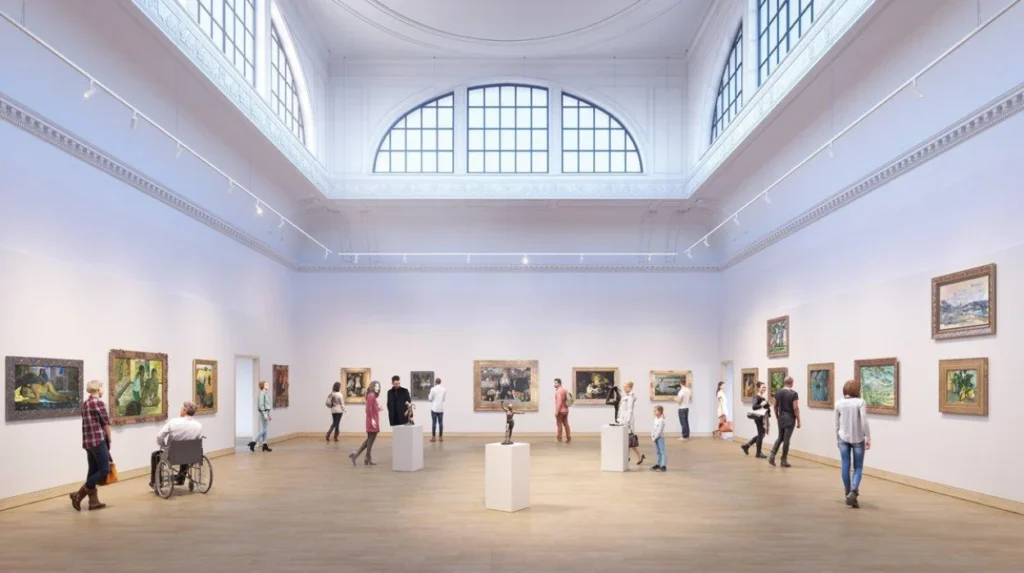
How does the architecture shape the visitor experience?
Somerset House’s Neoclassical architecture creates a coherent visitor experience through symmetrical planning, monumental courtyards, riverside terraces, ceremonial staircases, and carefully proportioned public spaces that reflect eighteenth-century ideals of order, authority, and civic identity.
The existing Somerset House represents one of Britain’s greatest surviving examples of Neoclassical public architecture.
Sir William Chambers designed the complex according to classical architectural principles derived from Ancient Greece and Rome. These principles emphasised symmetry, proportion, balance, and monumental scale.
The central courtyard forms the heart of the visitor experience. Its expansive open space creates visual harmony while directing movement toward galleries, entrances, cafés, and event venues.
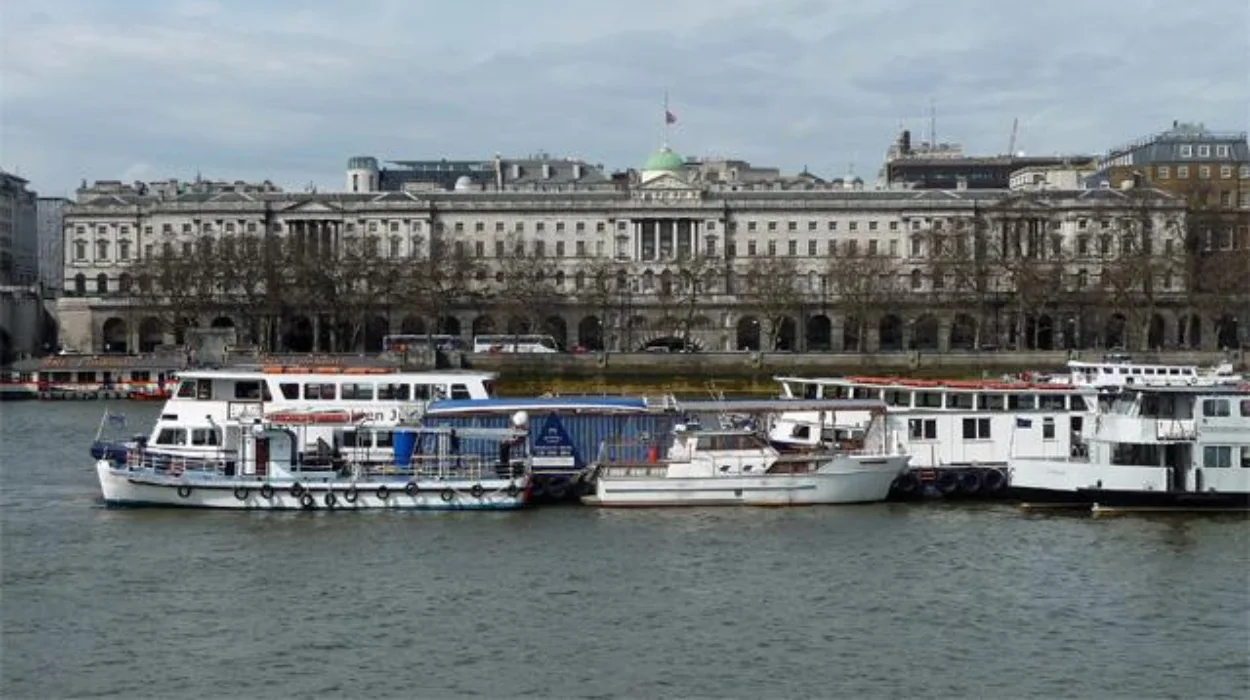
The Strand façade presents an imposing public face through repetitive columns, pilasters, arches, and decorative stonework. This composition expressed governmental stability during the late eighteenth century.
Visitors also encounter impressive vaulted spaces beneath the river terrace. These historic foundations supported government offices while creating dramatic architectural interiors that remain accessible today.
The riverside terrace offers panoramic views across the Thames toward the South Bank. Historically, this position connected Somerset House directly with London’s commercial and political centre.
Interior spaces combine ceremonial grandeur with practical functionality. High ceilings, generous corridors, stone staircases, and natural lighting demonstrate how eighteenth-century architects balanced aesthetics with administrative efficiency.
Conservation programmes maintain original masonry, sculptures, decorative plasterwork, and structural elements while integrating modern accessibility, environmental controls, and exhibition infrastructure.
What makes the Edmond J. Safra Fountain Court unique?
The Edmond J. Safra Fountain Court transforms Somerset House’s central courtyard into an interactive public space through programmable fountains, seasonal installations, cultural events, and architectural openness that encourages year-round public participation.
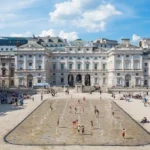
The Fountain Court has become Somerset House’s most recognisable public space.
Fifty-five programmable fountains emerge directly from the courtyard pavement without permanent barriers. This design allows the space to serve multiple purposes throughout the year.
During warmer months, families, children, photographers, and tourists gather around the fountains, creating one of central London’s most accessible public squares.
The fountains also contribute to architectural interpretation by emphasising the symmetry of the surrounding Georgian buildings.
Temporary art installations frequently occupy the courtyard between seasonal events. Large-scale sculptures, environmental artworks, and interactive displays transform the historic space while preserving its architectural integrity.
Because the courtyard remains freely accessible during opening hours, many visitors experience Somerset House without purchasing exhibition tickets, reinforcing its role as a public civic space.
Which seasonal events define Somerset House throughout the year?
Seasonal programming transforms Somerset House through outdoor cinema, winter ice skating, music festivals, design events, cultural celebrations, and public art installations that attract diverse audiences while activating historic public spaces.
Seasonal programming distinguishes Somerset House from many historic attractions.
Summer brings outdoor film screenings within the courtyard. Historic architecture provides a dramatic backdrop for classic cinema, contemporary films, and special premieres.
Music festivals present performances spanning electronic music, jazz, classical music, world music, and contemporary genres. Historic surroundings create distinctive performance environments rarely found elsewhere in London.
Design festivals showcase architecture, sustainability, innovation, product design, and creative industries through exhibitions, workshops, and public installations.
Winter transforms the courtyard into one of London’s best-known ice skating destinations. The skating rink attracts visitors from across Britain and internationally while preserving clear views of the surrounding Georgian façades.
Festive lighting, seasonal markets, and holiday programming further increase visitor numbers during winter months.
Educational events continue throughout every season. Public lectures, artist talks, conservation workshops, family learning sessions, and school programmes ensure year-round engagement beyond entertainment.
How does Somerset House preserve its historic significance while supporting contemporary culture?
Somerset House preserves nationally important historic architecture through conservation, adaptive reuse, educational programming, and compatible cultural activities that protect historic fabric while ensuring continuous public relevance and financial sustainability.
Adaptive reuse forms the foundation of Somerset House’s success.
Historic government offices have become galleries, studios, creative workspaces, restaurants, educational facilities, and event venues without compromising the building’s architectural character.
Conservation specialists regularly inspect masonry, roofing, drainage systems, sculptures, decorative stonework, and structural elements to prevent deterioration.
Modern climate control systems protect both the historic building and temporary exhibitions.
Accessibility improvements, including lifts, ramps, and visitor facilities, increase public access while respecting heritage regulations.
Educational programmes explain conservation principles, architectural history, and urban development, helping visitors understand why preserving historic buildings benefits future generations.
The Somerset House Trust balances commercial activities with public access. Revenue from exhibitions, events, venue hire, restaurants, and partnerships supports ongoing maintenance and conservation.
This financial model demonstrates how historic buildings achieve long-term sustainability without sacrificing heritage value.

What can visitors discover beyond the main exhibitions?
Visitors explore riverside terraces, historic staircases, public art installations, cafés, creative studios, shops, educational spaces, and architectural viewpoints that extend the Somerset House experience beyond formal gallery exhibitions.
Many visitors spend several hours exploring Somerset House beyond its ticketed galleries.
The river terrace offers one of central London’s most attractive viewpoints across the Thames.
Historic staircases showcase original eighteenth-century craftsmanship through stone construction, decorative balustrades, and carefully proportioned spaces.
Public art appears throughout the complex. Sculptures, installations, and commissioned works encourage exploration between exhibition spaces.
Creative organisations housed within Somerset House contribute to its dynamic atmosphere. Designers, artists, cultural institutions, and innovation programmes operate alongside visitor attractions.
Independent cafés and restaurants occupy restored historic spaces, allowing visitors to experience heritage architecture during meals and informal gatherings.
Retail spaces offer exhibition publications, architecture books, design objects, locally produced crafts, and educational resources connected with current exhibitions.
These facilities encourage longer visits while strengthening Somerset House’s role as a complete cultural destination.
How does Somerset House contribute to London’s wider cultural landscape?
Somerset House strengthens London’s international cultural reputation through artistic innovation, heritage conservation, public education, creative industries, and accessible public programming that connects historic architecture with contemporary society.
London contains numerous historic attractions, but Somerset House occupies a distinctive position between heritage and innovation.
Its programming complements nearby museums, theatres, galleries, universities, and government institutions.
Partnerships with international artists, academic institutions, cultural organisations, and research bodies encourage global collaboration.
Educational outreach introduces school groups to architecture, history, design, conservation, photography, and visual arts.
Creative workspace programmes support emerging organisations that contribute to Britain’s cultural economy.
Public access remains central to Somerset House’s mission. Large sections of the complex remain freely accessible throughout the year, encouraging spontaneous visits alongside planned cultural experiences.
Its location near Covent Garden, the Strand, King’s College London, and the River Thames integrates Somerset House into London’s historic and cultural walking routes.
What should visitors know before planning a visit?
Visitors benefit from allowing several hours to explore exhibitions, courtyards, architectural features, riverside terraces, cafés, seasonal attractions, and public art because Somerset House functions as both a heritage site and an active cultural centre.
Somerset House rewards both short and extended visits.
Exhibition schedules change throughout the year, making advance planning valuable for visitors interested in specific themes.
The open courtyard remains accessible regardless of exhibition admission, allowing casual visitors to appreciate the architecture without entering galleries.
Seasonal programming significantly changes the visitor experience. Summer focuses on outdoor performances and public installations, while winter centres on the famous skating rink and festive activities.
Photography enthusiasts benefit from changing natural light across the courtyard, river terrace, and surrounding façades.
Architecture students often study Somerset House because it illustrates Georgian urban planning, Neoclassical design principles, adaptive reuse, and conservation practice within one accessible location.
Families appreciate the interactive fountains, educational workshops, and open public spaces.
Researchers value the site’s documented history spanning Tudor royal residence, government administration, scientific institutions, naval administration, and modern cultural use.
Somerset House represents one of Britain’s most successful examples of historic preservation combined with contemporary cultural programming. Its eighteenth-century architecture, central London location, internationally recognised exhibitions, accessible public courtyards, and diverse seasonal events ensure continuing relevance for modern audiences.
Visitors encounter far more than a historic building. They experience an active cultural institution where architecture, public space, education, visual arts, conservation, and community engagement operate together. This combination distinguishes Somerset House from conventional museums and historic houses.
Its carefully preserved Georgian design continues to frame new artistic expression while maintaining direct connections to London’s political, architectural, and cultural history. As exhibitions evolve and seasonal events return each year, Somerset House remains an enduring example of how historic places continue serving contemporary society without losing their historical identity.
Is Somerset House free to visit?
Yes. Entry to the Somerset House courtyard, riverside terrace, cafés, shops, and many public spaces is free. However, most temporary exhibitions, special events, and seasonal attractions such as the winter ice rink require paid tickets.