Key Points
- Subterranean Swelter: Commuters on the London Underground face extreme temperatures during peak travel hours, with underground conditions described by passengers as resembling a “sauna”.
- Worse Than Livestock Regulations: Commuter conditions on deep lines routinely exceed the legal temperature limits established for the transport of cattle.
- Infrastructure Failure: The historic London Underground network cannot be easily or quickly adapted to withstand severe modern heatwaves.
- The Hardest Hit Lines: Deep-level routes, including the Central, Bakerloo, and Victoria lines, suffer the most severe heat retention due to clay insulation and a lack of traditional air conditioning.
- Commuter Coping Mechanisms: Passengers are forced to employ drastic measures, including travelling in gym clothes to change at work and using portable electronic fans just inches from their faces.
- Routine Heatwaves: Climate patterns indicate that 30°C+ summer heatwaves in the capital are shifting from anomalies to annual routines, stressing an aging transport system.
London (Extra London news) July 11, 2026 – Millions of London Underground passengers are facing dangerous, subterranean heatwaves that exceed the maximum legal temperature limits permitted for transporting livestock, as the aging transport network struggles to adapt to escalating summer temperatures. The subterranean depths of the capital’s rail network have effectively transformed into heat traps, forcing commuters to endure gruelling journeys in overcrowded, un-air-conditioned carriages. Transport authorities admit that retrofitting the network’s historic deep-level tunnels to handle modern climate realities presents an extraordinary engineering and financial challenge, leaving commuters with few immediate solutions beyond personal resilience and portable fans.
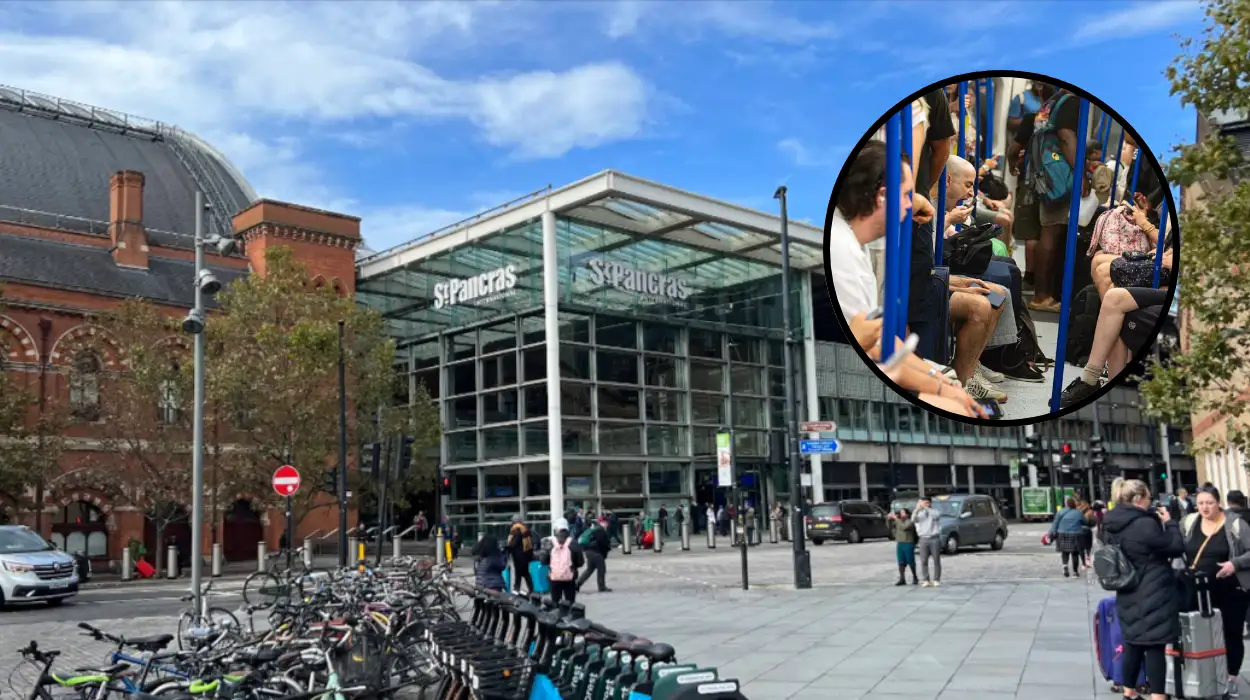
As reported by transport correspondents monitoring the situation at major hubs like King’s Cross St Pancras station, the transition from the already warm street-level air to the furnace-like conditions of the deep platforms is immediate and overwhelming. Inside the carriages, the scene is one of universal discomfort: passengers lean back against seats with their eyes closed to combat dizziness, while others hold small electric fans directly against their skin. The stoicism historically associated with London commuters is being tested to its absolute limit by what has become a predictable, annual tribulation rather than an occasional summer anomaly.
How Hot Is the London Underground During a Heatwave?
The temperature threshold on several deep-level Tube lines frequently surpasses the 30°C mark during summer peaks, a reality that places the network well outside standard comfort zones. For context, European Union and UK regulations stipulate that livestock, including cattle, should not be transported in temperatures exceeding 30°C to ensure animal welfare. Yet, human passengers on the Central, Bakerloo, and Victoria lines routinely experience conditions far higher than this limit.
Journalists tracking network temperatures have noted that the problem is compounded by humidity and overcrowding. As millions of bodies pack into confined spaces during rush hour, the ambient temperature escalates rapidly. While surface temperatures in London might hover around 30°C, the air trapped in deep-level tunnels can soar several degrees higher, creating an environment that public health experts warn could pose risks to vulnerable travellers, including the elderly and those with underlying respiratory or cardiovascular conditions.
Why Does the Tube Retain So Much Heat?
The fundamental issue lies in the historic engineering of the Underground itself. When the deep-level tubes were bored through the earth in the late 19th and early 20th centuries, the surrounding London clay acted as a natural heat sink, absorbing warmth from the trains and keeping the tunnels relatively cool. However, over a century of continuous train operations, combined with increasingly hot British summers, has effectively baked the clay. The surrounding earth has reached its thermal capacity; instead of absorbing heat, the clay now retains it and radiates it back into the tunnels.
Furthermore, the physical dimensions of the deep-level tubes leave almost no clearance space between the train roof and the tunnel ceiling. This tight fit makes the installation of standard air conditioning units on top of carriages physically impossible, as there is simply no room for the equipment or the expulsion of hot air. If a train were to pump heat out of its carriages into the narrow tunnels, it would merely raise the platform temperatures to even more dangerous levels, creating a secondary hazard for passengers waiting for the next service.
Explore More London Local News
TfL Alters Routes 19 and 38 Despite Backlash: London 2026
Thames Water Main Burst Floods Homes Amid Heatwave: Bow 2026
What Are Passengers Saying About the Tube Heat?
The lived experience of daily commuters highlights the physical toll of these journeys. As reported by Gwynn Guilford of The Guardian, a passenger named Anna, speaking from an Oxford Circus platform, stated that “We’re quite lucky that this platform is almost empty, because when the platform gets packed it’s [like a] sauna.” Anna noted that while she typically adapts well to elevated temperatures, the stagnant heat on the deep platforms has become exceptionally difficult to bear, particularly during peak commuting hours when human density peaks.
Other passengers have had to alter their daily routines entirely just to survive the journey to their workplaces. In the same coverage by The Guardian, a commuter named Craig stated that he has to travel in gym clothes and change into his work clothes at the office because of the heat on the Tube. Craig’s experience is shared by thousands of workers who find that standard professional attire is entirely incompatible with a 30-minute transit through the network’s deepest corridors.
Which Tube Lines Realistically Experience the Worst Conditions?
The network is effectively split into two distinct systems: sub-surface lines and deep-level lines. Sub-surface lines, such as the District, Circle, Metropolitan, and Hammersmith & City lines, use wider tunnels built just below street level. These lines have largely been successfully retrofitted with modern, spacious, air-conditioned trains because the larger tunnels allow for the dissipation of hot air and accommodate the necessary cooling machinery.
In stark contrast, the deep-level lines remain severe heat traps. According to official briefings from Transport for London (TfL), the Bakerloo line is particularly vulnerable because it operates some of the oldest trains in passenger use anywhere in the United Kingdom. These legacy fleets lack any mechanical cooling systems, relying entirely on small, open windows that simply circulate the hot tunnel air. The Victoria line, despite having newer rolling stock, remains one of the deepest lines on the network, making ventilation an ongoing structural battle. The Central line similarly suffers from extreme passenger density combined with lengthy deep-tunnel stretches that lack adequate cooling infrastructure.
What Is Transport for London Doing to Fix the Heat Problem?
Transport for London has acknowledged the severity of the situation but emphasizes that fixing a century-old underground labyrinth is a slow, capital-intensive process. TfL has implemented several localized engineering solutions, including the installation of massive industrial cooling fans at key interchange stations, upgraded ventilation shafts, and subterranean chilling units designed to pump cooler air onto specific platforms.
Long-term relief for the deep lines relies heavily on the introduction of the “New Tube for London” programme. This initiative involves introducing brand-new, walk-through trains equipped with specialized, compact air-cooling systems specifically engineered to fit within the restrictive dimensions of deep-level tunnels. The Piccadilly line is scheduled to receive these new trains first, followed eventually by the Bakerloo and Central lines. However, these upgrades require billions of pounds in sustained capital funding and take years to manufacture and test, meaning that comprehensive relief across the entire deep network remains a distant prospect for London’s sweltering public.