Key Points
- Mayoral Intervention: The Greater London Authority (GLA) has officially bypassed Barnet Council’s planning refusals to approve two substantial residential-led developments.
- Massive Housing Injection: The dual approvals will deliver a combined total of 1,768 new homes across the North London borough, targetting brownfield locations.
- Finchley Masterplan Unlocked: Arada London’s £1.5 billion transformation of the Great North Leisure Park (GNLP) will supply 1,485 new homes alongside a replacement civic sports centre and lido.
- High Barnet Station Scheme Approved: Barratt London and Places for London secured permission for 283 low-energy homes built atop an existing Tube station car park.
- Local Opposition Overridden: The decisions directly reverse unanimous and majority votes by local councillors, who had cited severe overdevelopment, excessive heights reaching 25 storeys, and infrastructure deficits.
- Affordable Housing Guarantees: The Finchley site commits to 25% affordable units by habitable room, while the High Barnet station scheme pledges 40% affordable delivery under a social and shared-ownership framework.
London (Extra London News) June 4, 2026 – The Greater London Authority has radically transformed the development landscape of North London by overriding Barnet Council’s planning committee to greenlight two separate major residential masterplans. Acting on behalf of London Mayor Sadiq Khan, Deputy Mayor for Planning, Regeneration and Skills Jules Pipe issued structural approvals for a combined 1,768 homes following intensive public call-in hearings. The landmark interventions unblock Arada London’s monumental 1,485-home redevelopment of the Great North Leisure Park in Finchley and a contentious 283-home passive-house development at High Barnet Tube station spearheaded by Barratt London and Places for London. Both applications had been decisively thrown out by local authorities late last year due to fierce community pushback regarding building heights, bulk, and local density limits.
- Key Points
- Why Did City Hall Step In to Reverse Barnet Council’s Planning Rejections?
- What Are the Details of Arada London’s 1,485-Home Finchley Scheme?
- How Did Local Residents and Politicians React to the Great North Leisure Park Approval?
- What is Planned for the High Barnet Station Car Park Development?
- Why Was the High Barnet Station Scheme Controversial Domestically?
- How Much Affordable Housing Will These Overturned Schemes Actually Deliver?
- What Happens Next for Barnet’s Redevelopment Projects?
The dual overrides mark a aggressive enforcement of City Hall’s strategic development powers as London struggles to meet its macro housing targets. By optimizing highly connected brownfield footprints, the Greater London Authority has prioritized housing volume and long-term environmental sustainability over localized spatial concerns. Local councillors and community preservation groups had argued that the projects constituted an unfeasible scale of overdevelopment. However, executive planners concluded that the critical requirement for urban housing and updated civic infrastructure outweighed neighborhood design complaints.
Why Did City Hall Step In to Reverse Barnet Council’s Planning Rejections?
The administrative clash between regional and municipal authorities highlights the widening friction regarding high-density urban planning across the capital. Barnet Council’s planning committee originally rejected the massive Great North Leisure Park (GNLP) proposal in December 2025 by a unanimous eight votes to zero. Local representatives determined that the scheme’s dense layout and high-rise design represented an inappropriate escalation of suburban limits.
However, as reported by journalist Daniel Gayne of Building, the council-owned leisure facility was approaching the absolute end of its operational lifespan, prompting the local cabinet to flag a total site overhaul as early as November 2023. When local political mechanisms completely stalled the £1.5 billion regeneration investment due to design disputes, Mayor Sadiq Khan utilized his legal statutory powers to call in the application for strategic reassessment.
In the official decision documentation released by the Mayor of London’s office, planning officers affirmed that London continues to fall significantly short of its foundational housing delivery targets. City Hall planners declared that the underlying design and layout were “well considered and would optimise development capacity” on a vital underutilized brownfield asset. Deputy Mayor Jules Pipe explained during the public determination hearings that while he had balanced “numerous concerns regarding the density and massing of the scheme,” the overarching regional strategy must “optimise this and over brownfield locations” to prevent development pressures from spilling into the protected Green Belt.
What Are the Details of Arada London’s 1,485-Home Finchley Scheme?
The largest component of the mayoral intervention centers on the sprawling Great North Leisure Park in Finchley. Designed by JTP Architects, the approved masterplan outlines a comprehensive mixed-use neighborhood that will replace the outdated commercial leisure park and lido structures with 20 distinct buildings. The residential towers will scale up to 25 storeys at their peak, radically redesigning the skyline of an area historically characterized by low-to-medium-rise housing.
Beyond the delivery of 1,485 homes, the site will feature a new public sports centre and lido facility designed by Cambridge-based firm Saunders Boston. The masterplan integrates more than 4,000 square meters of public realm, an outdoor sports pavilion, and specialized ecological corridors. According to technical filings submitted by the developer, the site’s extensive landscaping plan incorporates green roofs and play zones engineered to deliver a 150% biodiversity net gain uplift.
Financially, the development represents a major step forward for Arada London, an entity formed after the UAE-based Arada Group acquired developer Regal London in September 2025. Steve Harrington, Planning Director at Arada London, expressed deep relief regarding the decision following more than a year of municipal gridlock:
“Having submitted our proposals for the site more than a year ago, in January 2025, and experienced unnecessary and costly delays, we are pleased to be progressing the scheme with the support of the Greater London Authority on one of the borough’s largest underused sites. GNLP will make a tangible contribution to the local community, delivering amenities and new green spaces that will support the health and wellbeing of local residents and visitors.”
How Did Local Residents and Politicians React to the Great North Leisure Park Approval?
The executive override bypassed a wave of public resistance. The planning application amassed 264 formal objections from local residents, neighborhood forums, and ward councillors who united against the physical scale of the project. Critics pointed out that the surrounding environment consists primarily of modest two-to-eight-storey housing, making a 25-storey tower block a massive visual anomaly.
As documented in local community reviews compiled by Housing Today, opposition focused on the fact that the Finchley area simply lacked the baseline medical, educational, and transport infrastructure required to absorb an estimated 4,000 new inhabitants. Local representatives stated during the initial refusal hearings that while they remained explicitly open to a “scaled-back proposals fitting our development plan,” the developer’s insistence on maximum density was unacceptable.
Despite these arguments, City Hall’s technical review team noted that no objections had been raised by statutory environmental watchdogs, including the Environment Agency and Natural England. Deputy Mayor Jules Pipe ultimately brushed aside the density complaints, ruling that any minor impacts on neighborhood amenity—such as reduced daylight or sunlight exposure—were entirely offset by the wider public benefits. Furthermore, Pipe confirmed that the scheme would directly legally bind the developer to fund increased local bus frequencies and robust sustainable construction mechanisms.
Explore More Barnet News
Barnet Council Split Forces Historic Bipartisan Power-Sharing Reform: Barnet 2026
City Hall Overrules Barnet Council on Major Housing Developments: Barnet 2026
What is Planned for the High Barnet Station Car Park Development?
Simultaneously, Deputy Mayor Jules Pipe utilized the same public hearing session to overturn Barnet Council’s rejection of a second high-density proposal located near High Barnet station. Jointly brought forward by Barratt London and Places for London—Transport for London’s dedicated property development arm—the project focuses on reclaiming a car park and adjacent land currently utilized for container storage.
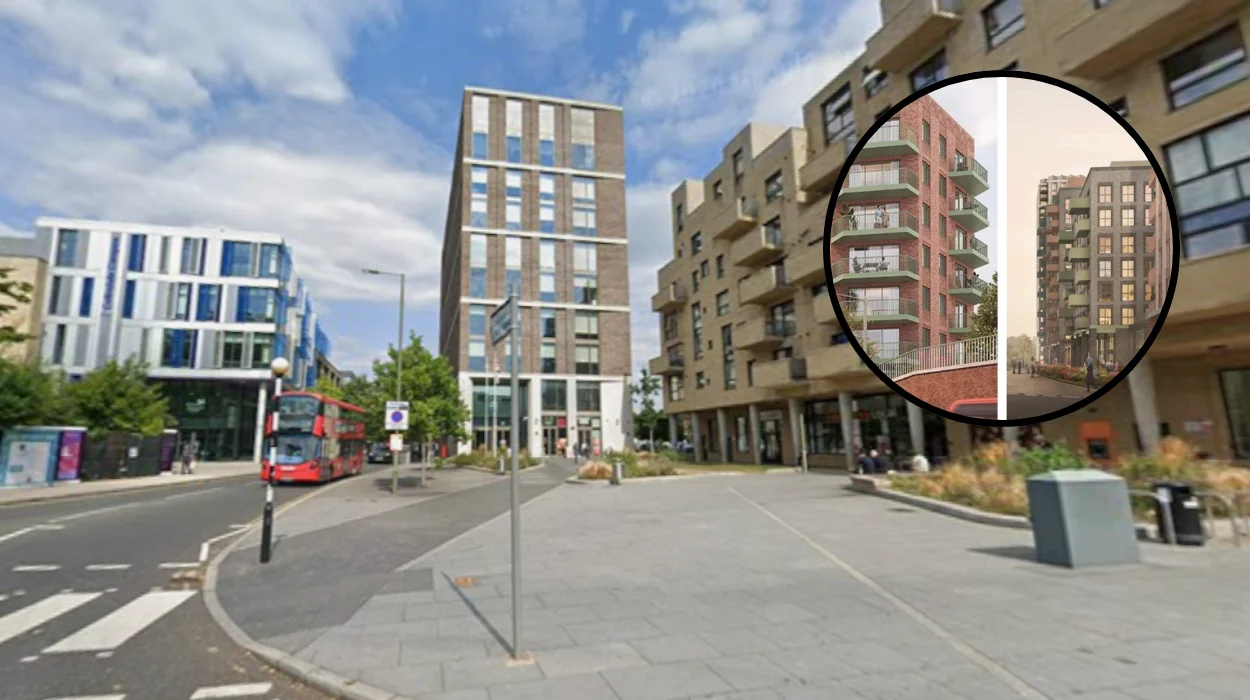
The approved transport-led development consists of five residential buildings ranging between five and 11 storeys in height. The masterplan provides 283 new homes alongside 567 square meters of flexible commercial space. Architecturally, the project is designed by JTP Architects to meet rigorous eco-friendly Passive House standards, drastically minimizing carbon emissions through hyper-insulated structural shells and advanced ventilation systems.
In an official public statement released immediately following the determination, JTP Architects celebrated the strategic victory for sustainable transit-oriented design:
“This decision marks an important step forward in unlocking the potential of allocated, well-connected sites to help meet London’s housing needs. We are thrilled that the GLA recognised the architectural ambition of the proposal and the robustness of its height and massing strategy in delivering low-energy passive-house homes, together with a substantial affordable housing offer.”
Why Was the High Barnet Station Scheme Controversial Domestically?
The backlash surrounding the High Barnet station masterplan was even more pronounced than the Finchley controversy, drawing more than 800 formal community objections compared to just over 100 letters submitted in support. Local preservation groups, including the Barnet Society, waged a sustained campaign against building multi-storey tower blocks on a suburban Tube station parking asset.
Local planning committee members had rejected the scheme against the explicit recommendations of their own technical planning officers. Councillors maintained that the height and massing were fundamentally incompatible with the historic character of High Barnet. Residents also raised concerns over the permanent loss of park-and-ride commuter spaces, which they argued would trigger parking chaos across surrounding residential streets. This infrastructure friction matches ongoing disputes highlighted by local groups like the Quinta Village Green Residents Association regarding the council’s wider imposition of Controlled Parking Zones (CPZs) in the area.
In overriding the committee’s decision, Deputy Mayor Jules Pipe noted that utilizing a fragmented, car-dominated brownfield transport asset directly adjacent to a London Underground terminal represents the ideal execution of sustainable planning policy. By converting surface parking into high-density housing, the GLA aims to reduce private car reliance while capitalizing on pre-existing public transport links.
How Much Affordable Housing Will These Overturned Schemes Actually Deliver?
A pivotal factor that tilted both determinations in favor of City Hall was the guaranteed delivery of affordable housing units, a core policy benchmark for Sadiq Khan’s mayoral administration. In both instances, developers structured their viability models to align with strategic GLA targets, making it legally and politically difficult for City Hall to support the local council’s rejections.
As detailed by financial reports monitored by Inside Conveyancing, Sadiq Khan has historically demonstrated a strict approach to affordable housing ratios. For example, the Mayor previously rejected amendments to redevelopment plans for the former Metropolitan Police headquarters when developers attempted to scale back affordable quotas.
For the Great North Leisure Park, the provision of a 25% affordable framework was deemed “strongly supported” by Deputy Mayor Jules Pipe during final reviews, particularly given the enormous infrastructure costs associated with building the replacement public sports centre and lido. For the High Barnet station site, the 40% affordable quota represents a massive enhancement compared to older, rejected private schemes in the borough—such as Meadow Residential’s historical attempt to convert Barnet House in Whetstone into 250 micro-flats with minimal affordable provisions, which drew severe criticism from local MPs like Theresa Villiers. By securing binding Section 106 legal agreements for both new sites, City Hall ensures that a significant portion of the 1,768 homes will actively serve low-and-middle-income Londoners.
What Happens Next for Barnet’s Redevelopment Projects?
With formal planning permission now granted by executive decree from the Greater London Authority, the legal focus shifts to finalizing the Section 106 legal agreements. These intricate contracts will lock in the exact developer contributions for local road improvements, bus service expansions, educational grants, and the strict timelines for the delivery of the new Finchley leisure assets.
For Arada London, the determination clears the path to transition from a prolonged, costly planning phase into active construction procurement, marking its first major footprint in the UK market since its acquisition of Regal London. For Barratt London and Places for London, the decision creates an immediate blueprint for how outer-London station car parks can be redeveloped into high-density, eco-friendly assets moving forward.
While Barnet Council has lost its immediate planning authority over these specific plots, municipal leaders are forced to adapt to a regional planning reality where local design objections are routinely superseded by City Hall’s overarching housing mandates. Construction schedules and formal ground-breaking dates for both masterplans are expected to be announced later this year once final legal signatures are exchanged.