Key Points
- Devolution Warnings: Civic chiefs and local government leaders have urged frontrunner Andy Burnham not to “level down” London or “hollow out” the capital’s civil service to fund regional restructuring.
- Whitehall Jobs at Risk: The proposed sweeping decentralisation of power from central government to regional mayors is expected to result in the elimination of tens of thousands of civil service roles in Whitehall.
- Funding and Tax Concerns: Critics highlight a lack of clarity on how multi-billion-pound regional development plans will be financed, raising fears of major property tax reforms that could land London with an extra £7.5 billion bill.
- Economic Imbalance Raised: Opponents point out that London currently faces the highest unemployment rate in the United Kingdom at 6.6 per cent, compared to lower rates in northern regions such as the North West (5 per cent) and Wigan (2.9 per cent).
- Strategic Structural Shifts: Plans include creating a “No10 North” hub to drive regional economies and granting the Mayor of London more local control over housing and education, though alongside warnings against reducing net capital investment.
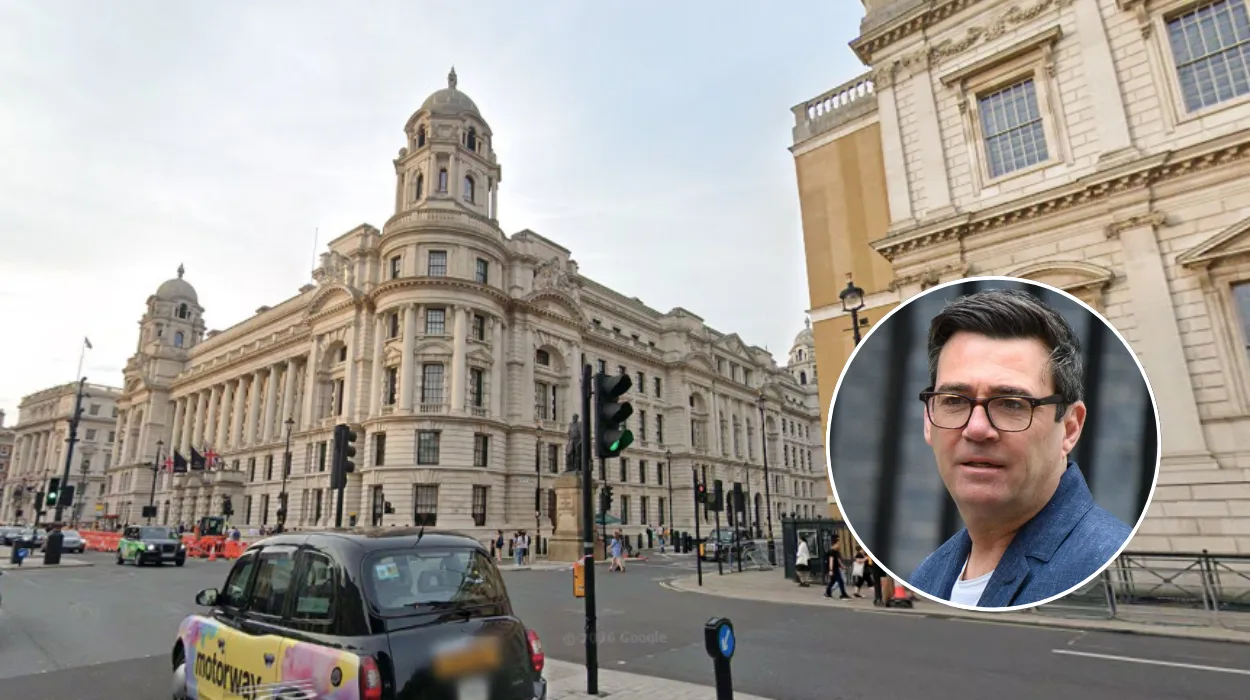
London (Extra London News) July 02, 2026 – A major political conflict has erupted over the future of the British civil service and regional funding distribution, as local civic leaders issued stark warnings to frontrunner Andy Burnham against executing plans that could “hollow out” the UK capital. The dispute arises amidst projections that tens of thousands of central government positions located across Whitehall will be permanently axed under an upcoming structural overhaul designed to shift legislative and executive powers away from London to regional metropolitan mayors.
- Key Points
- Why Are Local Leaders Warning Against the Devolution Revolution?
- How Many Whitehall Jobs Are Set to Be Eliminated?
- What Are the Details of Andy Burnham’s Decentralisation Plan?
- How Will the Mayor of London and Local Governments Be Impacted?
- What Are the Economic and Fiscal Concerns Surrounding the Blueprint?
Why Are Local Leaders Warning Against the Devolution Revolution?
The central friction stems from an ambitious “devolution-first” agenda championed by the incoming administration. As reported by Nicholas Cecil of The Standard, Councillor Paul Swaddle, the Conservative leader of Westminster City Council, explicitly cautioned against a strategy that penalises the capital to boost other regions. Councillor Paul Swaddle stated that “you don’t level up the north by levelling down London,” adding that “growth isn’t about moving things around, it’s about making new opportunities and realising them.”
The anxiety among London local authorities is fueled by a belief that central resources are being actively diverted. As reported by Nicholas Cecil of The Standard, Councillor Paul Swaddle further accused the executive of “raiding the capital” through systematic reconfigurations of local authority funding mechanisms. Commenting on the legislative trajectory, Councillor Paul Swaddle remarked that “their Fair Funding Review already strips millions from councils like ours, hitting inner London hardest and forcing brutal choices on public services, and now they’re coming for the jobs.” He concluded his assessment by asserting that “real devolution means backing councils to grow, not hollowing out London to prove a point.”
How Many Whitehall Jobs Are Set to Be Eliminated?
The proposed decentralisation strategy is fundamentally designed to reduce the physical footprint of the central state apparatus in London. According to political reporting published by The Standard, the transition of administrative responsibilities from the core executive to regional authorities will inevitably result in tens of thousands fewer central government jobs remaining in the historic Whitehall district.
This reduction is framed by proponents not as an arbitrary cut, but as a structural down-sizing necessitated by the transfer of authority. As reported by Nicholas Cecil of The Standard, one of Mr Burnham’s prominent parliamentary allies, Peckham Member of Parliament Miatta Fahnbulleh, confirmed the operational reality of the policy, stating that this shift would mean central Government becoming “far smaller” as specific public powers are systematically devolved directly to regional mayors across the country.
What Are the Details of Andy Burnham’s Decentralisation Plan?
The blueprint put forward by the Makerfield MP represents a significant departure from traditional centralized governance models. As reported by Nicholas Cecil of The Standard, Mr Burnham has pledged to deliver the “biggest devolution of powers in modern times” upon assuming office. A core component of this administrative reconfiguration includes the establishment of a dedicated operational hub designated as “No10 North.”
This regional executive entity is intended to oversee and accelerate targeted economic programmes tailored to non-metropolitan areas. According to details outlined by The Standard, the initiatives driven by this new structure will prioritize:
- Large-scale reindustrialisation efforts across traditional manufacturing corridors.
- The deployment of new regional infrastructure networks.
- Localised measures to manage the cost of living, including interventions regarding regional transport networks.
While the primary focus remains heavily weighted toward regional development outside of the south-east, some provisions have been targeted toward the capital. As reported by Nicholas Cecil of The Standard, Mr Burnham sought to clarify his vision for the capital during recent policy declarations, vowing to deliver “good growth in every postcode” and committing to structural measures to contain transport fares within the London network.
Explore more Westminster News:
Sadiq Khan to Force Al Fresco Dining in Soho London 2026
Westminster Council Meeting Chaos: Leader Called Scumbag, London 2026
How Will the Mayor of London and Local Governments Be Impacted?
The legislative changes will alter the operational relationship between Downing Street and City Hall. Under the proposed framework, the Mayor of London, Sir Sadiq Khan, is slated to receive significantly enhanced statutory powers over local housing strategies and regional educational frameworks. However, this transfer of regulatory authority has been met with fiscal caution from regional leadership.
As reported by Nicholas Cecil of The Standard, despite the projected expansion of his administrative portfolio, Sir Sadiq Khan has explicitly warned Mr Burnham against implementing reductions to the capital’s core investment allocations. This tension underscores a broader concern among municipal leaders that an increase in devolved legal responsibilities may not be matched by the necessary fiscal resources to execute them effectively.
What Are the Economic and Fiscal Concerns Surrounding the Blueprint?
A central point of contention for economists and local politicians alike is the long-term financing of these extensive structural reforms. As reported by Nicholas Cecil of The Standard, Mr Burnham is expected to channel billions of pounds in additional public funding directly into the regions to support major domestic policy goals, including the most expansive council homes building programme seen since the post-war era. However, official documentation indicates that the administration has yet to formally detail the precise funding mechanisms for these multi-billion-pound commitments, particularly as the Treasury simultaneously navigates the massive capital requirements of a pre-existing national defence investment plan.
This fiscal gap has intensified fears among municipal authorities regarding potential tax increases targeted at high-value asset zones. As reported by Nicholas Cecil of The Standard, analysts are concerned that the administration may look to resurrect previously debated tax structures, such as replacing the existing council tax and stamp duty frameworks with a unified national property tax. Financial modeling indicates that such a structural tax shift would disproportionately impact the capital due to elevated real estate valuations, potentially landing London taxpayers with an estimated £7.5 billion in additional annual liabilities.
Furthermore, critics argue that aggressive asset diversion ignores shifting macroeconomic realities within the capital itself. According to official data compiled by the Office for National Statistics (ONS) and cited by The Standard, London currently records the highest unemployment rate anywhere in the United Kingdom at 6.6 per cent. In stark contrast, older industrial or regional sectors targeted for major financial assistance exhibit lower baseline unemployment metrics; the North West currently records an unemployment rate of 5 per cent, while the Wigan area—which encompasses a portion of the Makerfield constituency—stands at 2.9 per cent. This statistical divergence forms the core of the argument presented by London civic chiefs, who maintain that the capital requires sustained fiscal stabilization rather than an ideological reduction in its economic and administrative base.