Key Points
- Golden Anniversary Milestone: Cycle Islington, originally founded in 1976 as the Islington Cycle Action Group (ICAG), celebrated its 50th anniversary, marking half a century of advocacy for safer and improved cycling infrastructure.
- Pre-dating the Mothership: The borough-level organisation was established two years before the London Cycling Campaign (LCC), the city-wide umbrella group of which it is now an integrated part.
- Political Heavyweights in Attendance: The celebratory event at the Islington Museum drew prominent political figures, including Islington North Member of Parliament (MP) Jeremy Corbyn, Environment Chief Councillor Rowena Champion, and Dame Emily Thornberry MP.
- Historical Retrospective Screened: Attendees watched a short documentary film detailing the group’s long history and incremental wins, including the implementation of low-traffic neighbourhoods and segregated lanes.
- Addressing Gender Disparities and Safety: Group leadership emphasized that less than one-third of cycling trips in London are completed by women, citing systemic safety hazards and road-based misogyny as major barriers.
- Continuing Call to Action: Despite acknowledging significant milestones in transforming London’s transit landscape, organisers insisted that systemic delays mean local networks still lag decades behind international benchmarks like the Netherlands.
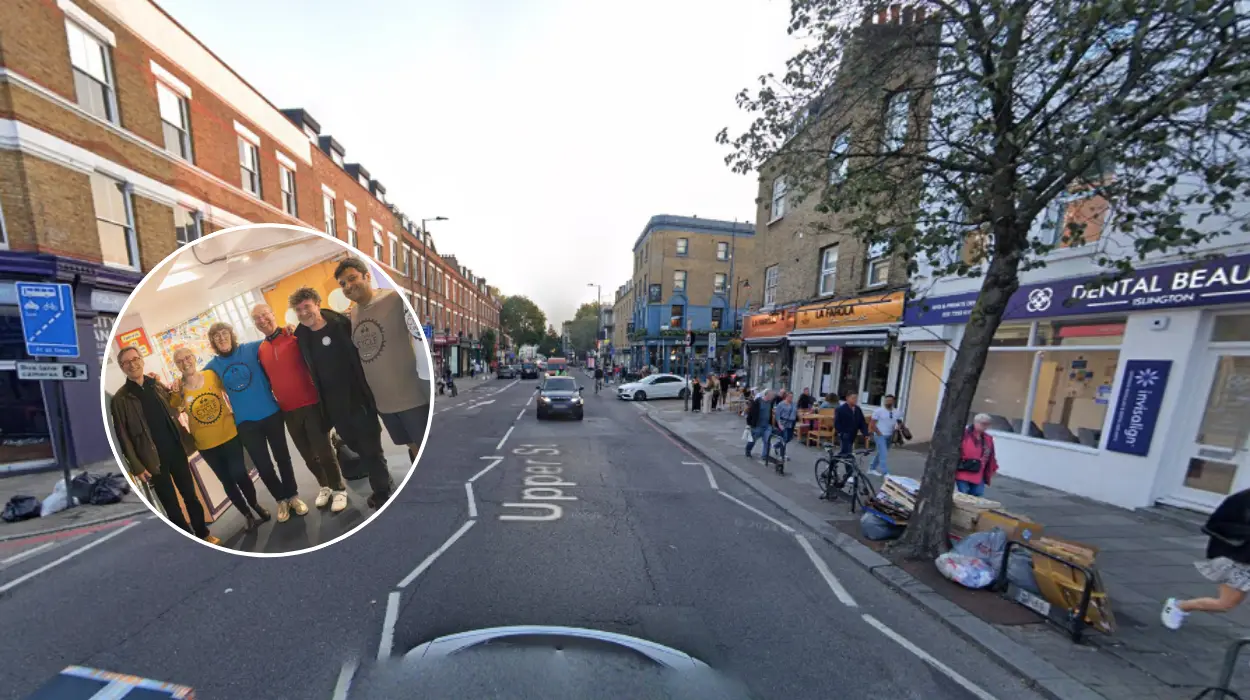
Islington (Extra London News) June 19, 2026 — A diverse coalition of cyclists, grassroots campaigners, and high-profile politicians gathered at the Islington Museum to commemorate the 50th birthday of Cycle Islington, celebrating half a century of localized activism dedicated to reshaping urban transport. Established in 1976 under its foundational moniker, the “Islington Cycle Action Group,” the organization has served as a primary institutional voice for two-wheeled transit within the borough. Remarkably, the group’s establishment pre-dates the formation of the London Cycling Campaign (LCC)—the expansive city-wide umbrella network under which Cycle Islington now officially operates—by a clear two years. The golden jubilee event functioned as both a retrospective of the systemic changes achieved across London’s urban topography and a platform to address the structural deficits that continue to impact vulnerable road users.
- Key Points
- What Is the History and Legacy of Cycle Islington’s Campaigning?
- What Did Political and Community Leaders Say at the Anniversary Launch?
- What Are the Current Advocacy Priorities and Safety Barriers for Cyclists?
- Why Do Women Face Disproportionate Obstacles in Urban Cycling?
- How Does the Perception of Danger Contrast with Actual Cycling Safety?
- How Does London’s Active Travel Infrastructure Compare Globally?
- What Public Events Characterised the 50th Anniversary Celebrations?
What Is the History and Legacy of Cycle Islington’s Campaigning?
As reported by journalist Finn Logue of the Islington Tribune, the organization’s inception traces back to a collective of proactive individuals who recognized the ecological and social imperatives of shifting local transport away from fossil fuels. First formed as the “Islington Cycle Action Group” (ICAG) in June 1976, the entity was originally established by what early participants described as a core group of “cycling keenies” and close associates of the environmental charity Friends of the Earth. Writing for the Islington Tribune in an antecedent historical profile, reporter Finn Logue noted that the group’s primary ambition was to inspire everyday citizens to swap petrol for pedals, pioneering localized safety infrastructure long before municipal authorities adopted formal cycling strategies.
According to institutional timelines maintained by the organization, this early independence meant that when the London Cycling Campaign was eventually consolidated in 1978 to coordinate pan-London advocacy, ICAG was already a fully functional, sophisticated pressure group. The organization subsequently absorbed into the LCC framework, fostering critical lateral partnerships with adjacent borough branches, such as the Camden Cycling Campaign, to lobby for continuous, inter-borough cycling corridors.
The multi-generational composition of this advocacy network was explicitly highlighted during the exhibition. As reported by Finn Logue of the Islington Tribune, the event featured the formal screening of a historical short film reflecting deeply on the long-term timeline of the group. The documentary broadcasted testimonies from foundational members alongside prominent local politicians who have observed or intersected with the group’s lobbying efforts over the decades. Organizers confirmed that a comprehensive, extended version of the retrospective film would be published permanently on the group’s official website for public access.
What Did Political and Community Leaders Say at the Anniversary Launch?
The milestone event brought together an array of local and national political figures who have historically aligned with environmental and active travel portfolios within North London. Among the dignitaries present to demonstrate institutional support were Islington North MP Jeremy Corbyn, local environment chief Councillor Rowena Champion, Baroness Caroline Russell of the Green Party, and Dame Emily Thornberry MP.
In her keynote address delivered to the packed gallery at the Islington Museum, Cycle Islington’s current co-ordinator, Eilidh Murray, adopted a dual posture that balanced deep institutional pride with a stern assessment of contemporary bureaucratic inertia. As recorded by Finn Logue of the Islington Tribune, Murray stated:
“It’s been a big project setting this all up. We’ve been planning it since last September. Tonight tells the story of our long, honourable and continuing story of campaigning in Islington, and we hope that progress in the borough will not have to continue for another 50 years.”
Transitioning from a critique of municipal timelines to a celebratory acknowledgment of the technological catalyst behind their movement, Murray concluded her address by rallying the attendees to toast the historical vehicle underpinning their half-century of activism. As transcribed by Logue, Murray implored the audience:
“Let’s fill our glasses, have a toast to the next 50 years and celebrate the most fabulous invention of 1817, the bicycle!”
The sentiment of slow, hard-fought structural progress was echoed by individual veterans of the movement who have been embedded in the organization since its mid-70s inception. Speaking directly to the Islington Tribune, Adrian Williams, a foundational member of the group since the beginning, provided a candid perspective on the realities of long-form urban campaigning. As reported by Finn Logue, Williams observed:
“Cycle Islington has been a shifting group of people who want to improve facilities for cyclists. This is a long, slow process, but there’s been some big successes over the years instilling cycle lanes and other facilities across London.”
What Are the Current Advocacy Priorities and Safety Barriers for Cyclists?
While the museum launch served to document past triumphs, contemporary organizers utilized the public platform to illuminate ongoing deficits in London’s transport infrastructure, particularly regarding accessibility, gender disparities, and safety perceptions.
Why Do Women Face Disproportionate Obstacles in Urban Cycling?
A primary focal point for the modern iteration of Cycle Islington is dismantling the cultural stereotype of cycling as an exclusive, high-speed hobby dominated by specific demographics. As reported by Sam Turner of Islington Now, group data indicates that less than one-third of all cycle journeys currently undertaken across greater London are executed by women. Group leaders attribute this stark demographic imbalance directly to systemic deficiencies in safety planning and infrastructure design.
In a detailed interview published by Sam Turner of Islington Now, Eilidh Murray, who has served as Cycle Islington’s coordinator for eight years and a member for fifteen, linked low female participation rates directly to the absence of physical protection from motor vehicles. As reported by Turner, Murray stated plainly:
“We’re campaigning to get more women on bikes. There’s an issue with safety. Women prefer to cycle in segregated cycle lanes.”
Compounding the structural deficiencies of the roads is the hostile social environment that female cyclists frequently navigate. Elaborating on these systemic cultural hostilities in an interview with the Islington Tribune, Murray exposed the routine verbal degradation and intimidation experienced by women on public roads. Murray told the newspaper:
“Women don’t like cycling with the current infrastructure. The misogyny we get on the road from men in vans is unbelievable. You get some man telling you shouldn’t be there, men abusing women and it’s not being taken seriously. What we want to see is a proper process for reporting to the police so they can at least see how much of this is going on.”
How Does the Perception of Danger Contrast with Actual Cycling Safety?
The organizational challenge of expanding cycling demographics is further complicated by a divergence between statistical safety metrics and public apprehension. Speaking to journalist Sam Turner of Islington Now, John Hartley, the Secretary of Cycle Islington, explained that public anxiety surrounding traffic interaction often outweighs the actual statistical risk of injury, acting as a massive psychological deterrent. As reported by Turner, Hartley explained:
“People are frightened to cycle. Cycling is actually a very safe activity. People are understandably frightened of motor traffic. The perception of the danger is almost as bad as the danger itself. That’s what stops people, particularly women, from cycling.”
Hartley emphasized that the most rewarding aspect of their localized agitation occurs when the municipal state validates their technical recommendations. Reflecting on the tangible outcomes of their lobbying, Hartley told Islington Now:
“The best part is campaigning when we win. It’s really nice to see where the council implements things that we suggested or had an influence over.”
Explore more Islington News:
Islington Council Fined for Homelessness Failure: London 2026
Benali Hamdache Takes Green Party City Hall Seat: London 2026
How Does London’s Active Travel Infrastructure Compare Globally?
When assessing the present state of the borough’s roads, Cycle Islington’s leadership explicitly utilizes international benchmarks to show that municipal execution remains severely delayed. Despite the implementation of controversial but highly effective low-traffic neighbourhoods (LTNs) and pockets of protected lanes across North London, the group maintains that British urban planning remains structurally deficient when contrasted with European models.
In an analysis provided to the Islington Tribune, coordinator Eilidh Murray placed local efforts within a wider global context, suggesting that domestic progress operates on a significantly delayed timeline relative to continental counterparts. Murray noted to the publication:
“We’re getting there, but we are moving slowly. We’re about 40 years behind Holland!”
According to Murray, the primary focus of Cycle Islington’s future lobbying efforts will center on securing comprehensive, continuous networks rather than fragmented, isolated corridors. She clarified that the group’s contemporary mandate includes pushing for pristine road surfaces, joined-up neighborhoods that prevent through-traffic from infiltrating residential zones, and rigorous preventative maintenance to mitigate road degradation and potholes. Murray summarized the ultimate, uncomplicated objective of the charity to the Islington Tribune:
“Ultimately, we want to get people onto bikes. So here’s to the next 50 years! Come and join us.”
What Public Events Characterised the 50th Anniversary Celebrations?
The institutional milestone was not confined to retrospective speeches at the Islington Museum; rather, the committee designed a comprehensive public program extending throughout the month of June to engage the broader community and display the joys of collective cycling.
As detailed by Eilidh Murray in an official organizational brief published on the Cycle Islington website, a small internal working group was convened as early as autumn to orchestrate a sequence of public interventions designed to mark the historic milestone. Following the initial museum launch, the centerpiece of the community engagement campaign was a major public transit event scheduled to coincide with Father’s Day.
The group organized a fully marshaled, family-friendly “Bike Round the Borough” ride, engineered to accommodate cyclists of all ages and technical competencies. As outlined by Murray on the group’s digital portal, the route was mapped in a distinct figure-of-eight layout, looping comprehensively through both the northern and southern sectors of the borough. The excursion commenced and concluded at Highbury Fields, where participants gathered to share a custom 50th birthday cake. To ensure historical continuity and youth engagement, the finale at Highbury Fields featured custom, handcrafted wooden games designed by long-term member John Hartley.
The month-long golden jubilee celebrations are scheduled to conclude with an indoor cultural gathering designed to reinforce the social bonds of the campaigning community. As reported by both Islington Now and the Islington Tribune, the organization has booked Hocking Hall, situated within the Whittington Park Community Centre in the north of the borough, to host a traditional Scottish ceilidh dance. The social evening will feature musical performances and dance calling by the Muckers, a celebrated Hackney-based folk band renowned across North London for their performances at civic events. To support the funding of their ongoing advocacy campaigns, the group also launched a temporary digital storefront, retailing commemorative 50th-anniversary merchandise including sustainably sourced t-shirts, tote bags, and traditional tea cloths.