Key Points
- Mayoral Intervention: London Mayor Sir Sadiq Khan is reportedly preparing to deploy new statutory powers to override Westminster City Council’s ongoing resistance to seasonal outdoor dining expansions in Soho.
- New Legal Powers: Legislative changes coming into effect on Monday will grant the Mayor of London the direct authority to overrule local authority decisions regarding pedestrianisation and street management.
- System Criticised: Sir Sadiq Khan has publicly condemned the current borough-by-borough regulatory framework for outdoor dining, labelling it as “outdated, inconsistent, and frankly illogical.”
- Funding Refusal: Westminster City Council failed to apply for seasonal pedestrianisation schemes this year, bypassing financial backing from City Hall’s newly launched £500,000 Summer Streets initiative.
- Long-term Strategy: Sources close to the London Mayor indicate that executive override powers will be executed to guarantee Soho hospitality venues permission to expand their al fresco setups by summer 2027.
- Stakeholder Friction: The political maneuver exposes deep systemic divisions between City Hall’s night-time economy objectives and the localized residential and administrative concerns of Westminster City Council.
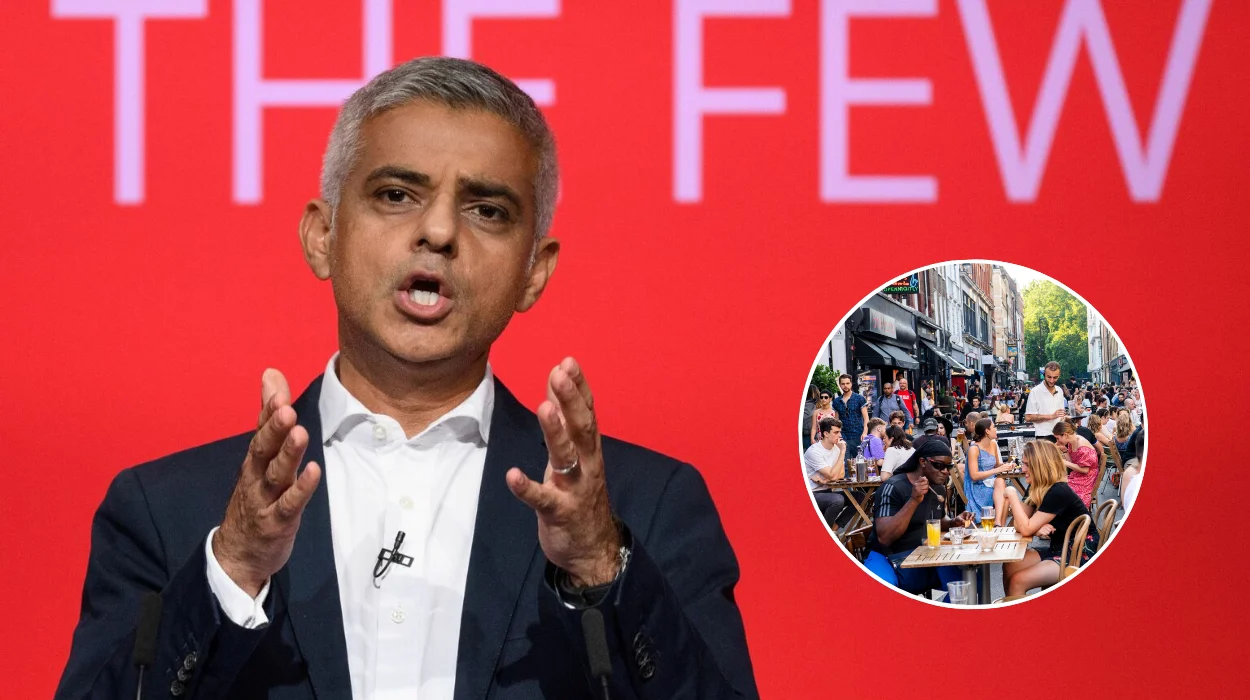
London (Extra London News) June 29, 2026 – The Mayor of London, Sir Sadiq Khan, is reportedly moving forward with highly contentious plans to unilaterally enforce seasonal al fresco dining initiatives across Soho, directly overriding deep-seated opposition from Westminster City Council. Capitalising on sweeping new legislative powers that take effect this Monday, the Mayor intends to break a multi-year bureaucratic deadlock over the pedestrianisation of the West End entertainment district. The upcoming legal framework will formally permit City Hall to bypass local council blockades, paving the way for a major expansion of outdoor eating and drinking areas designed to bolster the capital’s post-pandemic night-time economy.
The institutional clash intensified after Westminster City Council declined to apply for seasonal pedestrianisation permits for the current calendar year. This administrative refusal occurred despite the rollout of the Mayor’s high-profile £500,000 ‘Summer Streets’ project—a dedicated financial repository established by City Hall to support local authorities in executing temporary pedestrian infrastructure. Convinced that the local authority’s stance systematically damages central London’s business ecosystem, mayoral aides have confirmed that executive interventions are being structured to grant Soho venues comprehensive outdoor expansion permissions ahead of the 2027 summer season.
Why is Sadiq Khan overriding Westminster Council?
The political impasse stems from fundamentally divergent visions for the future of the West End’s urban landscape. As reported by political reporters at The Evening Standard, Sir Sadiq Khan firmly believes that London’s broader economic health must take precedence over localized administrative friction. Expressing his frustration with the fragmented regulatory environment that governs London’s public spaces, Sir Sadiq Khan stated that the current system is “outdated, inconsistent, and frankly illogical.” The Mayor argued that centralized oversight is vital to effectively balance and meet the wider economic interests of everyday Londoners, independent businesses, and the capital’s critical night-time economy.
For years, the hospitality sector within Soho has campaigned for a return to the sweeping, European-style temporary pedestrianisation models implemented during the COVID-19 pandemic. Those emergency measures saved hundreds of venues from insolvency but were subsequently dismantled by the local authority due to mounting pressure from permanent residential groups. By utilizing the incoming legislative framework, City Hall aims to establish a reliable, standardized approach to seasonal street closures, shielding commercial operators from the shifting political priorities of individual borough councils.
What are the new powers coming into force on Monday?
The imminent constitutional shift alters the balance of planning and highways authority within the Greater London area. According to detailed policy analysis published by journalists at The Evening Standard, the statutory mechanisms taking effect on Monday will grant the office of the Mayor of London explicit legal authority to countermand local council decisions on strategic roadways and key commercial zones. Historically, control over pavements, local traffic orders, and street-trading licensing fell strictly under the jurisdiction of individual boroughs like Westminster City Council.
Under the revised legal framework, if a local authority’s transport or spatial management choices are deemed detrimental to London’s broader strategic economic growth or international competitiveness, the Mayor can formally step in. In the specific case of Soho, these powers will enable City Hall to issue overarching declarations that temporarily suspend vehicular traffic and automatically authorize pavement layouts for hospitality venues, effectively neutralising Westminster City Council’s capacity to veto seasonal dining initiatives.
How does the ‘Summer Streets’ project affect Soho venues?
The operational dispute is further complicated by financial incentives designed to reshape central London’s public avenues. As documented in reports by The Evening Standard, City Hall recently introduced the £500,000 Summer Streets project, an initiative specifically engineered to provide municipal funding to local councils willing to establish designated outdoor eating, drinking, and cultural zones. The capital injection was structured to offset the logistical costs of security, waste management, and traffic redirection associated with pedestrian schemes.
Despite the availability of these central funds, Westminster City Council chose not to submit an application for seasonal pedestrianisation in Soho this year. This decision effectively blocked local venues from accessing the subsidized infrastructure support. Hospitality representatives have expressed deep concern over this missed fiscal opportunity, noting that neighboring boroughs have successfully utilized similar funding models to drive footfall and support independent commercial venues.
Explore more Westminster News:
Westminster Council Meeting Chaos: Leader Called Scumbag, London 2026
High Court Bans Dangerous Car Meets in Westminster London 2026
What do City Hall sources say about the 2027 al fresco plans?
While immediate changes for the ongoing summer window remain logistically constrained, planning for an executive intervention is already well underway. As reported by investigative journalists at The Guardian, high-level sources closely aligned with the London Mayor have confirmed that Sir Sadiq Khan is prepared to use his new statutory powers to reshape Soho’s layout permanently by 2027.
Detailing the internal mindset at City Hall, a source close to the mayor told The Guardian: “Opening up our streets to al fresco dining and other events should be at the heart of supporting our brilliant hospitality venues over the summer and autumn. Yet the attitude of too many influential people around Soho is that bringing more fun and socialising to our streets is something to be thwarted and blocked.” This candid admission underscores a deep institutional exhaustion with the lobbying power of local residential groups, signaling that the Mayor’s office views outdoor dining as a non-negotiable pillar of London’s cultural appeal.
What is Westminster Council’s stance on outdoor dining?
Westminster City Council’s historic reluctance to implement permanent or recurring seasonal pedestrianisation throughout Soho is rooted in complex local management challenges. Public statements and policy documents previously issued by Westminster councilors indicate that the local authority faces intense, sustained pressure from long-term residents and neighborhood associations. These community groups consistently argue that the pandemic-era al fresco experiments led to an unacceptable surge in anti-social behavior, structural noise pollution, obstructed pavements for disabled pedestrians, and severe complications for emergency service access.
Furthermore, the council maintains that managing dense urban environments like Soho requires an intricate balance between supporting a booming commercial district and preserving basic liveability standards for the thousands of citizens who reside in upper-floor flats within the entertainment zone. By refusing to apply for the Summer Streets funding and opting against seasonal closures, Westminster City Council had attempted to pivot back toward a traditional street-management model—a policy trajectory that now faces a direct legal challenge from the executive powers of the London Mayor.