Key Points
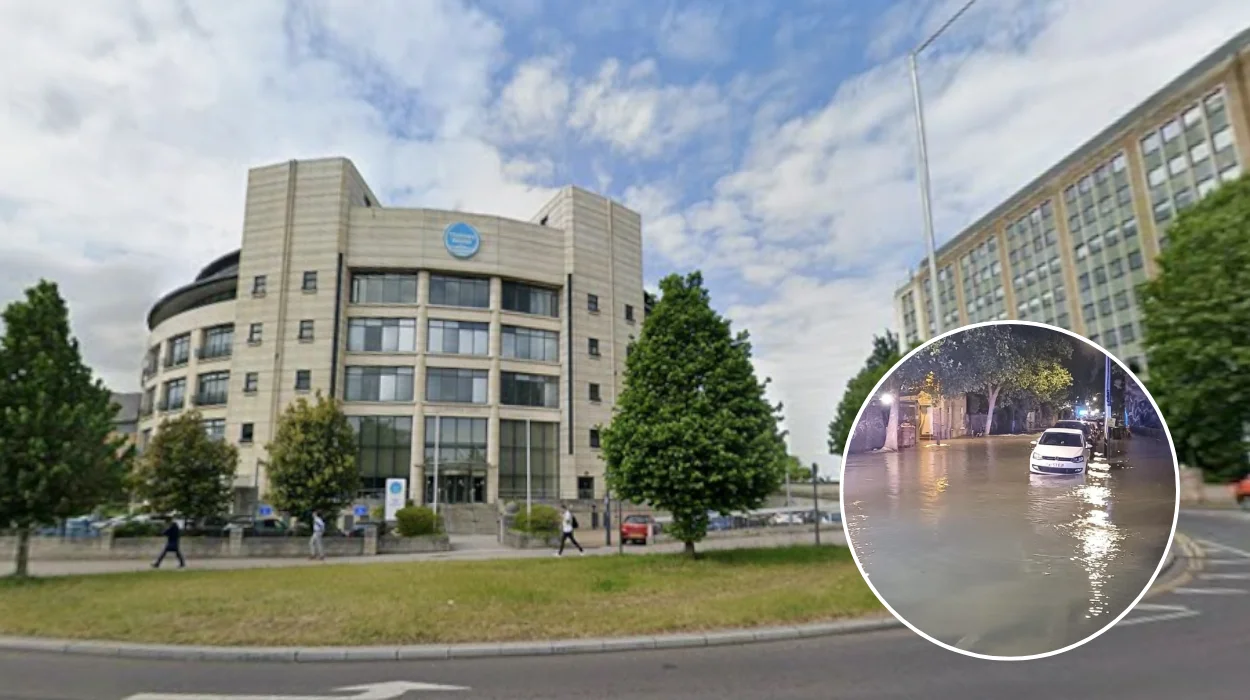
- Severe Infrastructure Failure: A major water main burst outside a public house on Old Ford Road in Bow, East London, triggering extensive flooding up to one metre deep.
- Widespread Household Disruption: Up to 650 households across the area experienced an immediate loss of critical utilities, including power, water, or gas, during an intense summer heatwave.
- Emergency Rescues Executed: London Fire Brigade personnel successfully rescued five individuals trapped inside a local pub as floodwaters rapidly engulfed the surrounding streets.
- Targeted Power Outages: UK Power Networks isolated electricity supply to 159 customers at 12:48 AM as a safety precaution, with the majority restored by early morning.
- Compounding Heatwave Pressures: The infrastructure crisis coincided with extreme weather conditions, as London recorded daytime temperatures of 32°C and a suffocating overnight low of 19.9°C.
- Multi-Agency Emergency Response: Approximately 40 firefighters and six fire engines deployed flood barriers and sandbags, collaborating with Thames Water and Tower Hamlets Council to establish an emergency rest centre for displaced residents.
- Ongoing Utility Recovery: Thames Water confirmed the flooding was stopped by mid-morning, though local traffic diversions and lower-than-normal water pressures are expected to persist during round-the-clock repair works.
Bow (Extra London News) July 9, 2026 – A catastrophic water main burst in East London has submerged residential streets in water up to one metre deep, cutting off vital water and electricity supplies to hundreds of households in the midst of a punishing regional heatwave. Emergency services were deployed late Wednesday night to Old Ford Road in Bow, where escalating floodwaters trapped citizens inside a local business and threatened dozens of low-lying properties. The sudden infrastructure failure triggered a massive multi-agency response involving the London Fire Brigade, Thames Water, and local municipal authorities, who worked under acute spatial and environmental pressures to stabilize the area as local ambient temperatures hovered near record nighttime highs.
- Key Points
- What Happened on Old Ford Road in Bow?
- How Many Residents Lost Water, Electricity, and Gas?
- Who Was Rescued by the London Fire Brigade?
- How Did the Extreme Heatwave Worsen the Situation?
- What Has Thames Water Stated About the Pipe Repairs?
- When Will Power Be Fully Restored by UK Power Networks?
- What Are the Next Steps for the Bow Community?
What Happened on Old Ford Road in Bow?
The crisis began unfolding in the late evening hours of Wednesday when a high-pressure water main ruptured unexpectedly on Old Ford Road, rapidly transforming a busy urban thoroughfare into a deep, fast-flowing waterway. According to official operational logs released by the London Fire Brigade (LFB), emergency handlers received the initial distress calls shortly before 10:30 PM. Within minutes, the volume of water escaping from the fractured subterranean pipe had engulfed the immediate vicinity outside a prominent local public house, rising to a dangerous peak depth of approximately one metre.
The cascading water quickly breached the kerbsides and began spilling into adjoining residential side streets, including Grove Road, creating an immediate hazard for vehicles and properties. The London Fire Brigade rapidly escalated its operational stance, dispatching six fire engines and approximately 40 frontline firefighters to the scene. First responders encountered heavily inundated roadways and a rapidly evolving situation where water levels threatened to breach the flood defences of dozens of terraced homes and ground-floor flats.
To mitigate the immediate structural danger, emergency crews worked through the night utilizing specialized high-volume flood barriers and strategic sandbagging lines. These measures were successful in gradually diverting the flow of the deluge away from the primary residential frontages, allowing the standing water levels to slowly subside before daybreak. However, the localized destruction left behind has caused extensive disruption to public transit, with long-term road closures implemented on Old Ford Road and significant traffic delays rippling outward through St Stephen’s Road and Roman Road.
How Many Residents Lost Water, Electricity, and Gas?
The physical intersection of high-pressure water and subterranean utility networks resulted in widespread utility outages across the Bow district. Figures released by the responding emergency services indicate that the incident compromised the domestic infrastructure of up to 650 distinct households overnight. These properties suffered varying combinations of immediate water supply failures, electrical blackouts, or gas disconnections, leaving vulnerable residents isolated in their homes without the means to cool themselves or access basic sanitation during a period of severe environmental heat.
As detailed by the London Fire Brigade’s assessment teams, the sheer volume of water entering underground utility conduits posed an immediate risk of electrical short-circuiting and secondary infrastructural damage. Consequently, specialized engineers had to execute targeted disconnections to protect both the public and the broader metropolitan grid. While the immediate flooding was halted prior to peak morning demand hours, the knock-on effects on local plumbing systems meant that hundreds of families woke up to empty taps or significantly degraded water pressures, severely hindering local relief efforts.
Who Was Rescued by the London Fire Brigade?
Among the most critical operational challenges faced by emergency crews during the initial phase of the deluge was the sudden encirclement of a local public house by rising floodwaters. As reported by Matt Watts, News Editor of The London Standard, five individuals found themselves entirely cut off and trapped within the venue as a metre of water accumulated directly outside the building’s exit points. The rapid onset of the flooding prevented the occupants from safely wading through the currents, necessitating a tactical intervention by the London Fire Brigade.
Using specialized wading equipment and water rescue protocols, firefighters successfully reached the stranded individuals and extracted them from the threatened premises without any reported injuries. Following the rescue, emergency services expanded their focus to broader community care. Working in direct coordination with Thames Water and the Tower Hamlets Council, the London Fire Brigade assisted in establishing a fully staffed emergency rest centre. This facility was designed to provide air-conditioned shelter, clean drinking water, and administrative support to any displaced residents or those left entirely vulnerable by the sudden loss of their domestic utility connections.
How Did the Extreme Heatwave Worsen the Situation?
The infrastructural emergency in Bow was significantly compounded by an ongoing, severe heatwave that has brought extreme temperatures to the capital. The rupture occurred immediately following a punishing daytime peak where local thermometers reached 32°C. Rather than bringing relief, the overnight period offered little respite for affected residents; meteorologists confirmed that the coolest temperature recorded across London stood at a stifling 19.9°C at 5:00 AM.
Living in high-density urban environments like East London during an intense heatwave presents notable physiological challenges, which are drastically magnified when domestic climate control and running water are abruptly withdrawn. Residents trapped inside brick terraced houses and tower blocks faced mounting indoor temperatures without the ability to shower, operate fans, or easily hydrate. Public health officials have repeatedly highlighted that prolonged overnight temperatures hovering near 20°C prevent the human body from properly cooling down after daytime heat exposure, rendering the sudden loss of water supply a matter of acute public safety rather than a mere logistical inconvenience.
What Has Thames Water Stated About the Pipe Repairs?
In the hours following the initial rupture, the regional water utility provider has faced intense public scrutiny regarding its emergency response timelines and the overall resilience of its subterranean network. As published in an official corporate update issued via its digital communications channel at 9:45 AM, Thames Water stated that “Our teams on site have stopped the flooding and are working to put things right. Your water supply should now have returned, the pressure may be lower than normal, but this will improve as it builds in the pipe.”
The utility firm acknowledged the substantial long-term impact the burst would have on the local community, highlighting that its field units would remain heavily active on Old Ford Road for an extended duration. In an additional public statement, a spokesperson for Thames Water stated that “Unfortunately, we’re likely to be in the area for some time as we need to fix the broken pipe and make good any damage caused by the flooding. We’ll be working around the clock to fix things, and apologise in advance for any disruption caused.” The company has deployed localized customer assistance teams to the streets of Bow to interface directly with affected households, distribute emergency bottled water, and log property damage claims.
Explore more Local London News:
Best Air-Conditioned London Pubs and Restaurants: Camden 2026
London Pubs Open Late for England World Cup Match: London 2026
When Will Power Be Fully Restored by UK Power Networks?
The electrical infrastructure within Bow also sustained notable impacts due to the encroaching floodwaters, forcing grid operators to intervene to prevent hazardous electrical faults. In an official briefing detailing the timeline of the electrical isolation, a spokesperson for UK Power Networks stated that “Engineers were called to the Old Ford Road area of Bow in East London in the early hours of this morning due to a burst water main. For safety reasons, power was isolated to 159 customers at 00:48am, with all but one being restored by 03:58am.”
The rapid restoration of electricity to 158 of the affected properties provided vital relief to households attempting to navigate the overnight heatwave with electrical cooling appliances. However, the complex nature of water ingress into domestic wiring systems has prolonged the outage for the final remaining customer. In the same corporate briefing, the UK Power Networks spokesperson stated that “Engineers are awaiting access to the final property to safely check their power supply.” Local authorities have emphasized that power will not be reintroduced to any flood-damaged structural environment until rigorous safety inspections are completed to eliminate the risk of electrical fires or shocks.
What Are the Next Steps for the Bow Community?
As the immediate threat of rising water recedes, the focus of the Bow community, municipal authorities, and utility providers has firmly shifted toward long-term recovery and infrastructural remediation. Gas provider Cadent has been formally contacted by media outlets and local representatives to ascertain whether the heavy flooding or subsequent excavation works have compromised the local gas mains, which could further delay a total return to normalcy for the 650 impacted households.
Concurrently, Tower Hamlets Council is assessing the structural integrity of the affected roadways and pavements on Old Ford Road, which may have suffered subterranean erosion or “washout” due to the high-pressure water release. Commuters and local business operators are being advised by transport authorities to prepare for protracted travel disruptions. With Thames Water teams working on a 24-hour rotation to excavate the fractured main, repair the damaged pipe architecture, and resurface the compromised roadway, the area is expected to remain a complex construction zone well into the coming days, testing the resilience of a community already straining under the weight of a severe British summer heatwave.