Key Points
- Alleged Unprovoked Assault: Beverley Thomas, a 58-year-old mother-of-one, was allegedly kicked violently in the leg by a random male passenger on a London bus while trying to disembark.
- Incident Details: The event occurred at approximately 3:00 pm on Monday, 6th July, aboard a route 345 bus travelling between Brixton and Stockwell in South London.
- The Escalation: The assault reportedly happened after Ms Thomas politely requested a tall male passenger to move, tapped his shoulder, and attempted to gently navigate past him when he blocked the exit aisle.
- Physical and Emotional Impact: The victim was left suffering from “excruciating” physical pain, resulting in visible marks on her leg that continued to throb and cause severe distress for several days following the encounter.
- Description of Suspect: The alleged attacker is described as a Black male, approximately 6 feet 4 inches tall, with a shaved head and distinct facial scabs.
- Call to Action: Ms Thomas has issued an urgent plea to the public, stressing that “women are not safe” and imploring anyone experiencing similar public transport harassment or assault to immediately report incidents to the Metropolitan Police.
- Official Response: The Metropolitan Police Service has officially confirmed receipt of the report and is currently handling the active investigation into the alleged assault.
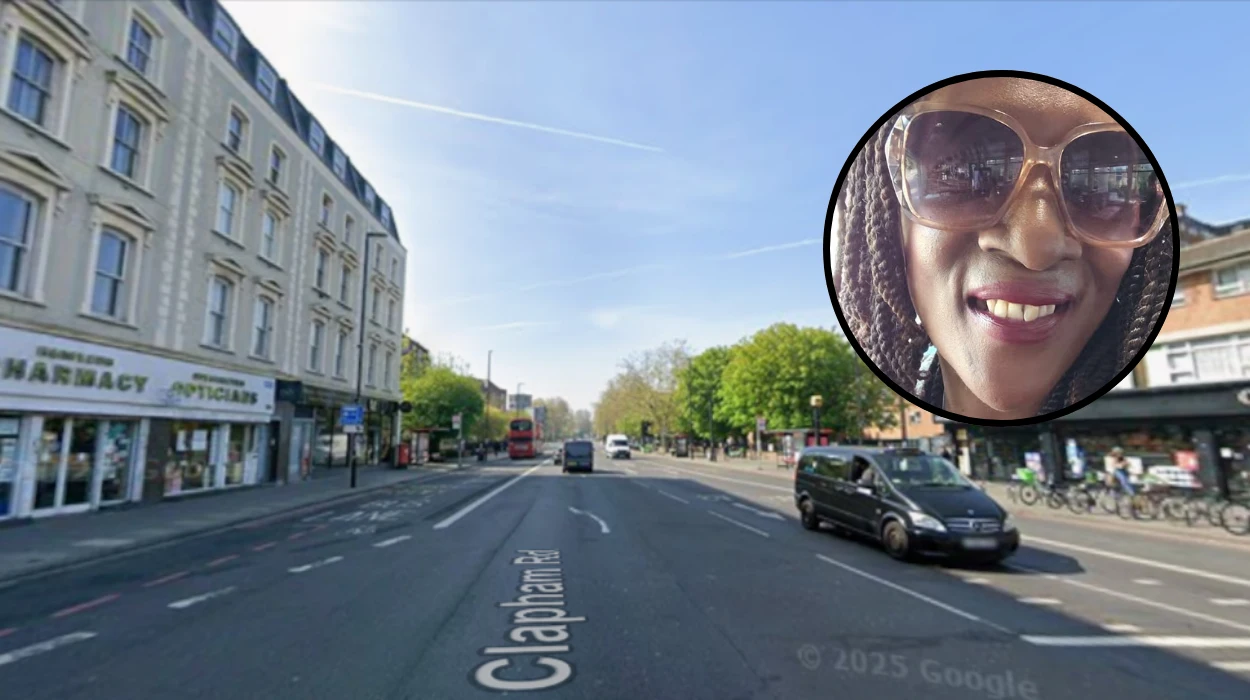
London (Extra London News) July 11, 2026 – A 58-year-old charity volunteer has spoken out after being subjected to a random, unprovoked physical assault on a London bus, which left her experiencing severe, continuous pain and raised deep concerns about the vulnerability of female passengers on the capital’s public transport network. Beverley Thomas was travelling home to Stockwell following a voluntary shift at a local food bank in Brixton when a tall male passenger allegedly kicked her heavily in the leg for simply attempting to step around him to reach the exit doors. The incident, which took place during broad daylight on a busy afternoon route, has renewed pressing debates over commuter security, public intervention, and the safety measures currently implemented across Transport for London (TfL) services. The Metropolitan Police have confirmed that an official report has been filed and an active inquiry is underway to track down the individual responsible.
- Who is Beverley Thomas and what happened on the 345 London bus route?
- How did the alleged assault on the London bus take place?
- What description did the victim provide of her attacker?
- How did fellow passengers and the bus driver react to the incident?
- Why was Beverley Thomas travelling from Brixton to Stockwell?
- What are the long-term physical and emotional consequences for the victim?
- What did Beverley Thomas say about women’s safety on public transport?
- How did the Metropolitan Police respond to the alleged bus assault?
As reported by Rafi Mauro-Benady of MyLondon, the victim, Ms Thomas, stated that the encounter has left her deeply shaken but resolute in her desire to see systematic changes in how anti-social behaviour and violent acts against women are addressed. The unprovoked attack has drawn widespread condemnation from community members, while the victim herself continues to emphasize the critical importance of documenting and reporting such incidents to the police. By speaking out, she aims to ensure that such acts are not normalized or ignored by a society increasingly hesitant to intervene in public confrontations.
Who is Beverley Thomas and what happened on the 345 London bus route?
To fully understand the context of the incident, it is essential to examine the background of the victim and the specific circumstances surrounding her journey. Beverley Thomas is a 58-year-old mother-of-one residing in Stockwell, known locally for her dedicated community involvement and resilient character. On Monday, 6th July, at approximately 3:00 pm, Ms Thomas was making her routine commute back to her residence after finishing a shift of voluntary service at a community food hub situated in nearby Brixton.
As detailed by journalist Rafi Mauro-Benady of MyLondon, Ms Thomas was a passenger on the route 345 bus, a well-frequented public transport line that connects various sectors of South and West London, including Peckham, Brixton, Stockwell, and South Kensington. According to the original reporting, the journey was entirely unremarkable until the bus approached her designated stop. Ms Thomas, demonstrating standard commuting etiquette, waited patiently for another female passenger to safely disembark from the vehicle before she made her own move towards the exit doors.
However, the situation quickly became tense when a remarkably tall male passenger stood up from his seat. As reported by Rafi Mauro-Benady of MyLondon, Ms Thomas indicated that this individual appeared to operate under the assumption that she should remain stationary and grant him unconditional priority to exit the vehicle ahead of her. Rather than proceeding off the vehicle smoothly, the male passenger abruptly came to a halt in the narrow gangway. Ms Thomas noted that the man “stopped at the two seats that you have at the front before you get off,” effectively creating a physical barrier and blocking the flow of traffic inside the bus.
How did the alleged assault on the London bus take place?
The mechanics of the confrontation highlight how a completely ordinary, everyday commuting scenario rapidly escalated into an act of physical violence. Finding her path completely obstructed by the stationary passenger, Ms Thomas attempted to resolve the impasse through polite, conventional communication. As reported by Rafi Mauro-Benady of MyLondon, Ms Thomas stated that she explicitly and politely muttered “excuse me” three distinct times in an effort to alert the man to her presence and her intent to exit the vehicle.
Despite her clear and repeated verbal notifications, the male passenger completely ignored her phrases, remaining rigidly positioned in the aisle. Realizing that verbal communication was proving entirely ineffective and wishing to catch the bus stop before the vehicle departed, Ms Thomas decided to take a mild physical step to garner his attention. As written by Rafi Mauro-Benady of MyLondon, Ms Thomas explained that she gently “tapped him on the shoulder to get his attention.” When this physical prompt was also met with total silence and a continued refusal to move, she realized she had no choice but to navigate around his frame.
Ms Thomas attempted to maneuver her body past the stationary man in a calm, non-confrontational manner to reach the open doors. It was during this specific moment of passing that the unprovoked assault allegedly occurred. As reported by Rafi Mauro-Benady of MyLondon, Ms Thomas stated that, entirely out of nowhere, she suddenly “felt this excruciating kick to my leg.” The sheer force of the blow left her in immediate shock. Turning around to identify the source of the sudden impact, she locked eyes with the tall passenger. Ms Thomas recalled that the man looked back at her, delivering a distinct, deliberate stare “as if to say he’s kicked me,” showing absolutely no remorse or hesitation regarding his actions.
What description did the victim provide of her attacker?
Following the immediate shock of the physical blow, Ms Thomas had to make a rapid decision on how to handle the volatile situation. Given her self-described aversion to public shouting matches and volatile arguments, she consciously chose to avoid engaging in a direct verbal or physical altercation with the aggressive individual. As reported by Rafi Mauro-Benady of MyLondon, Ms Thomas affirmed that she “doesn’t do confrontations,” electing instead to employ a tactical approach to secure justice.
In an effort to gather actionable evidence for law enforcement, Ms Thomas immediately retrieved her mobile telephone from her belongings with the intention of capturing a photographic image of her assailant. This decisive action allowed her to retain a clear mental image and visual profile of the individual to pass along during her subsequent police interview.
According to the official accounts compiled by journalist Rafi Mauro-Benady of MyLondon, Ms Thomas provided a highly specific physical profile of the suspect to assist with public identification and the ongoing police investigation:
- Ethnicity: Black male
- Height: Exceptionally tall, estimated to be approximately 6 feet 4 inches
- Hair: Shaved head, completely bald
- Distinguishing Facial Features: Notable presence of a “couple of scabs on his face”
What did the victim observe about the suspect’s mental state?
Beyond the physical attributes of the man who attacked her, Ms Thomas also reflected extensively on the bizarre nature of the interaction and what it suggested about the suspect’s underlying condition. The sheer randomness of the violence, paired with the complete lack of any prior argument, led her to believe that the individual may have been suffering from psychological issues or altered mental stability.
As reported by Rafi Mauro-Benady of MyLondon, Ms Thomas reflected on the suspect’s presentation, explicitly stating: “I find it bizarre that a Black man could see another Black woman and just want to do that. To be honest, he didn’t look the full ticket.” This localized British idiom implies that the suspect appeared to be mentally unstable, unpredictable, or lacking full cognitive awareness at the time of the assault. This observation introduces a complex layer to the case, highlighting the unpredictable dangers that everyday passengers face from individuals who may be experiencing acute mental crises or displaying severe anti-social tendencies within public spaces.
Explore More London Crime News
North London Crime: Hairdressers and Butchers Caught Selling Illegal Cigarettes, 2026
Finbar Sullivan Primrose Hill Murder: Teen Denies Charges North London 2026
How did fellow passengers and the bus driver react to the incident?
A significant aspect of modern public transport incidents involves the behavior of bystanders and transit staff, a dynamic that Ms Thomas observed closely during and after the assault. The presence of multiple witnesses on a daytime London bus usually provides a sense of security, yet the reality of public intervention often falls short due to the “bystander effect” and a fear of personal retaliation.
According to the reporting by Rafi Mauro-Benady of MyLondon, Ms Thomas observed that her fellow passengers on the route 345 bus appeared to be visibly “shocked” by the sudden, overt display of physical violence in the middle of the afternoon. However, this collective shock did not instantly translate into robust, protective intervention or an attempt to detain the suspect. Ms Thomas expressed a pragmatic understanding of this modern social hesitation, stating to MyLondon: “People in society today, they don’t want to get too involved. One or two people asked me if I was okay, I hope the bus driver reported it.”
This lack of deeper engagement highlights a growing trend in urban environments where citizens, fearful for their own personal safety or wary of escalating a volatile situation, choose to remain passive observers rather than active defenders. While a couple of individuals offered brief verbal comfort to ensure she was conscious and standing, the burden of reporting and seeking immediate justice ultimately fell squarely on Ms Thomas’s shoulders.
Why was Beverley Thomas travelling from Brixton to Stockwell?
To understand the profound emotional impact of this assault, it is valuable to look at what Ms Thomas was doing prior to boarding the vehicle. Her presence on the route 345 bus was directly tied to her selfless commitment to community welfare, a factor that made the subsequent violence feel particularly jarring and unjust.
As reported by Rafi Mauro-Benady of MyLondon, Ms Thomas had spent the hours leading up to the assault volunteering at a localized community food hub in Brixton. This charitable operation is overseen and managed by Pastor Lorraine Burrell Jones OBE, a well-respected local figure recognized for her extensive contributions to social welfare and support systems in South London. For Ms Thomas, this volunteer work is far more than a simple pastime; it represents a core pillar of her daily life and mental health.
Speaking candidly to journalist Rafi Mauro-Benady of MyLondon, Ms Thomas revealed that working at the food hub “means everything” to her. She explained that this community service played a vital role in providing her with a sense of purpose and stability, helping her navigate through incredibly “dark times” following the painful loss of her mother, who passed away last year. The contrast of leaving a space dedicated to peace, charity, and mutual support, only to be met with unprovoked violence on a public transport vehicle minutes later, underscores the deeply disturbing nature of the assault.
What are the long-term physical and emotional consequences for the victim?
The true impact of public violence is rarely confined to the immediate moment of the attack; rather, it lingers in the form of prolonged physical suffering and psychological reflection. Despite her injuries, Ms Thomas’s response to the event showcases a blend of personal stoicism, historical family influences, and an enduring sense of community duty.
As reported by Rafi Mauro-Benady of MyLondon, the physical impact of the “excruciating” kick left a highly visible mark and deep bruising on Ms Thomas’s leg. The injury caused continuous, severe pain, with her leg throbbing incessantly for days after the encounter. In fact, Ms Thomas noted that the leg did not actually stop hurting until Friday, 10th July—nearly five full days after the initial blow was delivered on the bus. Despite this persistent physical agony, her commitment to others remained unshaken; she resolutely returned to her volunteer duties at the Brixton food hub the very next morning, choosing not to let the actions of an aggressive stranger dictate her life.
When news of the alleged assault reached her immediate family circle and close friends, it sparked widespread outrage. As reported by Rafi Mauro-Benady of MyLondon, Ms Thomas’s loved ones were so thoroughly “raging” that many expressed an immediate desire to “go looking for him” to exact personal retribution. However, Ms Thomas firmly de-escalated these retaliatory sentiments, clarifying that she is currently at a stage in her life where she actively avoids conflict and “doesn’t want problems.”
Interestingly, she admitted that her reaction would have been vastly different in her younger years. Having grown up with four brothers who explicitly “taught her how to box,” she possessed the physical skills and temperament to engage in combat. Reflecting on her past, she openly stated to MyLondon: “Back in the day I would have been rolling around with him.” This revelation underscores her growth into a peaceful, community-minded individual who prefers the rule of law over street violence.
What did Beverley Thomas say about women’s safety on public transport?
The core message that Ms Thomas wishes to project to the wider public is one of systemic awareness, female solidarity, and civic responsibility. Rather than viewing her assault as an isolated piece of bad luck, she recognizes it as symptomatic of a broader, more dangerous environment that women must navigate daily within major urban centers.
As reported by Rafi Mauro-Benady of MyLondon, Ms Thomas issued a stark, uncompromising warning regarding the current state of public safety, flatly declaring: “Women are not safe, this type of behaviour needs to be stopped.” She emphasized the profound injustice of the situation, highlighting that a citizen should never have to fear physical violation while simply using municipal transit systems.
Expressing her ongoing disbelief, she stated to MyLondon:
“You’re on public transport trying to get home from doing something beautiful for the community and this is what I have to experience. I still can’t believe it’s happened.”
In response to this systemic vulnerability, Ms Thomas is actively urging all women and public transport users to refuse silence. She insists that the only way to dismantle this culture of casual violence is through rigorous, unwavering accountability. She implored the public, stating: “But if it does happen to anybody else, please report this in the first instance to the police. We’ve got to make a stand.” Her testimony serves as a rallying cry for commuters to actively flag abuses, ensuring that Transport for London and municipal authorities are forced to confront the true scale of harassment on their networks.
How did the Metropolitan Police respond to the alleged bus assault?
When public safety is compromised on municipal transit networks, the focus naturally shifts to law enforcement and their operational capacity to investigate, track down, and prosecute offenders. The role of the Metropolitan Police Service is pivotal in ensuring that complaints do not simply become static statistics, but rather result in tangible investigative action.
Following the assault, Ms Thomas followed her own advice and filed a formal report detailing the timeline, the route 345 bus location, the mechanics of the kick, and the comprehensive physical description of the 6-foot-4 suspect. As reported by journalist Rafi Mauro-Benady of MyLondon, the Metropolitan Police Service has officially confirmed that they received Ms Thomas’s report regarding the incident.
The investigation remains open, with police actively assessing available closed-circuit television (CCTV) footage, which is standard equipment across all modern Transport for London bus fleets. Such video evidence will be vital in corroborating the victim’s account, identifying the exact moment of the assault, and capturing high-resolution images of the suspect’s face to assist in his eventual apprehension.
How can the public assist with this active police investigation?
In investigations of this nature, community intelligence and eyewitness accounts are incredibly valuable tools for law enforcement. Because the incident took place at 3:00 pm on a busy Monday afternoon, it is highly probable that other commuters on the route 345 bus witnessed the sequence of events, saw the suspect boarding or exiting the vehicle, or perhaps captured mobile phone footage of their own.
Members of the public who were travelling on or near the route 345 bus between Brixton and Stockwell on Monday, 6th July, and who may recall seeing a uniquely tall Black man matching the description—approximately 6 feet 4 inches tall, bald, with scabs on his face—are strongly encouraged to come forward. Information can be passed directly to the Metropolitan Police Service by dialling the non-emergency municipal numbers, or provided completely anonymously via the independent charity Crimestoppers. Informants should reference the specific bus route, date, and time of the incident to ensure their tips are routed directly to the appropriate investigative team.