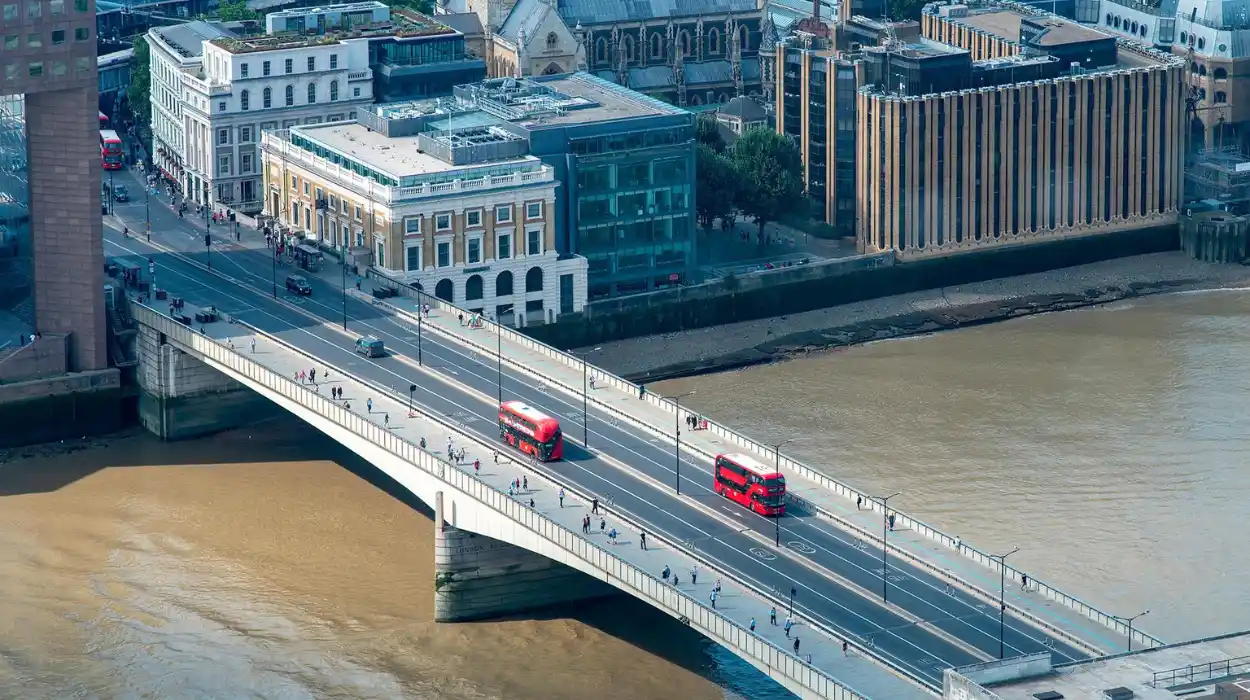
London Bridge is one of the most significant transport crossings in British history. For nearly 2,000 years, it has connected communities on both sides of the River Thames and played a central role in London’s growth. The bridge that stands today is the latest in a long sequence of structures that began during the Roman occupation of Britain and evolved through medieval, early modern, Victorian, and contemporary periods.
- Why has London Bridge remained important for nearly 2,000 years?
- What were the Roman origins of London Bridge?
- How did London Bridge evolve during the medieval period?
- What role did London Bridge play in medieval politics and society?
- Why was the medieval London Bridge eventually replaced?
- How did the nineteenth-century London Bridge change the city?
- What happened to the Victorian London Bridge?
- What defines the modern London Bridge?
- What archaeological discoveries have revealed London Bridge’s past?
- How has London Bridge influenced London’s long-term development?
- Why does London Bridge remain historically relevant today?
The history of London Bridge reflects the history of London itself. Wars, fires, commerce, engineering advances, and urban expansion all shaped its development. Each bridge built on this site responded to changing social, economic, and technological demands. The crossing became a strategic military route, a commercial hub, a residential district, and eventually a modern transport artery serving millions of people annually.
Understanding the story of London Bridge requires examining its origins, architectural transformations, historical significance, archaeological discoveries, and continuing role in twenty-first-century London.
Why has London Bridge remained important for nearly 2,000 years?
London Bridge remained important because it provided the principal crossing of the River Thames in central London for centuries, linking trade routes, supporting military movement, enabling urban growth, and serving as a strategic transportation corridor connecting northern and southern England.
The River Thames shaped the development of London. Before bridges existed, movement across the river depended on ferries and boats. These methods limited trade, communication, and military operations.
The Romans established Londinium around AD 47 after invading Britain in AD 43. Archaeological evidence indicates that a timber bridge was constructed near the present location of London Bridge during the first century AD. The crossing connected Roman roads extending toward Kent and other parts of southeastern Britain.
For centuries, London Bridge represented the lowest fixed crossing point on the Thames. This geographical advantage concentrated movement through a single location. Merchants transported goods, travelers entered the city, and armies crossed the river using this route.
The bridge also generated revenue through tolls and commercial activities. Governments and civic authorities recognized its strategic value and invested resources in maintaining and rebuilding it after periods of damage or decline.
Its continued importance demonstrates how geography can influence urban development over long periods. London grew around transportation networks, and London Bridge formed one of the most important components of that system.
What were the Roman origins of London Bridge?
The first London Bridge was constructed during the Roman occupation of Britain, probably between AD 50 and AD 80. Built primarily from timber, it connected Roman roads, supported trade, and helped establish Londinium as a major provincial settlement.
Roman engineers were highly skilled bridge builders. Their infrastructure projects included roads, aqueducts, fortifications, and river crossings throughout the empire.
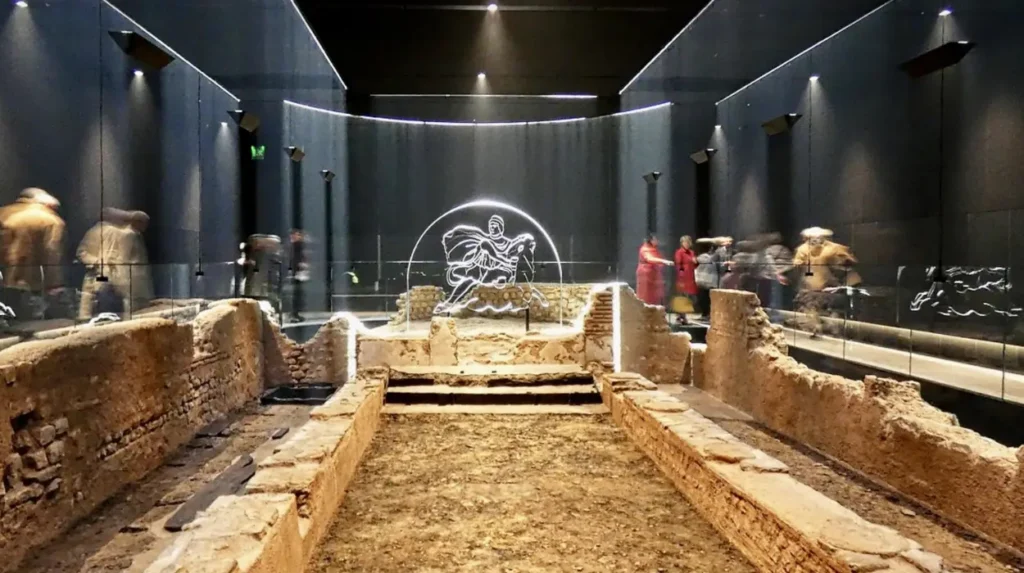
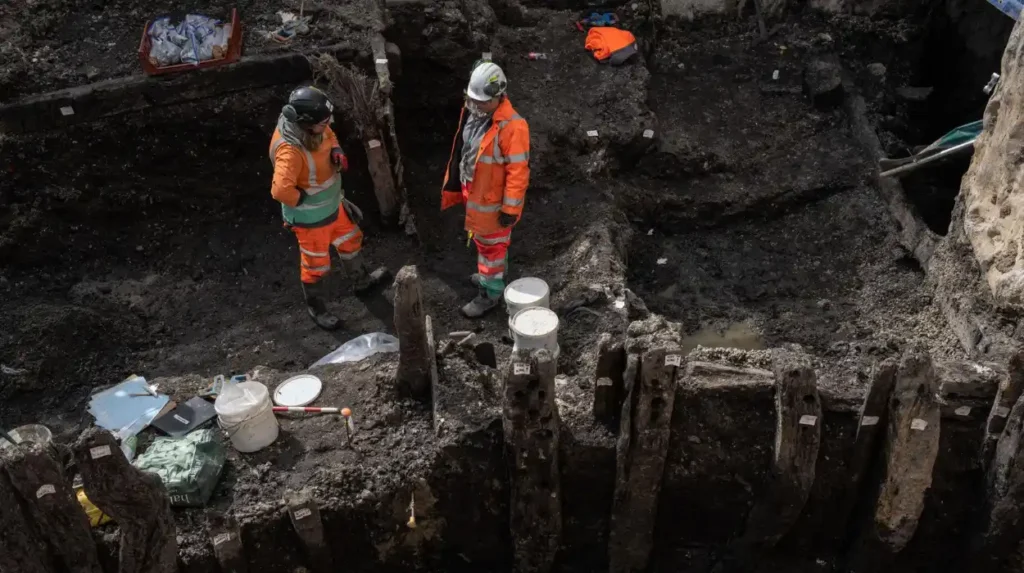
Excavations conducted around the Thames have uncovered wooden piles and structural remains associated with early Roman bridges. Dendrochronological analysis, which dates timber through tree-ring patterns, has helped researchers establish construction periods.
The bridge linked important Roman roads including routes leading toward the port of Dover and continental Europe. This connection enhanced commercial activity between Britain and the wider Roman Empire.
Londinium developed rapidly during the first and second centuries AD. Historical estimates suggest the settlement reached a population of approximately 30,000 to 45,000 inhabitants by the late Roman period. The bridge facilitated movement of goods including pottery, metals, grain, and imported products.
Roman London also contained warehouses, markets, administrative buildings, and defensive walls. The bridge formed part of an integrated urban system that supported economic and political activity.
Several Roman bridges likely occupied the site over nearly four centuries. Flooding, wear, and changing engineering requirements necessitated periodic reconstruction. Examples include timber-pile structures, reinforced deck crossings, and repaired bridge spans.
When Roman administration declined during the fifth century, maintenance ceased, and the bridge eventually deteriorated.
How did London Bridge evolve during the medieval period?
Medieval London Bridge transformed from a simple river crossing into a densely populated structure containing houses, shops, chapels, and defensive features, becoming one of Europe’s most distinctive urban bridges between the twelfth and sixteenth centuries.
Following the Norman Conquest of 1066, London expanded in political and economic importance. Existing bridge structures required replacement.
Construction of the famous stone medieval bridge began in 1176 under the supervision of priest and engineer Peter of Colechurch. The project lasted approximately 33 years and was completed in 1209.
The new bridge represented a major engineering achievement. It featured 19 arches, a drawbridge, defensive gatehouse, and substantial stone foundations. Its length exceeded 280 metres.
Buildings gradually appeared on the bridge. Residential properties, workshops, and commercial premises occupied both sides of the roadway. At certain points, hundreds of people lived directly above the river.
The bridge also contained the Chapel of St Thomas Becket, an important religious site. Pilgrims, traders, and local residents visited the chapel regularly.
Medieval London Bridge functioned as more than infrastructure. It became a self-contained community. Examples include merchants’ houses, craft workshops, and retail premises.
Traffic congestion frequently occurred because the roadway remained narrow despite growing urban populations. Nevertheless, the bridge supported London’s expanding economy and reinforced its position as England’s leading city.
What role did London Bridge play in medieval politics and society?
London Bridge served as a political symbol, military stronghold, commercial center, and public space where authorities displayed power, regulated trade, and communicated political messages to residents and visitors entering London.
Control of London Bridge often influenced political events. During periods of conflict, securing the crossing became a military priority.
The bridge’s gatehouse famously displayed the heads of executed traitors. This practice began in the late thirteenth century and continued for centuries. The displays acted as public warnings against treason and rebellion.
The bridge also regulated economic activity. Traders transporting goods into the city encountered customs duties and commercial oversight.
Its location created a natural gathering place for citizens. Royal processions, ceremonial events, and public celebrations frequently passed across the structure.
The bridge connected the commercial districts of the City of London with Southwark. Southwark became known for inns, markets, entertainment venues, and religious institutions.
Economic interaction between these areas contributed significantly to London’s prosperity. The bridge facilitated daily movement of workers, merchants, clergy, and officials.
As London’s population increased during the medieval era, pressure on the crossing intensified. Urban authorities continuously balanced commercial, residential, and transportation needs.
Why was the medieval London Bridge eventually replaced?
The medieval bridge was replaced because centuries of structural wear, increasing traffic demands, changing engineering standards, and urban growth made the aging stone structure unsuitable for a rapidly expanding industrial city.
By the eighteenth century, London had become one of the world’s largest cities. Population growth placed unprecedented pressure on transportation infrastructure.
Many buildings remained on the bridge until the eighteenth century. Their removal improved traffic flow but exposed underlying structural weaknesses.
The narrow arches restricted river navigation. Strong currents developed around bridge piers, creating hazardous conditions for vessels.
Engineers and planners increasingly viewed replacement as necessary. Structural assessments identified deterioration resulting from centuries of use, weather exposure, and modifications.
Industrial-era transportation needs differed dramatically from medieval requirements. Greater volumes of goods, passengers, and commercial traffic required wider, stronger crossings.
The bridge’s limitations affected both river transportation and road transportation. Modernization became a practical necessity rather than merely an aesthetic preference.
These factors ultimately led authorities to commission a completely new bridge during the nineteenth century.
How did the nineteenth-century London Bridge change the city?
The nineteenth-century London Bridge, designed by engineer John Rennie and completed in 1831, improved transportation efficiency, enhanced river navigation, and reflected the engineering ambitions of industrial Britain.
The replacement project represented one of the most important infrastructure developments of the era.
Scottish engineer John Rennie prepared the design, although construction occurred after his death under the supervision of his sons.
Completed in 1831, the bridge featured five granite arches and a significantly wider roadway. Its elegant design balanced functionality and architectural refinement.
The structure quickly became an important symbol of Victorian engineering confidence. Improved traffic flow supported London’s expanding commercial economy.
The bridge also improved navigation on the Thames. Wider spans reduced hazards for vessels traveling through central London.
Industrial Britain relied heavily on transportation infrastructure. Examples include railways, docks, and bridges. London Bridge formed part of this broader modernization effort.
The crossing accommodated increasing numbers of pedestrians, horse-drawn vehicles, and commercial traffic moving through the capital.
Its construction reflected advances in surveying, stoneworking, and civil engineering techniques that characterized nineteenth-century infrastructure projects.
What happened to the Victorian London Bridge?
The Victorian London Bridge was dismantled during the twentieth century after structural settlement issues emerged, and it was subsequently relocated to the United States, where it remains standing in Arizona today.
By the mid-twentieth century, traffic volumes exceeded expectations established during the nineteenth century.
Studies revealed that the bridge was gradually sinking into the riverbed. While the structure remained stable, ongoing settlement raised concerns regarding long-term performance.
Authorities decided to construct a replacement bridge rather than undertake extensive modifications.
In 1968, the bridge was sold to entrepreneur Robert McCulloch. The granite structure was carefully dismantled and transported to the United States.
The bridge was reconstructed in the city of Lake Havasu City, where it opened in 1971.
This relocation created one of the most unusual heritage preservation projects in modern history. Rather than demolishing the structure, planners preserved it through adaptive reuse.
Today, the former London Bridge remains a significant tourist attraction and an example of large-scale architectural relocation.
What defines the modern London Bridge?
The current London Bridge, opened in 1973, is a functional prestressed concrete and steel structure designed to support modern transportation demands while maintaining the historic crossing’s role within central London.
The present bridge was officially opened by Queen Elizabeth II on 17 March 1973.
Unlike its predecessors, the design prioritizes efficiency and durability over decorative architecture. Engineers focused on accommodating high traffic volumes and reducing maintenance requirements.
The bridge carries vehicles, cyclists, pedestrians, and public transport across the Thames daily.
Its location places it near major landmarks including The Shard, Borough Market, and Southwark Cathedral.
The crossing continues to serve as a vital component of London’s transport network. Millions of journeys occur across or near the bridge annually through interconnected rail, road, and pedestrian systems.
Modern engineering practices emphasize safety, load capacity, and long-term sustainability. The current structure reflects those priorities while preserving the historic route established nearly two millennia ago.
To experience this historic landmark in person today, consult our comprehensive [Walking Across London Bridge: Views, Attractions, and Nearby Sights] for itineraries and visiting parameters.
What archaeological discoveries have revealed London Bridge’s past?
Archaeological investigations have uncovered Roman timbers, medieval foundations, artifacts, and river structures that provide valuable evidence about bridge construction, urban development, trade networks, and daily life across different historical periods.
Archaeology has significantly expanded understanding of London’s bridge history.
Excavations associated with redevelopment projects have revealed preserved wooden piles from Roman bridge structures. Waterlogged conditions within the Thames environment helped protect organic materials.
Researchers have also discovered medieval foundations, ceramics, coins, tools, and commercial artifacts.
These findings provide evidence of construction techniques, maintenance practices, and economic activity.
Examples include imported pottery fragments, merchant tokens, and structural timbers. Each artifact contributes information about London’s development.
Scientific methods have improved archaeological interpretation. Examples include radiocarbon dating, dendrochronology, and digital reconstruction technologies.
Museum collections and academic institutions continue studying recovered materials to refine understanding of bridge evolution.
The archaeological record demonstrates continuity of occupation and infrastructure use across nearly two thousand years.
How has London Bridge influenced London’s long-term development?
London Bridge shaped London’s economic expansion, transportation networks, settlement patterns, and political importance by creating a permanent Thames crossing that supported continuous urban growth from Roman Britain to the modern metropolis.
Cities often develop around transportation corridors. London provides a clear example of this principle.
The bridge facilitated movement between northern and southern regions of England. Commercial exchanges increased because goods could cross the Thames more efficiently.
Urban districts emerged around the crossing. Examples include the City of London and Southwark. Their growth reflected the bridge’s strategic position.
The crossing also influenced property development, trade routes, governance structures, and infrastructure investment.
Successive generations rebuilt the bridge because its location remained indispensable. Although designs changed, the underlying geographic necessity persisted.
Today, London Bridge remains integrated into a wider transportation network that includes railways, roads, pedestrian routes, and river services.
Its historical significance extends beyond architecture. The bridge illustrates how infrastructure can shape economic activity, social interaction, and urban identity over centuries.
Why does London Bridge remain historically relevant today?
London Bridge remains historically relevant because it represents nearly two millennia of continuous infrastructure development, reflects major phases of British history, and preserves an enduring connection between London’s ancient origins and modern urban landscape.
Few locations in Britain demonstrate such extensive historical continuity.
The site has witnessed Roman occupation, medieval expansion, Tudor governance, industrial modernization, and contemporary urban development. Each period left physical, cultural, and documentary evidence.
Heritage organizations, historians, archaeologists, and educators continue studying the bridge because it provides insight into long-term urban change.
The crossing also serves as a valuable teaching resource. Students examining engineering, archaeology, architecture, geography, and British history encounter important evidence associated with London Bridge.
Modern visitors often focus on nearby landmarks, yet the bridge itself remains one of London’s most significant historical sites.
From Roman timber foundations to a twenty-first-century transport corridor, London Bridge demonstrates how infrastructure evolves while retaining its fundamental purpose. Its story reflects the broader story of London: adaptation, resilience, and continuous renewal across nearly 2,000 years.
How old is London Bridge?
London Bridge has a history stretching back nearly 2,000 years. The first bridge at the site was built by the Romans around the first century AD, making it one of the oldest continuously used crossing locations in Britain.