Key Points
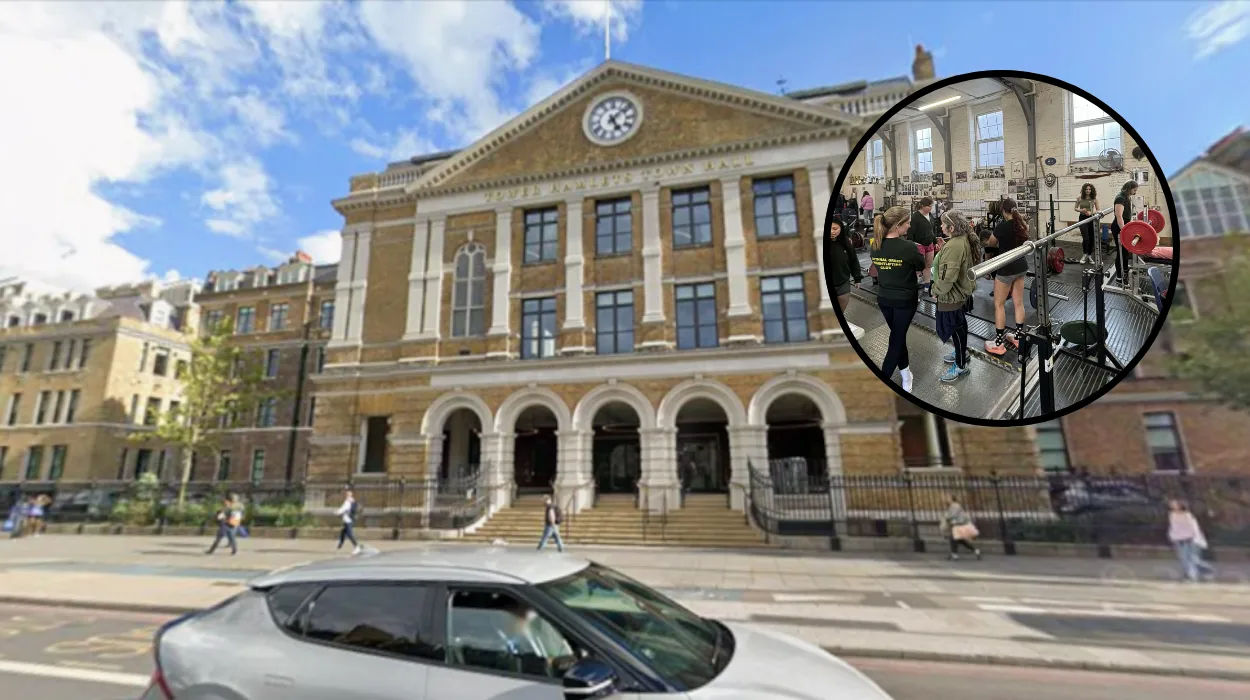
- Historical Eviction: The 100-year-old Bethnal Green Weightlifting Club (BGWLC), recognized as London’s oldest weightlifting institution, has been ordered by Tower Hamlets Council to vacate its historic premises on Turin Street.
- Redevelopment Blueprint: The local authority plans to clear the Professional Development Centre (PDC) site—spanning Bethnal Green Road and Turin Street—to pave the way for a major civic and residential development, incorporating a new public library and 44 housing units, 24 of which are designated for social rent.
- Decades of Heritage: Established in 1926, the non-profit, community-run club has occupied its current unassuming brick home since 1948, serving as a foundational pillar for local grassroots sports and elite athletic development.
- Protracted Legal Timeline: The council initially issued a Section 25 eviction notice in July 2024, dictating an exit by January 2025. Following legal appeals, localized petitioning, and intense community pushback, the eviction deadline was extended multiple times, culminating in a current hard deadline of October 2026.
- Relocation Uncertainties: While Tower Hamlets Council has proposed an alternative relocation site on nearby Tent Street, the club’s leadership maintains that no formal agreements have been finalized, describing their operational state as being left “in limbo.”
- Elite and Community Impact: The historic gym has produced world-class powerlifters and Paralympic champions, whilst concurrently acting as a vital community sanctuary for vulnerable locals, including international refugees.
London (Extra London News) May 18, 2026 – The Bethnal Green Weightlifting Club, an internationally revered grassroots stronghold for strength sports, is facing imminent eviction from its long-term home after Tower Hamlets Council advanced development applications to transform the historic Turin Street site into a mixed-use residential and civic hub. Under the current structural proposals, the existing building will be completely cleared to facilitate the construction of 44 residential apartments alongside a modern public library.
- Key Points
- Why Is Tower Hamlets Council Evicting the Bethnal Green Weightlifting Club?
- What Is the History of London’s Oldest Weightlifting Club?
- How Has the Eviction Timeline Escalated Since 2024?
- What Do Club Officials Say About the Council’s Actions?
- How Has the Local Community Reacted to the Forced Relocation?
- What Is the Position of Tower Hamlets Council on the Future of the Club?
- How Are Local Politicians and the Greater London Authority Responding?
The impending demolition marks a definitive end to the club’s 78-year tenure at the Professional Development Centre (PDC) site, sparking widespread condemnation from sports personalities, historical preservationists, and the local populace, who argue that the area’s rich social fabric is being systematically eroded.
Why Is Tower Hamlets Council Evicting the Bethnal Green Weightlifting Club?
The structural impetus behind the eviction stems from an aggressive municipal drive by the Tower Hamlets Council to alleviate local housing shortages and modernize community infrastructure. The local authority’s design scheme targets the broader Professional Development Centre site, which bridges Bethnal Green Road and Turin Street.
According to formal planning documentation submitted by the local government, the site has been earmarked for a comprehensive residential block comprising 44 homes, with a specific focus on municipal welfare through the inclusion of 24 units designated for social rent.
In addition to housing, the council intends to introduce an expansive public library to serve the wider borough.
The local authority has maintained that the redevelopment provides an essential public good that addresses critical housing waiting lists within East London, asserting that under-utilized or aging municipal assets must be repurposed to meet modern statutory demands.
What Is the History of London’s Oldest Weightlifting Club?
The Bethnal Green Weightlifting Club boasts an illustrious heritage that predates the modern organization of British strength sports. Founded in 1926, the club originally operated out of premises on Old Bethnal Green Road before relocating to its current single-storey brick building on Turin Street in 1948.
For nearly eight decades, the gym has functioned as a non-profit, community-managed sanctuary dedicated to Olympic weightlifting, powerlifting, and general physical culture.
The institution has consistently punched above its weight on the global stage. It has long been recognized as a premier training ground responsible for developing elite athletes, world champions, and highly decorated figures who have proudly represented Great Britain at both the Commonwealth Games and the Paralympic Games.
Despite its international sporting pedigree, the club has retained its strict grassroots ethos, offering affordable, expertly coached free-weight training to a highly diverse demographic cross-section of East London’s population.
How Has the Eviction Timeline Escalated Since 2024?
The legal friction between the property’s municipal owners and the club’s leadership has unfolded over a series of tense bureaucratic escalations.
As reported by Ruby Gregory, a Local Democracy Reporter for The Standard, Tower Hamlets Council initially served the club with a formal Section 25 eviction notice in July 2024, abruptly terminating their long-standing tenancy and ordering them to entirely vacate the premises by 31 January 2025.
The initial directive triggered immediate legal appeals from the club’s representatives, who alleged an total absence of prior consultation.
Following a series of highly publicized campaigns and legal interventions, the council consented to successive short-term stays of execution.
Writing for MyLondon, journalist Ruby Gregory documented that a crucial three-month extension was granted until 30 April 2025 to allow for emergency talks.
Subsequent negotiations pushed the deadline further, and as confirmed by club updates and localized reporting, the council ultimately adjusted the eviction timeline to October 2026.
This final extension ensures that the club will legally reach its historic 100-year centenary within its original Turin Street home, though its long-term survival beyond that date remains profoundly compromised.
Explore More Tower Hamlets News
Tower Hamlets Seeks Contractors for £500m Retrofit Programme; Tower Hamlets 2026
£300K funding for Tower Hamlets blocks deal in 2026
What Do Club Officials Say About the Council’s Actions?
The leadership of the Bethnal Green Weightlifting Club has expressed profound frustration over what they characterize as an uncommunicative and contradictory approach from municipal officials.
Reflecting on the initial eviction notification, Head Coach Martin Bass expressed sheer bewilderment regarding the lack of transparency. As published in official club statements and detailed by The Standard, Martin Bass stated that:
“We’ve been here almost 80 years, they know who we are, they’ve got our phone numbers, why didn’t they just talk to us?”
Furthermore, the club used Freedom of Information (FOI) requests to scrutinize the council’s internal processes, alleging that the local authority originally served the eviction mandate without an approved budget or crystallized development blueprints.
Martin Bass later observed to reporters that early discussions with local councillors suggested the gym would be replaced by a “Residents’ Hub,” a proposition that left the club highly skeptical given the lack of public plans.
In a joint statement issued via The Tower Hamlets Slice, an official spokesperson for the club emphasized the ongoing psychological toll on its members, stating:
“Crucially, our historic, grassroots sports club remains under threat. It is imperative that the council acts swiftly and decisively, not only to clarify its intentions regarding the building but also to offer a concrete plan that ensures the club can continue to serve the community.”
How Has the Local Community Reacted to the Forced Relocation?
For the gym’s diverse membership, the Turin Street facility represents far more than an athletic training space; it is widely described as an irreplaceable community lifeline.
Following the initial eviction announcements, members mobilized a massive global petition, gathering thousands of signatures from supportive lifters worldwide.
The human cost of the closure has been highlighted through individual testimonies collected by regional press. Journalists covering the dispute for MyLondon highlighted the stories of Taras Lyntovski and his wife, Yana Lyntovska, who joined the weightlifting club shortly after fleeing Ukraine as refugees following the 2022 Russian invasion. Highlighting the welcoming, inclusive environment of the club, Taras Lyntovski stated:
“This gym helped us very quickly, it wasn’t easy for us because we didn’t expect to leave our country and the guys here helped us very, very quickly because we have the same vision, they helped us to feel at home.”
The sentiment is echoed by elite athletes who fear the structural impact on British sports. In an interview with The Standard, celebrated British Paralympic powerlifter Ali Jawad issued a stark warning regarding the wider institutional ramifications of the council’s development plans, stating:
“I think if Tower Hamlets Council decide to completely shut this place down, they’re potentially denying a Paralympian another shot at the games. Do they really want to do that to the national team?”
What Is the Position of Tower Hamlets Council on the Future of the Club?
In response to sustained public criticism, Tower Hamlets Council has consistently maintained that it values the historical significance of the club but must balance that appreciation against the acute socioeconomic needs of the broader borough.
The local authority has categorically denied that it is seeking to entirely abolish the institution, emphasizing that alternative arrangements are being actively pursued.
A spokesperson for Tower Hamlets Council addressed the ongoing friction via a public statement reported by the Local Democracy Reporting Service, asserting:
“We understand the club’s concerns and want to reassure them that the extension is because we are doing everything we can to put alternative arrangements in place for them. This was delayed while we waited for their requirements. We have those now and so can continue to work with them to find a suitable alternative space.”
The council has explicitly proposed a potential relocation site situated on nearby Tent Street. However, municipal officers have conceded that discussions remain strictly ongoing, and no legally binding agreements or architectural guarantees have been executed to ensure the club’s seamless transition to a new venue before the final October 2026 demolition deadline.
How Are Local Politicians and the Greater London Authority Responding?
The dispute has inevitably permeated local political spheres, drawing scrutiny from regional representatives and the London Assembly. Club delegates previously sought direct intervention from Councillor Kabir Ahmed, who serves as both the Ward Councillor for Weavers Ward and the Cabinet Member for Regeneration, Inclusive Development, and Housebuilding.
While Councillor Ahmed reiterated the council’s broader statutory commitment to regenerating the area, the club maintained that clear justifications for targeting their specific building remained elusive.
The issue eventually escalated to the Greater London Authority (GLA). In a formal mayoral question session recorded in early 2025 regarding the “Bethnal Green gym eviction,” constituents formally petitioned the Mayor of London to intervene.
In an official written response preserved within the Greater London Authority archives, the executive office stated:
“I recognise the contribution and value that organisations like the Bethnal Green Weightlifting Club provide to local and neighbouring communities. Without knowing all the details, it is difficult for me to comment. However, I will ask my team to get in touch with the club directly to explore any support we can offer.”
As planning permission applications move through the final stages of municipal evaluation, the century-old institution remains locked in a race against time, caught precariously between the demands of civic expansion and the preservation of East London’s working-class sporting heritage.