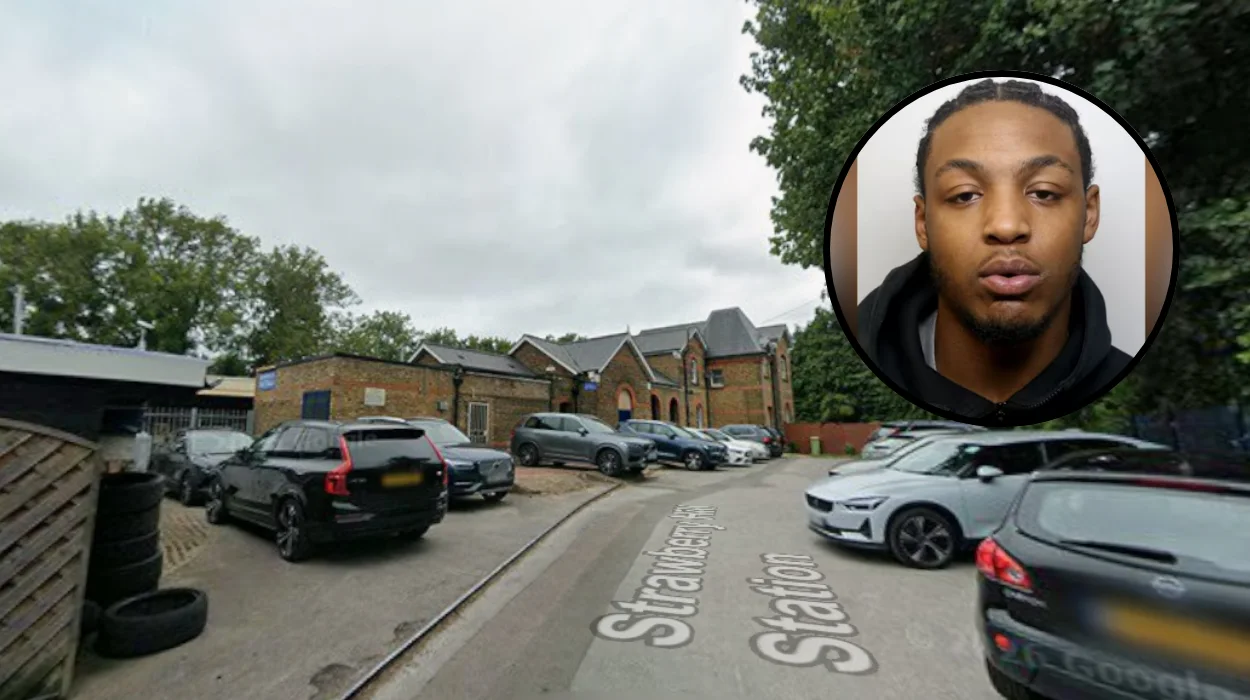
- Fatal Station Stabbing: Dino Donaldson, 21, has been found guilty of the murder of 21-year-old accounting student Anojan Gnaneswaran at Strawberry Hill station in West London.
- Motive Behind the Attack: The fatal confrontation erupted from a dispute over a £50 transaction involving 10 MDMA tablets scheduled at the suburban railway hub.
- Brutal Assault on Tracks: Donaldson brandished a long knife from his waistband, chased the victim, and inflicted fatal stab wounds to Gnaneswaran’s chest, abdomen, and thigh on the live railway tracks.
- Callous Post-Attack Behaviour: CCTV footage recovered from a night bus showed Donaldson laughing and smiling less than an hour after the victim was pronounced dead at the scene.
- Forensic Evidence and Arrest: Detectives recovered the murder weapon and a black glove hidden in a tree, both bearing DNA from both the killer and the victim. Donaldson was later found hiding inside a cupboard at his home.
- Upcoming Sentencing: Following the unanimous verdict at London’s Old Bailey on 14 April, Donaldson remains in custody and is scheduled to be sentenced on 19 June.
West London (Extra London News) May 30, 2026 – A twenty-one-year-old man faces a mandatory life sentence behind bars after being convicted at the Central Criminal Court (the Old Bailey) for the brutal murder of an accounting student on the tracks of a quiet suburban railway station. Dino Donaldson, of Caxton Road, Ealing, was found guilty by a jury on 14 April following a comprehensive and complex trial detailing a minor drug dispute that escalated into extreme violence. The conviction follows an extensive, fast-moving investigation spearheaded by British Transport Police (BTP) detectives from the specialist Major, Serious and Organised Crime (MSOC) team. The victim, Anojan Gnaneswaran, also 21, was a high-achieving university student and international karate competitor who tragically succumbed to multiple catastrophic stab wounds at Strawberry Hill railway station in West London despite the desperate, immediate life-saving efforts of his brother and emergency medical services. Donaldson, who maintained a stance of complete denial throughout the legal proceedings, has been remanded in custody to appear again at the Old Bailey for formal sentencing on 19 June.
- What Triggered the Fatal Altercation at Strawberry Hill Station?
- How Did the Confrontation Move Onto the Railway Tracks?
- What Key Evidence Led Detectives to Dino Donaldson?
- How Did the British Transport Police Respond to the Jury’s Verdict?
- Who Was Anojan Gnaneswaran, and How Are His Family Honouring Him?
- What Are the Next Steps in the Legal Proceedings Against Donaldson?
What Triggered the Fatal Altercation at Strawberry Hill Station?
The court heard harrowing evidence detailing how a trivial financial transaction involving illicit substances served as the catalyst for an unprovoked loss of life. As reported by legal correspondents covering the trial at the Old Bailey, jurors were presented with a timeline showing that two distinct groups of young men had meticulously arranged a meeting on the evening of 8 January 2024. The purpose of the rendezvous was the exchange of 10 MDMA tablets, carrying a street value of just £50, intended to take place within the confines of the West London suburban station.
According to prosecution records, Donaldson and three associates were the first to arrive at the station, positioning themselves on the platform just after 10:00 pm. Approximately one hour later, Anojan Gnaneswaran arrived at the location. What was intended to be a brief exchange rapidly dissolved into a volatile disagreement between the two parties. Seeking support as the atmosphere turned increasingly hostile, Gnaneswaran placed a telephone call to his brother. Prompted by the urgency of the situation, the victim’s brother immediately rushed to the station accompanied by two other individuals in an attempt to defuse the growing tension.
How Did the Confrontation Move Onto the Railway Tracks?
Despite the arrival of reinforcements, the hostility on the platform did not subside. As documented in the case files presented by the British Transport Police, the argument continued to intensify on the station platform. It was at this juncture that Donaldson became increasingly aggressive, fundamentally altering the nature of the dispute by pulling a long knife out of his waistband.
The sight of the weapon caused the victim’s group to scatter in fear. Donaldson gave chase, pursuing the fleeing men off the platform and down onto the active railway tracks. He caught up with Gnaneswaran on the trackside infrastructure, where he launched a vicious, sustained physical assault. Donaldson stabbed the defenceless 21-year-old student repeatedly, inflecting deep wounds to his chest, abdomen, and thigh.
Realising the severity of the attack, Gnaneswaran’s brother immediately dialled 999 to summon emergency services. Demonstrating immense bravery under unimaginable duress, the brother began administering Cardiopulmonary Resuscitation (CPR) directly on the trackside while waiting for emergency personnel. Paramedics arrived shortly thereafter to take over emergency medical care. However, despite the exhaustive, life-saving efforts of the medical teams, Gnaneswaran’s internal injuries were too severe, and he was tragically pronounced dead at the scene.
Explore More London Crime News
£8m Cocaine and Heroin Smuggling Gang Jailed: Kingston 2026
Knife Attack on Jewish Men in Golders Green Terror Incident, 2026
What Key Evidence Led Detectives to Dino Donaldson?
Following the killing, BTP detectives launched an urgent, round-the-clock homicide investigation to identify and apprehend the assailant. The breakthrough in the case relied heavily on a combination of digital forensics, physical searches, and cutting-edge DNA analysis.
As reported by senior investigative journalists tracking the MSOC team’s operations, movements were meticulously pieced together using a vast network of closed-circuit television (CCTV) cameras. Footage captured Donaldson fleeing the immediate murder scene, navigating his way through Twickenham and moving toward Kingston Upon Thames.
Less than an hour after Gnaneswaran had been pronounced dead by medical professionals, Donaldson boarded the N87 night bus. The vehicle’s on-board camera captured clear, high-definition footage of the killer laughing and smiling with associates, displaying a complete absence of remorse or awareness of the gravity of his actions.
Simultaneously, specialized BTP search teams conducting a systematic sweep of the station and its outer perimeter made a critical discovery. Hidden within the branches of a tree near the immediate murder scene, officers located a large knife alongside a single black glove. The items were rushed to a forensic laboratory under emergency protocols. Forensic scientists confirmed that the profiles of both Dino Donaldson and Anojan Gnaneswaran were present on both the weapon and the glove, providing the prosecution with irrefutable physical links between the suspect, the weapon, and the victim.
With the suspect identified and forensic evidence secured, an arrest warrant was swiftly authorized. On 11 January 2024, just three days after the fatal stabbing, armed officers executed the warrant at Donaldson’s home address on Caxton Road in Ealing. During a systematic room-by-room search of the property, officers located Donaldson hiding inside a household cupboard, where he was arrested without further incident.
How Did the British Transport Police Respond to the Jury’s Verdict?
Following the delivery of the guilty verdict at the Old Bailey, senior leadership within the British Transport Police expressed strong condemnation of Donaldson’s actions alongside a sense of relief that justice had been properly served.
“What started as an argument over a drug deal ended in a young man’s life being cut short by a remorseless thug,” stated BTP Detective Chief Inspector Paul Attwell.
In an official public brief detailing the conclusion of the trial, Detective Chief Inspector Attwell expanded on the character of the convicted man, highlighting the stark contrast between the bravado displayed on the night of the murder and his conduct during the judicial process.
As reported by crime editors detailing the official BTP statements, Detective Chief Inspector Paul Attwell stated that:
“Donaldson showed his true colours as a coward by arming himself with a knife that night. His cowardice has continued by never accepting responsibility and admitting his crime – thankfully the jury saw through his lies. He will live the rest of his life knowing he has taken someone else’s, and when he’s sentenced he will learn that he has a long time behind bars ahead to mull over his actions.”
Turning his thoughts toward the grieving family, Detective Chief Inspector Attwell further stated:
“While no verdict can ever compensate for the loss of Anojan, I hope today’s outcome provides his family with some sense of closure. Thanks to our extensive investigation, justice has now been served to the man responsible for killing their loved one.”
Who Was Anojan Gnaneswaran, and How Are His Family Honouring Him?
Behind the harrowing legal facts of the trial lies the devastating loss of a young life filled with immense potential and achievement. In the wake of the unanimous guilty verdict, the family of Anojan Gnaneswaran released an emotional tribute, describing him as a “much-loved son and brother” whose absence has left an irreplaceable void in their lives.
In an official joint statement issued through family liaison officers, the Gnaneswaran family expressed the deep pride they held for Anojan’s academic and personal milestones:
“Anojan was in his third year at university studying accounting and finance, and he was so excited for his future. He excelled at all sports and had achieved first-dan black belt in karate – he competed in the World and European championships in karate, and we will all miss him so much.”
The family’s statement paints a vivid picture of a disciplined, hard-working, and highly ambitious young man who, instead of entering the corporate financial sector as he had planned, became the victim of senseless knife crime on a suburban railway platform.
What Are the Next Steps in the Legal Proceedings Against Donaldson?
With the criminal trial concluded and the jury’s verdict formally recorded, the legal framework moves directly into the judicial sentencing phase. Under English law, a conviction for murder carries an automatic, mandatory sentence of life imprisonment.
When Donaldson returns to London’s Old Bailey on 19 June, the presiding judge will be tasked with determining the strict minimum term the 21-year-old must serve behind bars before he can even be considered eligible to apply for parole. Legal experts note that several statutory aggravating factors—most notably the possession and use of a knife taken to the scene of a crime, the setting of an illegal narcotics transaction, and the deliberate evasion of law enforcement post-incident—are expected to significantly elevate the starting point of the minimum tariff imposed by the court. Donaldson will remain in high-security custody until his scheduled sentencing hearing.