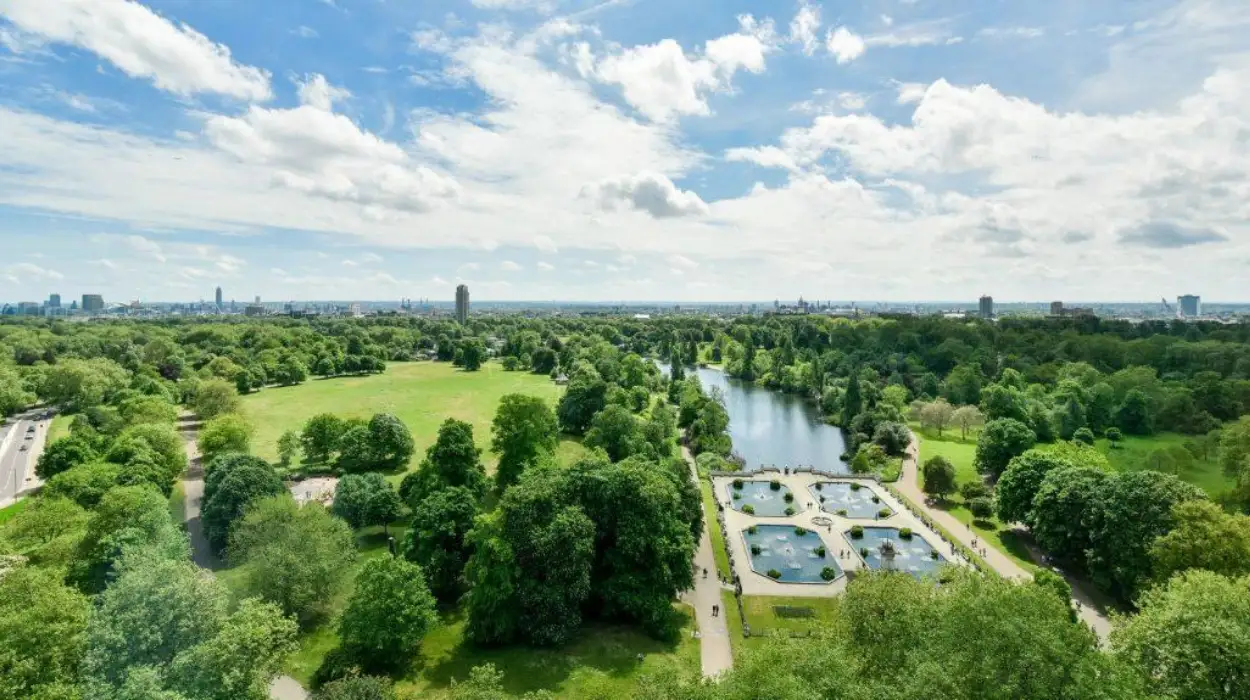
London’s Hyde Park is one of the most significant urban green spaces in the world. Covering approximately 350 acres (142 hectares), the park has evolved from a private royal hunting ground into a public landscape visited by millions of people each year. Its history reflects broader changes in English monarchy, urban planning, social reform, recreation, and public access to land.
- What was Hyde Park before it became a public park?
- How did Hyde Park become accessible to the public?
- Why was Hyde Park important in seventeenth-century London?
- How did eighteenth-century developments shape modern Hyde Park?
- What role did Hyde Park play during the Victorian era?
- Why is the Great Exhibition of 1851 associated with Hyde Park?
- How did Hyde Park become a centre for free speech and public assembly?
- What historic landmarks and features survive in Hyde Park today?
- How has Hyde Park been preserved for future generations?
- Why does Hyde Park remain historically important today?
Today, Hyde Park functions as a cultural, historical, environmental, and recreational asset in central London. The transformation of royal land into public space represents a major chapter in British history and demonstrates how changing political priorities reshaped access to urban environments.
What was Hyde Park before it became a public park?
Hyde Park originated as private royal hunting land acquired by King Henry VIII in 1536. For more than a century, it served the monarchy as a deer hunting estate before gradual political and social changes transformed it into a public recreational landscape.
The area now known as Hyde Park formed part of the Manor of Hyde, a property associated with Westminster Abbey during the medieval period. In 1536, during the Dissolution of the Monasteries, King Henry VIII seized extensive church lands across England. The Manor of Hyde became Crown property.
The acquisition reflected a broader redistribution of land during Tudor England. Royal estates expanded significantly as monastic properties were absorbed into the Crown’s holdings. Hyde became valuable because of its location west of the growing city of London and because it offered suitable terrain for hunting.
Hunting represented more than recreation. It served political, military, and social functions. Deer parks demonstrated royal authority, provided controlled game resources, and offered spaces where aristocratic relationships could be cultivated.
For approximately one hundred years, access remained restricted. Ordinary Londoners could not freely enter the estate. The landscape consisted primarily of woodland, grassland, and enclosed hunting terrain designed to support deer populations and royal sporting activities.
The park’s earliest identity therefore differed fundamentally from its modern role. It existed as a symbol of exclusive royal privilege rather than public accessibility.
How did Hyde Park become accessible to the public?
Public access began under King James I in the early seventeenth century. Although restrictions remained, controlled entry marked the beginning of Hyde Park’s transformation from exclusive royal property into a space increasingly connected with London’s wider population.
King James I ruled England from 1603 to 1625. During his reign, limited public access was permitted within Hyde Park. This change reflected evolving attitudes toward royal landscapes and growing connections between London and surrounding estates.
The decision did not create a fully public park. Access remained regulated, and significant areas continued to serve aristocratic purposes. However, the shift established an important precedent. Land previously reserved exclusively for monarchs became available to broader segments of society.
The growth of London contributed to this transition. By the seventeenth century, the capital’s population expanded rapidly. Demand for open land increased as urban development intensified.
King Charles I introduced additional improvements during the 1630s. In 1637, he formally opened Hyde Park to the public. Historians frequently identify this date as a major turning point in the park’s development.
The opening reflected wider political changes in Stuart England. Public visibility of royal authority became increasingly important. Allowing access to royal landscapes strengthened connections between the Crown and urban populations while enhancing the prestige of the monarchy.
Although social distinctions remained evident, Hyde Park began functioning as a shared civic environment rather than an exclusively royal domain.
Why was Hyde Park important in seventeenth-century London?
Hyde Park became a prominent social and political gathering space during the seventeenth century. Its location near the expanding capital allowed it to serve aristocratic society, public recreation, ceremonial display, and political observation simultaneously.
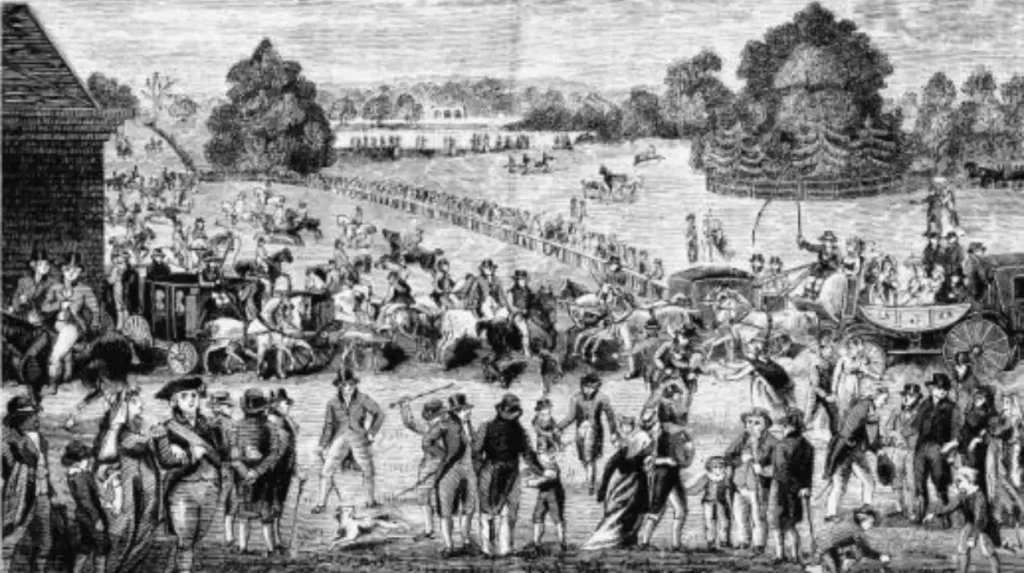
The park developed into a fashionable destination for London’s elite. Horse riding emerged as a particularly significant activity. Wealthy residents used the park to display social status, fashion, and political connections.
One of the most influential developments was the creation of Rotten Row. Originally established during the reign of King William III in the late seventeenth century, the route became one of London’s most famous riding avenues.
William III commissioned improvements after security concerns arose while travelling between Kensington Palace and St James’s Palace. The route became notable because it was illuminated with oil lamps, making it among the earliest artificially lit roads in Britain.
Hyde Park also acquired political significance. Public spaces allowed observation of social trends, political discussions, and emerging cultural practices. Visitors from different backgrounds increasingly shared the same environment.
The park therefore functioned as an important intermediary space between royal authority and urban society. It provided opportunities for interaction that were rare within many other institutions of the period.
How did eighteenth-century developments shape modern Hyde Park?
The eighteenth century established many characteristics associated with modern Hyde Park. Landscape improvements, increased public use, and connections with surrounding royal parks created a more organised and accessible environment within central London.
The eighteenth century witnessed substantial urban growth. London became one of Europe’s largest cities. Open spaces gained greater importance as residential districts expanded westward.
Park management increasingly balanced public access with landscape maintenance. New pathways improved circulation. Recreational use expanded. Visitors engaged in walking, riding, and social gatherings.
The park also benefited from improvements linked to neighbouring royal estates. Connections with Kensington Gardens strengthened the area’s role as an integrated landscape.
Landscape design during this period reflected broader trends in British park development. Formal geometric layouts increasingly gave way to naturalistic arrangements that emphasised open vistas, trees, and water features.
The changing character of Hyde Park mirrored evolving ideas about public space. Urban planners and political leaders increasingly recognised the social value of accessible green environments.
These developments established foundations that later Victorian planners would expand substantially.
What role did Hyde Park play during the Victorian era?
The Victorian era transformed Hyde Park into an internationally recognised public park. Major infrastructure projects, public events, social reforms, and landscape enhancements expanded its role as a civic, cultural, and recreational centre for London.
The nineteenth century brought profound changes to British society. Industrialisation accelerated urban growth. Population increases created demand for public recreation and healthier environments.
One of the most significant Victorian interventions was the creation of the Serpentine’s expanded recreational role. Although originally formed in 1730 under Queen Caroline, the lake became increasingly important for boating, leisure activities, and scenic enjoyment during the nineteenth century.
The Victorian period also witnessed major improvements in pathways, planting schemes, and visitor facilities. Public authorities recognised parks as instruments of urban improvement and social wellbeing.
Hyde Park became a venue for exhibitions, celebrations, demonstrations, and public gatherings. These functions reinforced its position as one of Britain’s most important civic landscapes.
The park increasingly represented democratic access to open space. Visitors from diverse social backgrounds used the same environment, reflecting broader social transformations occurring across Victorian Britain.
Why is the Great Exhibition of 1851 associated with Hyde Park?
The Great Exhibition of 1851 brought international attention to Hyde Park. Hosted within the Crystal Palace, the event showcased industrial innovation, scientific progress, and global trade while establishing the park as a landmark of modern Britain.
The Great Exhibition was organised under the leadership of Prince Albert and supported by Queen Victoria.
The event opened on 1 May 1851. Its centrepiece was the Crystal Palace, a vast iron-and-glass structure designed by Joseph Paxton.
More than six million visitors attended the exhibition. At a time when Britain’s population stood at approximately 27 million, this attendance represented a remarkable achievement.
The exhibition displayed products, machinery, scientific instruments, artworks, and manufactured goods from across the world. It demonstrated Britain’s industrial leadership while encouraging international exchange.
Although the Crystal Palace was later relocated to South London, the event permanently enhanced Hyde Park’s global reputation.
The exhibition also influenced future museum development in nearby South Kensington. Revenues contributed to cultural institutions that continue operating today.
How did Hyde Park become a centre for free speech and public assembly?
Hyde Park developed into a symbol of free expression through political meetings, reform campaigns, and public demonstrations. The establishment of Speakers’ Corner reinforced its reputation as one of Britain’s most important spaces for public debate.
Political gatherings occurred in Hyde Park throughout the nineteenth century. Reform movements sought expanded voting rights, labour protections, and social change.
Large demonstrations frequently attracted tens of thousands of participants. Authorities sometimes viewed these events with concern because they highlighted growing public engagement in political issues.
Speakers’ Corner emerged near Marble Arch and became associated with public speech. Individuals could address audiences on religion, politics, philosophy, and social issues.
The tradition reflected broader developments in democratic culture. Public parks increasingly functioned not only as recreational spaces but also as forums for civic participation.
Numerous political activists, religious speakers, campaigners, and public intellectuals used Hyde Park to engage audiences over successive generations.
Today, Speakers’ Corner remains one of the park’s most distinctive historical features and an enduring symbol of freedom of expression.
What historic landmarks and features survive in Hyde Park today?
Many historic features remain visible within Hyde Park. These landmarks illustrate centuries of royal influence, landscape design, public recreation, political activity, and national commemoration, allowing visitors to observe multiple layers of London’s history in one location.
The Serpentine remains among the park’s most recognisable features. Covering approximately 40 acres, the lake continues to support recreational and environmental functions.
Rotten Row survives as a historic riding route. Although modern usage differs from earlier centuries, the avenue preserves connections to aristocratic London.
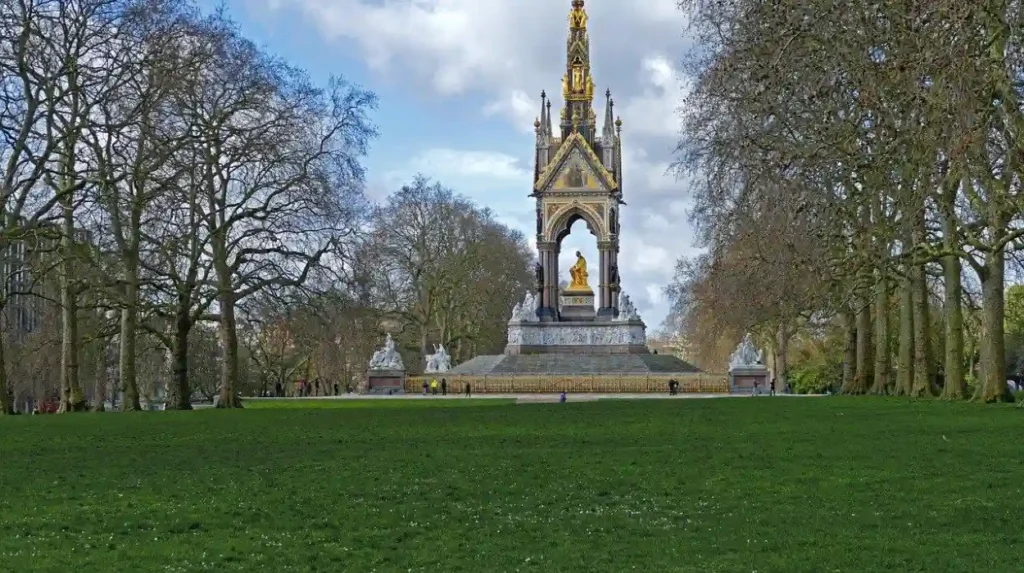
Several memorials commemorate important historical figures and events. Examples include the Diana, Princess of Wales Memorial Fountain and numerous military monuments.
The park also contains carefully managed woodland areas, formal gardens, and heritage landscapes reflecting different periods of development.
To experience this historic landmark in person today, consult our comprehensive [Best Things to Do in Hyde Park: Walks, Lakes, and Attractions] for itineraries and visiting parameters.
These surviving features allow historians, educators, and visitors to examine how royal land evolved into a major public institution.
How has Hyde Park been preserved for future generations?
Preservation efforts combine heritage protection, environmental management, conservation planning, and public engagement. These strategies ensure Hyde Park remains historically significant while continuing to serve millions of visitors each year.
Management responsibilities are carried out through structured conservation frameworks designed to protect historical and ecological assets.
Preservation initiatives address multiple priorities. Examples include heritage restoration projects, archaeological assessments, and biodiversity programmes.
Research conducted by conservation specialists helps document landscape evolution. Historical maps, archival records, and archaeological evidence provide insight into earlier phases of development.
Environmental management has become increasingly important. Urban parks contribute to air quality improvement, climate resilience, habitat protection, and public wellbeing.
Hyde Park supports numerous species of birds, insects, and plants. Conservation programmes maintain ecological diversity while preserving historical character.
The challenge of balancing heritage protection with modern public use remains central to long-term management strategies.
Why does Hyde Park remain historically important today?
Hyde Park remains historically important because it demonstrates how royal land became public space. Its evolution reflects changes in monarchy, urban planning, democratic participation, recreation, and heritage preservation across nearly five centuries of British history.
Few urban parks illustrate political and social transformation as clearly as Hyde Park. The site documents changing relationships between government, monarchy, and the public.
Its history encompasses multiple eras. Examples include Tudor royal hunting traditions, Stuart public access reforms, Georgian landscape development, Victorian civic expansion, and modern conservation initiatives.
The park also provides evidence of broader historical processes. These include urbanisation, industrialisation, democratisation, environmental planning, and cultural heritage management.
For educators, Hyde Park serves as a valuable teaching resource. For researchers, it offers extensive archival and archaeological material. For visitors, it provides direct access to one of London’s most significant historical landscapes.
The transformation from private royal hunting grounds to a public park represents a major achievement in the history of urban public space. Hyde Park demonstrates how land once reserved for monarchs became accessible to millions of people while retaining its historical identity.
As London continues to evolve, Hyde Park remains a living historical landscape. Its pathways, memorials, water features, and open spaces preserve centuries of national history while continuing to serve contemporary cultural, educational, and recreational needs.
Where is Hyde Park located?
Hyde Park is located in central London between Kensington, Mayfair, and Westminster. It is bordered by areas including Marble Arch, Knightsbridge, and Kensington Gardens.