Key Points
- Imposed Restrictions: The Metropolitan Police have invoked the Public Order Act to impose strict conditions on the “National March for Palestine” scheduled for Saturday, 18 July 2026, to prevent “serious disruption” to local communities.
- March Details: Organised by the Palestine Coalition, the demonstration is set to begin at 12:45 hrs in Russell Square, Camden, and will proceed through Holborn and the Strand to conclude in Whitehall, where an assembly and speeches will occur.
- Strict Timing: The procession must conclude by 17:30 hrs. Participants gathering before the start time are restricted to specific areas and must vacate the site by 13:00 hrs if the procession has not yet commenced.
- Primary Objective: Protesters aim to pressure Andy Burnham—who is set to be confirmed as the new UK Prime Minister on Monday—to impose wide-ranging sanctions on Israel, including a full arms embargo and a total trade ban.
- Escalating Tensions: The protest follows recent criticism by the Palestine Solidarity Campaign (PSC) regarding Mr. Burnham’s recent apology for the Labour Party’s stance on the conflict, which activists have described as “totally inadequate.”
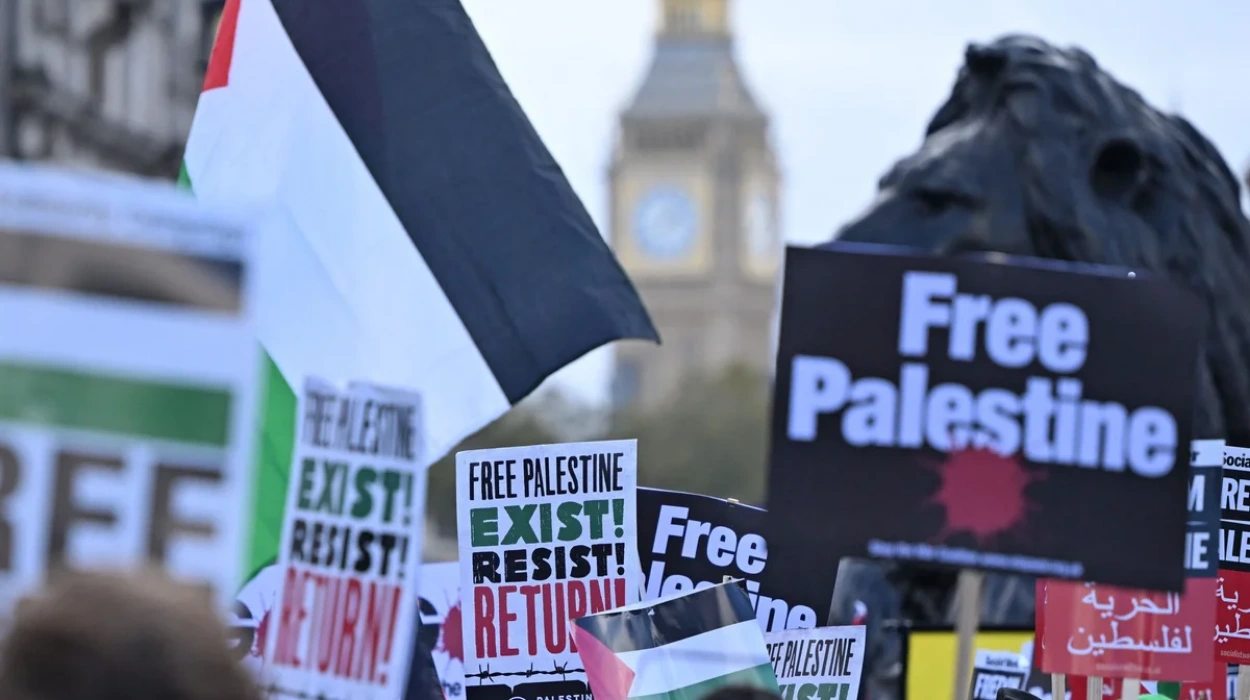
London (Extra London News) July 18, 2026 – The Metropolitan Police have implemented specific legal conditions under the Public Order Act for the “National March for Palestine” taking place in central London today, citing the necessity to mitigate the threat of “serious disruption” to residents and the wider public.
- Key Points
- Why have the Metropolitan Police imposed these conditions?
- What is the objective of the National March for Palestine?
- How has the Palestine Solidarity Campaign responded to the Prime Minister-in-waiting?
- What are the concerns regarding current government policy and the IHRA definition?
- How is the protest being policed compared to previous events?
The demonstration, organised by the Palestine Coalition, which includes the Palestine Solidarity Campaign (PSC), expects thousands of participants to march from Russell Square in Camden through the heart of Westminster to Whitehall. According to the official statement from the Metropolitan Police, the procession is mandated to start at 12:45 hrs and must conclude all assembly and speeches by 17:30 hrs. Authorities have mandated that anyone gathering ahead of the start time must remain within designated shaded zones identified on police maps and must clear the site by 13:00 hrs if they are not part of the departing procession.
Why have the Metropolitan Police imposed these conditions?
The decision to impose conditions under the Public Order Act comes as the Metropolitan Police seek to balance the right to protest with the maintenance of public order. As reported by the official Met Police news desk, the restrictions are explicitly designed to “mitigate the threat of serious disruption to the communities who live in these areas.” This regulatory approach follows a period of heightened sensitivity surrounding demonstrations in the capital, where police have previously faced scrutiny over the management of large-scale protests and the potential for disorder.
What is the objective of the National March for Palestine?
The march serves as a strategic effort to influence the incoming government. With Andy Burnham set to assume the office of Prime Minister on Monday, protesters are mobilising to demand a definitive shift in British foreign policy regarding Israel.
As reported by PA Media and shared via NAMPA, thousands are gathering to call upon Mr. Burnham to move beyond rhetoric and implement tangible sanctions against Israel. The Palestine Solidarity Campaign has made its intentions clear: the goal is to send a “powerful message” to the next Prime Minister to “stand up for Palestine and take all possible action, including sanctions, to end Israel’s genocide.”
How has the Palestine Solidarity Campaign responded to the Prime Minister-in-waiting?
Tensions between the protest organisers and the incoming leadership have been exacerbated by recent political developments. Peter Leary, the deputy director of the Palestine Solidarity Campaign, recently slammed Mr. Burnham’s apology for the Labour Party’s previous support of Israel’s actions in Gaza as “totally inadequate.”
As reported by Berny Torre of the Morning Star, Mr. Leary stated: “Burnham clearly wants to distance himself from [Sir Keir] Starmer’s shameful support for Israel’s genocide against the Palestinian people in the Gaza Strip, but his statement remains totally inadequate.” Mr. Leary further emphasised that if the Prime Minister-in-waiting truly intends to break with the legacy of his predecessor, “he must start by imposing wide-ranging sanctions against Israel including a full arms embargo and a total ban on all trade that aids or assists Israel’s violations of international law.”
Explore more Politics News:
London Plan Slashes Housing Targets: Impact on Capital in 2026
Keir Starmer Thanked for Ukraine Support by Ealing MP Guests, 2026
What are the concerns regarding current government policy and the IHRA definition?
The march is expected to be attended by a diverse coalition, including pro-Palestinian Jewish groups who have voiced significant opposition to the current political framework governing antisemitism allegations. The Morning Star reports that members of the Jewish Voice for Liberation are among those urging Mr. Burnham to abandon the International Holocaust Remembrance Alliance (IHRA) definition of antisemitism.
The group argues that the current application of the IHRA definition encourages a “conflation of antisemitism with criticism of Israel,” which they claim has been “deeply flawed” and “destructive in its effects.” This critique highlights the broader ideological divide present at the demonstration, where protesters are challenging not just foreign policy, but the internal standards by which political discourse on the conflict is regulated.
How is the protest being policed compared to previous events?
The Metropolitan Police have been increasingly proactive in setting conditions for marches, a tactic that has historically led to friction with civil liberties groups. In previous demonstrations, such as those held in late 2023 and throughout 2025, the force utilised Section 12 and Section 14 of the Public Order Act to restrict routes and assembly points.
As noted in reports by The Guardian regarding previous protests, legal experts have previously raised concerns over the “assault on the right to protest” when the police have attempted to ban gatherings near sites like the BBC or restrict march routes. While the Metropolitan Police maintain that these conditions are necessary to manage “serious escalation in criminality” and ensure public safety, activists argue that such measures often infringe upon the fundamental democratic right to peaceful assembly.
As the marchers move through Holborn and the Strand today, the heavy police presence is a reminder of the ongoing struggle to define the boundaries of protest in contemporary Britain. With the political transition in Whitehall imminent, today’s demonstration serves as a focal point for public demands for foreign policy reform and an end to the ongoing conflict in the Gaza Strip.