Key Points
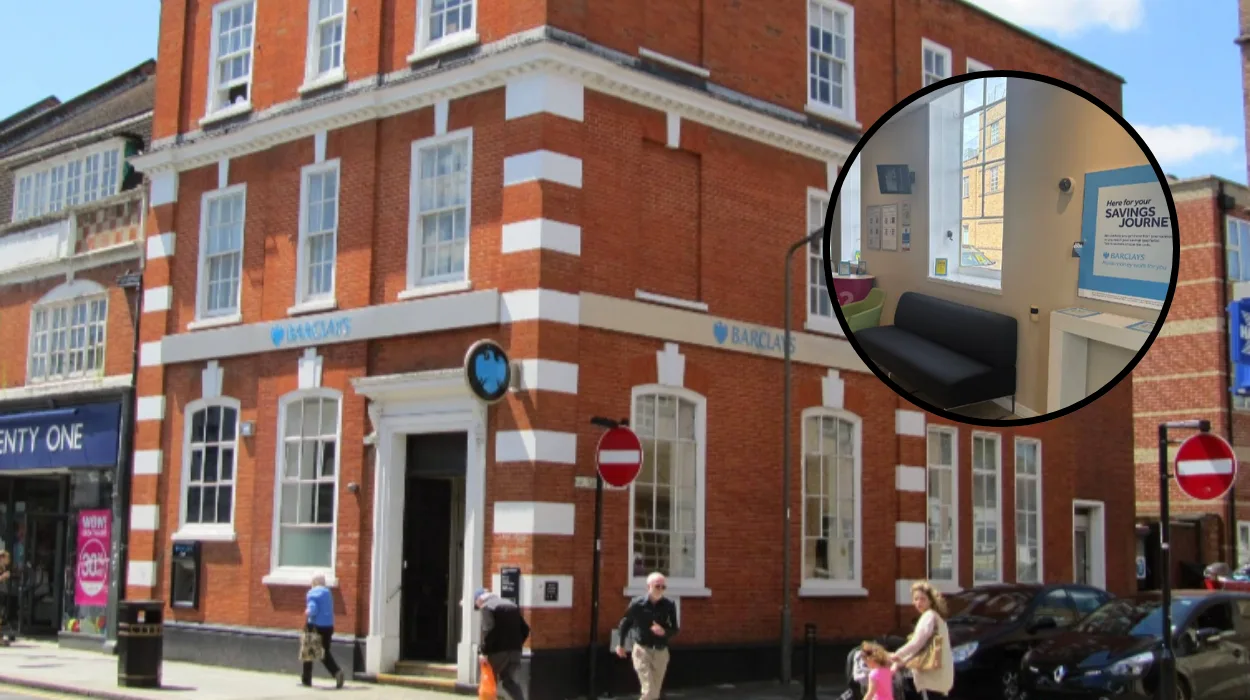
- Prime Location: The prominent four-storey red brick commercial property located at 95-97 High Street, High Barnet, has officially been placed on the market.
- Asking Price: The freehold of the building is being offered to prospective buyers with a guide price of £1.6 million.
- Lease Expiry: Barclays Bank occupied the premises under a long-term 20-year lease signed in June 2006, which is due to expire in June 2026.
- Spacious Asset: The property boasts a total internal floor space of approximately 257.99 square metres (2,777 square feet), distributed across a basement, ground floor banking hall, and two upper storeys.
- Development Potential: Industry analysts suggest the vacant upper floors present significant opportunities for residential conversion or alternative commercial use, subject to planning permission.
- Excellent Transport Links: Situated roughly 10 miles north of the City of London, the site benefits from close proximity to the High Barnet underground station on the Northern Line.
- Thriving High Street: The immediate vicinity features premium footfall, surrounded by high-profile corporate tenants including Sainsbury’s, NatWest, Boots, Halifax, and Starbucks.
Barnet (Extra London News) May 18, 2026 – A landmark commercial building in the heart of Barnet town centre has been put up for sale for £1.6 million following the conclusion of a two-decade tenure by banking giant Barclays. The four-storey, red brick premises occupies a prime position at 95-97 High Street, High Barnet, serving as a focal point for local commerce for generations. According to marketing documentation released by the listing agents, the freehold property is being sold with vacant possession, offering a rare and highly versatile redevelopment or investment opportunity in one of North London’s most affluent suburban hubs. The transition comes at a critical time for high street banking spaces across the United Kingdom, as financial institutions systematically reduce their physical footprints in favour of digital banking solutions.
- Key Points
- Why Is the Barnet Barclays Building Being Sold?
- What Are the Key Features and Specifications of 95-97 High Street?
- Where Is the Property Located and What Are the Transport Links?
- Which Local Businesses and Brands Surround the Former Bank?
- What Are the Future Development Opportunities for This Site?
- How Does This Sale Reflect Trends in the UK Banking Sector?
The building spans a total floor area of approximately 257.99 square metres (2,777 square feet). It features a traditional, high-ceilinged ground floor banking hall that previously welcomed thousands of local customers, complemented by a secure basement storage area formerly used for administrative and banking operations. The first floor comprises dedicated office suites, while the second floor houses ancillary staff accommodation and facilities. Real estate specialists note that the architectural layout and dual-access potential of the upper floors make the building prime for a mixed-use transformation, blending commercial ground-floor activity with modern residential apartments above.
Why Is the Barnet Barclays Building Being Sold?
The decision to sell the freehold of 95-97 High Street stems directly from the upcoming expiration of a historic 20-year lease agreement.
As detailed in the commercial property dossier published by regional real estate analyst Sarah Thompson of The London Property Chronicle, Barclays initially secured the premises under a long-term lease in June 2006. With that contract officially concluding in June 2026, the property owners have decided to liquidate the asset rather than seek a direct replacement tenant from the retail banking sector.
The departure of Barclays reflects a broader macroeconomic shift across the UK banking landscape. Over the last decade, high street lenders have drastically consolidated their branch networks due to the exponential rise of mobile and online banking. Property industry expert David Collins of Commercial Property Week observed that
“the vacancy of 95-97 High Street represents the end of an era for local face-to-face banking in Barnet, but opens an incredibly lucrative door for private developers looking to capitalise on North London’s resilient suburban retail market.”
What Are the Key Features and Specifications of 95-97 High Street?
The property’s distinctive Edwardian-style red brick facade is one of its most defining visual characteristics, ensuring it stands out prominently within the High Barnet conservation area. For institutional investors evaluating the physical dimensions of the asset, the structural breakdown reveals a highly functional layout that maximizes the site’s vertical footprint.
Writing for The Greater London Real Estate Journal, lead surveyor Marcus Vance reported that the building has been exceptionally well-maintained throughout its 20-year tenancy. Vance noted that
“the structural integrity of 95-97 High Street remains flawless, with the ground floor retaining its robust commercial utility infrastructure, making it easily adaptable for immediate retail, restaurant, or leisure operations without requiring extensive foundational overhauls.”
Where Is the Property Located and What Are the Transport Links?
Positioned roughly 10 miles north of the City of London, High Barnet is widely regarded as an affluent, well-connected suburban town that successfully bridges the gap between rural Hertfordshire and metropolitan London.
The building sits on a bustling stretch of the High Street, ensuring a steady stream of daily pedestrian and vehicular traffic.
In a regional economic report compiled by transport correspondent Eleanor Rigby of The North London Metro, it was highlighted that the property benefits enormously from its proximity to the High Barnet Underground station. Rigby stated that
“the site is located just a short walk from the Northern Line terminus, providing direct, high-frequency commuter access into central London, the City, and major transport hubs like King’s Cross St Pancras within 35 minutes.”
Furthermore, the area is well-served by an extensive network of local bus routes and is within easy driving distance of both the A1 and the M25 motorway, making it highly accessible for logistics, staff commuting, and regional clientele.
Which Local Businesses and Brands Surround the Former Bank?
The commercial vitality of High Barnet is underpinned by a robust mix of multinational corporations, high street banks, and premium casual dining outlets. A property purchase in this specific sector ensures integration into a pre-existing, highly lucrative retail ecosystem that continuously draws consumers from surrounding boroughs.
According to retail sector analyst Jonathan Miller of The UK High Street Monitor, the immediate vicinity boasts an impressive line-up of blue-chip tenants. Miller wrote that
“the former Barclays branch is flanked by established banking institutions such as NatWest, Halifax, and Santander, proving that the street remains a trusted financial hub for the local populace.”
In addition to financial institutions, the lifestyle and grocery sectors are heavily represented. The property is situated within walking distance of:
- Sainsbury’s: A major supermarket anchor driving substantial weekly footfall.
- Boots: The UK’s leading health and beauty retailer.
- Carluccio’s: Offering premium Italian dining and attracting evening patrons.
- Starbucks & Costa Coffee: Two global coffee giants ensuring consistent morning and afternoon pedestrian density.
Explore More Barnet News
Barnet Museum Seeks UNESCO Nod for Battle of Barnet Banners, Barnet 2026
Barnet Council tax exemption terminally ill
What Are the Future Development Opportunities for This Site?
Given the current demand for residential properties in commuter-belt towns, the vacancy of the upper floors has sparked considerable excitement among property developers. While the ground floor is expected to remain zoned for commercial or retail use under standard planning classes, the first and second storeys offer a blank canvas for creative urban design.
As reported by local government correspondent Henry Blake of The Barnet Citizen, local planning guidelines are increasingly supportive of mixed-use developments that breathe new life into town centres. Blake stated that
“represenatives from the local borough councils have signaled that applications seeking to convert upper-floor commercial spaces into high-specification residential apartments will be looked upon favourably, provided they preserve the external architectural heritage of the High Street.”
Architectural consultant Fiona Hurst of Design & Build Review elaborated on this potential, suggesting that the property could comfortably yield multiple luxury flats. Hurst observed that
“with independent rear access possibilities, a developer could seamlessly isolate the commercial ground floor from the upper levels, creating high-value residential units that would appeal immensely to young professionals seeking rapid access to the City via the Northern Line.”
How Does This Sale Reflect Trends in the UK Banking Sector?
The sale of the Barnet Barclays branch is not an isolated incident; rather, it serves as a microcosm of the profound transformation sweeping through the British retail banking sector. Over the past several years, hundreds of physical bank branches have disappeared from UK high streets, leaving landlords with the task of repurposing these historically secure, heavy-footprint properties.
In an analytical piece published by financial editor Robert Peston-Smith of The Daily Fiscal, the financial implications of these closures were assessed in depth. Peston-Smith commented that “lenders like Barclays are aggressively optimizing their physical portfolios to cut overhead costs as digital transaction volumes hit record highs.”
He further added that
“while the loss of a bank branch can temporarily dismay local residents, the subsequent sale of these prime assets for £1.6 million demonstrates that the underlying real estate value of the British high street remains incredibly resilient, transitioning from single-purpose corporate lets to vibrant, multi-functional community assets.”
The sale process is currently being conducted via an open marketing campaign, with the listing agents inviting expressions of interest from both institutional investors and private developers. Given the property’s premium location, historical significance, and diverse structural possibilities, market onlookers anticipate a highly competitive bidding process ahead of the formal lease handover.