Key Points
- Guilty Plea Entered: Gabriel Leroy, a 24-year-old former London Labour Party activist and Southend councillor, has formally pleaded guilty to conspiracy to commit a Computer Misuse Act offence.
- Selection Database Manipulation: The criminal charges follow an intense police investigation into allegations that an official Labour Party membership database was systematically manipulated to bolster a candidate’s chances during the Croydon East parliamentary selection process ahead of the 2024 general election.
- Co-Defendants Plead Not Guilty: Three other high-profile local Labour figures—Joel Bodmer, 40, Shila Bodmer, 41, and Carole Bonner, 70—appeared alongside Leroy at Southwark Crown Court and entered strict pleas of not guilty to the conspiracy charge.
- Additional Perverting Justice Charge: Joel Bodmer, a prominent trade union organiser who was initially a leading contender for the parliamentary seat before abruptly withdrawing, faces an independent charge of perverting the course of justice for allegedly altering phone records during the initial probe.
- Party-Wide Suspensions: The Labour Party administratively suspended all four individuals immediately following their initial police charging, launching an internal review and referring the matter directly to the Metropolitan Police Service’s Cybercrime Unit.
- Constituency Fall-Out: The selection race for the freshly redrawn Croydon East constituency had to be entirely abandoned and reset by national party officials in late 2023 after complaints emerged that internal voter logs and membership data had been modified without authorization.
London (Extra London News) June 16, 2026 — A political scandal that disrupted internal democratic processes within the Labour Party reached a critical legal milestone today as a former London party activist formally admitted to a cyber-crimes conspiracy intended to manipulate a crucial parliamentary selection database.
- Key Points
- What Are The Specific Criminal Charges Faced By The Defendants?
- How Did The Alleged Vote-Rigging Scheme Work In Croydon East?
- What Was The Political Impact On The General Election Selection?
- How Did The Labour Party And The Crown Prosecution Service Respond?
- Who Are The Key Individuals Implicated In The Scandal?
- What Are The Next Legal Steps In The Southwark Crown Court Trial?
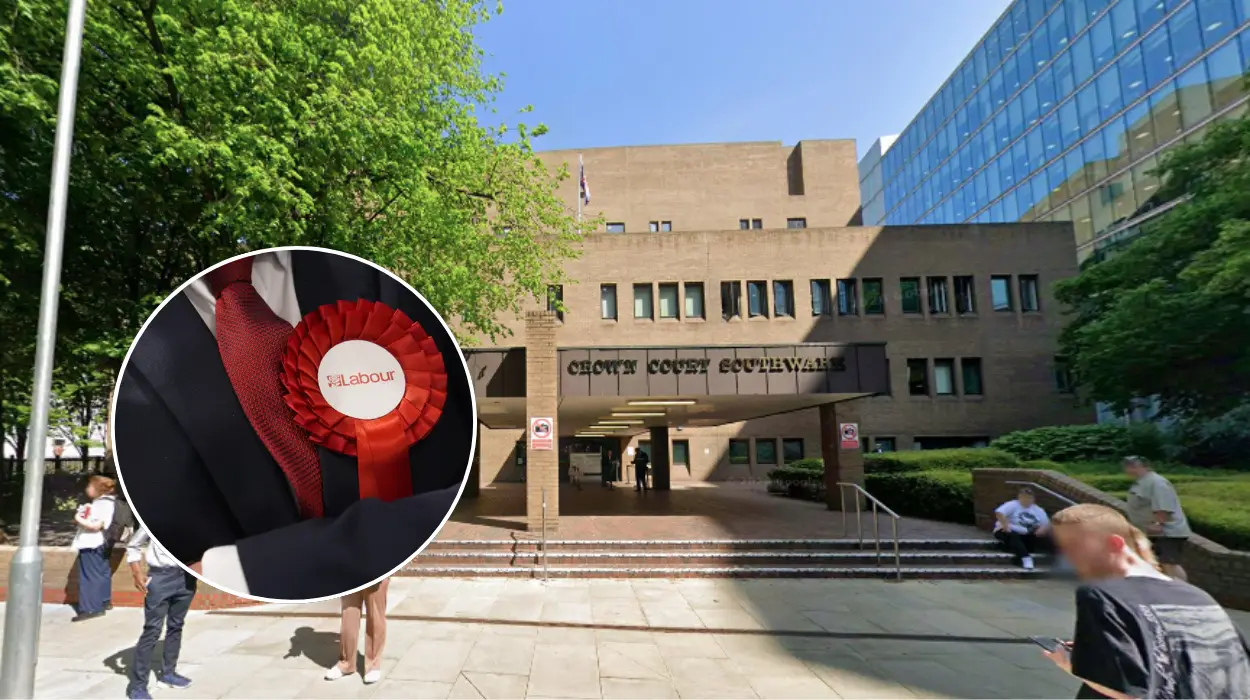
Appearing before Southwark Crown Court on Tuesday, 24-year-old Gabriel Leroy pleaded guilty to conspiracy to commit an offence under the Computer Misuse Act 1990. The prosecution maintains that the data breach was carefully orchestrated to alter voter records and illegitimately boost the electoral prospects of a specific candidate vying to represent the Labour Party in the newly formed Croydon East constituency during the run-up to the 2024 general election. The dramatic legal development marks the first formal admission of guilt in a complex, multi-defendant criminal case that has heavily scrutinised internal political party infrastructure and data handling security measures across the capital.
While Leroy accepted criminal liability for his involvement, three prominent co-defendants from the south London borough of Croydon firmly rejected the state’s allegations. Joel Bodmer, 40, his wife Shila Bodmer, 41, and veteran political figure Carole Bonner, 70, all stood in the dock at the same court session to enter formal pleas of not guilty to the joint charge of conspiracy to commit a Computer Misuse Act offence. The legal rift sets the stage for a highly publicised criminal trial, as federal prosecutors prepare to present digital forensic evidence detailing how deeply the democratic selection infrastructure of Britain’s governing party was compromised from within.
What Are The Specific Criminal Charges Faced By The Defendants?
The criminal case, which was built following a exhaustive multi-month investigation by the Metropolitan Police Service’s specialist Cybercrime Unit, hinges on specific statutory violations regarding unauthorised data access and manipulation.
As documented in initial legal briefs by political correspondent Ben Quinn of The Guardian, the central charge leveled against all four defendants is conspiracy to commit a computer misuse offence, brought forward under Section 1(1) of the Criminal Law Act 1977 and Section 3 of the Computer Misuse Act 1990. Section 3 specifically covers unauthorised acts with intent to impair, or with recklessness as to impairing, the operation of a computer or access to programs and data.
However, the legal jeopardy extends significantly deeper for one of the primary figures in the selection race. In reports published by Daniel Green of LabourList, it was confirmed that Joel Bodmer faces an additional, independent criminal count. Beyond the shared cyber-conspiracy charge, Bodmer has been explicitly charged with perverting the course of justice. Prosecutors allege that the 40-year-old union organiser intentionally altered physical and digital telephone records in a calculated attempt to mislead investigators and obscure the digital footprint linking the syndicate to the database breach.
Explore more Croydon News:
Croydon School Sports Wins National Youth Award: South London 2026
Mice and Cockroaches Overrun Council Homes: Croydon 2026
How Did The Alleged Vote-Rigging Scheme Work In Croydon East?
The roots of the criminal trial trace back to the high-stakes internal machinations of the Labour Party late in 2023, as local branches rushed to select parliamentary candidates for the impending general election. Croydon East was a newly redrawn, highly prized constituency where securing the Labour nomination was widely viewed as a direct pathway to becoming a Member of Parliament.
As detailed by investigations correspondent Joe Pike of the BBC, the selection process devolved into administrative chaos in November 2023 when local party members began raising formal complaints. Rival campaigns and grassroots activists noticed stark discrepancies within the official membership logs provided by the party’s central apparatus. It was quickly discovered that the contact details, voting eligibility, and email addresses of specific party members had been altered without central authorization.
The prosecution alleges that this targeted digital tampering was executed to manipulate who received campaign communications, who could access online voting portals, and how individual ballots were tracked. According to allegations compiled by The Guardian, the digital database was deliberately manipulated to artificially strengthen the voter base and statistical advantage of a single candidate—identified in regional party records as Joel Bodmer himself, who at the time was a prominent officer for the Unison trade union and vice-chair of the London Trade Union Liaison Organisation (TULO).
What Was The Political Impact On The General Election Selection?
The discovery of the data manipulation completely derailed the democratic selection timeline for Croydon East, forcing national party administrators to intervene directly. As reported by LabourList, the initial selection process had to be abruptly abandoned by the Labour National Executive Committee (NEC) in late 2023 to protect the integrity of the vote.
Following a four-month structural delay during which internal digital locks were changed and membership lists verified, the selection process was entirely re-run in early 2024. By the time the secondary process commenced, the political landscape had shifted permanently. Amid mounting internal scrutiny and the burgeoning police investigation, Joel Bodmer officially withdrew his candidacy from the selection race.
With Bodmer out of the running, the local party subsequently selected Natasha Irons to stand as the official parliamentary candidate. Irons went on to successfully contest and win the seat at the 2024 general election, securing her place as the sitting MP for Croydon East while her former party colleagues remained under heavy police surveillance.
How Did The Labour Party And The Crown Prosecution Service Respond?
From the moment the data anomalies were flagged, the institutional fallout for the local party branches in Southwark and Croydon was swift and severe. Senior party leadership moved to distance the national organization from the actions of the local committee members.
In a public statement secured by political reporter Ben Quinn of The Guardian, an official Labour Party spokesperson emphasized the gravity with which the political body viewed the breach:
“These are incredibly serious charges. When complaints were first raised with the Labour Party we conducted a thorough internal investigation and we referred the matter to the police as soon as potential criminal wrongdoing was identified. We cannot comment further while legal proceedings are ongoing.”
To prevent any further contamination of party processes, central management issued immediate administrative suspensions against Gabriel Leroy, Joel Bodmer, Shila Bodmer, and Carole Bonner. These suspensions remain strictly active pending the final verdicts of the Crown Court.
The decision to elevate the cyber-breach to a formal public prosecution was handled by the highest echelons of the British legal system. As recorded by LabourList, Frank Ferguson, the head of the Crown Prosecution Service’s (CPS) Special Crime and Counter-Terrorism Division, defended the state’s decision to pursue aggressive criminal trials against the political operatives:
“Our prosecutors have worked to establish that there is sufficient evidence to bring this case to court and that it is in the public interest to pursue criminal proceedings. We have worked closely with the Metropolitan Police Service as it has carried out its investigation.”
Furthermore, due to the highly sensitive political nature of the trial, Ferguson issued a strict legal reminder to the press and the public regarding active sub judice rules:
“We remind all concerned that criminal proceedings against these defendants are active and that they have the right to a fair trial. It is vital that there should be no reporting, commentary or sharing of information online which could in any way prejudice these proceedings.”
Who Are The Key Individuals Implicated In The Scandal?
The four individuals caught in the center of the prosecution represent a diverse cross-section of local government, trade union activism, and grassroots party organization within London’s political sphere.
Gabriel Leroy
The only defendant to enter a guilty plea thus far, the 24-year-old Southwark resident was once viewed as a rising star within regional politics. Beyond his work as a London Labour activist, Leroy had previously served as a local councillor in Southend, representing a younger generation of tech-literate operatives within the party framework. His formal confession to the conspiracy significantly strengthens the prosecution’s digital forensic narrative.
Joel Bodmer
A central figure in the Croydon political landscape, the 40-year-old was a high-profile Unison union organizer and held significant institutional power as the vice-chair of London TULO. His bid for parliament in Croydon East was heavily backed by traditional union factions before his campaign collapsed under the weight of the data manipulation discovery. He now faces the most severe legal jeopardy of the group due to the added count of perverting the course of justice.
Shila Bodmer
The 41-year-old Croydon resident and wife of Joel Bodmer was integrated into the local campaign infrastructure. Prosecutors allege she was an active participant in the illicit conspiracy to monitor and modify the internal party databases alongside her husband and Leroy. She has maintained her innocence.
Carole Bonner
At 70 years old, Bonner is a veteran institutional figure within the London borough of Croydon, having previously served as a long-standing local Labour councillor. Her inclusion in the criminal indictment shocked local grassroots members, given her decades of public service and deep familiarity with traditional, party-approved campaigning protocols. Like the Bodmers, Bonner has entered a firm plea of not guilty.
What Are The Next Legal Steps In The Southwark Crown Court Trial?
Following the mixed pleas entered on Tuesday, the legal architecture of the case will split into two distinct pathways. For Gabriel Leroy, his formal admission of guilt means he will bypass a lengthy trial process. His sentencing will be deferred by the trial judge until the conclusion of the criminal proceedings involving his co-defendants, a standard judicial practice designed to evaluate the full scope of a conspiracy before final punishments are dealt.
For Joel Bodmer, Shila Bodmer, and Carole Bonner, the matter now transitions into a full criminal trial at Southwark Crown Court. Digital forensic experts from the Metropolitan Police’s cyber unit are expected to take the stand to present server logs, IP address tracking data, and communication records aimed at linking the defendants directly to the unauthorized database modifications.
Legal defense teams for the trio are anticipated to challenge the circumstantial nature of the digital footprints and the definition of “unauthorized access” under the Computer Misuse Act. With the integrity of internal party democracy under the microscope, the upcoming trial promises to draw intense nationwide scrutiny from both political analysts and cybersecurity experts alike.