Key Points
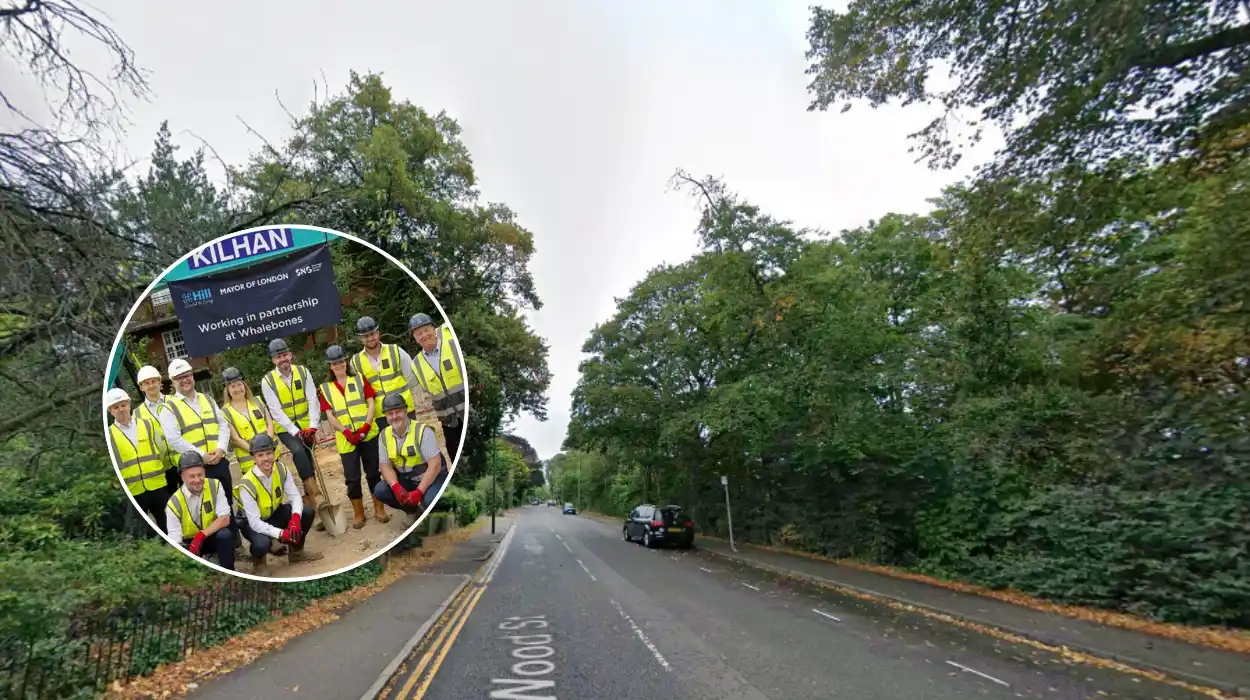
- Tom Copley’s Visit: Tom Copley, the Deputy Mayor of London for Housing and Residential Development, conducted a site tour at the Whalebones Park development in the London Borough of Barnet to inspect construction progress first-hand.
- Partnership and Vision: The site tour was hosted by the joint development partners, The Hill Group and Sovereign Network Group (SNG), to showcase their vision for a new community focused on sustainability and local housing needs.
- Total Housing Provision: The 12-acre Whalebones Park development will deliver 115 new homes on land adjoining the Grade II listed Whalebones House.
- Affordable Housing Allocation: Out of the 115 new properties, 54 homes (representing 47 per cent of the total layout) are dedicated to affordable tenures, addressing high local housing demands.
- Green Space and Public Access: Around half of the 12-acre site is being preserved as publicly accessible open space, featuring meadows, healing gardens, ponds, natural play areas, and a dedicated woodland walk.
- Community and Tenant Continuity: The layout retains historical community uses by incorporating a new smallholding for the site’s long-term agricultural tenant, alongside improved, custom-built studios for local artists and beekeepers.
- Biodiversity Commitment: The development guarantees a 10 per cent biodiversity net gain through a comprehensive long-term management plan, which includes planting 200 new trees and 750 metres of fresh hedgerows.
- Projected Completion Timeline: Following the structural inspection and review of the construction schedules, the first phase of residential homes is expected to be completed in Summer 2027.
Barnet (Extra London News) June 16, 2026 – The Deputy Mayor of London for Housing and Residential Development, Tom Copley, has conducted an official site inspection of the Whalebones Park development in Barnet to review the ongoing construction of 115 new residential properties. The prominent 12-acre development project, which is being delivered through a strategic partnership between award-winning housebuilder The Hill Group and major housing association Sovereign Network Group (SNG), seeks to balance the critical demand for urban housing in the capital with strict historical preservation.
- Key Points
- What Is the Strategic Significance of Tom Copley’s Whalebones Park Inspection?
- How Does Whalebones Park Address London’s Urgent Need for Affordable Housing?
- What Did Deputy Mayor Tom Copley State Regarding the Barnet Development?
- How Is the Hill Group Balancing New Home Construction with Historical Preservation?
- What Long-Term Socioeconomic Impacts Will Sovereign Network Group’s Investment Deliver?
- Which Unique Public Amenities and Ecological Features Are Integrated into the 12-Acre Master Plan?
- How Will the Project Preserve Historic Community Uses and Support Local Tenants?
- What Environmental Strategies Are Being Deployed to Achieve a 10 Per Cent Biodiversity Net Gain?
- When Can Londoners Expect the First Phase of Whalebones Park to Open?
Adjoining the historically significant, Grade II listed Whalebones House, the scheme represents a major infrastructure investment designed to integrate 54 highly sought-after affordable homes into a carefully managed eco-conscious landscape. During the high-profile visit, regional authorities and executive developers held detailed briefings regarding the master plan, which allocates roughly 50 per cent of the entire plot to public parklands, agricultural continuity, and local community infrastructure.
What Is the Strategic Significance of Tom Copley’s Whalebones Park Inspection?
The official visit by the Deputy Mayor underscores the Greater London Authority’s intense focus on collaborative housing delivery models that do not compromise the city’s green belt and heritage landscapes. As reported by the editorial team of Showhouse, Tom Copley joined Greg Hill, the Deputy Chief Executive Officer of The Hill Group, and Joe Marshall, the Chief Investment and Development Officer for SNG, along with an array of senior representatives from both partner organisations, to navigate the active construction zones and evaluate how the design balances structural density with historical conservation.
The site tour allowed policymakers and stakeholders to see the immediate progress of structural framing, groundwork, and utility installations. The dialogue between the local government representative and the development leadership focused heavily on how private-public alignment can solve structural deficits in London’s property sector. By bringing a senior mayoral figure directly to the Barnet site, the development partners highlighted Whalebones Park as a blueprint for contemporary outer-London developments. The project demonstrates that heritage land can be thoughtfully repurposed to serve the public good while actively enhancing the ecological value of the surrounding environment.
How Does Whalebones Park Address London’s Urgent Need for Affordable Housing?
The core discussion during the mayoral tour centred around the distribution of housing tenures and the physical accessibility of the properties to local residents facing pricing pressures in the borough. As noted in the reporting by Showhouse, the layout will provide a total of 115 new homes upon its final completion. Crucially, 54 of these properties—equating to 47 per cent of the total master plan—are legally bound under affordable tenures. This high percentage stands out in comparison to standard commercial developments, which frequently struggle to meet the capital’s affordable housing targets.
The inclusion of these 54 properties directly targets the deep shortfall of high-quality housing choices for lower- and middle-income families in Barnet. By establishing a substantial portion of the site for non-market housing, the partnership aims to foster socioeconomic diversity within the newly formed neighbourhood. This housing delivery strategy aligns closely with City Hall’s broader mandate to maximize affordable output across all London boroughs, particularly on unique parcels of land that require sensitive planning permissions and sophisticated architectural executions.
What Did Deputy Mayor Tom Copley State Regarding the Barnet Development?
The political endorsement of the scheme was made explicit through formal commentary during the collective review of the architectural blueprints and active zones. As reported by the editorial staff of Showhouse, Tom Copley commented:
“Whalebones Park is a fantastic example of how we can deliver the high-quality, genuinely affordable homes Londoners need while creating places where communities can thrive. It was great to visit the site and see the progress being made, as well as the commitment from Hill and SNG to preserving green space, enhancing biodiversity and respecting the heritage of this special location. Developments like this are vital to building a better, fairer London for everyone.”
This explicit backing highlights the growing administrative preference for housing schemes that integrate ecological management alongside basic residential construction. By praising the project’s adherence to high architectural and environmental standards, the Deputy Mayor signalised that future approvals in highly sensitive historical settings will likely depend on similar multi-layered community benefits.
Explore more Barnet News:
City Hall Approves Arada and Barratt Schemes: Barnet 2026
Met Police Record Sharp Jump in London Hate Crimes: Barnet 2026
How Is the Hill Group Balancing New Home Construction with Historical Preservation?
Maintaining the character of an area dominated by a Grade II listed asset requires a meticulous approach to planning, materials, and spatial density. As recorded by Showhouse, Greg Hill, the Deputy CEO of The Hill Group, stated:
“This is a truly special development that balances the delivery of much-needed new homes with the protection of the site’s natural beauty and historic significance. Our plans respect the heritage of Whalebones House and the character of Barnet, while creating a sustainable new neighbourhood and, working closely with SNG, we’re ensuring it’s a place where everyone can live together well.”
To achieve this equilibrium, the construction layouts utilize specific setbacks and structural heights that do not overshadow the original Whalebones House. The architectural vernacular chosen for the new residential units draws inspiration from the local historic character of Barnet, using premium materials that complement the existing built heritage. This conscious design philosophy ensures that the introduction of dense, modern housing units appears as a natural, sympathetic expansion of the historic estate rather than an intrusive commercial development.
What Long-Term Socioeconomic Impacts Will Sovereign Network Group’s Investment Deliver?
The financial and operational commitments from housing associations are vital for ensuring that affordable housing remain sustainable and well-managed for decades to come. As reported by the news desk of Showhouse, Joe Marshall, the Chief Investment and Development Officer for SNG, added:
“Our 54 homes here will give local people greater access to affordable rent and shared ownership in an area where demand remains high. Combined with the new green spaces, community facilities and long-term investment in the landscape, this development will make a lasting positive impact for both new and existing residents.”
The dual pathways of affordable rent and shared ownership are specifically calibrated to support distinct segments of the local demographic. Affordable rent provisions protect vulnerable tenants from volatile private rental markets, while shared ownership options allow first-time buyers to gain an equity foothold in an otherwise inaccessible property market. Furthermore, by linking asset management with the broader maintenance of the parkland, SNG ensures that the social benefits extend far beyond the literal walls of the new buildings, elevating the standard of living for the entire surrounding community.
Which Unique Public Amenities and Ecological Features Are Integrated into the 12-Acre Master Plan?
The layout of Whalebones Park diverges significantly from conventional high-density residential developments through its extensive dedication to non-residential land use. Based on the documented project briefs from Showhouse, around half of the total 12-acre site will be explicitly retained as publicly accessible open space. Rather than carving the entire acreage into private plots, the master plan establishes an interconnected network of attractive meadows, healing gardens, ecological ponds, natural play areas, and a dedicated woodland walk.
These elements are intentionally woven into the layout to encourage public health, mental wellbeing, and pedestrian permeability. Accessible green routes will run throughout the development, allowing both new occupants and existing Barnet residents to traverse the site easily. This emphasis on public access directly counteracts the historical insularity of private estates, transforming a previously restricted heritage space into an inclusive community asset that supports active lifestyle choices and daily outdoor recreation.
How Will the Project Preserve Historic Community Uses and Support Local Tenants?
A critical aspect of the social sustainability model deployed at Whalebones Park is the active preservation of the site’s historical human activities. As highlighted in the published coverage by Showhouse, the project explicitly includes the construction of a brand-new smallholding tailored specifically for the site’s long-term agricultural tenant. This provision ensures that the agricultural continuity of the land is not erased by modern urbanization, preserving a living link to Barnet’s rural and semi-rural past.
In tandem with the agricultural preservation, the joint venture is delivering newly designed, modernized studios for local artists and beekeepers who have historically utilized the site. These specialized facilities are equipped to support creative industries and urban apiculture, ensuring that local cultural producers are not priced out or displaced by the development. Additionally, the integration of structured on-site parking ensures that these community facilities remain highly functional and accessible, maintaining a vibrant, multi-use ecosystem where art, agriculture, and modern residency coexist harmoniously.
What Environmental Strategies Are Being Deployed to Achieve a 10 Per Cent Biodiversity Net Gain?
The ecological framework governing the construction and long-term maintenance of Whalebones Park is designed to satisfy rigid environmental criteria, ensuring that the local ecosystem is left in a demonstrably better state than before development commenced. According to the environmental data published by Showhouse, the project is on track to achieve a verified biodiversity net gain of 10 per cent. This target will be met through the strategic planting of 200 new trees and the establishment of 750 metres of fresh, native-species hedgerows across the property.
These botanical additions are paired with an extensive, long-term habitat management scheme. The newly formed ponds and meadows will be monitored to support local bird, insect, and small mammal populations, creating vital wildlife corridors within the urbanized borough. By embedding these strict ecological controls directly into the foundational civil engineering works, The Hill Group and SNG are mitigating the typical environmental degradation associated with housing rollouts, ensuring that green infrastructure matures alongside the residential community.
When Can Londoners Expect the First Phase of Whalebones Park to Open?
As construction progresses through its initial foundational and structural phases, target timelines have been formalized to manage market expectations and logistical handovers. As reported by Showhouse, the first residential units within the Whalebones Park development are officially expected to reach completion in Summer 2027. This projected timeline accounts for the intricate, multi-stage construction sequences required to build modern, energy-efficient housing while carefully protecting the adjoining Grade II listed structures and preserving the delicate root systems of the historical trees on site.
The rollout will be executed in managed phases, ensuring that public green spaces, artistic studios, and agricultural facilities are brought online in coordination with residential handovers. This phased approach minimizes disruption to the existing Barnet community and allows for the gradual, smooth integration of new tenants and homeowners into the area. Over the coming months, development partners will continue working alongside local authorities to monitor construction milestones, ensuring the project remains aligned with both its strict sustainability targets and its summer handover objectives.