Key Points
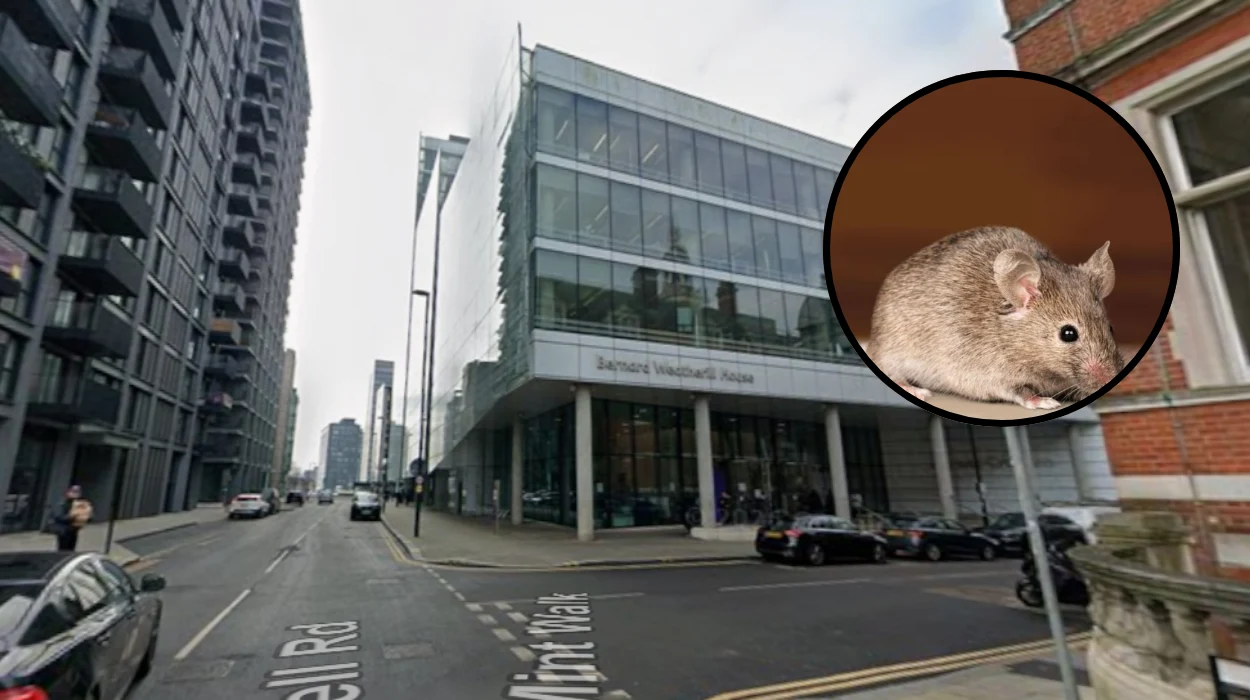
- Dominance of Rodents: Mice are identified as the most persistent and widespread pest affecting tenants within Croydon’s local authority housing network.
- Massive Callout Volume: Pest control teams have been dispatched thousands of times, averaging hundreds of residential visits every month to address ongoing infestations.
- Substantial Statistical Share: Data reveals that mice alone have accounted for 11,266 individual visits, representing 57.4% of all residential pest control callouts since the 2021/22 financial period.
- Five-Year Surge in Cockroaches: While some pests have plateaued, cockroach infestations have exhibited a steady, uninterrupted, and consistent upward trajectory over the last five years.
- Mixed Long-Term Trends: Broad figures show a sharp historical escalation in residential pest issues across the borough since 2021, despite a marginal, modest reduction in callouts for rats, mice, and bedbugs over the final 12 months of the recorded data.
- Official Data Disclosure: The comprehensive statistics were uncovered and brought to light via a Freedom of Information (FOI) request filed by the Local Democracy Reporting Service (LDRS).
Croydon (Extra London News) June 6, 2026 – Mice have officially been unmasked as the most dominant and relentless pest plagueing tenants inside Croydon Council’s social housing stock. Fresh municipal data confirms that specialist pest control operators are being sent out hundreds of times every single calendar month to battle persistent domestic infestations.
- Key Points
- Why are mice proving to be the primary pest problem in Croydon council estates?
- What do the official Freedom of Information figures reveal about the multi-year surge?
- Why are cockroach infestations continuing to rise across the borough?
- What are the statutory obligations of Croydon Council regarding pest management?
- How has the local authority responded to the publication of these pest control statistics?
The extensive data trail, which was successfully extracted from local government archives via a Freedom of Information (FOI) request submitted by the Local Democracy Reporting Service (LDRS), highlights that mice alone are responsible for a staggering 11,266 specific emergency visits. This volume represents a commanding 57.4% share of every single residential pest callout logged by the south London borough since the start of the 2021/22 financial year.
While historical data trends point to an aggressive, sharp acceleration in residential pest invasions across the wider Croydon area over the last half-decade, the most recent annual returns indicate a mixed bag for local estate management. Callouts specifically targeting rats, mice, and bedbugs experienced a slight, modest contraction over the past year. Conversely, cockroach populations have bucked this downward trend entirely, mounting a steady and highly consistent numerical increase over the identical five-year reporting window.
Why are mice proving to be the primary pest problem in Croydon council estates?
According to the analytical breakdown published by the Local Democracy Reporting Service (LDRS), the sheer scale of mouse infestations outstrips all other biological hazards combined within the local authority’s property portfolio. Housing data analysts note that the architectural design of high-density estate blocks, combined with historical structural vulnerabilities in older housing stock, creates ideal highways for small rodents to migrate between interconnected walls, ceiling voids, and communal service ducts.
The structural reality of urban social housing means that an unaddressed infestation in a single flat can rapidly compromise an entire block. Pest control teams frequently report that standard baiting and trapping methods yield only temporary relief if wider structural proofing—such as blocking access holes around internal gas pipes and electricity meters—is not systematically integrated into the council’s overarching cyclical maintenance regimes.
Explore More Croydon News
Sir Arthur Conan Doyle House Faces Market Flat Conversion: Croydon 2026
Croydon Council Backs Foster Care Fortnight Campaign: Croydon 2026
What do the official Freedom of Information figures reveal about the multi-year surge?
The detailed figures released under the Freedom of Information Act provide a stark mapping of the biological pressures facing Croydon’s tenants. Since the launch of the 2021/22 fiscal data track, total multi-species pest control interventions have scaled significantly, reflecting a broader regional battle against domestic urban pests.
Though the wider data matrix outlines a minor deceleration in emergency call rates for standard rodents and blood-feeding bedbugs over the trailing twelve months, the aggregate historical curve since 2021 remains notably higher than pre-pandemic baselines.
Why are cockroach infestations continuing to rise across the borough?
While conventional rodents showed signs of a minor retreat in the latest annual statistics, blattodea (cockroach) populations have sustained an unbroken upward trend. Environmental health reports regularly correlate the rise of cockroaches with localized micro-climates inside multi-occupancy buildings. These insects thrive within warm, humid, and poorly ventilated service shafts, boiler cupboards, and communal kitchen setups.
The steady, year-on-year climb over the last five years indicates that localized eradication efforts are failing to disrupt the wider breeding cycles of these highly resilient insects. Unlike seasonal pests, cockroaches remain active and reproductive year-round within heated residential properties, requiring highly specialized gel-baiting treatments and multi-stage chemical interventions to successfully collapse established subterranean colonies.
What are the statutory obligations of Croydon Council regarding pest management?
Under the Prevention of Damage by Pests Act 1949 and current UK housing legislation, local authorities maintain strict statutory obligations to ensure that their residential properties do not fall into states of verminous infestation that endanger public health. When tenants experience pest issues within social housing, the council is typically required to step in, identify the root cause of the structural breach, and deploy qualified pest control operators to rectify the situation.
However, local authorities across Greater London have frequently cited extreme budgetary constraints and a backlog of housing repairs as major hurdles in delivering rapid-response pest services. For residents trapped in affected blocks, prolonged exposure to pests like mice and cockroaches introduces significant health risks, as both species are known vectors for food-borne pathogens, while their dander and droppings are heavily linked to the exacerbation of chronic respiratory illnesses such as asthma.
How has the local authority responded to the publication of these pest control statistics?
Croydon Council housing management teams have consistently stated that they take all tenant reports of domestic vermin and insect infestations seriously. The local authority maintains a dedicated, contract-managed pest control arm tasked with executing both reactive treatments and proactive building inspections across its managed estates.
In light of the LDRS data, municipal officials point to the recent modest drop in annual mouse and rat callouts as early evidence that targeted baiting programs and localized structural proofing initiatives are beginning to yield measurable impacts. Nonetheless, housing officials acknowledge that the persistent escalation of cockroach numbers demands a re-evaluation of current eradication strategies, with a particular focus on deeper, block-wide chemical treatments rather than treating isolated flats in a piecemeal fashion.