
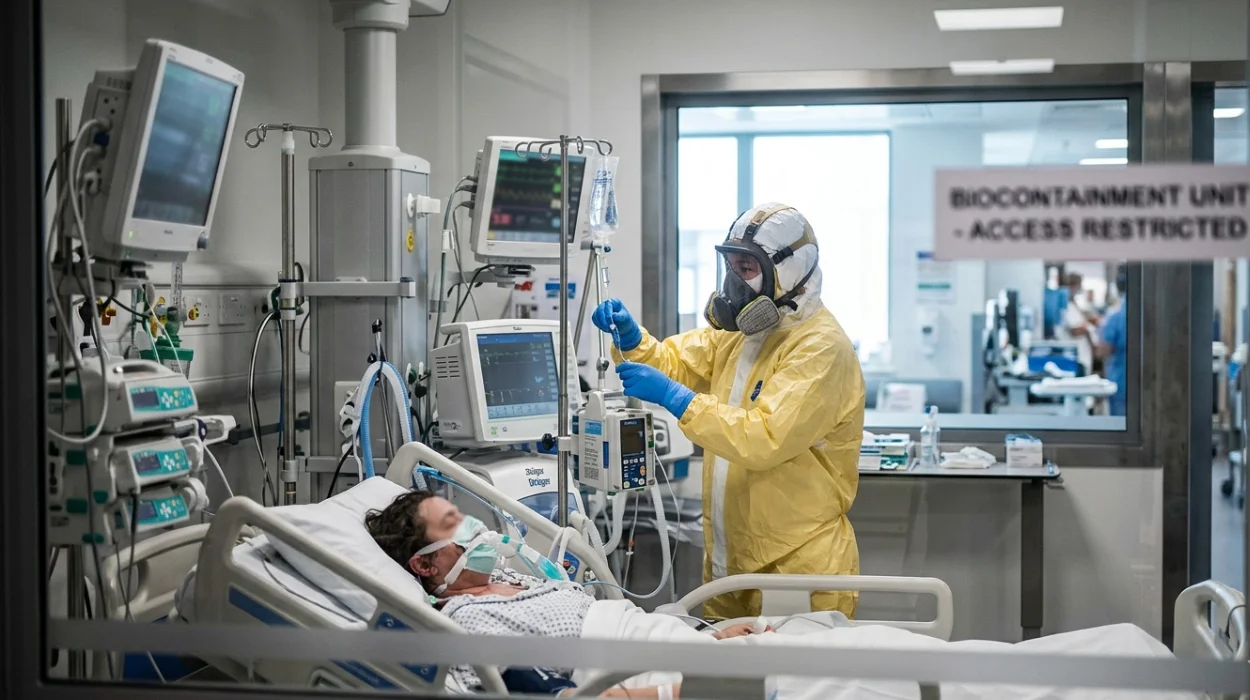
Ebola virus disease is a rare, severe, and frequently fatal viral hemorrhagic fever affecting humans and non-human primates. The illness stems from infection by a group of viruses belonging to the genus Orthoebolavirus, previously classified under the genus Ebolavirus (Centers for Disease Control and Prevention [CDC], 2026). Extra London News presents this authoritative guide detailing the clinical manifestations, systemic progression, and physiological impacts of this pathogen’s footprint on the human body, providing essential health information accessible to the global public and residents across London.
- What Are the Initial Symptoms of Ebola?
- How Do Early Symptoms Progress to Advanced Illness?
- What Causes the Hemorrhagic Symptoms of Ebola?
- How Does Ebola Induce Multi-Organ Failure?
- What Are the Long-Term Symptoms in Survivors?
- How Do Clinicians Differentiate Ebola from Other Diseases?
- What Are the Current Outbreak Trends and Treatment Strategies?
What Are the Initial Symptoms of Ebola?
The early clinical presentation of Ebola virus disease involves non-specific, influenza-like systemic symptoms that manifest abruptly after an asymptomatic incubation period. This initial phase lasts several days and is characterized by a high viral load building within the circulatory system of the patient.
The Onset of Early Phase Symptoms
The transition from the incubation period to active illness is sudden and pronounced. Patients experience a rapid escalation of body temperature, severe headache, muscle pain, and extreme physical weakness (CDC, 2024). These initial clinical markers are frequently referred to as “dry” symptoms, as they occur before the onset of profound fluid loss through gastrointestinal distress (CDC, 2026).
- Fever: The sudden elevation of body temperature serves as the primary clinical indicator that an asymptomatic individual has become infectious.
- Myalgia: Profound muscle pain presents across major muscle groups, stemming from widespread localized muscle tissue inflammation (Hollingshead, 2024).
- Cephalea: Severe, persistent headaches occur during the first 48 hours of symptom onset, driven by early systemic inflammation and immune cytokine release.
Incubation and Infectious Timelines
The time interval between initial exposure to an orthoebolavirus and the first appearance of symptoms ranges from 2 to 21 days, with a documented clinical average of 8 to 10 days (CDC, 2026; Hollingshead, 2024). An exposed individual remains entirely non-contagious throughout this incubation window. Transmission risk only begins when the patient develops overt clinical signs, such as fever or chills, because the presence of symptoms directly correlates with high concentrations of the virus in bodily fluids (CDC, 2026; Hollingshead, 2024).
How Do Early Symptoms Progress to Advanced Illness?
The clinical course of Ebola virus disease evolves rapidly from localized, non-specific ailments to severe, multi-system gastrointestinal and systemic manifestations. This transformation typically occurs between the third and fifth days of symptomatic illness, marking the transition from “dry” to “wet” symptoms.
The Emergence of Gastrointestinal Distress
As the infection advances, the virus directly targets and damages cells within the gastrointestinal tract. This damage produces severe gastrointestinal distress, including profuse watery diarrhea, frequent vomiting, and intense abdominal pain (CDC, 2026). The volume of fluid lost during this phase can exceed several liters per day, leading to severe dehydration, critical electrolyte imbalances, and metabolic disturbances (Kadanali, 2016).
- Profuse Diarrhea: Patients excrete large volumes of watery stool, which frequently contains viral particles and cellular debris from the intestinal lining.
- Persistent Vomiting: Inability to retain oral fluids accelerates the depletion of systemic hydration and body salts.
- Abdominal Pain: Severe cramping and localized epigastric pain occur as a result of inflammation within the visceral organs and mucosal linings.
Cutaneous and Mucosal Manifestations
Between the fifth and seventh days of the illness, a characteristic maculopapular rash develops in approximately half of all diagnosed cases (Hollingshead, 2024; Kadanali, 2016). This non-pruritic, flat, red rash typically originates on the face, neck, trunk, and arms before spreading across the rest of the body. Simultaneously, mucosal involvement becomes evident through physical signs including conjunctival injection, which manifests as severely bloodshot eyes, alongside a sore throat and persistent hiccups (Hollingshead, 2024; Kadanali, 2016).
What Causes the Hemorrhagic Symptoms of Ebola?
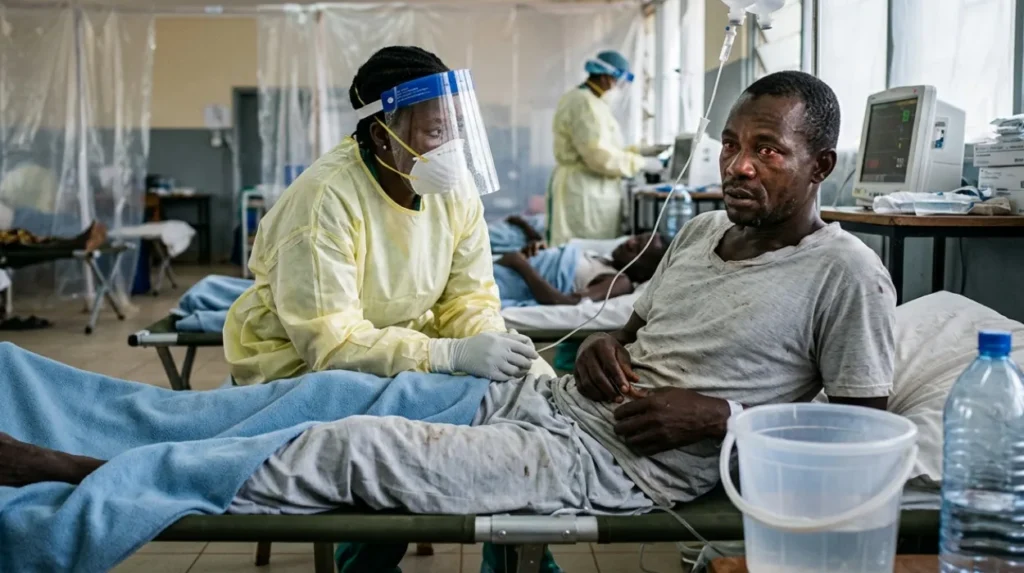
Hemorrhagic symptoms represent the most visually distinctive but poorly understood aspect of Ebola virus disease. These manifestations are complex, involving the simultaneous destruction of the host circulatory system, the coagulation cascade, and vital metabolic pathways within the liver.
The Disruption of the Coagulation Cascade
The virus targets mononuclear phagocytes, including macrophages and dendritic cells, which triggers a massive release of pro-inflammatory cytokines and reactive oxygen species into the bloodstream (Hollingshead, 2024). This systemic immune response induces widespread endothelial dysfunction, damaging the inner lining of blood vessels.
The body attempts to repair this damage by inducing platelet aggregation, which actively consumes and sequesters available platelets (Hollingshead, 2024). This process results in a profound state of thrombocytopenia, which is a critically low blood platelet count. The depletion of platelets causes a failure in the normal clotting mechanism, leading to simultaneous internal clotting and external bleeding (Hollingshead, 2024; Kadanali, 2016).
Clinical Presentation of Hemorrhage
Despite the historic designation of the illness as Ebola hemorrhagic fever, overt massive hemorrhage occurs in fewer than 50% of documented clinical cases (Hollingshead, 2024). When bleeding does manifest, it presents through distinct clinical signs across multiple physiological sites.
- Venipuncture Oozing: Continuous, uncontrolled bleeding or oozing from intravenous lines and needle insertion sites is a common early indicator of coagulopathy.
- Gastrointestinal Bleeding: The excretion of blood via hematemesis, which is the vomiting of blood, or melena, which is the passage of black, tarry stools containing digested blood (Hollingshead, 2024).
- Cutaneous Bleeding: The appearance of petechiae, which are tiny purple skin spots, ecchymosis, which are large bruises, and hematomas under the surface of the skin (Kadanali, 2016).
- Mucosal Bleeding: Unprovoked bleeding from internal mucosal linings, most frequently involving the gums, nose, and the conjunctiva of the eyes.
How Does Ebola Induce Multi-Organ Failure?
The physiological termination of fatal Ebola virus disease cases is driven by profound hypovolemic shock and multi-organ dysfunction syndrome. The systemic distribution of the virus allows it to infect, replicate within, and destroy cells across almost every major organ system in the human body.
Hepatic and Renal Dysfunction
The liver is a primary site of viral replication during the mid-to-late stages of infection. Viral replication inside hepatocytes causes extensive hepatic necrosis, which impairs the liver’s ability to synthesize critical clotting factors, further exacerbating the patient’s hemorrhagic tendencies (Hollingshead, 2024).
Concurrently, the kidneys experience severe damage. Renal failure develops due to a combination of direct viral cellular damage and hypoperfusion, which is a profound reduction of blood flow caused by systemic fluid loss (Kadanali, 2016). This state is marked by elevated blood urea nitrogen and serum creatinine levels.
Pathophysiology of Fatal Shock
The accumulation of fluid loss from the gastrointestinal tract, combined with increased vascular permeability caused by endothelial cell damage, leads to a critical drop in total blood volume. This state of hypovolemic shock prevents the cardiovascular system from maintaining adequate blood pressure to perfuse vital organs (Hollingshead, 2024).
The resulting lack of oxygen delivery to tissues causes systemic cellular death, metabolic acidosis, and complete cardiovascular collapse. In fatal cases, death typically occurs between 6 and 16 days after the initial onset of symptoms (Hollingshead, 2024; Kadanali, 2016).
Explore More Things To Do
Covent Garden Shopping, Food & Theatre Guide – London
Roman London Wall and Londinium Ruins Walk – City of London
What Are the Long-Term Symptoms in Survivors?
Individuals who survive the acute phase of Ebola virus disease often face a prolonged, debilitating recovery period known as post-Ebola syndrome. The virus can persist in immunologically privileged sites within the body long after it has been cleared from the general bloodstream.
Ocular and Neurological Sequelae
Survivors frequently experience severe, long-term complications affecting the eyes and central nervous system. These issues emerge as the immune system interacts with residual viral particles sequestered within delicate tissues (Hollingshead, 2024).
- Uveitis: Severe inflammation of the middle layer of the eye, which causes pain, redness, photophobia, and permanent blindness if left untreated.
- Encephalitis: Delayed inflammation of brain tissue, leading to chronic headaches, short-term memory deficits, and altered mental status (Hollingshead, 2024).
- Spinal Cord Injury: Localized neurological damage resulting in peripheral neuropathy, muscle weakness, and altered physical sensation (Hollingshead, 2024).
Musculoskeletal and Reproductive Implications
Chronic musculoskeletal pain is the most widely reported symptom among recovering patients. Survivors experience severe arthralgia, which is joint pain, and myalgia that can persist for months or years, significantly limiting physical mobility and return to normal function.
Additionally, reproductive implications are significant due to viral persistence in the testes. Recovered males can transmit the live virus through seminal fluid for many months after clinical recovery (CDC, 2026; Kadanali, 2016). This persistence requires continuous semen testing to confirm the total absence of viral RNA before barrier-free sexual activity can safely resume.

How Do Clinicians Differentiate Ebola from Other Diseases?
Diagnosing Ebola virus disease based on symptoms alone is challenging during the initial 48 hours of illness. The early presentation closely mimics several highly prevalent infectious diseases native to sub-Saharan Africa, necessitating rigorous differential diagnostic protocols and specialized laboratory confirmation.
The Challenge of Differential Diagnosis
Because early symptoms such as sudden fever, headache, and generalized body aches are entirely non-specific, clinicians cannot definitively identify Ebola without evaluating epidemiologic risk factors alongside clinical presentations. A patient must exhibit matching symptoms and have a documented history of potential exposure within the preceding 21 days, such as travel to an active outbreak zone or direct contact with a sick individual (CDC, 2024). Global transport hubs mean medical professionals in international cities like London must also maintain vigilance and review these travel histories closely when evaluating patients presenting with matching symptom clusters. Clinicians must systematically rule out several common illnesses that present with identical early signs:
- Malaria: A parasitic infection causing high fever, chills, and headache, which is highly endemic in regions where Ebola outbreaks occur.
- Typhoid Fever: A bacterial infection characterized by a prolonged fever, abdominal pain, and systemic weakness.
- Lassa Fever: Another viral hemorrhagic fever that presents with initial flu-like symptoms before progressing to severe multi-organ involvement.
- Yellow Fever: A mosquito-borne viral illness causing acute fever, myalgia, and subsequent hepatic dysfunction.
Definitive Laboratory Confirmation
To establish a definitive diagnosis, healthcare providers must isolate the patient and collect blood samples for molecular and immunological testing. Because viral loads may be low during the first 3 days of symptomatic presentation, it can take up to 72 hours after symptom onset for the virus to reach detectable levels in the bloodstream (CDC, 2024).
What Are the Current Outbreak Trends and Treatment Strategies?
The clinical management of Ebola virus disease has evolved from entirely palliative care to include targeted therapeutic interventions. However, the efficacy of these treatments depends heavily on the specific viral strain causing the infection and how early supportive measures are introduced.
Current Outbreaks and Strains
The genus Orthoebolavirus contains multiple distinct species, four of which are known to cause severe disease in humans: Zaire, Sudan, Bundibugyo, and Taï Forest (CDC, 2026; Kim, 2020). Two other species, Reston and Bombali, have been identified in non-human primates and bats but have not caused clinical disease in humans to date (CDC, 2026). The Zaire species historically carries the highest mortality rate, ranging from 60% to 90%, followed by the Sudan species at 40% to 60%, and the Bundibugyo species at approximately 25% to 50% (CDC, 2026; Kadanali, 2016).
Public health responses remain active. Agencies, including the CDC, are actively responding to re-emergent outbreaks of the Bundibugyo species within remote regions of the Democratic Republic of the Congo and Uganda (CDC, 2026). International monitoring teams, including specialists collaborating with research institutions based in London, track these developments closely to prevent international spread and ensure global biosafety protocols remain optimized against zoonotic spillovers from natural reservoirs like fruit bats of the family Pteropodidae (Kadanali, 2016).
Clinical Support and Therapeutic Interventions
While advanced monoclonal antibody treatments exist to neutralize the Zaire species, there are no approved targeted antiviral therapies or vaccines available for the Bundibugyo or Sudan strains (CDC, 2026). Consequently, clinical management for these species relies entirely on aggressive, early supportive care (CDC, 2026; Kadanali, 2016).
This protocol includes the continuous intravenous administration of fluids and essential electrolytes to combat the profound volume depletion caused by diarrhea and vomiting (CDC, 2026). Additionally, clinicians utilize specialized medications to support systemic blood pressure, manage fever and intense pain, and treat secondary bacterial infections if they occur (CDC, 2026). Implementing these supportive interventions within the early “dry” phase of the illness significantly lowers overall case-fatality rates and optimizes the patient’s chances of long-term survival.
What is Ebola virus disease?
Ebola virus disease is a severe viral hemorrhagic fever caused by viruses belonging to the genus Ebola. It affects humans and non-human primates and can cause life-threatening organ failure and shock.