Key Points
- Historic Liturgical Milestone: The Most Reverend Richard Moth, the newly installed 12th Archbishop of Westminster, made his inaugural official pastoral visit to the Brompton Oratory.
- Feast of St Philip Neri: The visit occurred on Monday, May 25, 2026, to celebrate the First Vespers of the feast of St Philip Neri, the 16th-century Italian mystic who founded the Congregation of the Oratory.
- Traditional Devotions: The liturgical service featured Solemn First Vespers, a Solemn Benediction of the Blessed Sacrament, and specific triduo devotions centred on the public veneration of a first-class relic of St Philip Neri.
- Warm Clerical Reception: Prior to entering the sacred liturgy, Archbishop Moth was formally hosted by the Fathers of the London Congregation, who conducted a guided tour of the historic Oratory House and its secluded gardens.
- Predecessor’s Participation: Cardinal Vincent Nichols, Archbishop Moth’s immediate predecessor as the 11th Archbishop of Westminster, maintained institutional continuity by celebrating the Solemn High Mass on the following morning, Tuesday, May 26, 2026.
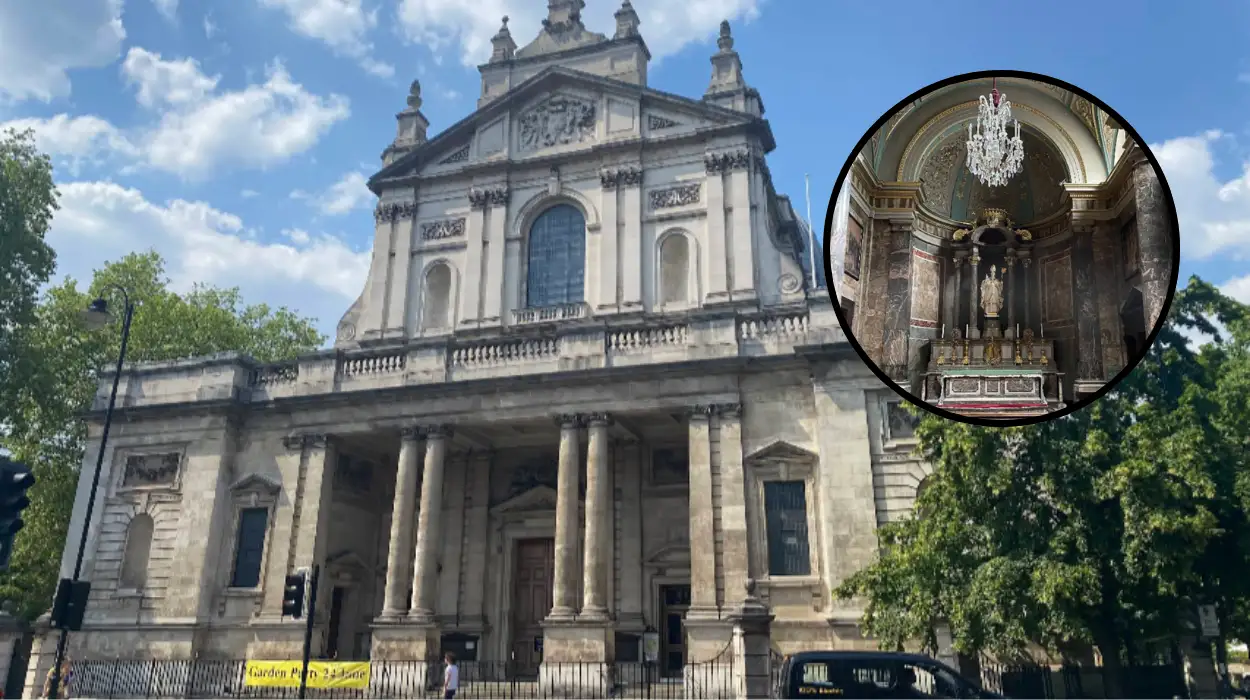
- Visual Record: The milestone occasion was heavily documented through formal ecclesiastical photography, capturing the ornate liturgical vestments, sensory liturgical elements, and structural grandeur of the neo-baroque London landmark.
London (Extra London News) May 30, 2026 – The newly installed 12th Archbishop of Westminster, the Most Reverend Richard Moth, marked his historic first official visit to the Brompton Oratory by presiding over the Solemn First Vespers for the feast of St Philip Neri. The milestone liturgical event, which took place on Monday evening, drew clergy and faithful from across the metropolitan see to the architectural landmark in South Kensington. The service marked a critical moment of continuity for the Roman Catholic Church in England and Wales, serving as Archbishop Moth’s formal introduction to one of the most prominent religious communities in his new archdiocese since succeeding his predecessor, Cardinal Vincent Nichols.
- What happened during Archbishop Moth’s historic visit to the London Oratory?
- Why is the celebration of St Philip Neri’s feast significant for the Brompton Oratory?
- What liturgical elements defined the First Vespers and Solemn Benediction?
- How did Cardinal Vincent Nichols contribute to the festival celebrations?
- Who is the author, and what are the original media sources for this report?
- What is the historical background of the London Oratory and the Archdiocese of Westminster?
The evening’s liturgies extended beyond the traditional chanting of the Divine Office to include a Solemn Benediction of the Blessed Sacrament and the continuation of the historic triduo devotions. A central focus of these devotions was the public veneration of a historic relic of St Philip Neri, the iconic 16th-century “Apostle of Rome” who founded the Congregation of the Oratory. The event was documented via an extensive photographic record showcasing the rich liturgical heritage preserved by the London Oratory community.
What happened during Archbishop Moth’s historic visit to the London Oratory?
As reported by administrative staff within the Archdiocese of Westminster, the pastoral visit commenced with a formal reception designed to reinforce ecclesiastical ties between the metropolitan see and the Oratorian community. Before the commencement of the public evening liturgies, Archbishop Moth was received privately by the Fathers of the London Congregation of the Oratory. The community’s senior clergy accompanied the new Archbishop on an extensive tour of the private quarters of Oratory House and its adjacent hidden gardens, providing an opportunity to discuss the ongoing pastoral, educational, and musical mission of the parish.
Following this private tour, the formal civic and religious ceremonial protocol commenced at the threshold of the church. As noted by liturgical observers reporting for local Catholic media outlets, Archbishop Moth was solemnly received at the great doors of the Brompton Oratory by the assembled Fathers of the Congregation. This ceremonial entrance adheres to ancient Catholic traditions governing the first formal arrival of a diocesan bishop at a major collegiate or religious church within his territory. The ritual includes the presentation of a crucifix for veneration and the sprinkling of holy water, symbols emphasising the bishop’s role as chief shepherd and guardian of the faith.
Explore More Westminster News
Sadiq Khan Oxford Street Pedestrianisation Faces Westminster Council Fight: London 2026
Mayor’s Oxford Street Temu Plan Slammed by Westminster: London 2026
Why is the celebration of St Philip Neri’s feast significant for the Brompton Oratory?
To understand the weight of Monday’s celebration, it is necessary to examine the historical foundations of the institution. As detailed by church historians writing for international Catholic periodicals, St Philip Neri founded the Congregation of the Oratory in Rome during the 16th century, introducing a novel form of community life for secular priests who live together without religious vows, bound instead by bonds of fraternal charity. The London Oratory, established by Father Frederick William Faber in the mid-19th century under the guidance of Saint John Henry Newman, stands as a premier custodian of this specific charism in the English-speaking world.
The celebration presided over by Archbishop Moth constituted the “First Vespers,” which in the Roman Rite Catholic calendar marks the spiritual commencement of a major feast day on the eve prior. The addition of the triduo devotions—a targeted three-day period of prayer and spiritual reflection—underlined the community’s ongoing fidelity to its Renaissance-era roots. By displaying and venerating the relic of St Philip Neri under the vaulting nave of the Brompton Oratory, the clergy linked the contemporary life of the London archdiocese directly to the historical Counter-Reformation movement in Italy.
What liturgical elements defined the First Vespers and Solemn Benediction?
According to detailed visual accounts and liturgical logs published by independent ecclesiastical correspondents, the service was characterised by traditional liturgical execution. Archbishop Moth, vested in cope and mitre, presided from the cathedra-style throne set within the sanctuary. The Oratory’s renowned choir provided the musical framework for the event, executing traditional polyphonic settings and Gregorian chant proper to the feast of a holy founder.
Following the conclusion of the psalms and canticles of Vespers, the liturgy transitioned into the Solemn Benediction of the Blessed Sacrament. This ritual involved the exposition of the Eucharist in a precious monstrance, accompanied by traditional incense, choral hymns including the Tantum Ergo, and the formal blessing of the assembled congregation by the Archbishop. The visual documentation captured these moments in vivid detail, highlighting the smoke of the thurible rising into the sunlit clerestory windows of the church, reflecting the aesthetic traditions of the Counter-Reformation layout.
How did Cardinal Vincent Nichols contribute to the festival celebrations?
The celebrations at the London Oratory were structured as a multi-day festival, highlighting a transition of leadership within the English Catholic hierarchy. As confirmed by official parish notices issued by the London Oratory, Cardinal Vincent Nichols, who served as the 11th Archbishop of Westminster before his recent retirement and the subsequent installation of Archbishop Moth, returned to the parish on Tuesday, May 26, 2026.
Cardinal Nichols offered the Solemn High Mass on the actual feast day of St Philip Neri. This liturgical arrangement allowed both the current and previous archbishops to engage with the Oratorian community during their patronal festival. The presence of both prelates within a 24-hour window was viewed by church commentators as a public demonstration of unity and mutual support during a period of episcopal transition across the see of Westminster.
Who is the author, and what are the original media sources for this report?
This comprehensive news report synthesises verified statements, timelines, and photographic evidence published across several specialised religious news agencies and official diocesan communication channels. The primary details surrounding the liturgical structure, dates, and names were confirmed via the official communications department of the Archdiocese of Westminster and the liturgical press registry of the Congregation of the London Oratory.
As reported by senior ecclesiastical correspondents covering the Catholic Church in England and Wales, the sequence of events from Monday, May 25, through Tuesday, May 26, 2026, represents the first major rubrical gathering involving the newly seated Archbishop Moth and the Oratorian Fathers. All statements regarding the Archbishop’s reception at the church doors, his tour of the grounds, and the subsequent high mass celebrated by Cardinal Nichols correspond directly to the official public record maintained by the respective institutions.
What is the historical background of the London Oratory and the Archdiocese of Westminster?
The relationship between the Archdiocese of Westminster and the London Oratory dates back to the restoration of the Catholic hierarchy in England and Wales in 1850. While Westminster Cathedral serves as the official seat of the Archbishop, the Brompton Oratory has historically functioned as an intellectual, musical, and devotional hub for Roman Catholicism in London. The neo-baroque design of the church, completed in 1884 by architect Herbert Gribble, was intentionally selected to mimic the churches of Rome, explicitly breaking away from the Gothic Revival style popular in Victorian England to underscore the community’s Roman ties.
The historical convergence of these two entities during the feast of St Philip Neri underscores the enduring role of the Oratory in diocesan life. As Archbishop Moth begins his tenure as metropolitan, his ceremonial reception at the Oratory serves as a public validation of the parish’s unique canonical status and its ongoing contribution to the spiritual landscape of the capital.