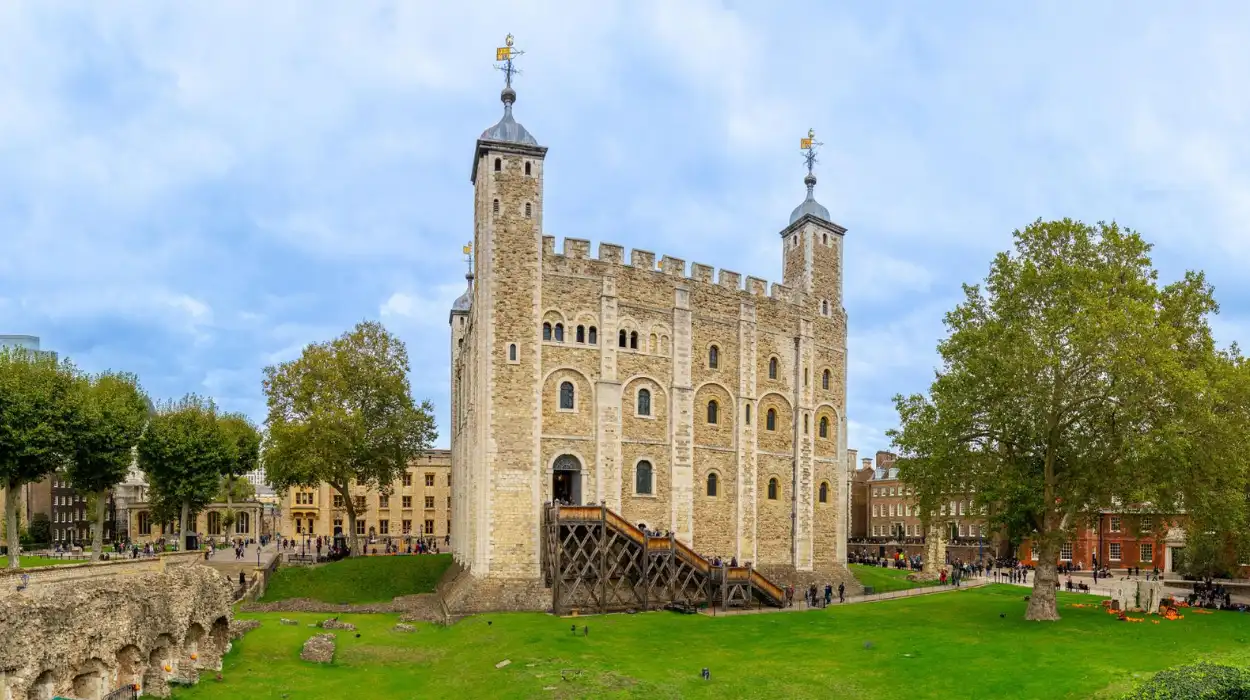
The Tower of London is one of the most significant historic sites in the United Kingdom. Located on the north bank of the River Thames, the fortress has served as a royal residence, military stronghold, prison, treasury, armoury, mint, and ceremonial landmark for nearly 1,000 years. Today, it is a UNESCO World Heritage Site that attracts millions of visitors annually and preserves some of the most important artefacts in British history, including the Crown Jewels.
- Why is the Tower of London one of Britain’s most important historic landmarks?
- What is the historical timeline of the Tower of London?
- Norman Foundation (1066–1154)
- Medieval Expansion (1154–1485)
- Tudor Era (1485–1603)
- Stuart and Georgian Periods (1603–1837)
- Victorian Preservation (1837–1901)
- Modern Heritage Era (1901–Present)
- What can visitors see inside the White Tower?
- Why are the Crown Jewels the Tower’s most famous attraction?
- Which medieval towers should visitors explore?
- How did the Tower function as a prison and execution site?
- What role do the Yeoman Warders play at the Tower today?
- What is the significance of the Tower’s ravens?
- How has the Tower of London been preserved for future generations?
- Why does the Tower of London remain relevant in the twenty-first century?
For visitors, the Tower offers a unique opportunity to explore medieval architecture, royal history, military collections, and centuries of political change within a single historic complex. Understanding what to see and do at the site requires knowledge of its historical development, major structures, collections, and continuing cultural significance.
Why is the Tower of London one of Britain’s most important historic landmarks?
The Tower of London is Britain’s most important medieval fortress because it combines nearly 1,000 years of royal, military, political, and cultural history within a single preserved site. Its buildings, collections, and ceremonial traditions document the evolution of the English and British state.
The Tower of London was founded shortly after the Norman Conquest of England in 1066. Following his victory at the Battle of Hastings, William I, commonly known as William the Conqueror, initiated a programme of castle construction across England to establish Norman authority.
The fortress occupies a strategic position beside the River Thames. This location allowed control of river traffic, protection of the City of London, and defence of the kingdom’s political and economic centre.
The complex expanded through several construction phases. The original Norman keep became surrounded by successive defensive walls, towers, gates, and moats. Over centuries, monarchs adapted the site to changing military, political, and administrative requirements.
In 1988, UNESCO designated the Tower of London as a World Heritage Site because of its exceptional architectural significance and its influence on castle design throughout medieval Europe.
Today, the site receives more than 2.5 million visitors annually, making it one of the most visited heritage attractions in the United Kingdom.
What is the historical timeline of the Tower of London?
The Tower of London’s history spans from 1066 to the present day and includes Norman conquest, medieval monarchy, Tudor politics, imperial administration, and modern heritage preservation. Each era left physical and historical evidence visible throughout the fortress.
Construction began around 1078 when William the Conqueror ordered the creation of the White Tower.
The principal phases of development include:
Norman Foundation (1066–1154)
The White Tower was built as a symbol of Norman power. Constructed from imported Caen stone from Normandy, it became one of Europe’s largest stone keeps.
Medieval Expansion (1154–1485)
Successive monarchs expanded the fortress with additional walls, towers, and defensive systems. Kings including Richard I, Henry III, and Edward I significantly enlarged the complex.
During this period, the Tower functioned as a royal palace, treasury, armoury, and prison.
Tudor Era (1485–1603)
The Tudor period produced some of the Tower’s most famous historical episodes. Political prisoners included Anne Boleyn, Catherine Howard, Thomas More, and Lady Jane Grey.
Executions within the Tower reflected the political instability of sixteenth-century England.
Stuart and Georgian Periods (1603–1837)
The fortress gradually lost its role as a royal residence. However, it remained important as a military installation, armoury, and state prison.
Victorian Preservation (1837–1901)
Growing public interest in heritage led to restoration programmes that emphasised the Tower’s medieval appearance.
Modern Heritage Era (1901–Present)
The Tower now functions primarily as a historic monument and museum while retaining ceremonial and military connections to the British Crown.
What can visitors see inside the White Tower?
The White Tower is the oldest and most historically significant building within the fortress. Visitors can explore Norman architecture, royal collections, military artefacts, and centuries of architectural development preserved inside its massive stone walls.
The White Tower stands at the centre of the complex and remains the defining feature of the site.
Completed during the late eleventh century, it rises approximately 27 metres above ground level and was designed to project Norman authority.
Inside, visitors encounter several major exhibitions.
Royal Armouries Collections
The Royal Armouries display one of the world’s most important collections of historic weapons and armour.
Artefacts include ceremonial armour worn by Henry VIII, medieval swords, firearms, and tournament equipment.
The collection documents military developments across multiple centuries, including 3 major periods: the medieval era, for example knightly armour; the Tudor era, for example royal tournament equipment; and the early modern era, for example firearms technology.
St John’s Chapel
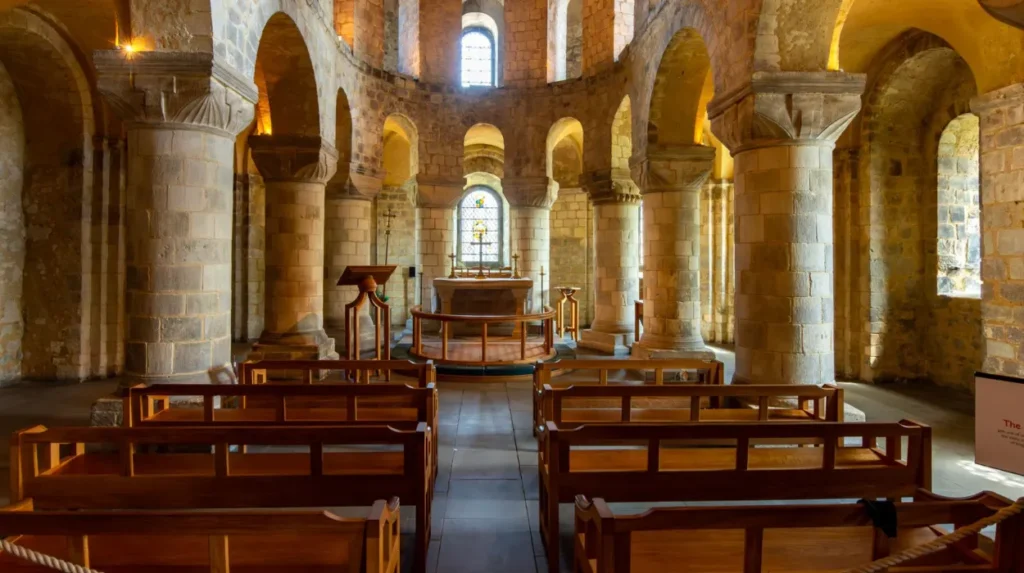
Located within the White Tower, St John’s Chapel is one of the best-preserved examples of Norman ecclesiastical architecture in England.
Built around 1080, the chapel retains its original Romanesque design and offers insight into Norman religious practices.
Royal Exhibitions
Displays throughout the White Tower explain the changing functions of the fortress and its role in royal government.
Why are the Crown Jewels the Tower’s most famous attraction?
The Crown Jewels represent the ceremonial authority of the British monarchy and include crowns, sceptres, orbs, and regalia used during coronations and major state occasions. They form one of the world’s most valuable collections of royal ceremonial objects.
The Crown Jewels are housed in the Jewel House and constitute the Tower’s most visited exhibition.
The collection contains more than 100 objects and over 23,000 gemstones.
These items play central roles in coronation ceremonies and state functions.
Among the most notable artefacts are:
St Edward’s Crown
Created in 1661, St Edward’s Crown is used during the coronation ceremony itself.
Imperial State Crown
The Imperial State Crown is worn by the monarch during the State Opening of Parliament.
It incorporates numerous historic gemstones connected to British royal history.
Sovereign’s Sceptre with Cross
This ceremonial sceptre contains the Cullinan I diamond, one of the largest cut diamonds in the world.
The exhibition also explains the destruction of earlier regalia during the English Civil War and the creation of replacement items after the Restoration of the monarchy in 1660.
Which medieval towers should visitors explore?
The Tower of London contains numerous medieval towers that reveal how the fortress functioned as a defensive stronghold, royal residence, and state prison. Each structure preserves evidence of different historical periods and uses.
The fortress contains more than 20 named towers.
Several are especially significant for visitors.
Bloody Tower
The Bloody Tower is associated with one of England’s greatest historical mysteries: the disappearance of the Princes in the Tower.
Edward V and Richard of Shrewsbury disappeared in 1483 after being confined within the fortress.
The circumstances remain debated among historians.
Beauchamp Tower
This tower contains prisoner inscriptions carved into stone walls.
The carvings provide direct evidence of imprisonment during the Tudor era.
Wakefield Tower
The Wakefield Tower once formed part of the medieval royal apartments.
Exhibits explain the lifestyle and political functions of medieval kings.
Salt Tower
The Salt Tower preserves additional prisoner graffiti and historical records connected to state prisoners.
How did the Tower function as a prison and execution site?
The Tower served as a prison for high-status political and religious prisoners rather than ordinary criminals. Its role reflected struggles for power, succession, religion, and government throughout English history.
Contrary to popular belief, the Tower was never a mass prison.
Instead, it held individuals considered threats to the Crown or state.
Notable prisoners included:
- Thomas More
- Anne Boleyn
- Catherine Howard
- Guy Fawkes
- Sir Walter Raleigh
The site became associated with imprisonment because many prominent figures were detained there during periods of political instability.
Only a small number of executions occurred within the Tower itself.
Most executions took place on nearby Tower Hill.
Those executed within the fortress included Anne Boleyn in 1536 and Catherine Howard in 1542.
The execution site now serves as a memorial area that explains the historical circumstances surrounding these events.
What role do the Yeoman Warders play at the Tower today?
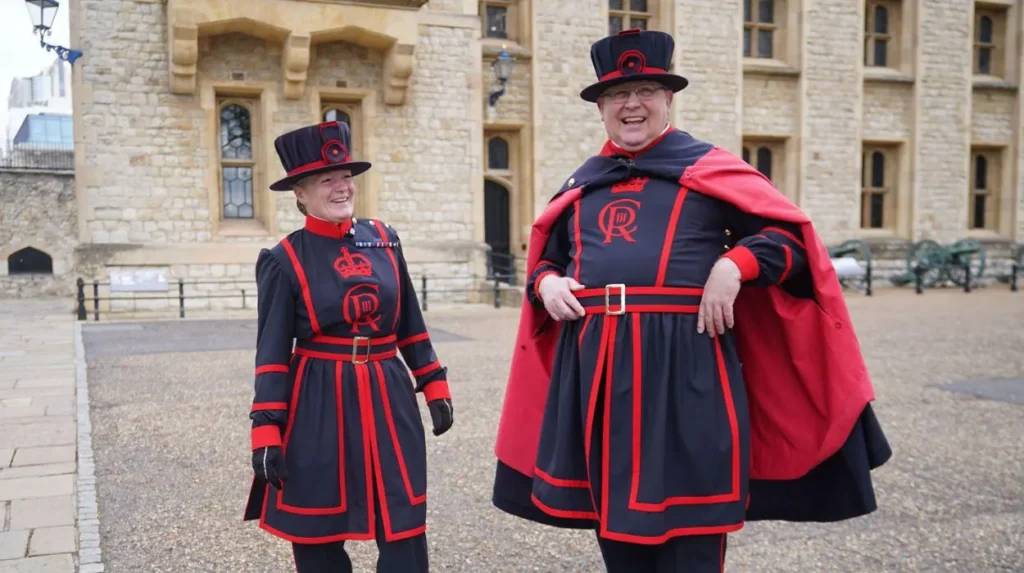
The Yeoman Warders preserve ceremonial traditions, provide security support, conduct educational tours, and interpret the site’s history for visitors. They represent one of the oldest continuing ceremonial institutions in Britain.
Often referred to as Beefeaters, the Yeoman Warders have served the Crown for centuries.
Modern Warders are recruited from experienced members of the British Armed Forces.
Their responsibilities include:
Guided Interpretation
Yeoman Warders conduct tours that explain major historical events, architecture, and traditions.
Ceremonial Functions
They participate in state ceremonies and heritage activities throughout the year.
Site Preservation
Warders contribute to the protection and interpretation of historic collections and buildings.
Their expertise helps connect visitors with nearly a millennium of institutional continuity.
What is the significance of the Tower’s ravens?
The ravens are ceremonial birds maintained at the Tower under a long-standing tradition stating that the kingdom and fortress will endure as long as the ravens remain present.
The tradition became widely established during the nineteenth century.
A dedicated Ravenmaster oversees the birds’ care.
Typically, at least six ravens are maintained at the site, with additional reserve birds available.
The ravens have become among the most recognised symbols associated with the Tower of London.
Their presence contributes to the site’s cultural identity and public interest.
The tradition also illustrates how folklore and heritage interpretation intersect within historic environments.
How has the Tower of London been preserved for future generations?
The Tower of London is preserved through conservation programmes, archaeological research, heritage management, and legal protections that safeguard its structures, collections, and historical significance for future generations.
The site is managed by the independent charity Historic Royal Palaces.
Conservation efforts address both physical preservation and public education.
Architectural Conservation
Specialists monitor stonework, timber structures, roofing systems, and defensive walls.
Research informs restoration decisions while preserving historical authenticity.
Archaeological Investigations
Archaeological studies continue to reveal information about medieval construction methods, daily life, and changing site functions.
Investigations have uncovered evidence from multiple periods, including 3 major phases: Norman occupation, for example defensive foundations; medieval expansion, for example domestic structures; and Tudor adaptation, for example administrative facilities.
Collection Management
Historic artefacts require specialised environmental controls and conservation procedures.
This work ensures long-term preservation of armour, manuscripts, regalia, and archaeological materials.
Public Engagement
Educational programmes support schools, researchers, and visitors.
To experience this historic landmark in person today, consult our comprehensive [The Tower of London: A Fortress of Power, Prison, and Crown Jewels] for itineraries and visiting parameters.
Why does the Tower of London remain relevant in the twenty-first century?
The Tower remains relevant because it preserves evidence of monarchy, government, military history, architecture, law, religion, and national identity across nearly 1,000 years of British history.
Few historic sites provide such a continuous record of political and social change.
The fortress illustrates the evolution of royal authority, state institutions, military technology, and urban development.
Its collections support historical research, museum education, heritage tourism, and public understanding of Britain’s past.
For educators, the Tower offers primary evidence of medieval and early modern history. For students, it demonstrates how architecture reflects political power. For genealogical researchers, it provides context for understanding the institutions that shaped generations of London residents. For heritage professionals, it serves as a model of long-term conservation and interpretation.
The Tower’s significance extends beyond Britain. Its architecture influenced castle construction throughout Europe. Its collections preserve globally important artefacts. Its history intersects with major events that shaped the development of the modern British state.
As both a monument and a living heritage site, the Tower of London continues to connect contemporary audiences with nearly a millennium of historical change. Visitors who explore its walls, towers, exhibitions, Crown Jewels, ceremonial traditions, and preserved architecture encounter one of the most complete historical landscapes in the world—a place where the story of England and Britain remains visible in stone, artefacts, and living tradition.
Why are ravens kept at the Tower of London?
According to tradition, the kingdom will fall if the ravens ever leave, so they are permanently cared for at the Tower.