Covent Garden is a historic commercial and entertainment district in central London defined by its 17th-century piazza, covered market buildings, luxury shopping arcades, restaurants, and licensed street performances. The area combines preserved architectural heritage with modern tourism and cultural attractions visited by millions annually.
- How did Covent Garden evolve from a fruit market into a modern cultural destination?
- What can visitors see in Covent Garden Piazza today?
- Why is Covent Garden important to London’s theatre and entertainment history?
- Where are the best shopping streets and retail areas in Covent Garden?
- What food and dining experiences define modern Covent Garden?
- How does Covent Garden preserve its historical architecture and identity?
- What is the best way to explore Covent Garden today?
Located in the West End of London, Covent Garden developed from monastic farmland into one of Britain’s best-known commercial and entertainment districts. The name originated from the “Convent Garden” once controlled by Westminster Abbey.
The district centres around the Piazza designed by architect Inigo Jones in the 1630s. This square became London’s first formally planned public piazza inspired by Italian Renaissance urban design.
Today, Covent Garden combines heritage architecture with contemporary retail, theatre culture, dining, and tourism. Visitors encounter restored market halls, historic churches, Georgian streets, theatres, luxury boutiques, and public entertainment zones concentrated within a compact walkable area.
The district preserves major historical landmarks including the Market Building completed in 1830 by Charles Fowler. Covent Garden also contains protected Georgian terraces and Victorian commercial architecture that survived postwar redevelopment pressures.
The story of From Fruit Market to West End Hub: Covent Garden History explains how centuries of trade, performance culture, and urban planning transformed the area into one of London’s most recognisable cultural destinations.
How did Covent Garden evolve from a fruit market into a modern cultural destination?
Covent Garden transformed through several phases including monastic agriculture, aristocratic planning, wholesale produce trading, Victorian entertainment growth, postwar decline, and heritage-led regeneration that reshaped the district into a modern West End cultural and tourism centre.
The land originally formed part of the agricultural estate belonging to Westminster Abbey during the medieval period. Following the Dissolution of the Monasteries under Henry VIII in 1540, the Crown acquired the estate.
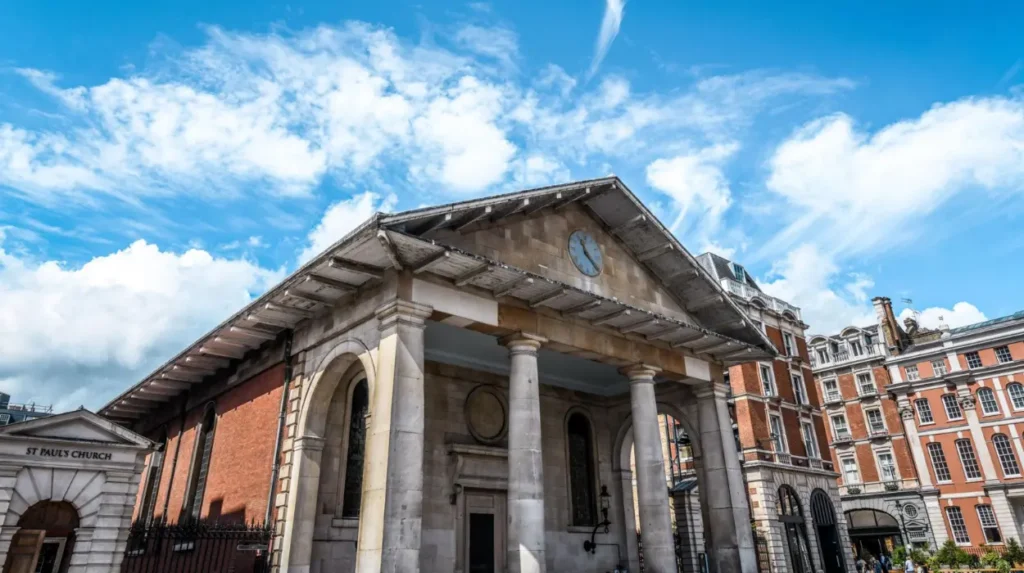
During the early 17th century, the Russell family commissioned Inigo Jones to design a formal residential square around a central piazza. Construction began in 1631. St Paul’s Church formed part of the original architectural plan.
By the late 1600s, informal produce trading expanded around the Piazza. Traders sold fruit, vegetables, flowers, and agricultural goods delivered into central London. Parliament formally authorised market operations in 1670.
The phrase From Fruit Market to West End Hub: Covent Garden History accurately reflects this transformation from agricultural commerce into a globally recognised entertainment and tourism district.
The wholesale market became one of London’s busiest trading centres during the 18th and 19th centuries. Taverns, theatres, coffee houses, and lodging businesses expanded nearby to serve traders, performers, labourers, and visitors.
The construction of the modern Market Building in 1830 improved trading infrastructure. Railway expansion later enabled produce deliveries from across Britain directly into central London markets.
During the 20th century, increasing congestion reduced the market’s operational efficiency. Wholesale trading relocated to Nine Elms in 1974, where New Covent Garden Market continues operating today.
Large-scale demolition plans threatened the historic district during the postwar era. Public preservation campaigns prevented redevelopment and secured conservation protections. Restoration projects converted former market halls into retail and hospitality spaces while preserving the original architecture.
This regeneration model became internationally influential in urban heritage conservation.
What can visitors see in Covent Garden Piazza today?
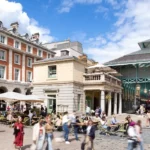
Covent Garden Piazza contains restored market halls, artisan stalls, street performance zones, restaurants, historic public buildings, and luxury retail spaces surrounding London’s first planned square. The Piazza remains the district’s central visitor and entertainment hub.
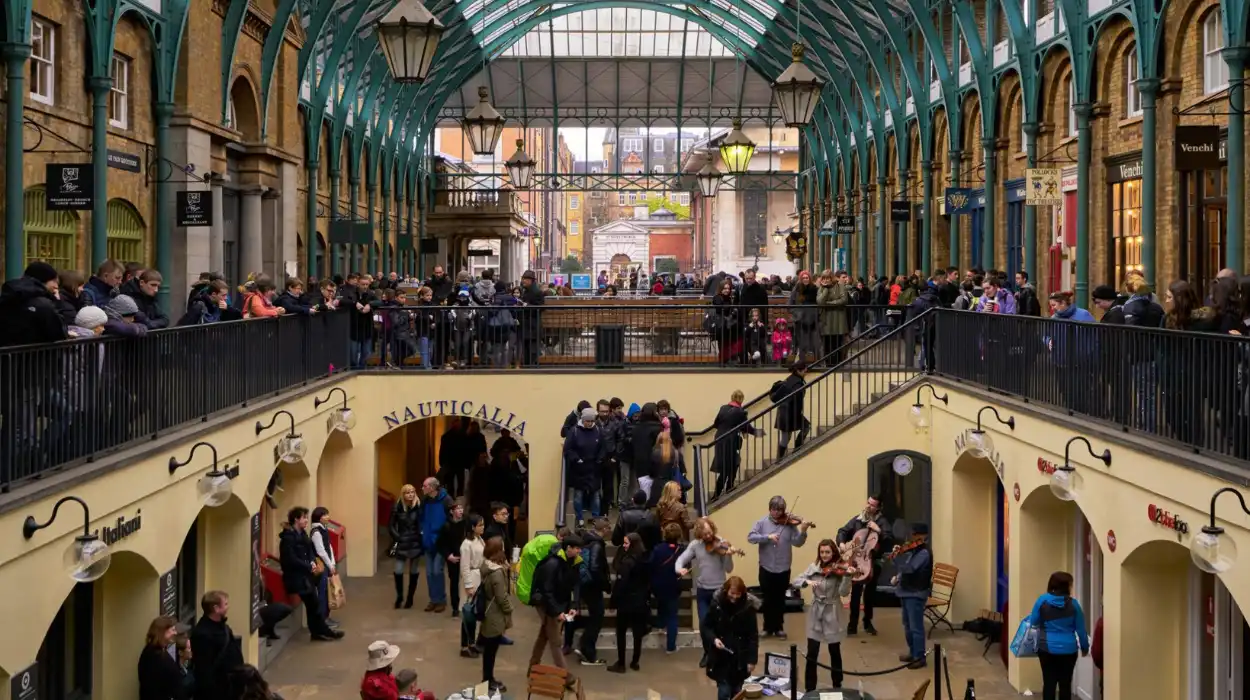
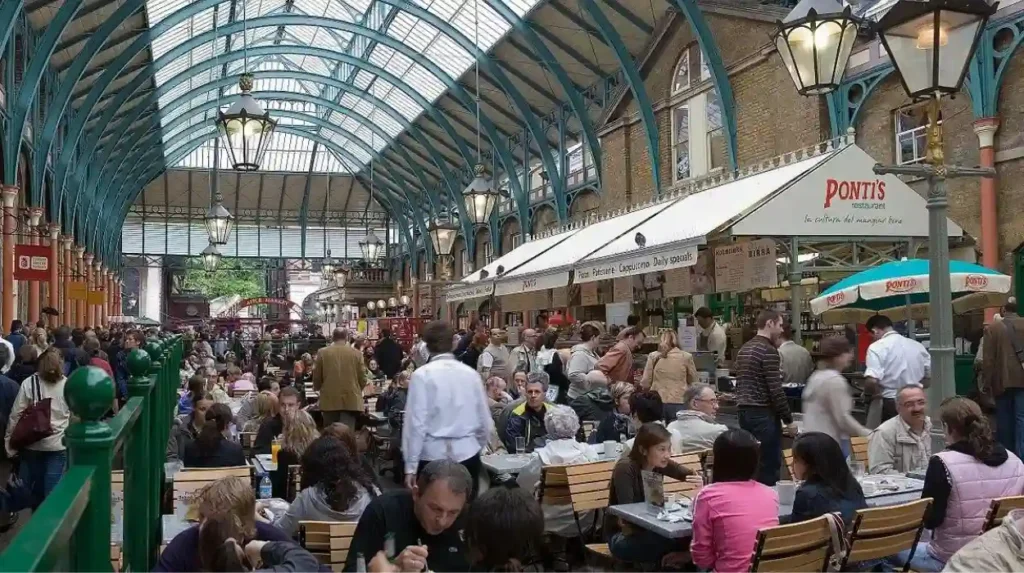
The Piazza includes several interconnected areas. The Apple Market contains antiques, crafts, and designer goods. The East Colonnade Market specialises in handmade products and artisan stalls. South Hall accommodates fashion retailers and cafés beneath restored glass-and-iron roofing.
Street performances remain one of Covent Garden’s defining attractions. Licensed entertainers perform magic acts, live music, acrobatics, juggling routines, comedy shows, and circus demonstrations within designated public pitches.
This entertainment tradition developed from historical market culture where performers gathered large public crowds. Today’s regulated busking system preserves that legacy within a controlled public environment.
St Paul’s Church, often called “The Actors’ Church,” remains closely connected to London’s theatre community. The church contains memorials dedicated to performers, directors, and theatrical figures associated with the West End.
Nearby attractions include the London Transport Museum, which documents the development of London’s transport network through restored buses, Underground trains, and historical exhibits.
The Piazza also connects visitors to surrounding streets including Floral Street, Neal Street, Henrietta Street, and James Street, each containing preserved Georgian and Victorian architecture adapted for modern commercial use.
To experience this historic landmark in person today, consult our comprehensive [Insert Anchor Text for Things to Do Article Here] for itineraries and visiting parameters.
Why is Covent Garden important to London’s theatre and entertainment history?
Covent Garden became central to London’s entertainment industry because theatres, taverns, markets, and public gathering spaces concentrated within the district, creating one of Britain’s most influential commercial performance and cultural economies from the Restoration era onward.
The district’s entertainment significance expanded after the Restoration of the monarchy in 1660. Royal theatre patents encouraged the development of formal performance venues near Covent Garden.
One of the most important institutions became the Theatre Royal, Covent Garden, established in 1732. This venue later evolved into the modern Royal Opera House, internationally recognised for opera and ballet productions.
Covent Garden also supported informal entertainment traditions. Street performers, musicians, and public entertainers historically attracted audiences near the market and surrounding taverns.
The district’s commercial environment encouraged cultural growth because theatre audiences required restaurants, accommodation, transportation, and hospitality services concentrated within walking distance of venues.
Writers including Samuel Pepys documented visits to Covent Garden theatres and nightlife venues, providing historical evidence of the area’s cultural importance during the 17th century.
Modern street theatre continues this tradition through professionally regulated public performances in the Piazza. Covent Garden therefore preserves both elite theatrical culture and accessible public entertainment within the same urban environment.
Where are the best shopping streets and retail areas in Covent Garden?
The best shopping areas in Covent Garden include the Market Building, Seven Dials, Neal Street, Floral Street, and Neal’s Yard. These districts combine preserved historic architecture with independent boutiques, luxury fashion stores, beauty retailers, and artisan businesses.
The central Market Building remains the district’s primary retail centre. Historic market interiors now accommodate international fashion labels, cosmetics retailers, gift shops, and London-themed stores.
Seven Dials developed during the late 17th century around a seven-road junction. Today the area contains smaller independent retailers and lifestyle boutiques concentrated within preserved historical streets.
Neal Street functions as a major pedestrian shopping corridor linking Covent Garden with Seven Dials. The street became associated with fashion retail expansion during the late 20th century.
Floral Street contains premium fashion boutiques and direct access routes to the Royal Opera House complex. The street preserves Victorian commercial façades integrated into modern retail spaces.
Neal’s Yard emerged as a prominent alternative retail courtyard during the 1970s organic food and wellness movement. Brightly painted buildings now house cafés, skincare businesses, and health-focused retailers.
Unlike larger commercial shopping districts such as Oxford Street, Covent Garden emphasises architectural atmosphere and pedestrian experience alongside retail activity.
What food and dining experiences define modern Covent Garden?
Modern Covent Garden dining combines historic pubs, international cuisine, theatre restaurants, cafés, and market-inspired hospitality businesses shaped by centuries of commercial trade, tourism growth, and West End entertainment culture.
The district’s food culture developed from its role as London’s major produce market. Traders, labourers, actors, and visitors created constant demand for taverns, cafés, and affordable dining establishments.
Today, Covent Garden contains both luxury and mid-range restaurants serving British, Italian, French, Japanese, Middle Eastern, and pan-Asian cuisine.
Historic pubs around Maiden Lane and Bow Street preserve Victorian and Georgian design features including timber interiors, etched windows, and traditional bar layouts.
Theatre-focused hospitality also shapes local dining patterns. Restaurants adapt operating hours around evening performance schedules serving pre-theatre and post-theatre audiences.
Outdoor café culture expanded significantly during the late 20th century as pedestrianisation projects improved public space accessibility. Courtyard seating and market-side terraces now define much of the district’s daytime atmosphere.
Seasonal events regularly introduce temporary food installations, winter markets, and festival programming within the Piazza.
How does Covent Garden preserve its historical architecture and identity?
Covent Garden preserves its historical character through conservation laws, listed building protections, adaptive reuse restoration projects, archaeological research, and public heritage campaigns that protect the district’s architectural integrity while supporting commercial activity and tourism.
Covent Garden became a designated Conservation Area in 1973. This status introduced planning controls intended to preserve streetscapes, façades, and the district’s historical urban layout.
Many structures hold Grade II or Grade II* listed status under British heritage legislation. These protections prevent inappropriate demolition and major architectural alterations.
The adaptive reuse of former market buildings became central to preservation strategy after wholesale trading relocated in 1974. Restoration projects retained original ironwork, masonry, and roof structures while converting interiors for modern retail use.
Public campaigns proved essential in preventing large-scale redevelopment during the 1960s and 1970s. Conservation organisations argued that Covent Garden represented a rare surviving example of layered London urban history.
Archaeological investigations uncovered artefacts linked to medieval farming, market trading, domestic occupation, and entertainment culture across several centuries.
The district remains internationally recognised within urban conservation studies because it demonstrates how historical preservation and commercial regeneration can coexist successfully.
What is the best way to explore Covent Garden today?
The best way to explore Covent Garden is through a walkable itinerary combining the Piazza, market halls, shopping streets, museums, restaurants, and nearby theatre districts that collectively reflect the area’s historical and cultural development.
Morning visits generally provide lower crowd density and improved opportunities to observe architecture and public spaces before peak tourism periods.
Most visitors begin at Covent Garden Underground Station, opened in 1907 on the Piccadilly Line. The station significantly increased visitor access to the district during the early 20th century.
The Piazza serves as the main orientation point for exploring nearby attractions including St Paul’s Church, the Royal Opera House, Seven Dials, Neal’s Yard, and surrounding retail streets.
Walking routes frequently extend into nearby West End areas because Covent Garden connects directly with London’s theatre and entertainment corridor.
The London Transport Museum provides historical context regarding the city’s infrastructure and transport development through restored vehicles and archival displays.
Evening visits highlight the district’s relationship with theatre culture as restaurants and public spaces become increasingly active before major performances begin.
Covent Garden remains one of London’s most accessible historical districts because its compact geography preserves the historical relationship between markets, entertainment venues, public squares, and commercial streets within a walkable environment.
Why is Covent Garden famous?
Covent Garden is famous for its 17th-century Piazza, the Royal Opera House, luxury shopping, public entertainment, and historical market architecture.