London offers distinctive seasonal experiences throughout the year because its history, royal traditions, public celebrations, historic parks, museums, markets, riverside spaces, and cultural institutions have evolved over nearly two thousand years. Every season reveals different aspects of the capital’s heritage while preserving centuries of architectural, political, and social development.
- Why does London offer unique experiences during every season?
- What makes spring one of the best seasons to explore London’s heritage?
- Royal parks showcase centuries of landscape history
- Historic gardens preserve botanical innovation
- Riverside walks reflect London’s commercial past
- Why is summer ideal for experiencing London’s outdoor history?
- Historic riverside districts become cultural centres
- Outdoor performances continue Elizabethan traditions
- Historic ceremonies remain public traditions
- How does autumn reveal London’s intellectual and cultural heritage?
- Museums preserve London’s archaeological history
- Literary districts demonstrate cultural development
- Historic architecture becomes easier to examine
- Why does winter showcase London’s historic traditions most clearly?
- Victorian Christmas transformed London
- Historic markets continue centuries of commerce
- Religious heritage shapes seasonal celebrations
- How have London’s seasonal traditions changed through history?
- Which historic locations provide memorable experiences throughout the entire year?
- Why do London’s historic parks and public spaces remain globally significant?
- How do seasonal experiences help visitors understand London’s history?
From its foundation as the Roman settlement of Londinium around AD 47 to its position as one of the world’s leading cultural capitals, London has continuously adapted to changing climates, traditions, and urban life. The city’s royal ceremonies, botanical landscapes, seasonal festivals, riverside events, historic gardens, and architectural landmarks create experiences that remain closely connected to Britain’s historical identity.
Unlike destinations that rely on one peak tourist season, London maintains year-round cultural significance. Spring celebrates centuries-old royal parks and botanical traditions. Summer highlights outdoor heritage sites and historic waterways. Autumn showcases museum collections, literary heritage, and historic neighbourhoods. Winter transforms ceremonial spaces through festive traditions that originated during the Victorian era and continue today.
Understanding how London’s seasons reflect its historical evolution allows visitors to appreciate the city beyond individual attractions. Each season preserves traditions that developed across different historical periods, including Roman Britain, the Medieval Kingdom of England, the Tudor dynasty, the Georgian expansion, the Victorian Empire, and modern Britain.
Why does London offer unique experiences during every season?
London provides distinctive seasonal experiences because its historic parks, royal ceremonies, architectural landmarks, cultural institutions, rivers, and public traditions evolved over two millennia. Seasonal changes highlight different aspects of the city’s heritage while preserving customs established during Roman, Medieval, Tudor, Georgian, Victorian, and contemporary periods.
London’s geographical location in southeastern England creates four clearly defined seasons. These seasonal variations shaped urban planning, agriculture, commerce, recreation, and royal traditions throughout history.
The River Thames influenced London’s seasonal economy from Roman times onward. Spring supported increased river transport after winter conditions. Summer encouraged trade and public gatherings along the waterfront. Autumn marked harvest markets and commercial exchanges. Winter brought ceremonial celebrations connected to Christianity, monarchy, and civic life.
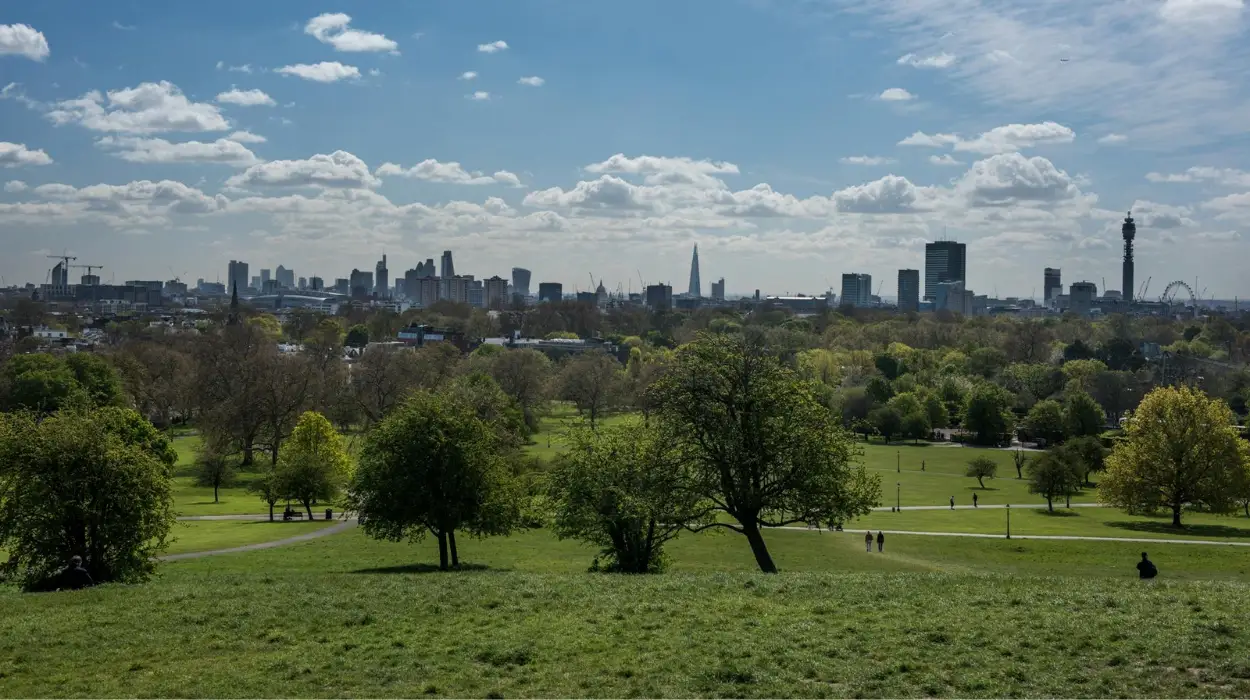
The city’s extensive network of royal parks also reflects seasonal history. Many originated as medieval hunting grounds before becoming public landscapes. Their changing appearance throughout the year demonstrates centuries of landscape design influenced by French, Dutch, and English gardening traditions.
London’s cultural calendar similarly developed over centuries. National celebrations, royal commemorations, museum exhibitions, literary festivals, and seasonal markets preserve traditions established across different historical eras.
Rather than replacing older customs, London continuously incorporated new traditions while maintaining historic continuity. This layered development explains why every season offers historically significant visitor experiences.
What makes spring one of the best seasons to explore London’s heritage?
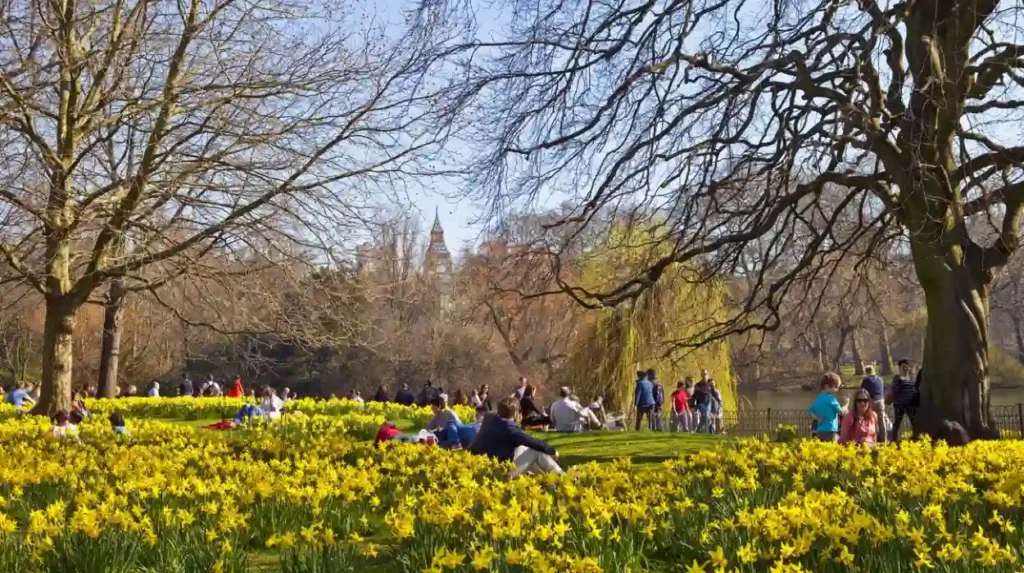
Spring reveals London’s historic landscapes through blooming royal parks, restored gardens, palace grounds, riverside walks, and botanical collections. The season reflects centuries of landscape architecture, scientific discovery, and royal patronage while providing excellent conditions for exploring outdoor historic landmarks.
Spring has historically symbolised renewal in London since medieval religious calendars connected Easter with agricultural and civic life.
Royal parks showcase centuries of landscape history
London contains eight Royal Parks covering approximately 5,000 acres. Several originated as private hunting estates for English monarchs before gradually opening to the public.
Hyde Park developed after King Henry VIII acquired former monastic land in 1536 following the Dissolution of the Monasteries. St James’s Park evolved from marshland transformed by King Charles II during the seventeenth century. Richmond Park, enclosed in 1637 by King Charles I, remains one of Britain’s largest enclosed royal parks.
Spring highlights ornamental gardens, flowering trees, historic avenues, and carefully managed wildlife habitats established over several centuries.
To experience these historic landscapes in person today, consult our comprehensive [How London’s Traditions Changed With the Seasons Throughout British History and Culture] for itineraries and visiting parameters.
Historic gardens preserve botanical innovation
London played a leading role in botanical science during the eighteenth and nineteenth centuries.
The city’s botanical collections expanded alongside Britain’s global trade networks. Plants introduced from Asia, Africa, Australia, and the Americas transformed British gardening.
Scientific institutions documented thousands of plant species while landscape designers created ornamental gardens combining native and imported vegetation.
Spring remains the period when these historical planting schemes become most visible.
Riverside walks reflect London’s commercial past
Walking along the Thames during spring illustrates London’s dependence on its river throughout history.
Historic wharves, warehouses, bridges, and embankments demonstrate how commerce shaped London’s expansion from the Roman period through the Industrial Revolution.
Modern pedestrian paths allow visitors to follow routes historically used by merchants, sailors, dockworkers, and royal processions.
Why is summer ideal for experiencing London’s outdoor history?
Summer provides extended daylight, open historic sites, river activities, outdoor performances, ceremonial events, and archaeological landscapes. These experiences demonstrate how London’s public spaces, royal traditions, and commercial districts developed from Roman settlement into Britain’s political and cultural capital.
Long daylight hours significantly improve access to London’s outdoor heritage.
Summer enables visitors to spend more time examining architectural details, archaeological remains, and historic streets without seasonal weather restrictions.
Historic riverside districts become cultural centres
The South Bank illustrates London’s transformation from industrial waterfront to cultural destination.
Historic warehouses, docks, theatres, and commercial buildings have been restored while preserving their architectural character.
Nearby river crossings demonstrate engineering progress from medieval timber bridges to Victorian iron structures and modern transport infrastructure.
The Thames continues serving ceremonial, recreational, and transportation functions established centuries ago.
Outdoor performances continue Elizabethan traditions
London’s association with outdoor theatre dates to the sixteenth century.
William Shakespeare wrote many of his plays for performance in open-air playhouses located outside the medieval City of London.
Modern productions continue these traditions while introducing historic drama to contemporary audiences.
Seasonal performances preserve theatrical practices closely connected to London’s literary history.
Historic ceremonies remain public traditions
Summer frequently includes military ceremonies, royal celebrations, and civic events rooted in constitutional history.
Many ceremonial traditions originated during the seventeenth and eighteenth centuries when the British monarchy increasingly adopted formal public appearances.
State occasions continue demonstrating historical relationships between the Crown, Parliament, military institutions, and the public.
These ceremonies preserve traditions rather than functioning solely as tourist attractions.
How does autumn reveal London’s intellectual and cultural heritage?
Autumn highlights museums, libraries, historic universities, literary institutions, galleries, and architectural landmarks. Cooler weather encourages exploration of indoor collections that preserve archaeological discoveries, scientific achievements, artistic masterpieces, and documentary evidence spanning nearly two thousand years of British history.
Autumn traditionally marked the beginning of London’s educational and cultural calendar.
Universities, museums, learned societies, and libraries expanded their public programmes during this period, continuing practices established during the nineteenth century.
Museums preserve London’s archaeological history
London contains some of the world’s most significant museum collections.
Archaeological excavations have uncovered Roman roads, mosaics, coins, temples, and domestic buildings beneath the modern city.
Museums preserve these discoveries while explaining London’s continuous occupation since Roman Britain.
Collections also document Saxon settlement, Norman expansion, medieval commerce, Tudor government, Georgian urban planning, Victorian industrialisation, and twentieth-century reconstruction.
Literary districts demonstrate cultural development
Neighbourhoods associated with writers preserve London’s literary heritage.
Bookshops, publishing houses, historic homes, libraries, and educational institutions illustrate how London became one of the world’s leading centres for literature.
Authors including Geoffrey Chaucer, William Shakespeare, Samuel Johnson, Charles Dickens, Virginia Woolf, and George Orwell contributed to London’s international literary reputation across different historical periods.
Autumn literary events continue traditions established by Victorian publishing culture.
Historic architecture becomes easier to examine
Cooler weather allows longer walking tours through London’s historic districts.
Architectural styles including Romanesque, Gothic, Tudor, Baroque, Georgian, Victorian, Edwardian, Art Deco, Modernist, and Contemporary coexist within relatively compact neighbourhoods.
Examining these buildings reveals London’s continuous physical development over almost twenty centuries.
Why does winter showcase London’s historic traditions most clearly?
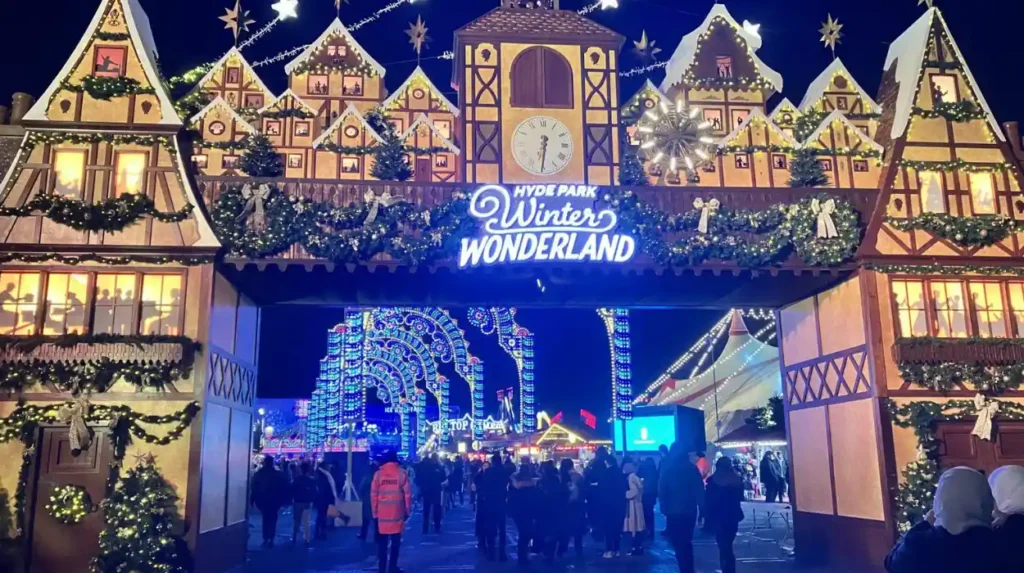
Winter highlights London’s ceremonial identity through Christmas traditions, royal architecture, illuminated streets, historic markets, religious celebrations, and seasonal performances. Many customs originated during the Medieval period, expanded under the Victorian monarchy, and continue as nationally significant cultural traditions.
Winter traditions occupy a central place in London’s historical identity.
Religious festivals, civic ceremonies, charitable activities, and seasonal markets have shaped urban life since the medieval period.
Victorian Christmas transformed London
Queen Victoria’s reign between 1837 and 1901 significantly influenced modern Christmas traditions.
Decorated trees, seasonal cards, charitable giving, festive shopping, and public celebrations became increasingly widespread during the nineteenth century.
London’s commercial districts developed elaborate seasonal displays that attracted residents and visitors alike.
Many contemporary winter traditions directly descend from Victorian customs.
Historic markets continue centuries of commerce
London’s markets developed from medieval trading centres serving local communities.
Several historic markets adapted successfully to changing consumer demands while preserving traditional locations and architectural features.
During winter they combine historic commercial functions with seasonal cultural activities.
These markets illustrate continuity between medieval commerce and modern retail.
Religious heritage shapes seasonal celebrations
London’s churches and cathedrals preserve centuries of religious architecture and musical traditions.
Winter services continue liturgical practices established across generations.
Historic buildings also demonstrate changes in ecclesiastical architecture following the Norman Conquest, the English Reformation, Victorian restoration campaigns, and modern conservation efforts.
Sacred music performed during winter reflects centuries of English choral development.
How have London’s seasonal traditions changed through history?
London’s seasonal traditions evolved through Roman occupation, medieval religious life, Tudor monarchy, Georgian urban expansion, Victorian industrialisation, and modern multicultural society. Each historical era introduced customs while preserving earlier traditions that continue shaping the city’s annual cultural calendar.
Seasonal traditions reflect London’s remarkable historical continuity.
Roman festivals introduced civic celebrations connected with imperial administration.
Medieval London incorporated Christian feast days, agricultural markets, and guild ceremonies.
The Tudor monarchy expanded royal pageantry and court celebrations.
Georgian London added public pleasure gardens, scientific societies, and organised entertainment.
Victorian industrialisation transformed leisure through museums, railways, public parks, department stores, and seasonal tourism.
Modern London has incorporated global cultural influences while preserving historic ceremonies.
Rather than replacing previous customs, successive generations adapted existing traditions to changing political, economic, and social conditions.
This historical layering distinguishes London from cities whose traditions developed over shorter periods.
Which historic locations provide memorable experiences throughout the entire year?
Several London landmarks remain historically significant regardless of season because they preserve Roman archaeology, medieval fortifications, royal government, religious architecture, scientific achievement, and cultural institutions. These sites demonstrate continuous historical importance independent of seasonal weather or annual celebrations.
Some historic places maintain equal relevance during every season.
The City of London preserves Roman street patterns alongside medieval churches and financial institutions.
Westminster represents Britain’s constitutional development through Parliament, royal buildings, and religious monuments.
Greenwich illustrates maritime history, astronomy, navigation, and scientific innovation.
Southwark preserves London’s theatrical and commercial heritage extending back to Roman settlement.
Kensington reflects royal residence, museum development, and Victorian urban planning.
The Thames connects these districts while illustrating London’s geographical continuity across two millennia.
Each location contributes different evidence for understanding London’s historical development.
Why do London’s historic parks and public spaces remain globally significant?
London’s parks and public spaces demonstrate centuries of urban planning, environmental conservation, royal patronage, and democratic access. Their preservation illustrates how historic landscapes continue supporting biodiversity, recreation, education, and cultural identity within one of the world’s largest metropolitan regions.
Public parks transformed London’s quality of life.
Rapid urban growth during the eighteenth and nineteenth centuries increased demand for accessible green space.
Government authorities, royal estates, and philanthropic organisations expanded public access to landscaped environments that had previously served private or aristocratic purposes.
These parks now support millions of annual visits while preserving historic monuments, designed landscapes, archaeological evidence, and ecological habitats.
Conservation programmes balance heritage protection with contemporary recreational needs.
Climate adaptation initiatives also ensure that historic landscapes remain resilient for future generations.
London’s experience has influenced urban park development worldwide.
How do seasonal experiences help visitors understand London’s history?
Seasonal experiences reveal London’s historical evolution by connecting architecture, landscapes, traditions, ceremonies, museums, waterways, and public spaces within their historical context. Observing the city throughout different seasons demonstrates how nearly two thousand years of continuous development shaped modern London.
London’s history cannot be understood through individual landmarks alone.
Seasonal exploration reveals relationships between geography, monarchy, religion, commerce, science, architecture, and public life.
Spring illustrates botanical innovation and landscape design.
Summer highlights riverside commerce, outdoor heritage, and ceremonial traditions.
Autumn emphasises scholarship, archaeology, literature, and museum collections.
Winter preserves religious customs, civic celebrations, and Victorian festive culture.
Together these experiences create a comprehensive understanding of London’s historical identity.
The city’s enduring appeal results from continuity rather than reinvention. Roman foundations remain beneath financial districts. Medieval churches stand beside modern skyscrapers. Royal parks preserve Tudor landscapes within contemporary neighbourhoods. Victorian museums continue educating global audiences. Historic markets still support commerce centuries after their establishment.
For tourists, educators, historians, and researchers, experiencing London across every season provides a deeper appreciation of Britain’s capital as a living historical landscape. Each visit reveals another layer of the city’s development, demonstrating how centuries of preservation, adaptation, and public engagement continue shaping one of the world’s most historically significant urban environments.
What is the best season to visit London for first-time tourists?
Spring and summer are generally the best seasons for first-time visitors because the weather is milder, parks are in bloom, outdoor attractions are fully open, and longer daylight hours allow more sightseeing. However, every season offers unique historical and cultural experiences.