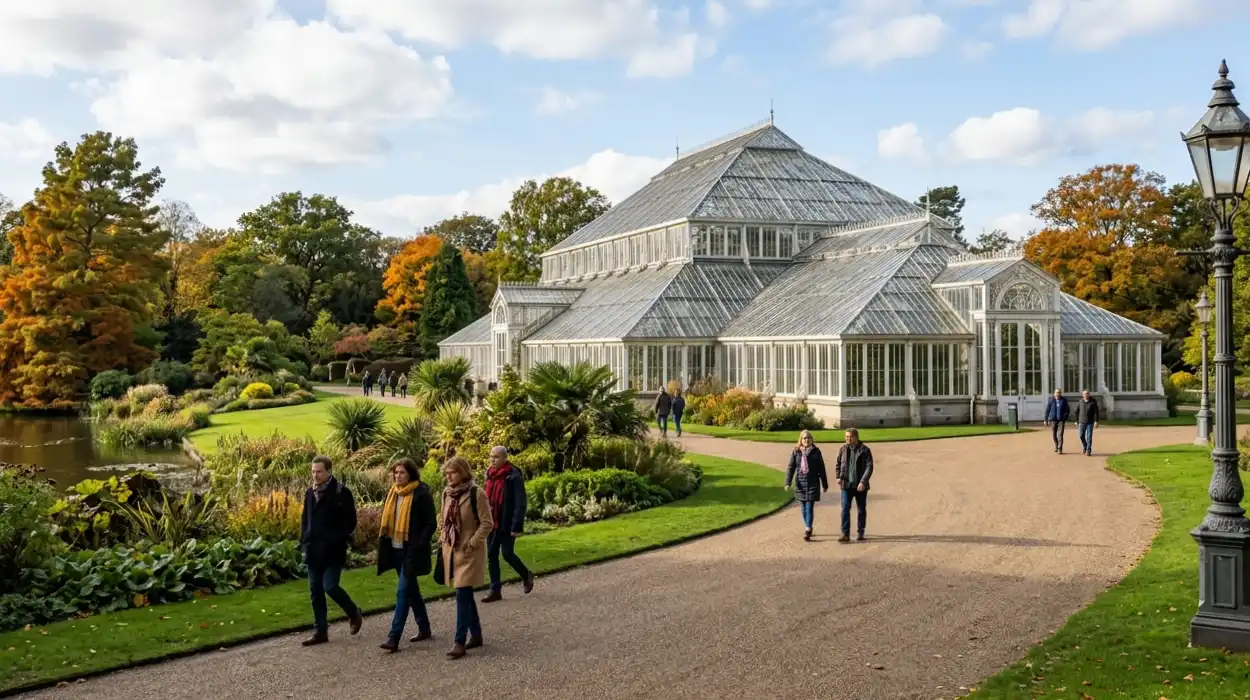
Kew Gardens is the Royal Botanic Gardens, Kew, a scientific and public botanic garden located in Kew, Richmond, southwest London, with an address in postcode TW9.
Kew Gardens is a scientific institution founded in the 18th century and designated a UNESCO World Heritage Site for its historic landscapes, glasshouses, and collections. The site covers roughly 330 acres (134 hectares) and includes landscape gardens, specialised glasshouses, plant research facilities, and the Herbarium that together hold about 7 million preserved specimens and more than 50,000 living plant species.
- When is the best time to visit Kew Gardens?
- What are Kew’s principal historical milestones?
- What are the key components and public features at Kew Gardens?
- How do Kew’s plant collections and scientific resources function?
- What seasonal highlights should visitors expect each season?
- How should visitors plan a seasonal visit to maximise their experience?
- What are practical visitor details and accessibility provisions?
- How does Kew contribute to plant conservation and research?
- What events, exhibitions and programmes run seasonally at Kew?
- What are notable collections and research outputs to reference?
- How does Kew manage climate change and future relevance?
- What are representative visitor examples and statistics?
- How should writers and publishers cite Kew facts and update evergreen content?
When is the best time to visit Kew Gardens?
The best time depends on the visitor’s interest: spring for blossom (mid‑March–mid‑April), summer for borders and glasshouses (June–August), autumn for tree colour (September–November), and winter for light trails and bare‑branch structure (November–February).
Kew publishes seasonal highlights and event schedules that identify peak windows for magnolias, cherry blossom, bluebells and spring bulbs, peak summer borders and meadow displays, autumn foliar displays and seed heads, and winter installations including the Kew Christmas light trail. Visit planning should consider opening times, special-event dates, and crowding: spring blossom and summer weekends are busiest, while autumn weekdays are quieter.
What are Kew’s principal historical milestones?
Kew’s history dates from the 18th century, with key milestones including royal patronage under King George III, the foundation of Kew’s scientific institutions in the 19th century, and UNESCO inscription in 2003.
Kew began as a royal estate in the 1700s, expanded scientific work in the 1800s with botanical exploration and the establishment of the Herbarium, and built landmark structures such as the Palm House (completed 1848) and Temperate House (restored and reopened 2018) that reflect Victorian glasshouse engineering and global plant exchange networks. The institution’s role in plant taxonomy, conservation, and seed banking grew across the 20th and 21st centuries, establishing Kew as both a public garden and a global research centre.
What are the key components and public features at Kew Gardens?
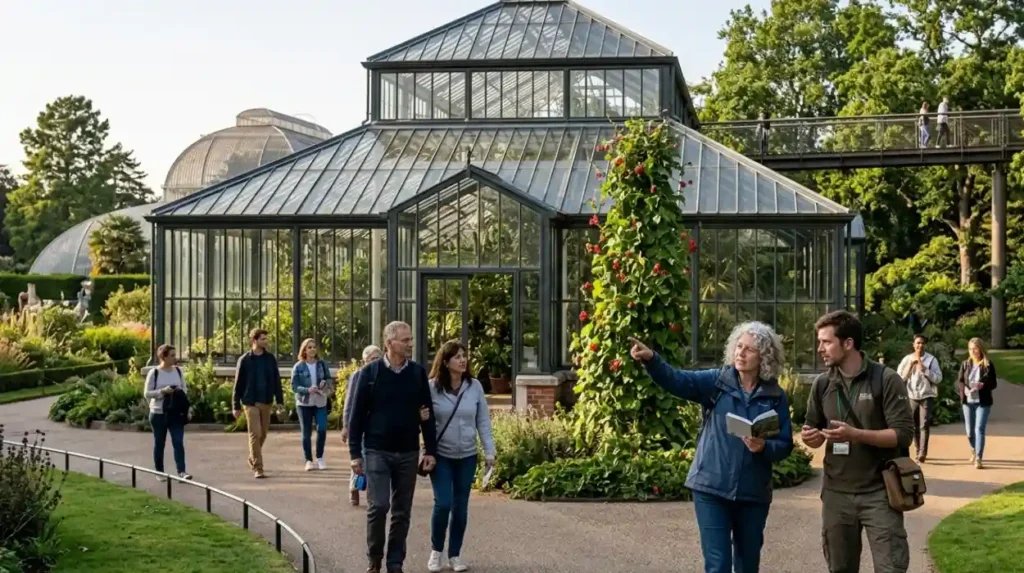
Key components include landscape gardens, the Palm House, Temperate House, Princess of Wales Conservatory, the Herbarium, library and archives, treetop walkway, and Wakehurst estate; each component hosts specific plant collections and exhibits.
The Palm House holds tropical plant collections that require humidity and warmth; the Temperate House contains rare temperate-zone plants in a restored Victorian structure; the Princess of Wales Conservatory houses ten climatic zones with orchids, cacti and carnivorous plants; the Herbarium stores millions of preserved specimens for taxonomy and research; Wakehurst—Kew’s partner country estate in West Sussex—houses wild plant collections, the Millennium Seed Bank and large conservation landscapes. These components support public displays, specialist tours, educational programmes and scientific research simultaneously.
How do Kew’s plant collections and scientific resources function?
Kew’s living collections, preserved Herbarium specimens, seed bank and botanical research groups function through plant acquisition, identification, documentation, conservation and public display as an integrated scientific system.
Kew researchers conduct taxonomy, genetics, conservation assessments and seed banking; the Millennium Seed Bank Partnership stores seed samples to conserve plant genetic diversity worldwide; herbarium specimens provide historical records used in species description and climate change studies; living collections allow horticultural research, public education and phenological tracking (the study of seasonal plant events). Data from these resources feed international databases used by conservationists, horticulturists and policy makers.
What seasonal highlights should visitors expect each season?
Spring features cherry blossom, magnolias, tulips and bluebells (mid‑March–mid‑April); summer features herbaceous borders, wildflower meadows and glasshouse peak displays (June–August); autumn features tree colour and seed heads (September–November); winter features structural gardens, conservatory interest and the annual light trail (November–January).
Spring bloom windows are precise: magnolias and cherries peak from mid‑March to early April, and Kew runs blossom view events and guided walks during that window. Summer brings peak flowering in borders and long days for exploring glasshouses, and Kew schedules outdoor concerts and family programmes in the summer months. Autumn is prized for broad colour palettes across the arboretum and thinning crowds; winter focuses on architectural plants, conservatory species adapted to cool seasons, and Kew’s ticketed illuminated trail during selected November–January dates.
How should visitors plan a seasonal visit to maximise their experience?
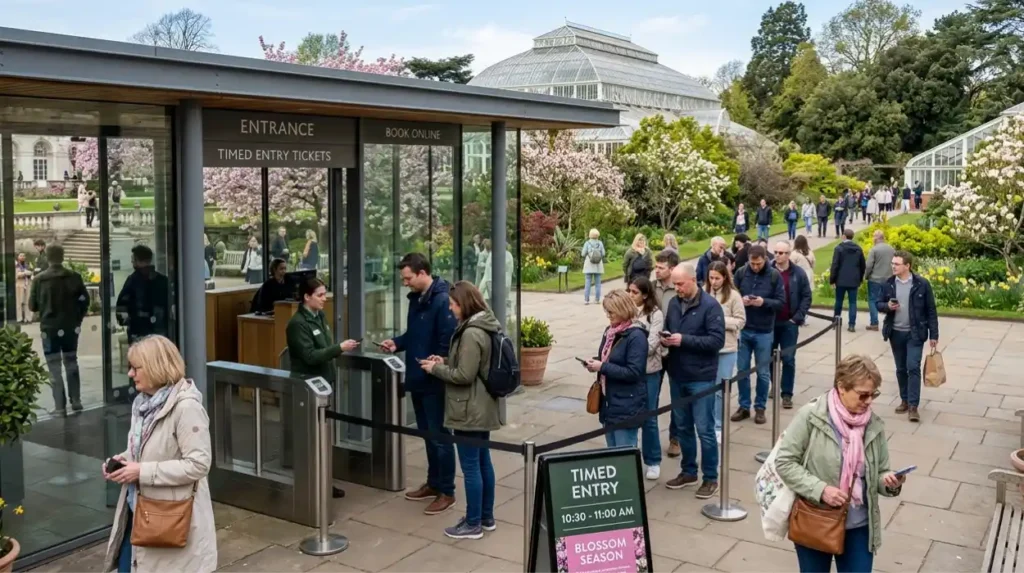
Plan by selecting desired seasonal highlights, book timed-entry tickets online, arrive on weekdays for fewer crowds, allocate at least 3–4 hours for the main Kew site, and check event pages for temporary exhibitions and access changes.
Kew uses timed-entry ticketing to manage visitor flow and also posts operating hours and special-event dates online; visitors should reserve tickets in advance for popular windows such as the blossom season and the winter lights. Allocate time: a focused visit to core glasshouses and the treetop walkway requires roughly 3–4 hours; a full exploration, including the galleries, café stops, and longer walks, requires 5–6 hours. Travel options: Kew is accessible by District Line to Richmond / Kew Garden stations, by London Overground to Kew Bridge, and by local bus services; parking is limited, so public transport or cycling is preferable.
What are practical visitor details and accessibility provisions?
Kew Gardens publishes seasonal opening hours and accessibility information, provides step‑free access to many buildings, mobility scooters for hire, and facilities including cafés, restrooms, and stroller‑friendly routes.
Kew’s map and website outline wheelchair‑accessible routes, accessible toilets, quiet spaces for sensory needs, and specific accessibility information for the Palm House, Temperate House and other buildings; some historic structures retain restricted access due to conservation—check Kew’s official accessibility pages for precise details and prebook mobility aids where needed. Walkway surfaces vary; bring appropriate footwear for wet or uneven paths during winter and autumn.
Explore More London Local News
Mouse Poo Shuts Ark Atwood Kitchen in Westminster 2026
Tower Hamlets Seeks Contractors for £500m Retrofit Programme; Tower Hamlets 2026
How does Kew contribute to plant conservation and research?
Kew contributes through taxonomy, the Herbarium, the Millennium Seed Bank Partnership, conservation programmes, and public science communication that supports policy and species recovery worldwide.
The Millennium Seed Bank stores seeds from threatened plant species to prevent extinction and supports restoration projects globally; Kew’s taxonomists describe species, maintain type specimens in the Herbarium, and publish research used in IUCN Red List assessments and national conservation frameworks. Kew’s public programmes translate research into educational displays and citizen science projects, connecting scientific outcomes to community action.
What events, exhibitions and programmes run seasonally at Kew?
Kew runs seasonal exhibitions, guided walks, family activities, scientific talks, and ticketed events such as the spring blossom walks and winter illuminated trail; schedules change annually and are published on Kew’s events pages.
Examples include guided blossom‑viewing walks in spring, summer family trails and botanical workshops, autumn plant‑science talks, and the winter Christmas light trail that operates on selected nights from mid‑November through early January. Temporary exhibitions tell themes of plant science, art and history and often occupy galleries and outdoor sites; check Kew’s “What’s On” calendar for exact dates and booking requirements.
Explore More London Local News
Northfield Tops Voter Turnout in Ealing Council Elections 2026
Hackney Green Councillor James Tilden Quits Over Rules Breach, Hackney 2026
What are notable collections and research outputs to reference?
Notable collections include the Temperate House’s rare temperate species, the Palm House’s tropical collection, the Herbarium’s 7 million specimens, and the Millennium Seed Bank’s global seed repository; research outputs include taxonomic monographs, conservation assessments, and seed‑conservation studies.
Kew’s Herbarium and library support botanical scholarship with historical plant records, expedition archives and specimen datasets; the Temperate House houses rare species like Encephalartos (cycads) and other conservation‑priority plants, while Palm House collections support tropical ecology research. Publications from Kew scientists appear in peer‑reviewed journals and feed into global plant databases used by conservation practitioners.
How does Kew manage climate change and future relevance?
Kew addresses climate change by researching plant resilience, conserving genetic diversity through the Seed Bank, monitoring phenological shifts, and adapting horticulture and landscape management to new climatic norms.
Kew scientists track phenology (flowering and leaf‑out dates) to document climate‑driven shifts and publish data for global analyses; the Millennium Seed Bank prioritises species threatened by climate change and habitat loss, and Kew’s research informs restoration guidelines and urban planting strategies that increase resilience in landscapes and cities. These activities position Kew as a continuing resource for adaptation policies and biodiversity conservation.
What are representative visitor examples and statistics?
Kew holds over 50,000 living plants and around 7 million preserved herbarium specimens; visitor numbers vary annually but reach millions across the estate and Wakehurst combined, with peak attendance in spring and summer months.
Kew’s living collections figure is commonly cited as “over 50,000” distinct plant species or samples, and the Herbarium total is about 7 million preserved specimens, both used in institutional statements and public materials; Wakehurst receives additional visitors and hosts the Millennium Seed Bank, expanding Kew’s reach beyond the main London site. Kew’s official pages provide current attendance figures and annual reports for precise yearly visitor statistics.
How should writers and publishers cite Kew facts and update evergreen content?
Use Kew’s official site, academic publications from Kew staff, UNESCO documentation, and the Millennium Seed Bank materials as primary sources; update seasonal details annually and verify event dates before publishing.
Cite Kew’s official pages for opening hours, seasonal highlights, and event schedules; cite peer‑reviewed papers or Kew research outputs for scientific claims and the UNESCO World Heritage listing for historic status. Refresh seasonal windows, ticketing rules and event listings at least twice per year to maintain evergreen accuracy.
What is Kew Gardens?
Royal Botanic Gardens, Kew is a UNESCO World Heritage Site and scientific botanic garden in southwest London covering about 330 acres with glasshouses, gardens, and global plant collections.