Notting Hill’s quieter corners reveal historic mews, private gardens, independent museums, and local cultural venues that showcase the neighbourhood’s architecture, community life, and creative economy beyond Portobello Road Market.
- What hidden streets and mews should visitors see in Notting Hill?
- Where are Notting Hill’s private communal gardens, and how are they accessed?
- What cultural venues exist off Portobello’s main strip?
- What independent shops, cafés, and eateries are local secrets?
- What are notable parks and green spaces near Notting Hill?
- What historical context shaped Notting Hill beyond the market?
- What museums and collections reveal Notting Hill’s material culture?
- What community institutions support local culture and events?
- How do Notting Hill’s property types and architecture vary?
- What walking routes reveal the neighbourhood’s lesser-known features?
- What are real-world examples of businesses and spots often missed by tourists?
- What data or statistics describe tourist flows versus local use?
- How do conservation rules and planning policies affect Notting Hill’s character?
- What future relevance do Notting Hill’s hidden features have for culture and tourism?
What hidden streets and mews should visitors see in Notting Hill?
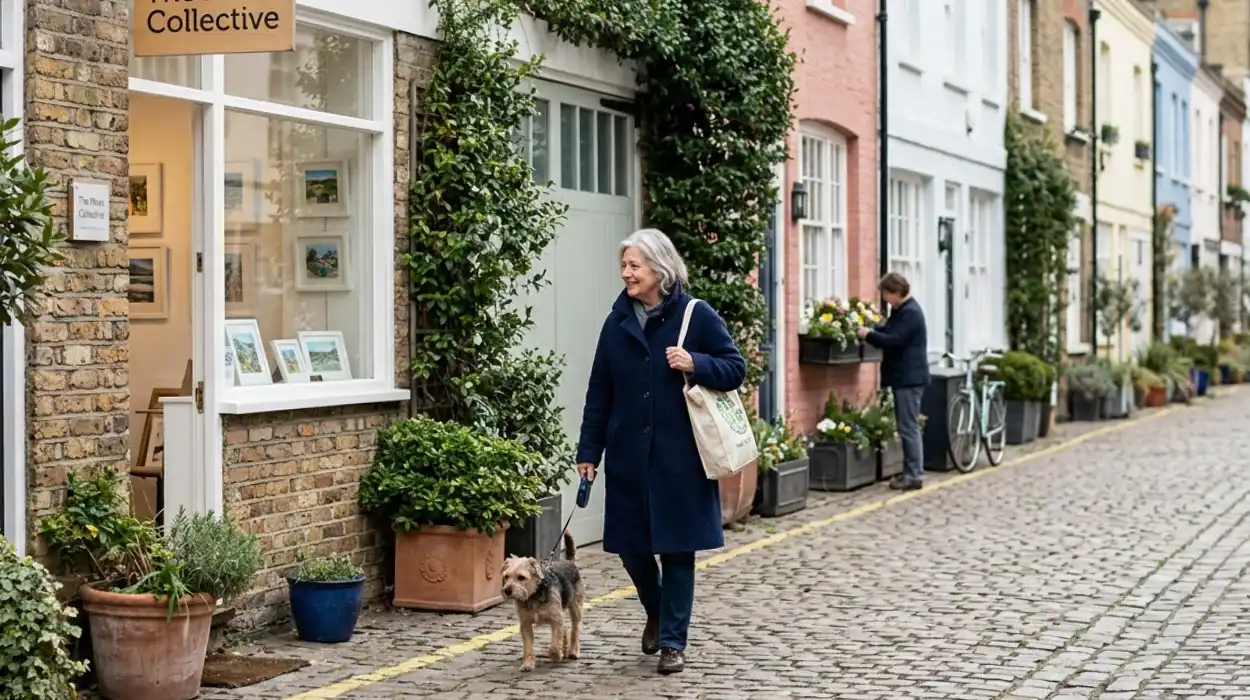
Notting Hill contains several preserved mews and lanes—St. Luke’s Mews, Colville Mews, Pembridge Mews, and Hillgate Place—that show Victorian service-street architecture and converted stables.
These mews are narrow lanes originally built as service yards and coach houses during the 19th century; they now host converted homes and small workshops, often with cobbles and period façades. St. Luke’s Mews is the most photographed because of its pastel façades and film links; Colville Mews and Pembridge Mews display restored brickwork and private entrances typical of converted stables. Hillgate Place contains Victorian cottages dating to the 1800s and illustrates local residential conservation practices.
Where are Notting Hill’s private communal gardens, and how are they accessed?
Notting Hill contains private communal gardens such as Ladbroke Square, Stanley Gardens, and Rosmead Gardens; access is restricted to residents and keyholders, reflecting 19th-century garden square planning.
These communal gardens form part of the 19th-century model of London’s garden squares, created to serve residents of surrounding stucco townhouses; Ladbroke Square is the largest in Notting Hill and remains privately managed by leasehold arrangements and resident trusts. Stanley Gardens and Rosmead Gardens are smaller examples, maintained under similar private governance and accessible only with resident permission, producing a patchwork of public and private green spaces across the neighbourhood.
What cultural venues exist off Portobello’s main strip?
Notting Hill hosts cultural venues such as The Tabernacle arts centre, Electric Cinema, the Museum of Brands, and small independent galleries that stage community arts, screenings, and collections.
The Tabernacle is a community arts centre in Powis Square offering concerts, classes, and exhibition space and functions as a local cultural hub for community programming and official events. Electric Cinema on Portobello Road is one of Britain’s oldest working cinemas, featuring luxury seating and boutique screenings that differ from mainstream multiplex programming. The Museum of Brands documents 19th- to 21st-century consumer culture with packaging, advertising, and branding exhibits; it provides curated historical context for design and commerce.
What independent shops, cafés, and eateries are local secrets?
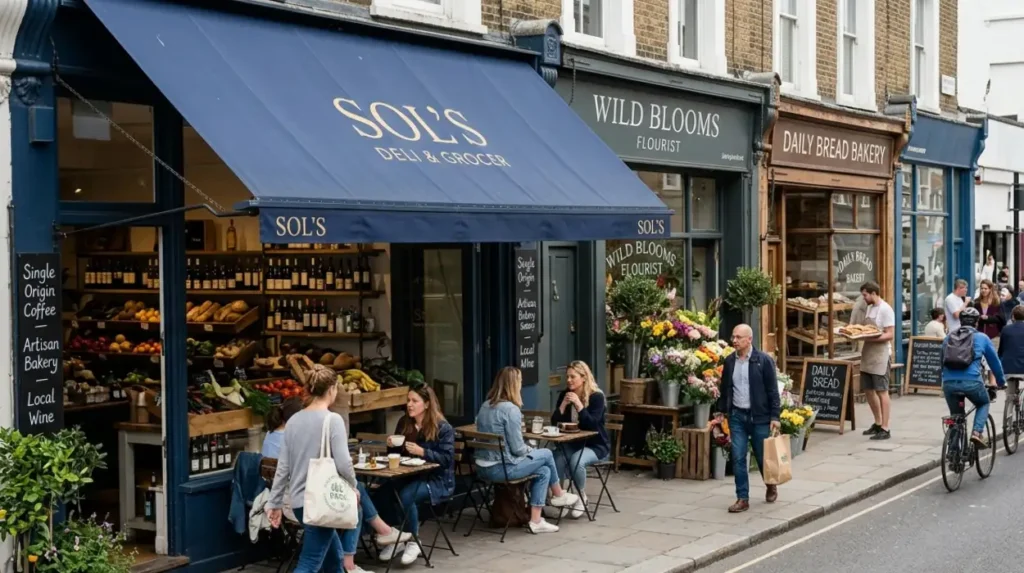
Beyond the market, Notting Hill’s Westbourne Grove and side streets contain independent wine bars, florists, single-origin cafés, and boutique delis such as Sol’s and adjacent specialist retailers.
Westbourne Grove and nearby lanes concentrate small businesses that serve residents and discerning visitors, including single‑origin coffee shops, independent bakeries, deli‑style food shops, specialist florists, and boutique wine bars; these businesses operate year-round and contribute to the local retail economy. Local operators often rotate seasonal menus and stock rare items, supporting artisan producers and forming part of Notting Hill’s food and beverage micro-economy.
What are notable parks and green spaces near Notting Hill?
Holland Park and its Kyoto Garden, as well as private garden squares, give Notting Hill substantial green space, with Holland Park providing public woodland, sports facilities, and a Japanese-style garden.
Holland Park is a municipal park featuring the Kyoto Garden (a Japanese landscape garden created in the 20th century), sports courts, playgrounds, and woodland paths; it functions as the principal public green space adjacent to Notting Hill and receives year-round local use. Private garden squares supplement public parks and preserve Victorian landscape design, maintaining biodiversity and heritage planting within the conservation area.
What historical context shaped Notting Hill beyond the market?
Notting Hill developed in the 19th century as a suburb of west London with stucco-fronted terraces, garden squares, and service mews; later 20th-century migration and cultural change created a layered social history.
The area’s physical form—stucco terraces, crescents, and garden squares—originated with Victorian-era urban expansion, reflecting London’s suburbanisation during the 1800s; mews served as coach houses and service yards for large households. In the 20th century, waves of migration, including Caribbean communities after World War II, reshaped Notting Hill’s cultural life and led to annual cultural events such as the Notting Hill Carnival, which began in 1966 as a community-led festival and remains a major cultural institution (Notting Hill Carnival is a separate, large event not limited to Portobello Road).
What museums and collections reveal Notting Hill’s material culture?
The Museum of Brands records consumer packaging and branding from the Victorian period to the present, showing social and commercial change through 20,000+ items and archive material.
The Museum of Brands curates packaging, advertising, and branded artefacts that trace technological, social, and commercial shifts across more than a century; its collection illustrates daily life and consumer trends with labelled exhibits and chronological displays. Smaller galleries and private collections in the area feature contemporary art, photography, and design shows focused on local and international practitioners.
Explore More London Local News
Compton School’s Samia Wins Barnet Youth Parliament (2026)
Croydon Men Charged in Charing Cross Tube Assault, London 2026
What community institutions support local culture and events?
Community institutions such as The Tabernacle, resident associations, and local churches host cultural programming, educational classes, and community governance activities that sustain neighbourhood cohesion.
The Tabernacle runs arts education, performance programming, and community services in Powis Square and provides studio and event space for local groups. Resident associations manage private gardens, consult on planning applications, and coordinate conservation efforts; churches and community centres provide meeting places and local social services.
How do Notting Hill’s property types and architecture vary?
Notting Hill contains stucco-fronted terraces, Victorian crescents, converted mews houses, and modern infill developments, reflecting 19th-century construction and later adaptive reuse.
Stucco terraces and crescents were built between the early and late 1800s, showing classical proportions and decorative plasterwork; mews houses are former stable blocks converted since the mid-20th century into small, high-value residences. Recent infill and renovation projects follow conservation-area controls that preserve façades while allowing internal modernisation under local planning guidance.
Explore More London Local News
Nancy Pexton Jailed for Life over Sister Jennifer Abbott’s Rolex Murder, Camden 2026
Tories Challenge Khan’s Oxford Street Plan After Westminster Win, London 2026
What walking routes reveal the neighbourhood’s lesser-known features?
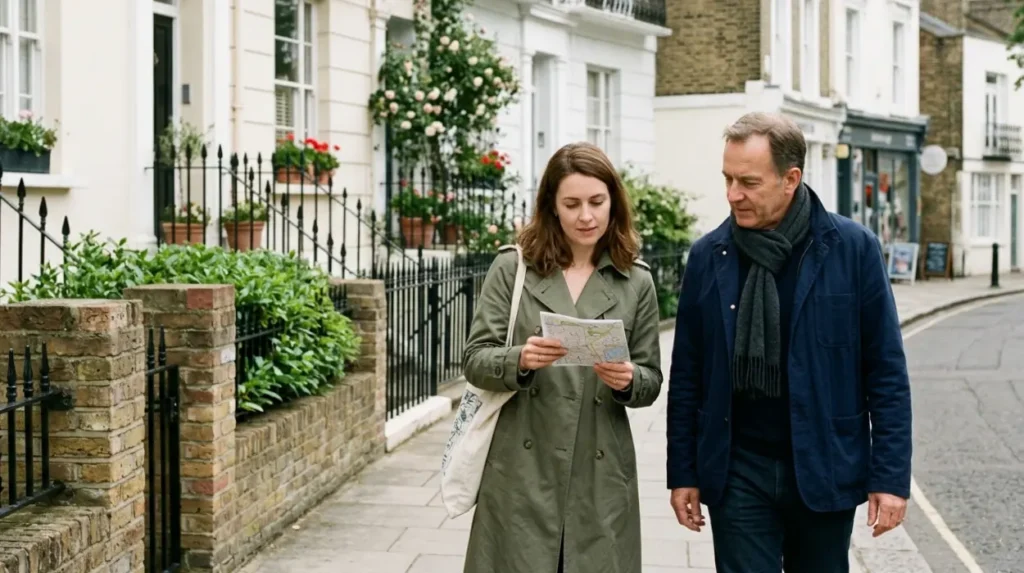
Walking from Notting Hill Gate south-west toward Holland Park and along Westbourne Grove, then into side streets like Lansdowne Crescent and Clarendon Cross, reveals mews, communal gardens, galleries, and cafés.
A typical short route: start at Notting Hill Gate station, walk west on Pembridge Road to Westbourne Grove, continue south to Lansdowne Crescent, then loop north through Colville Terrace to explore mews and residential crescents; this route traverses conservation areas and offers examples of varied street typologies and local commerce. Guided and self-guided walking tours highlight architectural details, private garden histories, and local businesses; maps and guide resources are available through local visitor information and independent publishers.
What are real-world examples of businesses and spots often missed by tourists?
Examples include Electric Cinema (historic independent cinema), The Museum of Brands (consumer culture collection), small wine bars like Sol’s, and local florists and delis on lanes off Westbourne Grove.
Electric Cinema provides a boutique screening experience with preserved interior features and premium seating, drawing cinephile audiences. The Museum of Brands houses curated brand archives and rotating exhibits that contextualise packaging design. Sol’s and similar boutique wine bars and delis operate on side streets and serve both residents and repeat visitors, representing Notting Hill’s contemporary independent retail mix.
What data or statistics describe tourist flows versus local use?
Portobello Road Market contains over 800 stalls during peak market days, while the surrounding streets remain primarily residential with year-round local commercial activity.
Portobello Road Market’s scale—reported as hundreds of stalls on busy days—creates concentrated tourist footfall on market days, while side streets and mews sustain regular resident foot traffic and local commerce. The neighbourhood’s conservation status and high residential demand produce a mix of short-term visitor peaks and long-term resident patterns in retail turnover and footfall distribution.
How do conservation rules and planning policies affect Notting Hill’s character?
Conservation-area designations and local planning controls require preservation of façades, limit demolition, and manage change in Notting Hill to retain historic character and streetscape continuity.
Local planning authorities enforce conservation-area policies that protect stucco terraces, garden squares, and mews, requiring listed-building consent for alterations to designated structures and controlling new development to match historic scales. These policies maintain architectural continuity, influence property renovation costs, and support heritage tourism by preserving visible historic fabric.
What future relevance do Notting Hill’s hidden features have for culture and tourism?
Notting Hill’s preserved mews, private gardens, and small cultural venues provide sustainable, year-round visitor experiences that diversify tourism beyond weekly markets and support local creative economies.
Shifting tourism strategies emphasise dispersed, low-impact visits that use walking routes, museums, and small venues to reduce congestion on Portobello Road and maintain local quality of life; permanent cultural venues and independent retailers generate recurring local income and preserve neighbourhood identity. Conservation policies and community-led programming underpin long-term cultural resilience and heritage preservation.
What hidden streets and mews should visitors explore in Notting Hill?
Visitors should explore St. Luke’s Mews, Colville Mews, Pembridge Mews, and Hillgate Place for Victorian mews architecture, cobbled lanes, and converted stable houses.