Key Points
- New Enforcement Powers: Camden Council has approved a Public Spaces Protection Order (PSPO) granting police and council enforcement officers the authority to tackle alcohol-fueled anti-social behaviour (ASB).
- Financial Penalties: Individuals who refuse requests to stop drinking or hand over alcohol face a £100 fixed penalty notice, which reduces to £60 if paid within 14 days.
- Scope and Exemptions: The measures apply borough-wide but exclude Hampstead Heath, which is governed by the City of London Corporation, and the forecourts of licensed premises.
- Political Context: The policy represents the first major legislative decision enacted under the leadership of Camden Council’s newly appointed leader, Councillor Sagal Abdi-Wali.
- Public and Historical Precedent: The order comes after a public consultation showed 78 per cent resident support, reviving controls that previously lapsed in 2020.
- Public Health Debates: Health advocates and medical institutions have contested the concept of “responsible drinking” used in the policy, citing alcohol’s status as a Group 1 carcinogen.
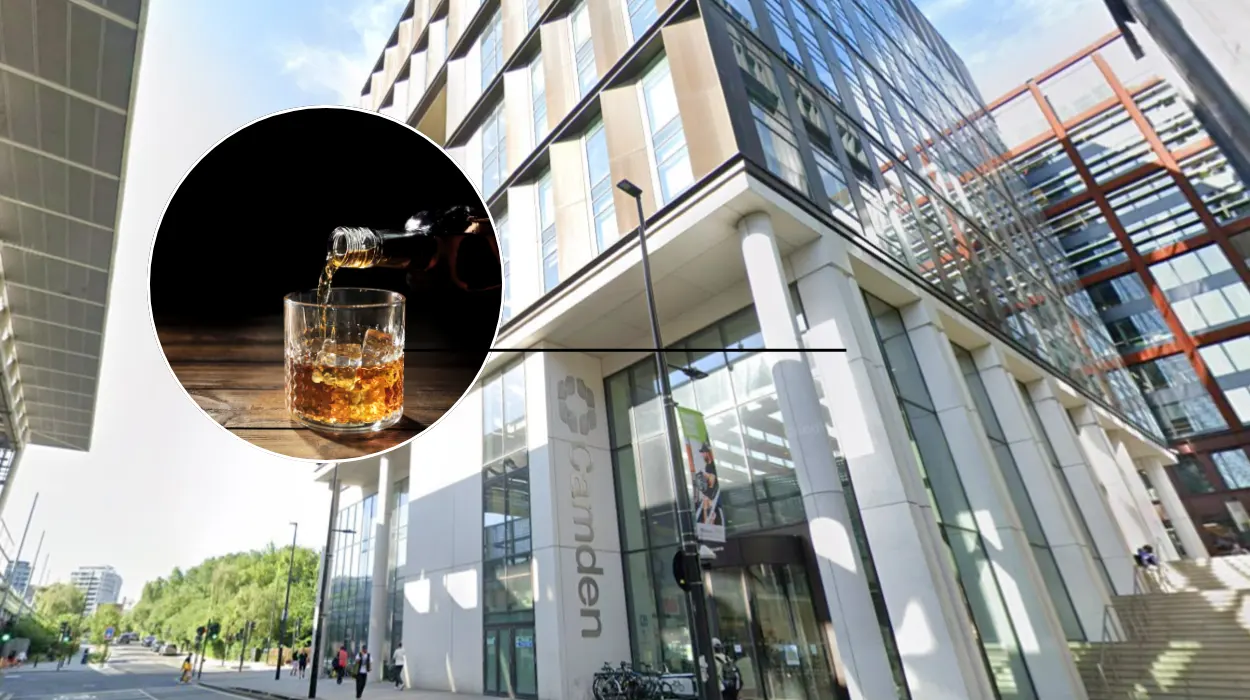
Camden (Extra London News) June 15, 2026 – Street drinkers across the London Borough of Camden face fixed penalty notices of up to £100 following the local authority’s decision to implement strict new enforcement powers targeting alcohol-related anti-social behaviour. The Public Spaces Protection Order (PSPO), formally ratified by senior politicians on Tuesday 9 June, empowers both Metropolitan Police officers and council enforcement teams to intervene when public drinking disrupts the community. Under the newly approved legal framework, officials can order individuals to cease drinking immediately and confiscate containers of alcohol, or any liquids suspected to be alcohol, from persons engaging in disruptive actions.
- Key Points
- What Do the New Enforcement Powers Mean for Public Spaces?
- Who is Leading Camden Council Through This Regulatory Shift?
- How Do Senior Politicians Justify the Reintroduction of Fines?
- Where Exactly Will the New Drinking Restrictions Apply?
- Why Did the Council Revive Powers That Lapsed in 2020?
- What Does Medical Evidence Say About ‘Responsible Drinking’?
- How Does the New Policy Intersect with Camden’s 2025 Night-Time Economy Plan?
The implementation of the PSPO, scheduled to take effect in July 2026, marks a decisive return to public drinking controls within the north London borough. It serves as the initial landmark policy approved during the first official cabinet session presided over by the newly selected leader of Camden Council, Councillor Sagal Abdi-Wali, who assumed the political headship of the Town Hall following local political changes. The intervention has been positioned by local authorities as an essential instrument to address long-standing community concerns regarding crime, intimidation, and rowdy behaviour linked heavily to the local evening and night-time economy.
While the regulation addresses widespread public concern, it highlights an underlying policy tension between economic revitalization and municipal enforcement. It arrives just a year after Camden Council revised its formal Licensing Policy in 2025 to actively expand operating hours and foster growth within its hospitality sector. Simultaneously, the wording of the measure has drawn broader scrutiny from public health experts who challenge the municipal premise of “responsible drinking,” highlighting independent medical data that underscores the carcinogenic risks inherent to any level of alcohol consumption.
What Do the New Enforcement Powers Mean for Public Spaces?
The newly approved Public Spaces Protection Order is designed to function as a targeted enforcement mechanism rather than an absolute prohibition on public alcohol consumption. According to the legislative framework established under the Anti-Social Behaviour, Crime and Policing Act 2014, the order explicitly targets the intersection of public drinking and localized disruption. Enforcement personnel do not possess the authority to penalise peaceful citizens drinking in public parks; instead, their powers are triggered strictly when an individual’s alcohol consumption coexists with demonstrable anti-social behaviour.
As reported by Josef Steen of The Standard, the legislative measures grant police constables, police community support officers, and authorised council enforcement teams two specific operational directives. First, they may demand that an individual immediately stop consuming alcohol in a restricted public space. Second, they are legally empowered to confiscate any opened or sealed containers of alcohol, as well as any alternative substances that officers reasonably believe to be alcohol. Any seized material is subsequently subject to immediate disposal by the inspecting officers.
A failure to comply with either a directive to stop drinking or a demand to surrender a container constitutes an immediate breach of the PSPO conditions. Individuals found in breach will automatically receive a Fixed Penalty Notice (FPN) of £100. To incentivize swift resolution and reduce administrative burdens on local courts, the penalty framework integrates a mitigation clause: if the fine is settled within 14 days of issuance, the total liability is reduced to £60. Those who refuse to pay the fixed penalty face the prospect of formal prosecution through the magistrates’ court system.
Who is Leading Camden Council Through This Regulatory Shift?
The ratification of the anti-social behaviour policy coincided directly with a historical transition at the highest level of Camden’s municipal governance. The cabinet session on Tuesday 9 June represented the first formal legislative meeting chaired by Councillor Sagal Abdi-Wali since she officially took over the leadership of the council. Her ascension followed a highly competitive selection process within the local Labour group after the preceding council leader, Richard Olszewski, unexpectedly lost his seat during municipal elections.
As documented by political correspondent Josef Steen for The Fitzrovia News, Councillor Abdi-Wali secured her leadership mandate in a closely contested internal election, ultimately prevailing over fellow cabinet member Councillor Adam Harrison. Born in Somalia, Abdi-Wali arrived in the United Kingdom as a child refugee, making her subsequent appointment a historic milestone as she became the first Black woman to serve as the leader of Camden Council. Upon stepping into the leadership role, she initiated a structural cabinet reshuffle, designating Councillor Patricia Callaghan to oversee the community resilience brief as deputy leader and appointing Councillor Adam Harrison to lead the safer communities portfolio as co-deputy.
The rapid adoption of the PSPO highlights the priority the new administration places on street-level governance and visible community safety. For the newly installed leadership, the order represents a practical test of balancing the social preservation of the borough against the demands of its diverse resident and business populations.
Explore more Camden News:
Nancy Pexton Guilty of Murdering Sister Jennifer Abbott Dauward: Camden 2026
Man Charged With Murder of Nahom Medhanie in Camden 2026
How Do Senior Politicians Justify the Reintroduction of Fines?
Municipal leaders have defended the introduction of the £100 fines by emphasizing that the policy is designed to isolate and deter a disruptive minority rather than penalize the general population. The administration has sought to reassure the public that the borough remains open to leisure, tourism, and responsible outdoor socialization.
As reported by the Local Democracy Reporting Service, Councillor Patricia Callaghan, deputy leader and cabinet member for community resilience, provided a detailed defense of the strategy during the cabinet presentation, stating:
“We know that the majority of alcohol consumption in Camden is carried out in a responsible way. We want people to enjoy themselves, and it doesn’t have a negative impact on our community. Where there are community concerns around anti-social behaviour associated with some alcohol consumption, we hope that this PSPO will help to alleviate these issues.”
The administration’s messaging emphasizes geographic precision and operational proportionality over broad-brush prohibition. This approach was further reinforced by the borough’s community safety chief following the formal passage of the legislation. As reported by The Standard, Councillor Adam Harrison, cabinet member for safer communities and deputy leader, issued an official statement on Wednesday 10 June to clarify the exact intent behind the deployment of the order:
“This isn’t about a casual drink in the park with friends, this is about clamping down on anti-social and irresponsible drinking that we know negatively impacts residents, businesses, and visitors in Camden. Our enforcement officers patrol the borough seven days a week, deterring criminals and looking out for your safety. If you have concerns about anti-social behaviour in your area, we’re here for you and urge you to report it. Every report matters and will be taken seriously.”
Where Exactly Will the New Drinking Restrictions Apply?
The geographical jurisdiction of the Public Spaces Protection Order spans across nearly the entirety of Camden’s administrative boundaries, but it incorporates critical structural and territorial exemptions. To preserve the commercial viability of the hospitality sector, the cabinet member report explicitly confirms that the regulations will not apply to any individuals standing within the immediate forecourts or designated outdoor seating areas of licensed premises. The council stated that this exclusion was deliberately designed to “strike a balance between promoting a vibrant and inclusive night-time economy” and controlling the “anti-social behaviour associated with some alcohol consumption.”
Furthermore, a significant geographic exemption exists regarding Hampstead Heath. Although the massive green space is situated topographically within the northern sector of the Camden borough, it does not fall under the local authority’s regulatory jurisdiction. Hampstead Heath is managed, financed, and legally governed by the City of London Corporation. Consequently, Camden’s council enforcement officers lack the statutory powers to enforce the PSPO within the boundaries of the Heath, leaving it subject to separate open-spaces bylaws managed by the City Corporation.
Beyond these specific exemptions, the order covers all standard public highways, pavements, council-managed parks, housing estates, and open squares. Based on comprehensive feedback gathered during the local authority’s statutory public consultation, enforcement resources will be disproportionately directed toward documented municipal hotspots. Residents repeatedly identified Camden Town centre, Tottenham Court Road, and the historic streets of Fitzrovia as the primary urban zones where alcohol-fueled disruptions frequently occur.
Why Did the Council Revive Powers That Lapsed in 2020?
The introduction of the 2026 PSPO represents a reinstatement of local regulatory history rather than an entirely new policy initiative. Camden Council had previously enacted identical borough-wide controls on public drinking in 2015 to manage the challenges associated with its international nightlife reputation. However, under federal statutory guidelines, PSPOs carry a strict legal sunset clause of three years unless formally renewed. Camden’s original public drinking controls lapsed entirely in 2020, a period marked by shifting municipal priorities during the global health crisis.
Following the expiration of the 2020 orders, the local authority documented a steady and persistent rise in community complaints. According to official cabinet reports, the borough experienced “regular” and escalating concerns regarding localized anti-social behaviour and street crime directly connected to the nightlife ecosystem. Incidents reported to the council included public urination, loud music, rowdy congregations blocking pavements, and instances where independent municipal contractors were physically prevented from locking public park gates at sunset due to groups of intoxicated individuals refusing to vacate the premises.
The decision to reactivate these powers was heavily driven by a public consultation carried out by the council earlier this year. The consultation engaged nearly 200 local residents and community stakeholders, revealing a clear consensus for intervention: 78 per cent of respondents voted in support of reinstating the restrictive measures. A significant portion of the consultation feedback contained detailed testimonies regarding safety; multiple respondents reported facing aggressive and intimidating behaviour while navigating the borough, specifically citing instances of drunk men subjecting women and girls to street harassment and verbal abuse.
How Does Camden’s Anti-Social Behaviour Compare Globally to Other Boroughs?
The escalation of alcohol-fueled public disruption is not unique to Camden; rather, it reflects a wider urban management strategy deployed across Greater London. The vast majority of London’s 32 municipal boroughs have already implemented similar public space restrictions to manage street drinking. Camden’s immediate geographic neighbours—namely the London Borough of Haringey, the London Borough of Islington, and the City of Westminster—all maintain active PSPOs targeting public intoxication and rowdy behavior.
| London Borough | Recorded ASB Incidents (May 2025 – April 2026) | Regional ASB Crime Ranking | Active Alcohol PSPO Status |
| Westminster | 13,641 | 1st | Active |
| Camden | 9,117 | 8th | Approved (July 2026 Launch) |
| Haringey | Not Disclosed | Variable | Active |
| Islington | Not Disclosed | Variable | Active |
Statistical data compiled by the Metropolitan Police Service provides clearer context regarding the scale of the challenges confronting Camden’s new leadership. Between May 2025 and April 2026, the Metropolitan Police recorded a total of 9,117 distinct incidents of anti-social behaviour within Camden’s borders. This volume positions Camden as the eighth highest borough for reported ASB out of all 32 local authorities in Greater London. By comparison, the neighbouring City of Westminster recorded the highest volume of anti-social disruption in the entire metropolis during the exact same twelve-month period, accumulating 13,641 separate incidents.
What Does Medical Evidence Say About ‘Responsible Drinking’?
While Camden Council’s legislative strategy relies on drawing a distinction between “responsible” and “irresponsible” alcohol consumption, international medical bodies reject this terminology. Public health institutions maintain that any policy framework based on the concept of safe or responsible drinking ignores modern oncological and biochemical realities.
According to formal global medical classifications, alcohol is classified explicitly as a Group 1 carcinogen—putting it in the same high-risk category as asbestos, radiation, and tobacco. Epidemiological studies verified by the World Health Organization indicate that there is no scientifically identifiable “safe level” of alcohol consumption regarding cancer development. Medical research confirms that even habitual consumption characterized by the public or the industry as “light” or “moderate” directly contributes to the development of at least seven distinct classifications of cancer, including breast, bowel, esophageal, and oral cancers.
This medical reality has fueled a structural critique of local government policy approaches. Public health advocacy groups argue that by enshrining the phrase “responsible drinking” into legal codes like the PSPO, local authorities inadvertently perpetuate a corporate narrative developed by the alcohol industry. Experts from the Institute of Alcohol Studies (IAS) have frequently noted that the notion of a “responsible drinker” was systematically created by commercial alcohol producers to shift the ethical accountability of alcohol harm from the product itself onto the behavior of the individual consumer. The IAS maintains that a fundamental, irreconcilable conflict of interest persists between the economic growth objectives of the multi-billion-pound alcohol industry and the statutory health goals of public Camden Council Imposes £100 Fines for Public Drinking: London 2026
.
How Does the New Policy Intersect with Camden’s 2025 Night-Time Economy Plan?
The introduction of the PSPO reveals a complex policy overlap with the borough’s economic strategies. In 2025, just one year prior to approving the new fines, Camden Council underwent a comprehensive revision of its formal Statement of Licensing Policy. The explicit objective of that 2025 revision was to liberalize regulatory frameworks, expand operational “framework hours” for late-night venues, and actively remove bureaucratic barriers to allow the hospitality, entertainment, and evening sectors to grow.
The 2025 licensing overhaul was championed as a vital post-pandemic economic recovery package designed to maintain Camden’s global standing as a hub for live music, theatre, and culinary tourism. However, the subsequent rise in recorded anti-social behaviour highlights the secondary effects of an expanded night-time economy. The local authority now finds itself managing an intricate dual strategy: its economic departments are tasked with attracting thousands of late-night visitors to localized entertainment hubs, while its safer communities teams are simultaneously tasked with deploying enforcement officers to penalise the street-level disruptions generated by that very expansion.
The approved PSPO will remain active for an initial fixed term of three years. As the July implementation date approaches, council enforcement officers and Metropolitan Police teams are finalized to deploy under the updated legal guidelines. Before the order reaches its scheduled expiration in 2029, the leadership team under Councillor Sagal Abdi-Wali will be required to conduct a thorough data review to determine whether the £100 fines have successfully curbed street disruption, or if further structural interventions are required to balance Camden’s nightlife with the safety of its residents.