Afternoon tea is one of London’s most enduring cultural traditions. It combines hospitality, culinary heritage, architecture, and social history into a ritual that continues to attract millions of visitors every year. Across London’s historic hotels, department stores, museums, and heritage venues, afternoon tea preserves Victorian customs while adapting to contemporary tastes.
- What is traditional afternoon tea, and why is it important to London’s heritage?
- Which historic hotels preserve London’s classic afternoon tea tradition?
- Why is Fortnum & Mason considered one of London’s most iconic tea destinations?
- Which London museums and heritage venues offer traditional afternoon tea?
- How did afternoon tea become part of Victorian social life?
- What foods define a traditional London afternoon tea?
- Which architectural styles define London’s famous afternoon tea venues?
- How has London’s afternoon tea tradition adapted to modern visitors?
- Why does traditional afternoon tea remain culturally significant today?
- How can visitors experience authentic traditional afternoon tea in London?
Originating during the nineteenth century, afternoon tea became a defining feature of British social life. Today, London’s finest venues maintain ceremonial service, historic interiors, and carefully preserved traditions that reflect Britain’s cultural identity. For historians, educators, and visitors, these locations offer insight into London’s architectural heritage, royal influences, culinary evolution, and changing patterns of leisure.
What is traditional afternoon tea, and why is it important to London’s heritage?
Traditional afternoon tea is a formal British dining custom established during the nineteenth century that combines tea, sandwiches, scones, and pastries. In London, it represents Victorian social history, hospitality traditions, architectural preservation, and living cultural heritage that continues attracting visitors from across the world.
Traditional afternoon tea developed during the early Victorian period. The practice is widely attributed to Anna Maria Russell, the seventh Duchess of Bedford, during the 1840s. Afternoon meals filled the long gap between lunch and late evening dinner, creating a new social occasion among Britain’s upper classes.
As London expanded into the world’s largest city during the Victorian era, luxury hotels, private clubs, and aristocratic homes adopted the custom. Afternoon tea became associated with etiquette, conversation, fashion, and refined hospitality.
Unlike high tea, which developed among working households as a substantial evening meal, afternoon tea remained a lighter social gathering served between approximately 3:00 pm and 5:00 pm.
Today, London’s traditional afternoon tea venues preserve original dining rooms, period architecture, silver service, historic recipes, and ceremonial presentation, making them valuable examples of Britain’s intangible cultural heritage.
Which historic hotels preserve London’s classic afternoon tea tradition?
Several historic London hotels continue serving traditional afternoon tea using ceremonial service, preserved interiors, and long-established culinary standards. These institutions combine Victorian architecture, Edwardian elegance, and royal associations, offering visitors authentic experiences within some of Britain’s most historically significant hospitality buildings.
The Ritz London
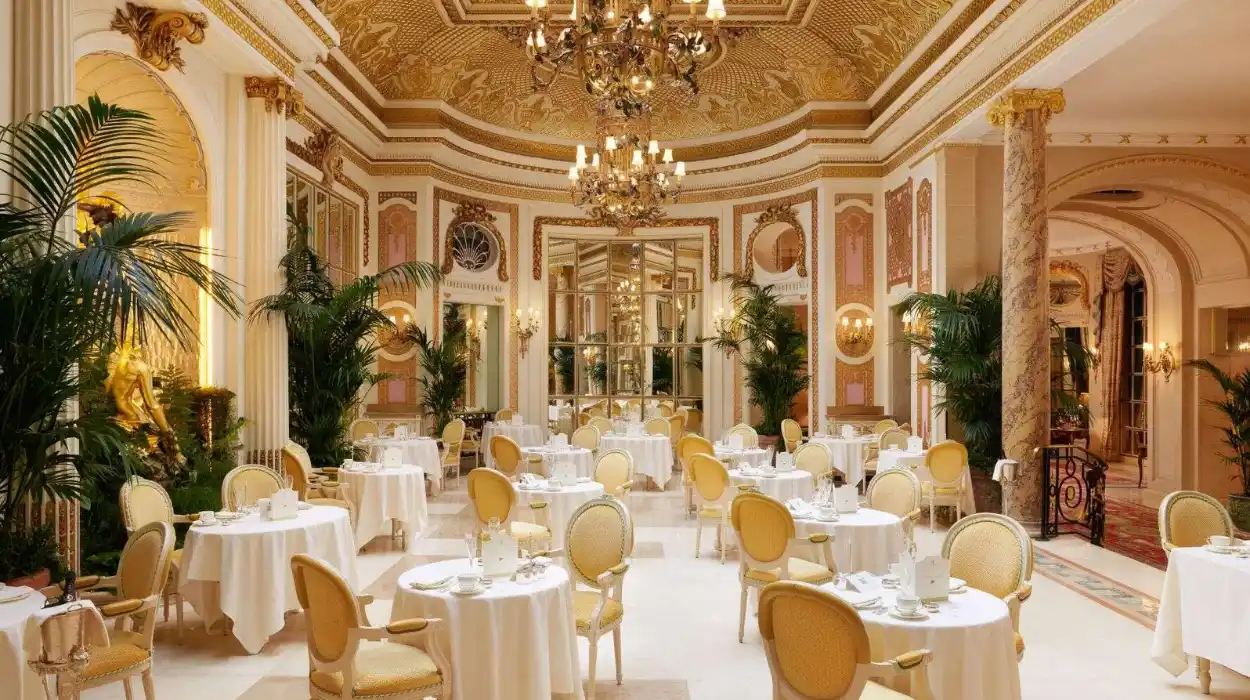
Opened in 1906, The Ritz London transformed luxury hospitality in Britain. Designed in the French neoclassical style, its Palm Court remains one of the world’s most recognised afternoon tea settings.
The hotel’s elegant interiors feature crystal chandeliers, gilded mirrors, marble columns, and Louis XVI-inspired decoration. Live piano performances accompany traditional tea service, preserving early twentieth-century hospitality customs.
Claridge’s
Claridge’s has served London’s elite since the nineteenth century. Following extensive Art Deco renovations during the 1920s and 1930s, it became associated with royalty, diplomats, and international visitors.
Its afternoon tea service combines traditional British recipes with contemporary pastry craftsmanship while maintaining formal presentation standards.
The Savoy
Since opening in 1889, The Savoy has represented London’s grand hotel tradition. Located beside the River Thames, it introduced electric lighting and luxury amenities that revolutionised British hospitality.
Afternoon tea at The Savoy continues inside elegant historic surroundings that reflect Edwardian London’s international reputation.
Brown’s Hotel
Established in 1837, Brown’s Hotel is London’s oldest continuously operating hotel. Its Drawing Room has served afternoon tea for generations, preserving intimate Victorian hospitality within Mayfair.
Many literary figures, including Rudyard Kipling and Agatha Christie, maintained close associations with Brown’s during their careers.
Why is Fortnum & Mason considered one of London’s most iconic tea destinations?
Fortnum & Mason combines luxury retail history with Britain’s tea-trading heritage. Since the eighteenth century, the department store has supplied tea to royal households while preserving ceremonial afternoon tea traditions that remain central to London’s international cultural identity and visitor experience.
Founded in 1707, Fortnum & Mason began as a grocery retailer before becoming one of Britain’s premier suppliers of luxury food and tea.
Its reputation expanded alongside Britain’s global maritime trade. Tea imported from China and later India became one of the company’s defining products.
The Diamond Jubilee Tea Salon preserves traditional service while reflecting elegant Edwardian design. Visitors experience carefully selected loose-leaf teas served alongside classic finger sandwiches, freshly baked scones, and handcrafted pastries.
Royal Warrants awarded throughout its history demonstrate the company’s long-standing relationship with the British monarchy.
The building itself forms part of London’s commercial heritage, representing centuries of retail innovation and culinary excellence.
Which London museums and heritage venues offer traditional afternoon tea?
Several museums and historic buildings combine afternoon tea with cultural interpretation. These venues allow visitors to experience British culinary traditions while exploring architecture, art collections, and nationally significant heritage sites preserved for education and public engagement.
Victoria and Albert Museum
The Victoria and Albert Museum celebrates decorative arts and design history. Its elegant café, originally designed during the Victorian period, remains one of London’s most architecturally significant museum dining spaces.
Afternoon tea here combines historic surroundings with access to one of the world’s largest collections of decorative arts.
Wallace Collection
Located inside Hertford House, the Wallace Collection preserves eighteenth-century French art and decorative objects.
Its courtyard restaurant provides afternoon tea within a heritage environment that reflects aristocratic domestic life.
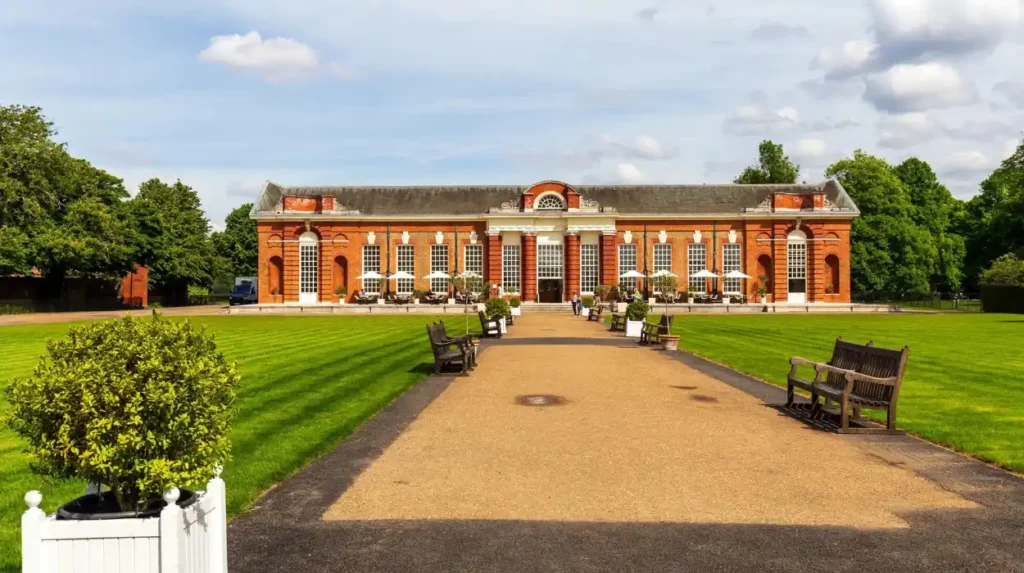
Kensington Palace
Historic royal residences occasionally host seasonal afternoon tea experiences nearby, allowing visitors to combine royal history with Britain’s tea traditions.
These experiences reinforce the close relationship between afternoon tea and royal ceremonial culture.
To experience London’s wider heritage attractions beyond afternoon tea, consult our comprehensive [Best Places for Traditional Afternoon Tea in London Every Visitor Should Experience] for carefully planned itineraries and visiting parameters.
How did afternoon tea become part of Victorian social life?
Victorian society transformed afternoon tea into an important social institution through changing dining schedules, expanding middle-class prosperity, improved transportation, and increasing availability of imported tea, sugar, and porcelain across Britain during the nineteenth century.
Industrialisation altered daily routines across Britain.
Dinner gradually shifted from late afternoon to evening among wealthier households, creating a long interval between meals. Afternoon tea solved this practical problem while evolving into an important social gathering.
Women frequently hosted afternoon tea receptions, strengthening family networks, political discussions, charitable organisations, and literary societies.
Tea drinking also reflected Britain’s expanding global trade.
Imports from India, Sri Lanka, and China increased dramatically after the East India Company’s influence expanded overseas. Lower transportation costs gradually made tea affordable for broader sections of society.
Fine porcelain imported from Asia and later manufactured in Britain enhanced the ceremonial presentation of afternoon tea.
What foods define a traditional London afternoon tea?
Traditional afternoon tea follows a structured sequence featuring finger sandwiches, freshly baked scones with clotted cream and jam, handcrafted pastries, and premium loose-leaf tea served using formal etiquette developed during Victorian Britain and preserved by London’s leading establishments.
The first course typically includes delicate finger sandwiches with fillings such as cucumber, smoked salmon, egg mayonnaise, or roast ham.
Freshly baked scones follow.
Authentic British scones remain lightly textured and are traditionally accompanied by clotted cream and fruit preserves.
The final course features pastries, cakes, and seasonal desserts prepared by specialist pastry chefs.
Tea itself remains central to the experience.
Common varieties include Earl Grey, Darjeeling, Assam, English Breakfast, and specialised heritage blends reflecting Britain’s historic tea trade.
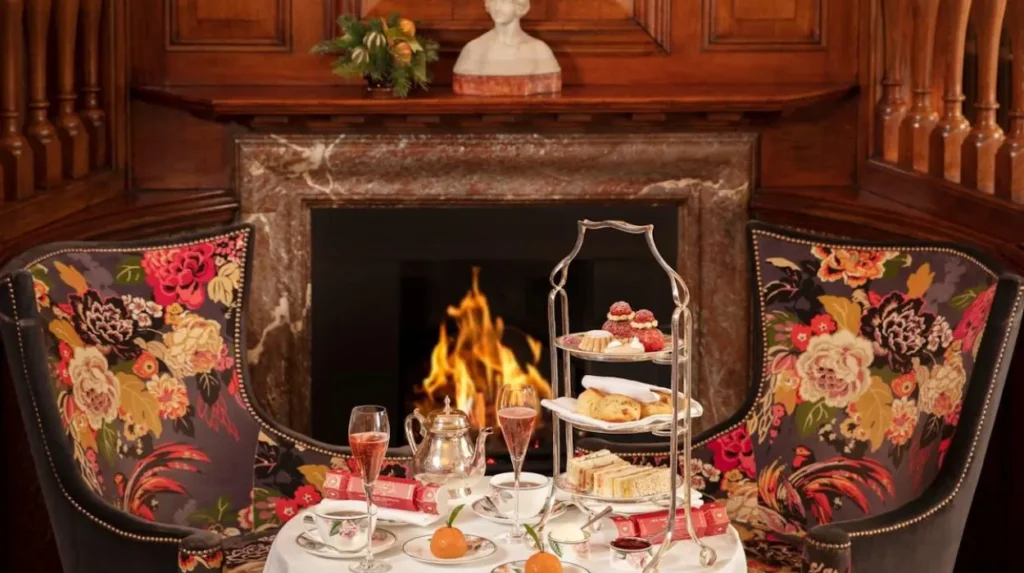
Presentation follows established etiquette involving porcelain teacups, silver teapots, linen tablecloths, and tiered serving stands.
Which architectural styles define London’s famous afternoon tea venues?
London’s afternoon tea venues preserve multiple architectural periods including Georgian, Victorian, Edwardian, Art Deco, and French Neoclassical styles. These interiors illustrate changing tastes in luxury hospitality while protecting nationally important examples of Britain’s built heritage.
Georgian architecture emphasised balance, symmetry, and restrained elegance.
Victorian interiors introduced elaborate decoration, carved woodwork, patterned ceilings, stained glass, and ornamental plasterwork.
Edwardian design shifted toward lighter colours, larger windows, and refined luxury reflecting London’s growing international status before the First World War.
Art Deco influences appeared during the 1920s through geometric ornament, polished metals, marble finishes, and sophisticated lighting.
These preserved interiors offer historians valuable evidence of evolving hospitality architecture across more than two centuries.
How has London’s afternoon tea tradition adapted to modern visitors?
Historic venues preserve traditional etiquette while introducing contemporary menus, dietary options, sustainable sourcing, multilingual service, and online reservations. These adaptations expand accessibility without altering the ceremonial foundations that define London’s historic afternoon tea experience.
Modern afternoon tea now accommodates vegetarian, vegan, gluten-free, dairy-free, and halal dietary requirements while preserving classic presentation.
Many venues source ingredients from British farms, supporting sustainable agriculture and regional food producers.
International tourism has expanded the audience significantly.
Visitors from Europe, North America, Asia, Australia, and the Middle East increasingly include afternoon tea among London’s essential cultural experiences.
Digital reservations improve visitor management while protecting the quality of historic hospitality environments.
Despite operational modernisation, ceremonial service standards remain largely unchanged.
Why does traditional afternoon tea remain culturally significant today?
Traditional afternoon tea continues preserving Britain’s culinary history, hospitality customs, architectural heritage, and ceremonial etiquette. Its enduring popularity demonstrates how living traditions strengthen cultural identity while supporting heritage tourism, education, conservation, and London’s international reputation.
Afternoon tea represents more than food.
It preserves rituals that connect modern society with Victorian Britain.
Historic hotels, museums, and tea rooms maintain traditions that educate visitors about architecture, social history, international trade, and domestic customs.
Heritage tourism contributes significantly to London’s economy.
Millions of international visitors annually include historic dining experiences within broader cultural itineraries, supporting conservation of listed buildings and skilled culinary professions.
Educational institutions also use afternoon tea to interpret Victorian society, gender history, etiquette, colonial trade networks, and Britain’s evolving hospitality industry.
Its continued popularity demonstrates that carefully preserved traditions remain relevant within contemporary global tourism.
How can visitors experience authentic traditional afternoon tea in London?
Authentic afternoon tea combines historic surroundings, formal service, traditional recipes, and preserved architectural settings. Visitors obtain the most historically accurate experience by choosing heritage venues that maintain original ceremonial standards and documented connections to London’s cultural history.
Planning enhances the experience.
Many historic venues recommend advance reservations because afternoon tea remains one of London’s most popular visitor activities throughout the year.
Visitors benefit from selecting venues based on historical significance rather than solely on luxury.
Hotels dating from the Victorian and Edwardian eras provide valuable architectural context alongside traditional hospitality.
Museum cafés situated inside nationally significant heritage buildings combine educational experiences with culinary traditions.
Observing established etiquette—including leisurely dining, proper tea service, and appreciation of historic surroundings—allows visitors to understand afternoon tea as a living expression of British cultural heritage rather than simply a meal.
London continues evolving as one of the world’s leading cultural destinations, yet afternoon tea remains remarkably consistent with its nineteenth-century origins. Historic hotels, celebrated department stores, museums, and preserved heritage venues collectively safeguard this tradition for future generations. Through architecture, craftsmanship, culinary expertise, and ceremonial hospitality, traditional afternoon tea remains one of London’s most distinctive and enduring cultural experiences.
What is the difference between afternoon tea and high tea?
Afternoon tea is a light meal served between lunch and dinner, traditionally featuring sandwiches, scones, cakes, and tea. High tea is a more substantial early evening meal that historically included hot dishes, bread, meat, and vegetables for working families.