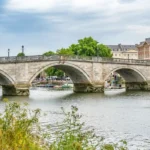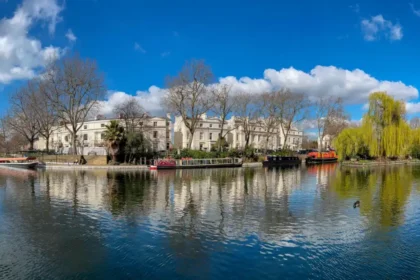
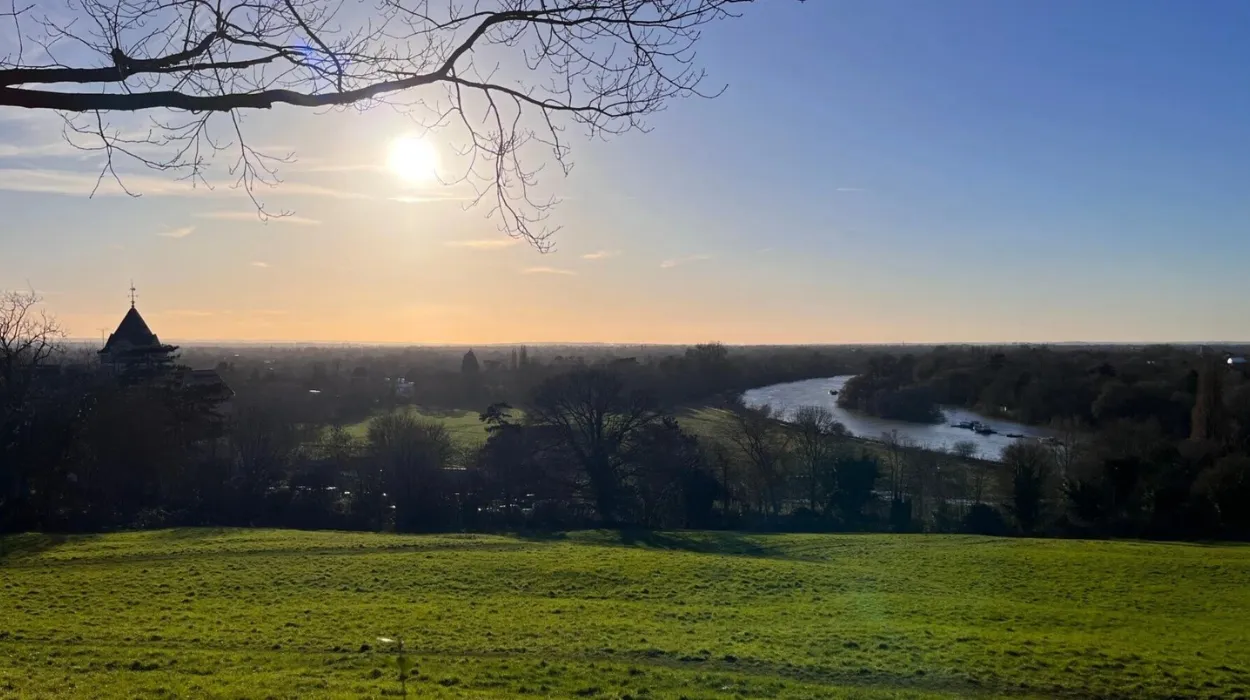
Richmond upon Thames is one of London’s most important historic landscapes. Its identity developed through royal residence, Tudor politics, Stuart hunting, Georgian architecture, scientific discovery, river transport, and the preservation of major green spaces. The area combines the River Thames, Richmond Park, Kew Gardens, Ham House, surviving royal landscapes, historic bridges, and protected architectural sites within a connected cultural geography.
- Why is Richmond historically important in London?
- What are the best scenic walks in Richmond?
- Why should visitors explore Richmond Park?
- What historic landmarks can visitors see in Richmond?
- How did Richmond become a centre of royal history?
- Why are Richmond’s parks important to London’s heritage?
- What makes Kew Gardens and Kew Palace historically significant?
- How does Ham House explain seventeenth-century Richmond?
- How can visitors understand Richmond through its riverside landscape?
- How has Richmond preserved its historic environment?
- Why does Richmond remain important for future generations?
- Frequently Asked Question
For history enthusiasts, cultural tourists, educators, students, heritage preservationists, and genealogical researchers, Richmond provides evidence of more than 500 years of documented change. The district also preserves older landscapes connected with the medieval Manor of Sheen and prehistoric features associated with Richmond Park.
Richmond’s importance comes from the relationship between landscape and power. Monarchs selected the area because of its position beside the Thames. Aristocratic families built estates along the river. Scientists developed internationally significant botanical collections at Kew. Public access campaigns transformed former royal landscapes into protected spaces used by millions of Londoners and visitors.
The best things to do in Richmond therefore extend beyond sightseeing. Scenic walks reveal historic land boundaries. Parks preserve royal hunting landscapes. Houses record the lives of political elites. Gardens document the history of botanical science. Riverside routes connect settlements that developed through trade, transport, and royal patronage.
Why is Richmond historically important in London?
Richmond is historically important because it developed from the medieval Manor of Sheen into a major royal, aristocratic, scientific, and cultural landscape. Tudor monarchs, Stuart rulers, Georgian royalty, wealthy landowners, and public preservation movements all shaped its surviving parks, buildings, gardens, and riverside environment.
The historical development of Richmond began long before modern Greater London. The area formed part of the Manor of Sheen, a royal estate beside the River Thames. The Thames provided access between Richmond and Westminster, while the surrounding countryside supplied hunting land, agricultural resources, and space for royal residences.
The name Richmond became firmly connected with the area during the Tudor period. Henry VII, previously Earl of Richmond, rebuilt the royal residence at Sheen after a devastating fire and renamed the palace Richmond. The new name connected the royal estate with Henry’s title and became the permanent identity of the surrounding settlement.
Richmond Palace became an important Tudor residence. Henry VII died there in 1509. Elizabeth I also spent significant periods at Richmond and died at Richmond Palace on 24 March 1603. The palace therefore occupied a central position in the transition between the Tudor and Stuart dynasties.
Much of the palace later disappeared, but Richmond remained associated with royal power. The wider landscape continued to attract monarchs and aristocrats because of its riverside location and extensive open land.
The area’s historical development can be understood through several connected landscapes, including royal landscapes such as Richmond Park, aristocratic estates such as Ham House, and scientific landscapes such as the Royal Botanic Gardens, Kew.
Richmond also demonstrates an important change in English heritage history. Landscapes originally controlled by monarchs and private landowners gradually became protected public spaces. Richmond Park is a major example. Historic England records it as a Grade I registered historic park and garden, recognising its exceptional national significance.
This combination of monarchy, architecture, landscape design, science, and public preservation gives Richmond an unusually dense historical environment.
What are the best scenic walks in Richmond?
The best scenic walks in Richmond follow the River Thames, cross historic parkland, connect Richmond Hill with riverside gardens, and explore former royal landscapes. These routes combine long-distance views, protected green spaces, historic buildings, archaeological features, and surviving evidence of London’s political and environmental history.
Richmond’s walking landscape is structured around the Thames and the large green spaces surrounding the historic town.
A riverside walk is one of the clearest ways to understand Richmond’s development. The Thames was a major transport corridor before the railway age. Royal courts, merchants, aristocrats, servants, and goods travelled along the river. Richmond’s position on the Thames helped establish its importance as a destination outside the densely built centre of London.
The Richmond riverside also connects visitors with historic bridges, public gardens, and views towards Richmond Hill. The combination of river and elevated landscape created one of the most recognisable historic views in London.
Richmond Hill became particularly significant because of its panoramic relationship with the Thames Valley. The view from the hill demonstrates why the area attracted royal and aristocratic development. The landscape extends across the river valley towards Petersham Meadows and surrounding countryside.
Terrace Gardens and Buccleuch Gardens preserve part of this historic setting. Historic England identifies the public landscape as being formed from the grounds of eighteenth- and nineteenth-century estates. The gardens therefore demonstrate the conversion of private residential landscapes into public heritage spaces.
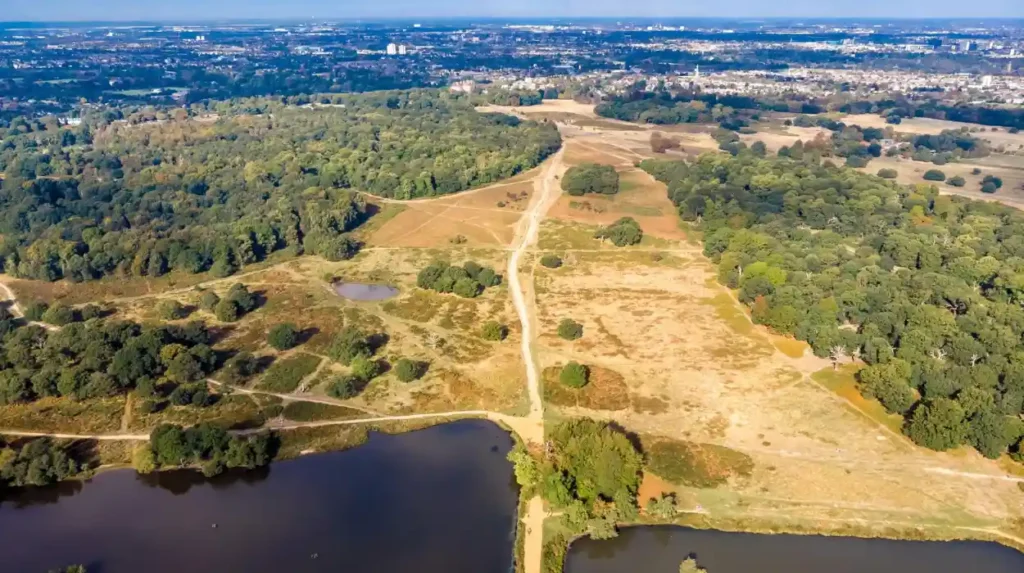
Walking through Richmond Park provides a different historical experience. The park contains open grassland, ancient trees, woodland, ponds, and long historic routes. Its landscape remains closely connected with the royal hunting system established during the Stuart period.
The Isabella Plantation provides another distinct walking environment. The 40-acre woodland garden occupies land developed from a Victorian plantation established during the 1830s. It opened to the public in 1953 and contains specialised collections of azaleas, rhododendrons, magnolias, camellias, and other plants.
A walk through these landscapes reveals how Richmond contains several historical environments within one borough: urban riverside development, designed gardens, royal parkland, and scientific botanical collections.
To experience these historic landscapes in person today, consult our comprehensive [How Richmond Became One of London’s Most Beautiful Riverside Destinations] for itineraries and visiting parameters.
Why should visitors explore Richmond Park?
Richmond Park should be explored because it preserves a vast royal hunting landscape created under Charles I, contains internationally important wildlife habitats, retains historic boundaries and monuments, and demonstrates how a former royal estate became one of London’s most significant protected public landscapes.
Richmond Park is central to the history of the area. The Royal Parks describes its royal connections as extending back to the medieval period, when the land formed part of the Manor of Sheen. The modern park took its decisive form during the reign of Charles I.
Charles I visited Richmond in 1625 and transformed the surrounding rural landscape into a formal royal hunting park. The creation of the park reflected the political culture of the Stuart monarchy. Hunting was a royal activity associated with land ownership, hierarchy, ceremony, and control.
The king stocked the park with approximately 2,000 red and fallow deer. Deer remain one of Richmond Park’s defining features. Their continued presence provides a direct connection between the modern landscape and the seventeenth-century royal hunting system.
In 1637, Charles I ordered the construction of a brick wall approximately eight miles long around the park. The wall was designed to contain deer and regulate access. This physical intervention also created conflict with local communities whose traditional movement across the landscape was restricted.
Historic England records that public access became a major issue during the park’s history. Ladder stiles were provided to allow pedestrians to cross the walls. Access was later restricted again under Princess Amelia in the eighteenth century, producing a significant legal dispute before pedestrian access was restored.
This history gives Richmond Park importance beyond recreation. The park records changing relationships between royal authority and public rights.
Today, Richmond Park is also protected for its natural importance. The Royal Parks identifies it as a National Nature Reserve, London’s largest Site of Special Scientific Interest, and a European Special Area of Conservation.
The park therefore combines cultural heritage and environmental conservation.
What historic landmarks can visitors see in Richmond?
Richmond contains major historic landmarks including Richmond Palace remnants, Ham House, Kew Palace, Richmond’s historic riverside landscape, and protected park structures. Together these sites document Tudor monarchy, Jacobean architecture, Stuart politics, Georgian royal life, and centuries of landscape preservation.
Richmond Palace is historically the most important lost royal structure in the town. The Tudor palace developed from the earlier royal residence at Sheen and became closely associated with Henry VII and Elizabeth I.
Although the full palace no longer survives, the site remains essential to understanding Richmond’s historical identity. The palace established Richmond as a royal settlement and attracted court activity, workers, suppliers, administrators, and associated development.
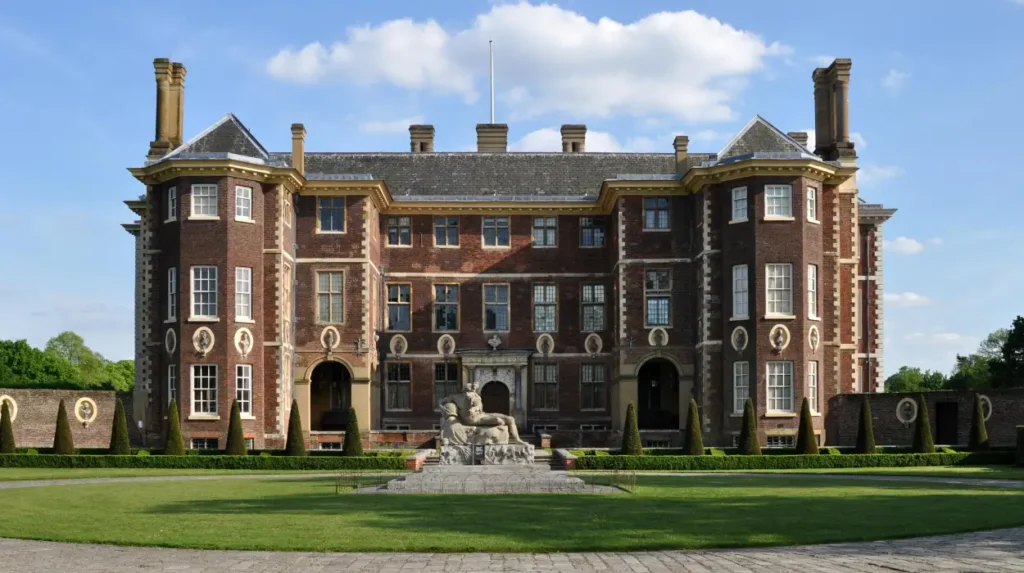
Ham House provides one of the strongest surviving examples of seventeenth-century elite architecture in the Richmond area. Historic England records that the house was completed for Sir Thomas Vavasour in 1610. The property later became associated with Elizabeth Murray, Countess of Dysart, and her second husband, John Maitland, Duke of Lauderdale.
The political importance of Ham House reflects the turbulent seventeenth century. Elizabeth Murray maintained important connections during the period of civil conflict and political change. The house was expanded and altered during the 1670s, creating the architectural form that survives as a major record of Jacobean and Restoration society.
The estate remained under the care of descendants connected with the Dysart and Tollemache families until its transfer to the National Trust in 1948. The gardens underwent major restoration during the twentieth century, including work beginning in 1975 to recover the character of the late seventeenth-century landscape.
Kew Palace is another major landmark within the wider borough of Richmond upon Thames. The surviving building was constructed in 1631 for Samuel Fortrey, a Flemish merchant. It later became a royal residence and was associated with the family of George III.
Historic England records that Kew Palace served as a royal residence from 1754 until 1818, the year Queen Charlotte died there. The building is Grade I listed, placing it among England’s most important protected historic structures.
These landmarks demonstrate how Richmond developed through successive political and architectural periods rather than through a single historical event.
How did Richmond become a centre of royal history?
Richmond became a centre of royal history because the Thames provided direct access to London, the surrounding countryside supplied hunting land, and successive monarchs developed palaces and estates there. Tudor, Stuart, and Georgian rulers each transformed Richmond’s architecture, landscape, and political importance.
Royal geography explains Richmond’s development.
The area was close enough to Westminster for political and administrative access but sufficiently rural to provide privacy, hunting, gardens, and open space. This balance made Richmond attractive to English monarchs.
The Tudor period established the strongest early royal identity. Henry VII rebuilt the palace and gave Richmond its modern name. His reign followed decades of civil conflict known as the Wars of the Roses. Royal building projects therefore also communicated dynastic stability and authority.
Richmond Palace became a place of government as well as residence. Monarchs did not separate private life from political administration in the modern sense. A royal household included servants, officials, diplomats, guards, clergy, and suppliers.
Elizabeth I’s death at Richmond Palace in 1603 marked a major constitutional transition. Her death ended the Tudor dynasty. James VI of Scotland inherited the English throne as James I, creating the dynastic union of the English and Scottish crowns.
The Stuart period changed Richmond’s landscape through the creation of Richmond Park.
Charles I’s enclosure of the park reflected a monarchy that exercised extensive authority over land and access. The later disputes surrounding public entry show how local communities challenged exclusive royal control.
The Georgian period shifted significant royal attention towards Kew. Kew Palace and the surrounding gardens became associated with George III and Queen Charlotte, while the wider landscape developed into an important centre for botanical knowledge.
Richmond’s royal history therefore survives through several connected forms: palace sites, hunting landscapes, royal residences, and scientific gardens.
Why are Richmond’s parks important to London’s heritage?
Richmond’s parks are important because they preserve historic land use, protect rare ecological systems, retain designed landscapes, and provide evidence of changing public access. Richmond Park, riverside gardens, and Kew’s historic landscape connect royal authority, environmental conservation, scientific research, and public recreation.
Historic parks are physical historical records. Their significance does not depend only on buildings. Paths, boundaries, trees, water systems, planting patterns, and views also preserve evidence of past decisions.
Richmond Park is a particularly strong example because its large scale has survived. Historic England describes the park as having pre-fifteenth-century origins and identifies its development as a royal deer park subsequently improved by later monarchs.
The Isabella Plantation demonstrates a later stage of landscape history. Its Victorian origins date to 1831, when Lord Sidmouth enclosed approximately 17 hectares of Isabella Slade and planted trees including oak, beech, and sweet chestnut for timber production.
The modern garden developed substantially from the 1950s. Park Superintendent George Thomson and head gardener Wally Miller transformed the landscape by removing invasive Rhododendron ponticum and developing new plant collections.
This process shows that historic landscapes are not static. Preservation often involves documented change, restoration, ecological management, and the protection of surviving historic features.
Kew represents another form of historic landscape preservation. The history of the institution began with royal gardens and developed into an internationally important centre for plant and fungal research.
Kew records that Princess Augusta founded a nine-acre botanic garden there in 1759. The Great Pagoda followed in 1762, and the estates of Richmond and Kew were united under George III in 1802. In 1840, Kew transferred from Crown control to government administration.
These changes transformed Kew from a royal pleasure landscape into a public scientific institution.
What makes Kew Gardens and Kew Palace historically significant?
Kew Gardens and Kew Palace are historically significant because they connect royal residence with the development of global botanical science. Their surviving buildings, gardens, collections, and designed landscapes document eighteenth-century monarchy, imperial-era plant collection, scientific institutions, and long-term heritage conservation.
Kew’s historical importance rests on the relationship between monarchy and science.
The royal estate created the physical setting for the botanic garden. Princess Augusta established a nine-acre garden in 1759. This development occurred during a period when European governments, aristocrats, and scientific institutions increasingly organised plant knowledge through collecting, classification, and cultivation.
The Great Pagoda, designed by William Chambers and completed in 1762, represented the eighteenth-century European interest in Asian architectural forms and global cultural exchange.
Plant collecting became increasingly important to Kew’s development. Joseph Banks sent seeds to Kew during and after his association with Captain James Cook’s voyages. Francis Masson, identified by Kew as its first plant collector, travelled to South Africa and returned with thousands of plants.
These activities were connected with the wider expansion of British maritime and imperial networks. Plants were collected for scientific study, agriculture, commerce, medicine, and ornamental horticulture.
Kew Palace provides the architectural counterpart to this scientific history. Built in 1631, the red-brick building later became a royal residence. Historic England records archaeological watching briefs conducted during works in 1998 and 2005–06, which identified Tudor structures and later features near the palace.
Archaeological investigation is important because it demonstrates that visible buildings represent only part of the historic landscape. Earlier structures, foundations, paths, and buried features also provide evidence.
How does Ham House explain seventeenth-century Richmond?
Ham House explains seventeenth-century Richmond through its exceptionally preserved architecture, political associations, formal gardens, and connections with aristocratic power. The estate records Jacobean building traditions, Restoration alterations, elite family networks, and the long-term preservation of a major Thames-side historic landscape.
Ham House was completed in 1610 for Sir Thomas Vavasour. Its early form belongs to the Jacobean period, the era following the accession of James I in 1603.
The building later passed into the possession of William Murray, first Earl of Dysart, and subsequently his daughter Elizabeth Murray.
Elizabeth Murray became one of the most significant figures in the history of the house. Her marriage in 1672 to John Maitland, Earl of Lauderdale and later Duke of Lauderdale, was followed by extensive alterations.
Historic England records that a new south wing was constructed and the garden extended during the 1670s. The house became larger and more elaborate during the Restoration period following the return of Charles II in 1660.
The survival of Ham House is particularly important because many historic interiors and estates experienced extensive Victorian or twentieth-century rebuilding. Ham retains strong evidence of seventeenth-century architecture and elite domestic culture.
The property also demonstrates the role of inheritance in preserving historic estates. Descendants of the Dysart and Tollemache families maintained the estate until the twentieth century before it entered institutional protection.
Its later transfer to the National Trust ensured public preservation and created a new chapter in the building’s history.
How can visitors understand Richmond through its riverside landscape?
Richmond’s riverside landscape explains the area’s development because the River Thames connected royal residences, estates, settlements, and commercial activity. Walking beside the river reveals how transport routes shaped political geography, residential growth, landscape design, and the continuing relationship between Richmond and central London.
The River Thames is Richmond’s principal geographical feature.
Before modern roads and railways, rivers provided major transport infrastructure. The Thames connected Richmond with Westminster, the City of London, and settlements further west.
Royal visitors and court officials could travel by water. Goods also moved along the river. Building materials, food, fuel, and other supplies supported the households of palaces and estates.
The riverside attracted wealthy residents because it combined access with landscape value. Large houses and gardens developed along sections of the Thames, creating a distinctive pattern of elite settlement.
Richmond Hill intensified the importance of the river landscape. Elevated viewpoints provided extensive views over the Thames Valley and surrounding meadows.
These views became part of the area’s heritage value. Landscape protection in Richmond therefore concerns not only individual buildings but also the relationship between open space, river, architecture, and distant views.
A riverside walk also demonstrates historical continuity. The Thames remains a transport and recreational route, but its role has changed from a primary practical corridor to a protected cultural landscape and public destination.
How has Richmond preserved its historic environment?
Richmond has preserved its historic environment through legal heritage designation, public ownership, conservation management, archaeological research, and institutional stewardship. Grade I listings, registered historic landscapes, nature protections, and restoration projects protect both individual landmarks and the wider relationship between buildings, landscapes, and public access.
Preservation in Richmond operates at several levels.
Individual buildings receive statutory protection through listing. Historic England records both Ham House and Kew Palace as Grade I listed structures. Grade I status is reserved for buildings of exceptional interest.
Historic landscapes also receive formal recognition. Richmond Park is Grade I registered on the National Heritage List for England. Its designation recognises the significance of the entire historic landscape rather than a single monument.
Environmental protection adds another layer. Richmond Park is a National Nature Reserve and Site of Special Scientific Interest, demonstrating that historic preservation and ecological conservation often protect the same landscape.
Restoration projects provide practical evidence of preservation.
Ham House gardens underwent restoration beginning in the 1970s. The Isabella Plantation experienced major renovation and biodiversity improvements between 2011 and 2015, including changes to paths, ponds, invasive vegetation, and plant collections.
Archaeological monitoring also contributes to preservation. Work near Kew Palace identified earlier Tudor structures and later landscape features, adding information that cannot be obtained from surviving buildings alone.
Richmond therefore shows that heritage preservation is an active process involving research, maintenance, restoration, ecological management, and legal protection.
Why does Richmond remain important for future generations?
Richmond remains important for future generations because its parks, palaces, houses, gardens, archaeological sites, and riverside landscapes preserve evidence of major changes in British history. Continued conservation protects accessible records of monarchy, science, architecture, ecology, public rights, and London’s changing relationship with open space.
Richmond’s historical significance is strengthened by the survival of connected places rather than isolated monuments.
Richmond Park explains royal land management and public access. Ham House records aristocratic life and seventeenth-century politics. Kew Palace preserves a royal residence. Kew Gardens documents the transformation of royal land into a scientific institution. The Thames explains the transport geography linking these places.
These sites also provide educational evidence.
Students can examine architecture directly. Educators can connect national political history with physical locations. Heritage researchers can study changing conservation methods. Genealogical researchers can investigate the families, estates, occupations, and communities associated with the district.
The preservation of green space has additional long-term significance. London’s population and built environment continue to create pressure on land. Richmond’s protected landscapes demonstrate the importance of maintaining historic and ecological environments within a major global city.
The area also shows how historical meaning changes over time.
A royal hunting ground became a public park. Private aristocratic estates entered heritage stewardship. Royal gardens became scientific institutions. Historic buildings became educational resources.
This process makes Richmond an important example of continuity and adaptation.
For visitors, the best things to do in Richmond are therefore connected by a single historical framework. Walking beside the Thames reveals the geography that attracted royal settlement. Exploring Richmond Park explains Stuart land use and public access. Visiting Ham House demonstrates seventeenth-century aristocratic power. Discovering Kew Palace and Kew Gardens connects monarchy with global scientific development.
Richmond remains one of the clearest places in London to study how landscape, political authority, architecture, science, and conservation developed together. Its scenic walks, parks, and historic landmarks preserve a living record of English history across successive centuries.
For Extra London News, Richmond offers an evergreen subject with continuing relevance because the historic environment remains physically accessible, legally protected, scientifically studied, and publicly used. The district is not defined by one landmark or one historical era. Its significance lies in the connected survival of royal, riverside, aristocratic, scientific, and public landscapes that continue to shape London today.
Frequently Asked Question
What is Ham House famous for?
Ham House is famous for its exceptionally preserved seventeenth-century architecture, interiors, formal gardens, and connections with Elizabeth Murray, Duchess of Lauderdale. It is one of Britain’s most important Stuart-period houses.