Key Points
- Hackney’s Grade II-listed municipal disinfecting station on Millfields Road in Clapton is the last surviving one in England and tops the Victorian Society’s 2026 annual Top 10 Endangered Buildings list.
- Commissioned in 1899 amid outbreaks of smallpox, scarlet fever, and measles (115 children died from measles in Hackney that year alone), it disinfected residents’ contaminated clothing and belongings at scale.
- The station closed in 1984, was added to Historic England’s Heritage at Risk register in 1995, and remains disused despite firm walls and a stable foundation ideal for modern adaptation.
- Victorian Society describes it as “exceptionally rare,” a testament to ambitious public health investment, and calls for sensitive sale and reuse to address community space deprivation.
- Quotes from Morgan Ellis Leah (Southern Conservation Adviser) and James Hughes (Director) emphasise its historical story and potential for public use.
- Hackney Council cites budget constraints for costly restorations but maintains the site and explores self-sustaining uses.
- The list highlights nationwide neglect of Victorian-era buildings, prompting urgent calls for intervention.
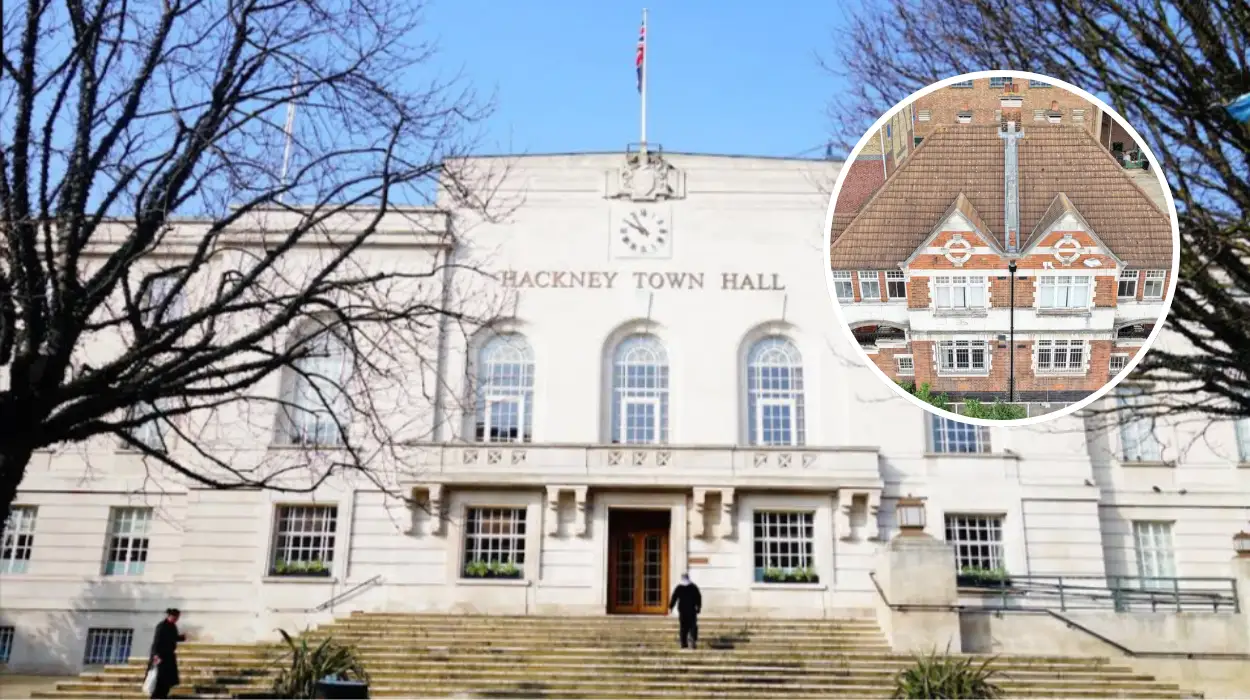
Hackney (Extra London News) April 28, 2026 – A disused Grade II listed public health building in Clapton has been named England’s most endangered structure from neglect and decay, topping the Victorian Society’s annual Top 10 Endangered Buildings list for 2026. The municipal disinfecting station on Millfields Road, believed to be the last of its kind surviving in the country, has sparked urgent calls from conservationists for its sensitive reuse amid widespread community space shortages.
- Key Points
- Why has Hackney’s disinfecting station topped the endangered list?
- What is the history of the Millfields Road disinfecting station?
- How does Hackney Council respond to the listing?
- What makes this building ‘exceptionally rare’?
- What are the other buildings on the Victorian Society’s Top 10 list?
- Why is public reuse the recommended solution?
- What challenges do local councils face in heritage preservation?
- How does this fit into London’s broader heritage risks?
- What next steps are proposed for the Hackney site?
The Victorian Society, a leading conservation charity, published its annual roundup today, spotlighting buildings at risk from decay or neglect across England. Hackney’s station claimed the top position, described as “exceptionally rare” due to its unique survival from the Victorian era. Commissioned in 1899 when infectious diseases like smallpox, scarlet fever, and measles ravaged communities – with 115 children dying from measles in Hackney alone that year – the civic infrastructure was designed to disinfect residents’ contaminated clothing and belongings on a large scale.
Closed in 1984 as Victorian structures faced widespread demolition, the building was placed on Historic England’s Heritage at Risk register in 1995. Despite its disuse, experts note its robust construction, including firm walls and a stable foundation, makes it more adaptable for contemporary purposes than many peers.
Why has Hackney’s disinfecting station topped the endangered list?
As reported by Josef Steen of MyLondon, the Victorian Society’s selection underscores the building’s national significance as the sole surviving municipal disinfecting station in England. Morgan Ellis Leah, Southern Conservation Adviser for the Victorian Society, told the Local Democracy Reporting Service (LDRS):
“There’s real deprivation of community space at the moment, and it’s a perfectly good building that can be put to public use.”
The charity emphasised that the structure stands as a testament to an era when public health investment was “ambitious and architecturally expressive.” In their official announcement on the Victorian Society’s website, the organisation stated that the “only viable option for its future” is a sensitive sale and reuse, leveraging its solid state to prevent further decay.
James Hughes, Director of the Victorian Society, highlighted its narrative value, saying:
“The building tells a powerful story about how society responded to crisis, and how civic ambition shaped the built environment.”
This aligns with the society’s broader mission to protect Victorian and Edwardian heritage, as detailed in their endangered buildings report.
What is the history of the Millfields Road disinfecting station?
Built in 1899, the station supported Hackney Council’s efforts during rampant disease outbreaks. MyLondon reports that it processed contaminated items at scale, reflecting the era’s public health priorities. The facility operated until 1984, surviving a period when most similar Victorian buildings were demolished.
Placed on Historic England’s Heritage at Risk register in 1995, it has languished without purpose. The Victorian Society notes its Grade II listed status and structural integrity – firm walls and stable foundations – position it well for adaptation, unlike more fragile at-risk sites.
How does Hackney Council respond to the listing?
A spokesperson for Hackney Council told MyLondon: Budget constraints make it difficult for the local authority to carry out ‘costly’ restorations of heritage buildings, but it continues to maintain the Millfields Road depot and is ‘looking at options for self-sustaining uses.”
This stance reflects ongoing challenges for local authorities nationwide, balancing heritage preservation with fiscal pressures. The council’s maintenance efforts, while commendable, have not yet yielded a viable redevelopment plan.
What makes this building ‘exceptionally rare’?
The Victorian Society describes the station as “exceptionally rare” because it is the last surviving municipal disinfecting station in England, per their 2026 Top 10 list. Its architectural expression of civic ambition in public health sets it apart, as noted in MyLondon’s coverage by Josef Steen.
Morgan Ellis Leah reinforced this, pointing to its potential amid “real deprivation of community space.” James Hughes added that it encapsulates societal responses to health crises, making its preservation culturally vital.
What are the other buildings on the Victorian Society’s Top 10 list?
While Hackney’s station leads, the full 2026 list includes other endangered Victorian and Edwardian structures across England, as published by the Victorian Society. Notable entries, drawn from the society’s report, encompass:
- A former textile mill in Manchester is at risk from urban decay.
- An Edwardian cinema in Birmingham, threatened by redevelopment.
- A Victorian town hall annexe in Leeds, suffering from water damage.
- A disused orphanage in Bristol, with crumbling masonry.
- An historic railway viaduct in Sheffield, undermined by neglect.
- A former workhouse infirmary in Norwich is facing demolition pressures.
- A Victorian pumping station in Liverpool, vandalised and overgrown.
- An Edwardian library in Coventry is structurally unstable.
- A municipal bathhouse in Plymouth is closed and deteriorating.
The society urges government intervention, listing these to spotlight neglect patterns. Full details are available on the Victorian Society’s endangered buildings page.
Why is public reuse the recommended solution?
Conservationists advocate sensitive sale and adaptive reuse as the path forward. Morgan Ellis Leah of the Victorian Society stated to LDRS:
“It’s a perfectly good building that can be put to public use,”
addressing community needs.
The charity argues its stable condition facilitates modern conversion – perhaps into a community centre, arts space, or health facility – without the prohibitive costs of ground-up restoration. James Hughes echoed this, noting its story of crisis response merits public accessibility.
Hackney Council’s exploration of “self-sustaining uses” aligns with this, potentially generating revenue to offset maintenance.
What challenges do local councils face in heritage preservation?
Hackney Council’s spokesperson highlighted budget constraints as a key barrier to “costly” restorations, a common plight for UK authorities. MyLondon reports this mirrors national trends, with Historic England’s register listing thousands of at-risk sites.
The Victorian Society’s list amplifies these issues, calling for policy changes like grants or tax incentives. Without intervention, more “exceptionally rare” buildings risk irreversible loss.
How does this fit into London’s broader heritage risks?
MyLondon’s related coverage identifies 21 historic London landmarks at risk, including Hackney’s station. Other threats include a memorial wall in Golders Green targeted in an arson attack and various West London sites, though unrelated directly.
The disinfecting station exemplifies East London’s vulnerability, with Clapton’s Millfields Road site emblematic of neglected civic heritage.
What next steps are proposed for the Hackney site?
The Victorian Society recommends immediate, sensitive sale, leveraging its adaptability. Hackney Council is reviewing self-sustaining options, maintaining the depot in the meantime.
Public campaigns and potential partnerships could accelerate reuse, transforming this relic into a vibrant community asset. Stakeholders await council updates amid the listing’s publicity.