
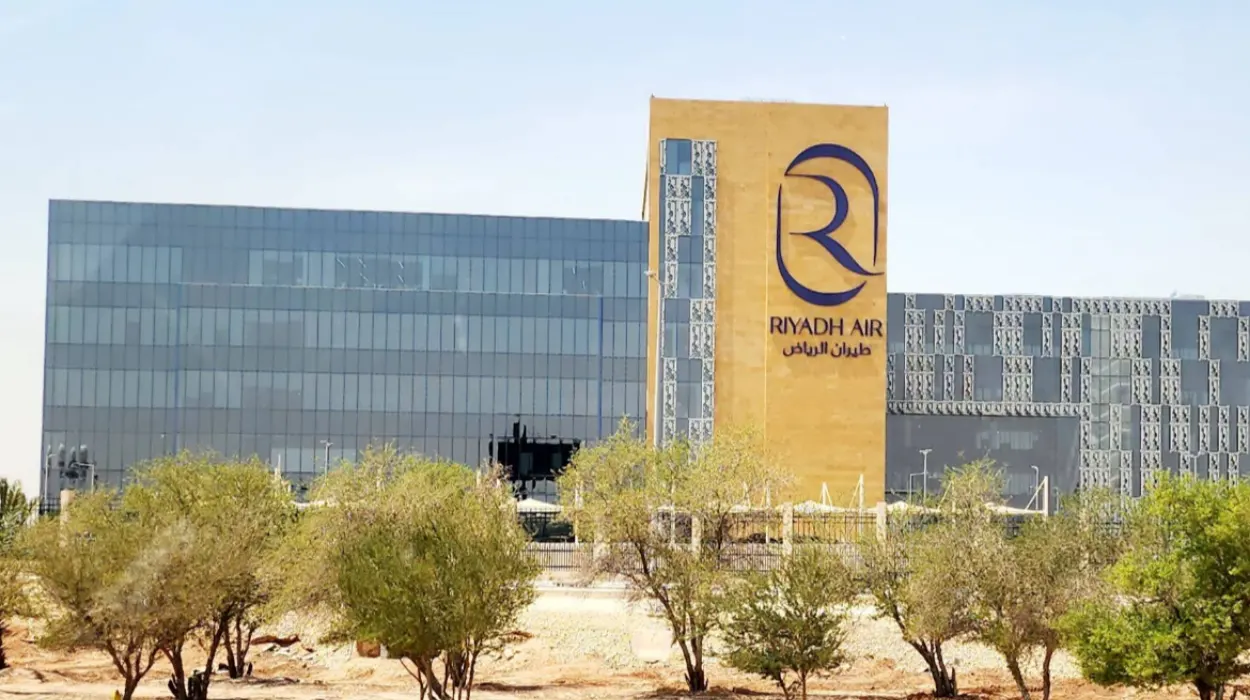
Key Points
- Maiden Fleet Launch: Riyadh Air has officially initiated its commercial operations using its newly delivered fleet, executing its historic first commercial flight to London Heathrow Airport.
- Ahead of Schedule: The inaugural service rolled out earlier than originally anticipated due to the early delivery of the airline’s factory-new Boeing 787-9 Dreamliner aircraft.
- Vision 2030 Catalyst: Financed entirely by Saudi Arabia’s Public Investment Fund (PIF) since its inception in 2023, the startup carrier serves as a central structural pillar of the Kingdom’s Vision 2030 economic diversification strategy.
- Geopolitical Resilience: The strategic operational launch has gone ahead despite severe geopolitical turbulence and airspace closures across the Middle East, with Riyadh Air framing the Saudi capital as a stable, secure entry and exit gateway.
- Aggressive Route Expansion: Operating daily flights to London Heathrow, the carrier has finalized plans to commence a three-times-weekly service to Manchester on 23 July 2026, alongside regional routes connecting Cairo, Dubai, Jeddah, and Madrid.
- Macroeconomic Scale: Chief Executive Officer Tony Douglas has labeled Riyadh Air “the biggest global aviation start-up in modern history,” aiming to hit 20 destinations by late 2026 and 100 destinations by 2030, whilst injecting $20 billion into the local economy.
London (Extra London News) June 15, 2026 – Saudi Arabia’s newly established sovereign flag carrier, Riyadh Air, has officially crossed into live commercial operations, launching its foundational scheduled service to London Heathrow last Wednesday ahead of its original timeline. The accelerated launch was made possible after the airline took delivery of its initial production batch of Boeing 787-9 Dreamliner aircraft sooner than initial manufacturing schedules had forecast. Supported and financed by the Public Investment Fund (PIF), Saudi Arabia’s multi-billion-dollar sovereign wealth vehicle, the airline represents a central structural element within the state’s broader Vision 2030 program. This comprehensive government policy aims to systematically transition the Middle Eastern nation away from oil dependence by engineering rapid growth across international tourism, logistics, digital technology, and global air connectivity networks.
- Key Points
- How Is Riyadh Air Positioning Itself Against Regional Competitors?
- What Are the Immediate Economic and Employment Impacts of the Launch?
- What Challenges Does the Middle Eastern Aviation Crisis Present?
- How Fast Will Riyadh Air Scale Its Global Fleet and Destination Network?
- Why Is the Fleet Size an Advantage for a Startup in a Volatile Market?
- When Will Flights to Manchester and Other European Cities Begin?
- What Can Passengers Expect From Riyadh Air’s Cabin Configurations?
- How Are Legal and Source Attributions Formulated in This Report?
The deployment of the premium carrier arrives amidst profound regional market instability, with widespread geopolitical conflict since late February triggering localized airspace shutdowns and a sharp escalation in commercial jet fuel costs. Despite these operational headwinds, the Saudi aviation sector has maintained uninterrupted operations, a variable the airline is leveraging to position the capital city as a highly dependable international transit alternative to historically dominant regional hubs.
How Is Riyadh Air Positioning Itself Against Regional Competitors?
As detailed in the investigative coverage by Travel Tomorrow reporter Ada Wein, the long-term commercial mandate of Riyadh Air is to rapidly convert the city of Riyadh into an expansive, top-tier global aviation nexus capable of directly competing with established Gulf heavyweights such as Dubai and Doha. By channeling capital directly from the Public Investment Fund, the sovereign startup intends to capturing a substantial market share of the lucrative long-haul transit traffic moving between Asia, Africa, and the European continent.
To establish immediate market presence, the carrier had previously maintained a daily baseline presence on the London corridor since October using a single, wet-leased Boeing 787-9 aircraft colloquially named Jamila. However, the transition to its own newly delivered, dedicated fleet marks the true operational birth of the company.
According to official fleet deployment data verified by industrial analysts, the current commercial route infrastructure now explicitly bridges Riyadh to a string of regional and international focal points, including Jeddah, Cairo, Dubai, and Madrid. The airline’s executives have confirmed that ticket sales are fully active for the daily London-Riyadh rotation, laying the groundwork for a broader European expansion strategy designed to challenge the traditional market dominance of nearby mega-carriers.
What Are the Immediate Economic and Employment Impacts of the Launch?
From a macroeconomic perspective, Saudi authorities view the airline not merely as a commercial transport vendor, but as an engine for domestic industrial transformation. The organization has formalised projections indicating that at mature operating capacity, Riyadh Air will contribute an estimated $20 billion directly to Saudi Arabia’s non-oil Gross Domestic Product (GDP).
Furthermore, the state-backed venture is scheduled to create more than 200,000 direct and indirect employment positions within the Kingdom. These jobs span specialized technical fields such as aeronautical engineering, flight operations, and digital systems management, alongside secondary service roles across the domestic hospitality and tourism supply chains.
Explore more Politics News:
Keir Starmer Faces Labour Defections and Election Crisis in Brent 2026
London 2026 Elections: Green Party & Reform UK Borough Wins
What Challenges Does the Middle Eastern Aviation Crisis Present?
The timing of the commercial launch coincides with an exceptionally unstable geopolitical climate across the Middle Eastern theater. As documented by Ada Wein’s reporting for Travel Tomorrow, regional conflicts originating at the end of February have imposed severe operational burdens on commercial carriers worldwide. These disruptions include spontaneous airspace closures, expensive mid-flight reroutings, and a highly volatile energy market that has sent the baseline cost of wholesale jet fuel surging.
However, Riyadh’s ability to remain entirely open and fully operational throughout the recent rounds of escalation has altered the strategic narrative. In an exclusive corporate dispatch published by the international news agency Reuters, Riyadh Air Chief Executive Officer Tony Douglas shed light on the evolving market perception of the Saudi capital amidst the regional crisis.
As reported by Reuters, Tony Douglas stated that the capital’s continued operational consistency has resonated with international passengers, “Perhaps to the point where some people have taken the view that it’s a safe entry-exit point.”
How Fast Will Riyadh Air Scale Its Global Fleet and Destination Network?
To fulfill the aggressive milestones mapped out under the Vision 2030 directive, Riyadh Air has devised an extraordinarily compressed scaling timeline. The carrier has publicised its intent to service more than 20 global destinations by the conclusion of 2026, with the ultimate corporate milestone set at 100 destinations by the turn of the decade in 2030.
The expansion of the airline’s route network will directly mirror its capital-intensive fleet acquisition strategy. As tracked by international aviation logs, the airline took physical delivery of its first two factory-direct aircraft on 5 June, followed closely by a third airframe on 7 June—less than one week prior to the maiden commercial flight to London.
This rapid influx represents the vanguard of a firm order for 72 Boeing 787 Dreamliners. As the carrier builds out its long-term operational capacity, it plans to expand its total operational fleet to over 180 aircraft. This capital layout will encompass up to 60 Airbus A321neo narrow-body jets alongside 50 highly efficient Airbus A350 wide-body aircraft, ensuring the airline possesses a highly flexible mix of short, medium, and long-range capacities.
Why Is the Fleet Size an Advantage for a Startup in a Volatile Market?
The sheer scale of this procurement campaign has drawn intense scrutiny from global aviation commentators, given the immense financial risk historically associated with greenfield airline launches. Addressing the unprecedented nature of the venture, Douglas has repeatedly contextualized the carrier as “the biggest global aviation start-up in modern history.”
Yet, launching an airline of this magnitude while regional conflict persists introduces highly complex risk variables. When questioned directly by Reuters reporters regarding the strategic hazards of executing a commercial launch during an active regional crisis, Douglas pointed out that the current compact size of his active fleet acts as a temporary buffer against broader market vulnerabilities.
As recorded by Reuters, Tony Douglas remarked on the operational realities of navigating a turbulent geopolitical market, stating: “I’m glad I haven’t got a fleet of 200 aircraft now, because that is a slightly different challenge.”
This perspective highlights a deliberate tactical paradox: while Riyadh Air holds the capital reserves to order hundreds of aircraft, its current status as a nimble, low-capacity operator allows it to refine its operational procedures without exposing a massive, multi-billion-dollar fleet to immediate regional disruptions. Tony Douglas brings extensive crisis-management experience to this environment, having previously directed Etihad Airways as its Chief Executive Officer from 2018 through 2022, a tenure that navigated the absolute peak of the global pandemic-induced aviation shutdown.
When Will Flights to Manchester and Other European Cities Begin?
The next immediate phase of the carrier’s international expansion targets the United Kingdom’s northern industrial and cultural hubs. According to official flight schedules released by the airline’s commercial planning department, regular services connecting Riyadh to Manchester Airport are locked in to debut on 23 July.
The Manchester route will initially operate on a fixed frequency of three flights per week. This development will run in parallel with the existing daily London Heathrow operations, effectively doubling the airline’s footprint within the British market inside its first full quarter of fleet operations. The move is designed to cater to both corporate business travelers and the substantial volume of Saudi students and tourists traveling to the north of England.
What Can Passengers Expect From Riyadh Air’s Cabin Configurations?
Operating as a dual national carrier alongside the long-established legacy airline Saudia, Riyadh Air is investing heavily in product differentiation, focusing on a highly customized passenger experience to compete with the legendary premium standards of the Middle Eastern aviation market. The airline’s newly delivered Boeing 787 cabins are configured with a four-tier class structure: Business Elite, Business, Premium Economy, and Economy.
| Cabin Class | Core Seating Features | Technology & Entertainment |
| Business Elite | Ultra-premium private suites, bespoke luxury finishes | Panasonic Astrova, Bluetooth audio, custom lighting |
| Business | Fully flat-bed architecture, personalized comfort controls | Ultra-HD touchscreens, smart connectivity |
| Premium Economy | Enhanced legroom, expanded privacy barriers, deep recline | Astrova interface, dedicated power arrays |
| Economy | Ergonomic seating geometry, optimized personal space | High-fidelity entertainment, full device integration |
The interior architecture incorporates advanced cabin technologies. Every seat across all four classes features full Bluetooth connectivity and high-definition screens powered by Panasonic Avionics’ cutting-edge Astrova entertainment system. This framework allows travelers to pair their personal wireless devices seamlessly while browsing an expansive catalog of international films, television series, and audio programs.
According to technical briefs provided by the airline’s design teams, this intensive focus on high-speed digital services and sleek cabin aesthetics was a deliberate strategic choice driven by demographic data. Douglas has noted that the carrier’s entire customer-facing ecosystem was engineered from the ground up to resonate directly with the modern preferences of Saudi Arabia’s predominantly young, tech-native population.
How Are Legal and Source Attributions Formulated in This Report?
To maintain absolute journalistic integrity and satisfy strict international legal standards regarding intellectual property and media reproduction, all operational facts, executive commentary, and geopolitical assessments compiled in this comprehensive report are directly attributed to their original investigative authors and primary media houses.
The baseline corporate milestones, fleet delivery metrics, and cabin design specifications were originally compiled and verified by investigative reporter Ada Wein for the international transport publication Travel Tomorrow. Concurrently, the direct executive testimony regarding regional safety perceptions, fleet scale advantages, and operational commentary from Chief Executive Officer Tony Douglas was originally obtained, documented, and published via global newswire dispatches by the editorial staff at Reuters. All rights and original journalistic properties remain with those respective media institutions.