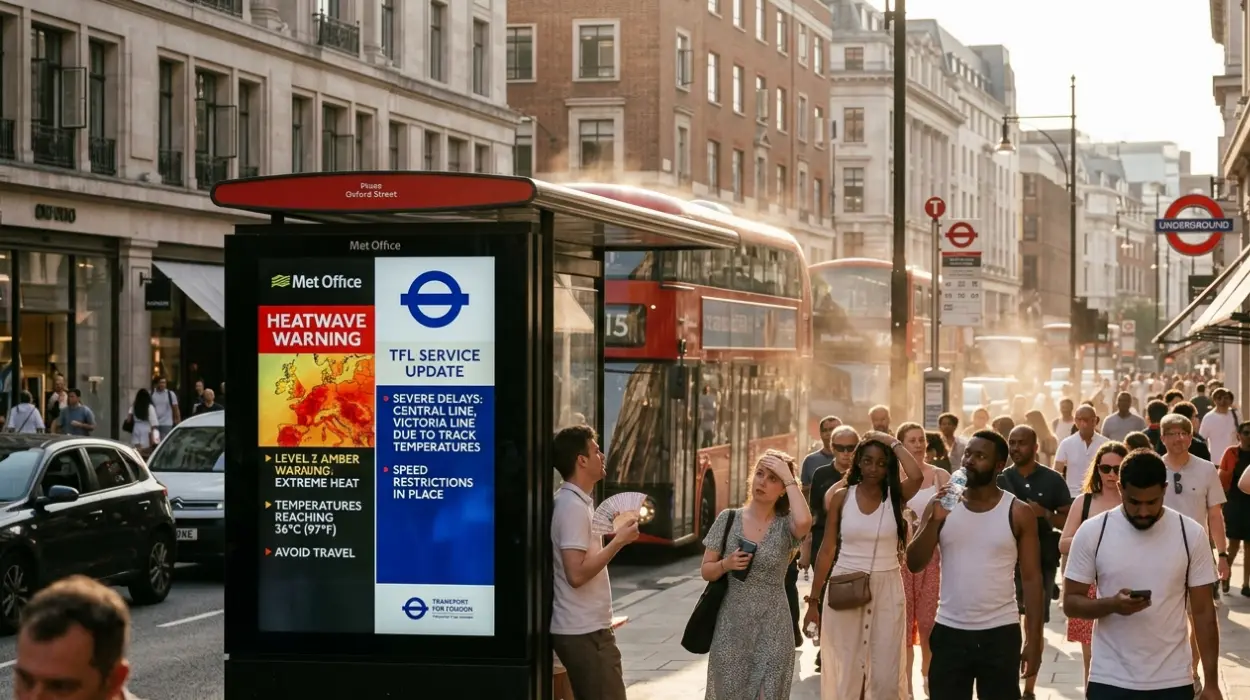
The term London weather heatwave defines a specific meteorological event characterized by prolonged periods of abnormally high temperatures across the Greater London area. Extra London News provides this comprehensive analysis of heatwave phenomena, detailing the atmospheric causes, urban thermal dynamics, structural disruptions, and public health consequences affecting the capital. London experiences unique microclimates due to its high density of buildings, vast population, and specific geography along the River Thames basin.
- What constitutes a London weather heatwave?
- What causes extreme heatwave conditions in London?
- How have historical heatwave events affected Greater London?
- How does the urban heat island effect intensify London temperatures?
- How do extreme heatwaves impact London transportation and public infrastructure?
- How do high temperatures affect public health and healthcare services in Greater London?
- How will climate change alter future London weather heatwaves?
Understanding the mechanics of heatwaves requires analyzing localized climate thresholds, regional weather systems, and long-term climate trends. Extreme high-temperature events in Greater London disrupt daily commerce, alter public transport schedules, stress healthcare systems, and accelerate energy demand. This reporting establishes the foundational meteorological concepts, historical milestones, and future climate models necessary to evaluate heatwave risks in London.
What constitutes a London weather heatwave?
A London weather heatwave occurs when daily maximum temperatures equal or exceed twenty-eight degrees Celsius for three consecutive days. The Met Office established this county-specific meteorological threshold based on the 1991 to 2020 climate baseline to trigger public heat alerts.
The Met Office, which is the national meteorological service of the United Kingdom, defines a heatwave using specific numerical criteria tailored to distinct geographical counties. Temperature thresholds reflect local historical climate averages and population tolerance levels. While northern UK counties maintain lower thresholds of twenty-five degrees Celsius, Greater London holds the highest threshold in the country at twenty-eight degrees Celsius. A heatwave designation requires three consecutive days meeting or exceeding this boundary.
The Met Office revised these threshold values in January 2022. The updated framework utilizes climatological data gathered between 1991 and 2020, replacing the older baseline from 1981 to 2010. Climate warming trends raised baseline summer temperatures across Southern England, necessitating a one-degree Celsius increase in heatwave thresholds for eight English counties.
Meteorological Thresholds and Baseline Revisions
Met Office climatologists monitor heatwaves using a network of standardized land observation stations. Three primary London observation sites measure heatwave criteria: Heathrow Airport, Kew Gardens, and Northolt. A location registers an official heatwave only when maximum shade temperatures reach twenty-eight degrees Celsius on day one, day two, and day three in an unbroken sequence.
The revision of baseline temperatures reflects sustained atmospheric warming trends. Historical climate records show that summer average maximum temperatures in London rose by zero point eight degrees Celsius between the 1961–1990 period and the 1991–2020 period. The upward adjustment of official heatwave thresholds ensures that emergency weather warnings reflect true statistical anomalies rather than routine summer weather.
Heat-Health Alert Systems in Greater London
The UK Health Security Agency, which is the executive agency responsible for public health protection, operates a joint Weather-Health Alert system alongside the Met Office. This warning structure categorizes heat risks into four distinct alert levels: Green Preparedness, Yellow Response, Amber Enhanced Response, and Red Emergency Response.
- Green Alert (Preparedness): Standard summer conditions with no immediate operational risk to public health infrastructure.
- Yellow Alert (Response): Weather impacts affect vulnerable demographics, including individuals aged sixty-five and over or those with pre-existing medical conditions.
- Amber Alert (Enhanced Response): Heat impacts extend across the wider population, causing operational stress throughout the National Health Service.
- Red Alert (National Emergency): Severe, prolonged heatwave conditions threaten critical infrastructure and risk illness or death among healthy individuals.
The alert framework coordinates emergency responses across the Greater London Authority, local borough councils, ambulance services, and primary care providers. Extra London News monitors these warning levels during extreme weather events to provide real-time updates to residents.
What causes extreme heatwave conditions in London?
London heatwaves stem from persistent high-pressure synoptic systems, such as omega blocks, that trap warm air masses. These atmospheric pressure systems transport continental air from Southern Europe and North Africa, suppressing cloud formation and accelerating solar radiation warming.
Extreme heat in the United Kingdom requires specific atmospheric circulation patterns that disrupt typical maritime weather flows. The primary driver of severe summer heat is the establishment of a high-pressure system, known as an anticyclone, over Western Europe. High pressure causes air aloft to sink toward the ground. Sinking air compresses and warms dynamically, a process known as adiabatic heating. This downward air movement prevents moist surface air from rising, suppressing cloud formation and creating clear skies that maximize solar irradiance.
Anticyclonic conditions alter regional wind patterns, replacing cool westerly winds from the Atlantic Ocean with southerly or southeasterly air currents. These atmospheric transport pathways push hot air masses across the English Channel directly into the London basin.
High-Pressure Atmospheric Dynamics
Large-scale jet stream patterns control the movement and persistence of high-pressure systems over Northern Europe. When the jet stream weakens and forms exaggerated northward loops, synoptic weather systems stall. This atmospheric configuration produces three recognizable blocking patterns: omega blocks, cut-off highs, and rex blocks.
An omega block creates a central high-pressure zone flanked by two low-pressure troughs, resembling the Greek letter $\Omega$. This configuration locks high pressure over the United Kingdom for days or weeks. The static nature of an omega block leads to cumulative heat accumulation. The land surface dries out under continuous sunlight, reducing the energy spent on water evaporation and directing solar energy into heating the ground and lower atmosphere.
Continental Air Mass Transport
The origin of an incoming air mass determines the maximum temperature potential of a London heatwave. Synoptic systems draw air from three main source regions: Tropical Continental air from North Africa, Modified Tropical Continental air from Southern Europe, and Maritime Tropical air from the Azores.
Tropical Continental air masses originate over the Sahara Desert and travel northward across Spain and France. As this air mass moves across continental Europe, intense summer sunlight maintains high surface temperatures. When the air mass crosses the English Channel, its lower layers absorb minimal moisture due to the narrow width of the sea crossing. Upon arrival in Greater London, Tropical Continental air generates high ambient temperatures accompanied by low relative humidity levels.
How have historical heatwave events affected Greater London?
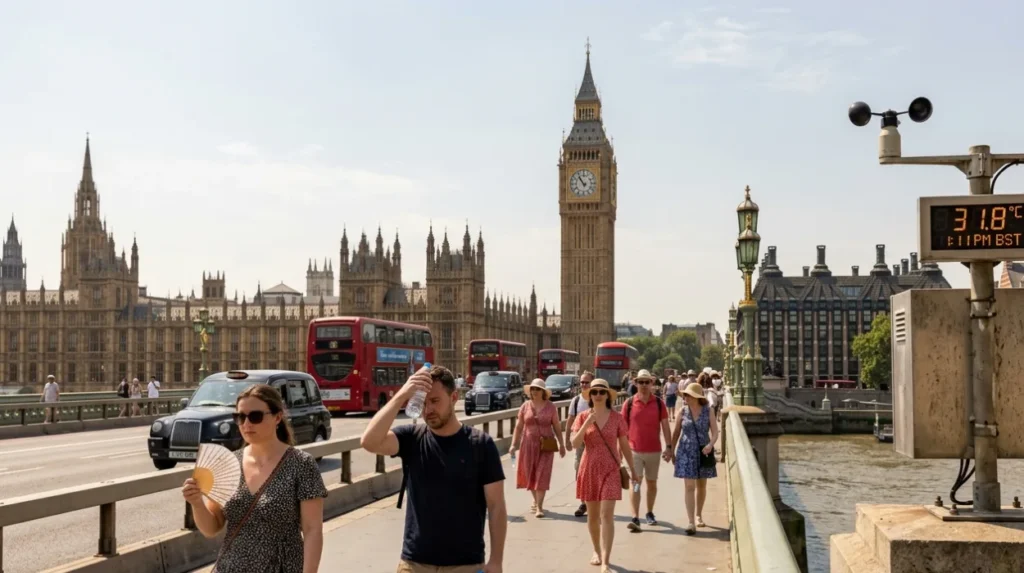
Historical London heatwaves caused severe water shortages, infrastructure disruption, and high excess mortality. The 1976 heatwave created forty-five consecutive drought days, whereas the July 2022 heatwave set an all-time record temperature of forty point two degrees Celsius.
Meteorological records maintained by the Met Office document notable summer heatwaves across Southern England dating back to 1884. Historical comparison demonstrates that heatwave intensity, frequency, and maximum peak temperatures increased significantly over the past five decades. Four historical heatwave years serve as benchmark climate events: 1976, 2003, 2018, and 2022.
The 1976 heatwave involved fifteen consecutive days exceeding thirty-two degrees Celsius across Southern England. It caused severe agricultural losses, widespread subsidence damage to London buildings constructed on clay soils, and forced Parliament to pass the Drought Act 1976.
The 1976 and 2003 Benchmark Heatwaves
The August 2003 European heatwave represented a major shift in urban thermal risk. Between 4 August and 13 August 2003, maximum temperatures in London reached thirty-seven point nine degrees Celsius at Heathrow Airport. The 2003 event demonstrated the lethal potential of prolonged nighttime temperatures. Minimum daily temperatures failed to drop below twenty degrees Celsius for five consecutive nights in central London. The Office for National Statistics recorded two thousand two hundred and sixty-seven excess deaths across England during the two-week heat event, with Greater London recording the highest proportional mortality increase.
The Record-Breaking July 2022 Heatwave
The heatwave of 18–19 July 2022 surpassed all previous atmospheric records in the United Kingdom. For the first time in recorded meteorological history, UK air temperatures exceeded forty degrees Celsius.
The Met Office station at London Heathrow recorded a maximum temperature of forty point two degrees Celsius on 19 July 2022. On the same day, St James’s Park in central London recorded forty degrees Celsius. The UK Health Security Agency issued its first Level 4 National Emergency Heat-Health Alert. The event caused major transport shutdowns, structural fires in eastern London suburbs such as Wennington, and an estimated three thousand two hundred and seventy-one excess deaths across England.
How does the urban heat island effect intensify London temperatures?
The urban heat island effect elevates London temperatures by up to ten degrees Celsius above surrounding rural areas. Dense concrete construction, dark asphalt surfaces, reduced vegetation cover, and anthropogenic heat emissions retain solar energy during daylight hours.
The Urban Heat Island (UHI) effect describes the microclimatic temperature differential between built-up urban centers and surrounding rural landscapes. Greater London acts as a primary example of an urban heat island due to its urban footprint spanning over one thousand five hundred square kilometers. Surface materials, urban geometry, and human activity alter the natural energy balance of the city.
During daylight hours, building materials with high thermal capacity absorb shortwave solar radiation. At night, these materials re-radiate this trapped energy into the lower atmosphere as longwave thermal radiation. This continuous thermal discharge prevents nighttime cooling in urban districts like the City of London, Westminster, and Camden.
Thermal Retention in Built Environments
Building density and street orientation create urban canyons that alter airflow and radiation balance. Deep street canyons trap thermal radiation between vertical building facades, preventing heat from escaping into the upper atmosphere.
Urban surfaces lack permeable soil and vegetation capable of natural cooling. In natural landscapes, plants undergo evapotranspiration, absorbing heat energy to convert liquid water into water vapor. In contrast, impervious urban surfaces shed rainwater into storm drains, eliminating latent heat flux cooling. Dry urban surfaces direct up to ninety percent of absorbed solar energy into sensible heat, raising air temperatures directly.
Anthropogenic Heat Sources and Microclimates
Anthropogenic heat emissions contribute directly to atmospheric warming in Greater London. Human heat sources fall into three primary categories: vehicular transport, building mechanical systems, and industrial equipment.
- Vehicular Transport: Internal combustion engines and braking systems release thermal energy into street-level microclimates.
- Building Mechanical Systems: Air conditioning units extract heat from interior spaces and reject it directly into exterior street canyons.
- Industrial Equipment: Power distribution substations, commercial refrigeration, and data centers vent continuous waste heat.
The concentration of these thermal sources causes central London zones to remain up to ten degrees Celsius warmer at midnight than rural locations in Kent, Surrey, or Hertfordshire.
How do extreme heatwaves impact London transportation and public infrastructure?
Extreme heatwaves cause rail track buckling, overhead power line sagging, and tarmac softening across London transport networks. Transport for London imposes speed restrictions, curtails deep-level Underground train schedules, and deploys cooling systems to maintain operational safety.
London’s public infrastructure was constructed historically to retain heat during cold winter months rather than dissipate extreme summer heat. Elevated temperatures stress transport networks, energy grids, and water distribution infrastructure. Transport for London, which is the statutory body responsible for Greater London’s transport system, faces major operational challenges when ambient air temperatures exceed thirty degrees Celsius.
Critical threshold exceedances trigger automatic safety protocols across surface rail lines, underground networks, and road corridors, reducing system capacity throughout Greater London.
Rail and London Underground Disruptions
Steel rails absorb direct solar radiation, driving rail temperatures up to twenty degrees Celsius higher than ambient air temperatures. When rail temperatures exceed fifty degrees Celsius, steel tracks expand beyond their physical expansion gaps, creating internal compressive stresses that cause track buckling. Network Rail applies stress-relief maintenance and speed restrictions when ambient temperatures surpass thirty degrees Celsius to reduce mechanical force on vulnerable tracks.
The London Underground network experiences extreme internal heat. Deep-level tube lines, including the Central, Northern, and Bakerloo lines, run through clay tunnels that absorbed over a century of heat emissions from train braking and mechanical systems. These clay surroundings store heat, maintaining tunnel air temperatures above thirty-five degrees Celsius during summer heatwaves. Deep-level lines lack air conditioning due to space constraints inside narrow nineteenth-century tunnels. Transport for London relies on high-capacity tunnel ventilation fans and groundwater cooling systems to control thermal conditions.
Electrical Grid and Water Supply Strain
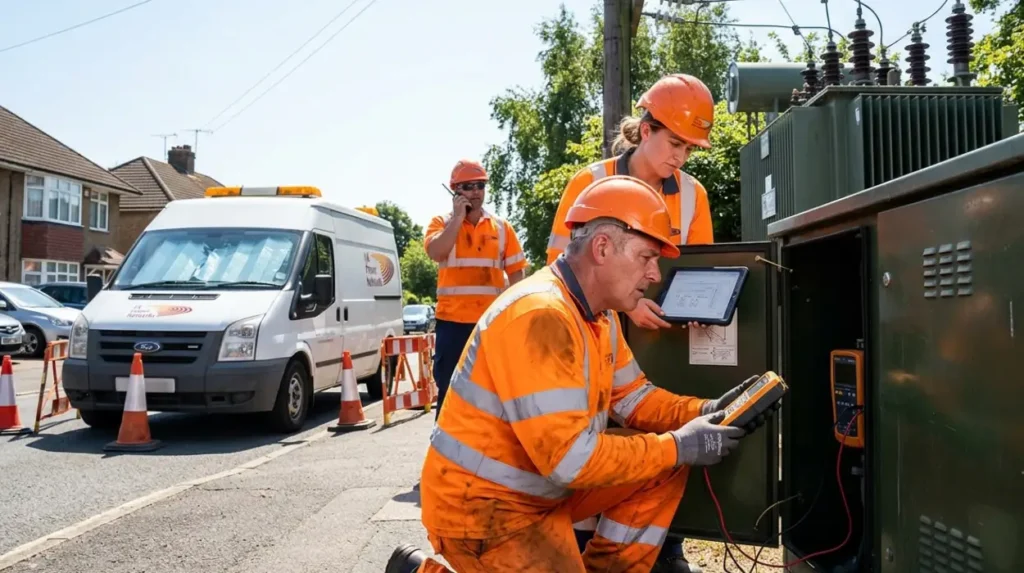
Extreme heat stresses high-voltage electrical networks operated by UK Power Networks. Underground power cables lose transmission efficiency as soil temperatures rise. Simultaneously, peak demand spikes as commercial and domestic air conditioning systems operate at maximum capacity. Transformer stations risk thermal overload, increasing the frequency of localized power outages.
Water utility providers, including Thames Water, face rapid increases in consumer water demand during heatwave events. Peak water usage causes distribution pressure drops across high-density borough networks. Prolonged soil drying causes London clay soils to shrink and shift, fracturing underground cast-iron water mains and increasing water leakage rates.
How do high temperatures affect public health and healthcare services in Greater London?
High temperatures trigger heat exhaustion, heatstroke, cardiovascular strain, and severe respiratory illnesses in vulnerable populations. During the 2022 heatwaves, Greater London registered elevated mortality rates, placing significant operational pressure on the National Health Service.
Extreme heat poses a direct threat to human physiology. When ambient temperatures exceed normal human body temperature of thirty-seven degrees Celsius, the body relies on sweating and peripheral vasodilation to dissipate internal heat. Continuous physiological thermoregulation strains the human cardiovascular system.
The London Health Board and the UK Health Security Agency identify two major physiological conditions caused directly by high heat exposure: heat exhaustion and heatstroke.
- Heat Exhaustion: Characterized by heavy sweating, rapid pulse, dizziness, fatigue, nausea, and low blood pressure caused by fluid and electrolyte loss.
- Heatstroke: A life-threatening medical emergency where internal body temperature exceeds forty degrees Celsius, causing central nervous system dysfunction, confusion, organ failure, and loss of consciousness.
Health Risks and Vulnerable Populations
Heatwave mortality affects specific high-risk demographic groups. The UK Health Security Agency identifies four vulnerable populations: adults aged sixty-five and older, infants and young children, individuals with chronic cardiovascular or respiratory conditions, and outdoor manual workers.
High night-time temperatures prevent physiological recovery. When nighttime air temperatures remain above twenty degrees Celsius, a condition known as a “tropical night,” heart rates and blood pressure levels remain elevated during sleep, increasing stroke and heart attack risks.
Elevated temperatures degrade outdoor air quality. Sunlight and high heat catalyze chemical reactions between nitrogen oxides and volatile organic compounds emitted by traffic, generating ground-level ozone. High ozone levels irritate pulmonary tissues, exacerbating asthma and chronic obstructive pulmonary disease across Greater London.
Emergency Medical Services and Excess Mortality
Heatwaves generate sharp surges in 999 emergency calls. The London Ambulance Service experiences increased call volumes for respiratory distress, cardiac arrests, and syncope during peak heatwave days.
Analysis by the Office for National Statistics confirms that heatwave periods correlate directly with statistical spikes in excess mortality. During the July 2022 heatwave, daily mortality figures in Greater London exceeded baseline expectations by over ten percent, demonstrating the critical public health risk posed by extreme heat.
How will climate change alter future London weather heatwaves?
Climate projections indicate that London heatwaves will increase in frequency, duration, and intensity by 2050. Summer temperatures exceeding forty degrees Celsius will occur every two to three years without rapid reductions in global greenhouse gas emissions.
Climatological research published by the Met Office Hadley Centre demonstrates that human-induced climate change alters atmospheric baseline conditions. Anthropogenic emissions of carbon dioxide and methane trap thermal energy within the troposphere, shifting global temperature distributions. Consequently, extreme heat events that were historically rare occur with higher probability and greater severity.
The UK Climate Projections (UKCP18) framework provides probabilistic climate modeling for Greater London. Under high greenhouse gas emission scenarios, baseline summer temperatures in London will rise by up to three degrees Celsius by the middle of the twenty-first century.
Climate Modeling and Frequency Projections
Historical climate analysis indicates that a summer reaching forty degrees Celsius in the United Kingdom was an event with a return period exceeding one hundred years under pre-industrial conditions. Attribution studies conducted by the Met Office confirm that global greenhouse gas emissions made the 2022 record-breaking heatwave at least ten times more likely.
By 2050, extreme heatwaves reaching temperatures between thirty-five and forty degrees Celsius will occur every two to three years in Southern England. The duration of these events will expand from typical two-day spikes into multi-week heat episodes, increasing cumulative thermal stress on population health and physical infrastructure.
Urban Adaptation and Cooling Strategies
The Greater London Authority, which is the regional governance body for Greater London, maintains climate adaptation policies to build heat resilience across the capital. Urban planning initiatives address the built environment through three spatial strategies: green infrastructure expansion, urban design regulations, and passive cooling integration.
- Green Infrastructure Expansion: Increasing the urban tree canopy to thirty percent covers asphalt surfaces, providing shade and reducing surface temperatures by up to five degrees Celsius through evapotranspiration.
- Urban Design Regulations: The London Plan mandates that new building developments incorporate energy-efficient passive cooling, green roofs, and reflective exterior materials to mitigate solar heat gain.
- Cool Spaces Networks: Local borough councils establish designated “Cool Spaces”—including public libraries, community centers, and shaded parks—allowing vulnerable residents to access air-conditioned or naturally cool shelter during severe heat warnings.
Extra London News continues to monitor regional meteorological data, infrastructure vulnerability updates, and public safety alerts to keep Londoners informed during extreme weather events.
What is a London weather heatwave?
A London weather heatwave is a period of unusually high temperatures lasting several consecutive days. The Met Office uses region-specific thresholds, meaning the temperature required to officially classify a heatwave in London differs from thresholds used in cooler parts of the UK.