London’s architecture tells the story of nearly two thousand years of urban development through Roman remains, medieval churches, Tudor palaces, Georgian squares, Victorian engineering, post-war reconstruction, and contemporary skyscrapers. The city’s architectural landscape reflects political power, economic expansion, technological innovation, religious transformation, and changing approaches to urban planning. Exploring London’s buildings through dedicated architecture tours provides one of the most comprehensive ways to understand how Britain’s capital evolved into one of the world’s most historically layered and architecturally diverse cities.
- Why are architecture tours one of the best ways to understand London’s history?
- Which historic architectural periods can visitors explore across London?
- Which historic buildings define London’s architectural heritage?
- How do London’s modern architectural masterpieces complement historic landmarks?
- How did the Great Fire of London permanently reshape the city’s architecture?
- Which neighbourhoods provide the richest architecture walking tours?
- Who were the architects that shaped London’s built environment?
- How does architectural preservation protect London’s historical identity?
- What can visitors learn from architecture tours beyond building design?
- Why will London’s architecture remain historically significant for future generations?
- Frequently Asked Question
Today, Greater London contains more than 600,000 listed buildings and structures, including four UNESCO World Heritage Sites, hundreds of conservation areas, and internationally recognised examples of modern architecture. Historic landmarks stand alongside award-winning contemporary developments, demonstrating how successive generations have reshaped the city while preserving significant elements of its past.
Why are architecture tours one of the best ways to understand London’s history?
Architecture tours reveal London’s complete historical development by connecting buildings with political events, social change, engineering innovation, religious transformation, and urban planning. They explain why different architectural styles exist together while demonstrating how nearly 2,000 years of construction shaped the modern capital.
Unlike museum exhibitions that present history through artefacts, architecture tours allow visitors to examine historical evidence in its original setting. Streets, bridges, churches, public buildings, and commercial districts preserve physical records of London’s continuous development from Roman Londinium to today’s global financial centre.
Buildings reveal far more than construction techniques. They illustrate economic prosperity, technological advancement, royal authority, religious reform, industrial expansion, wartime destruction, and modern regeneration.
Professional architecture tours frequently organise routes chronologically or thematically. Some focus on medieval London, while others examine Victorian engineering, post-war reconstruction, or contemporary sustainable design. Combined routes demonstrate how these periods overlap throughout the city.
London’s architectural diversity results from repeated rebuilding following major events including the Norman Conquest in 1066, the Dissolution of the Monasteries during the sixteenth century, the Great Fire of London in 1666, Victorian industrialisation, the Blitz during the Second World War, and twenty-first-century urban redevelopment.
Understanding these historical layers transforms familiar landmarks into evidence of broader historical processes.
Which historic architectural periods can visitors explore across London?
London preserves architectural examples from Roman, Norman, Medieval, Tudor, Stuart, Georgian, Victorian, Edwardian, Modernist, Postmodern, and Contemporary periods. Each era introduced distinctive construction techniques, planning principles, decorative styles, and engineering achievements that remain visible throughout the capital today.
Roman London survives through archaeological remains such as sections of the London Wall and the Roman amphitheatre beneath the Guildhall complex. These structures demonstrate early urban planning introduced after AD 43.
Norman architecture followed the conquest of 1066. Massive stone fortifications replaced timber defensive structures, symbolising centralised royal authority. The White Tower remains Britain’s finest Norman military building.
Medieval Gothic architecture flourished between the twelfth and fifteenth centuries. Pointed arches, ribbed vaults, flying buttresses, and stained glass transformed English religious buildings into monumental expressions of Christian faith.
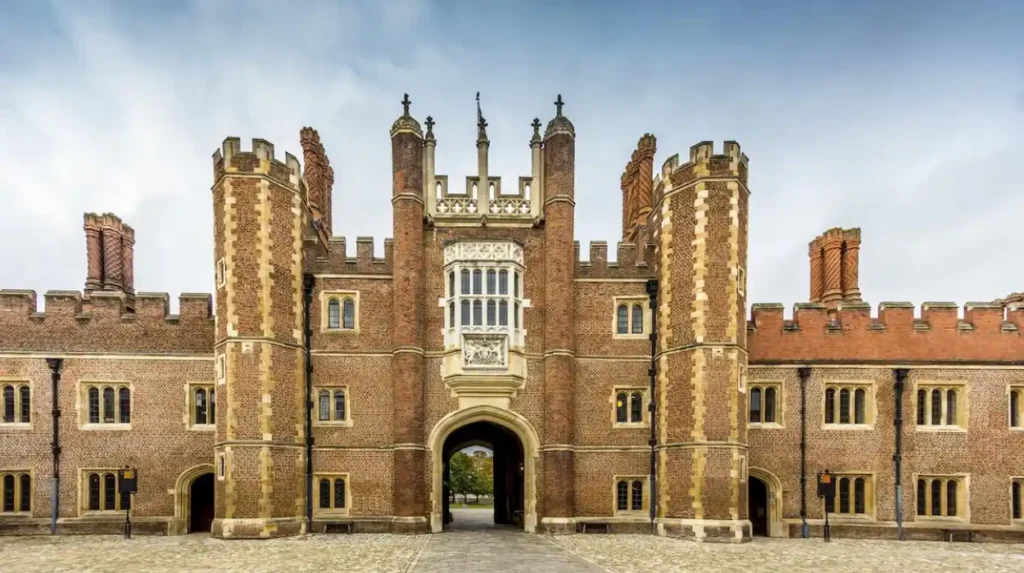
The Tudor period introduced brick construction on a larger scale while Renaissance influences gradually appeared within elite residences and royal palaces.
Following the Great Fire, Christopher Wren and his contemporaries reshaped central London using Baroque principles, producing new churches and civic buildings.
The Georgian era standardised London’s streets through elegant terraces, formal squares, and classical proportions inspired by ancient Greece and Rome.
Victorian architects embraced Gothic Revival, railway engineering, industrial materials, museums, civic institutions, and monumental infrastructure that reflected Britain’s imperial confidence.
Twentieth-century Modernism replaced ornament with functionality, while recent architecture combines advanced engineering, environmental sustainability, and innovative structural design.
Together these periods create one of the world’s richest architectural timelines.
Which historic buildings define London’s architectural heritage?
Historic buildings including the Tower of London, Westminster Abbey, St Paul’s Cathedral, Hampton Court Palace, Somerset House, and the Palace of Westminster demonstrate London’s architectural evolution across nearly one thousand years through military, religious, royal, governmental, and civic construction.
The Tower of London began under William the Conqueror during the late eleventh century. Successive monarchs expanded the fortress into a royal residence, prison, armoury, mint, and treasury. Norman military architecture remains clearly visible despite centuries of additions.
Westminster Abbey represents one of Britain’s most significant Gothic churches. Construction largely occurred between the thirteenth and sixteenth centuries. Coronations have taken place there since 1066, linking architecture directly with constitutional history.
St Paul’s Cathedral, completed in 1710, symbolises London’s recovery after the Great Fire. Christopher Wren combined classical architecture with English engineering innovation to create one of Europe’s greatest domed churches.
Hampton Court Palace illustrates the transition from Tudor royal residence to Baroque palace. Cardinal Thomas Wolsey began construction before Henry VIII transformed the complex into a major royal court.
Somerset House reflects eighteenth-century neoclassical planning, while the Palace of Westminster demonstrates Gothic Revival architecture developed after the devastating parliamentary fire of 1834.
Each landmark illustrates how architecture fulfilled political, religious, administrative, or ceremonial functions while shaping London’s identity.
To experience these historic landmarks in person today, consult our comprehensive [London’s Architectural Evolution Explained Through Iconic Buildings Across Different Historical Periods] for itineraries and visiting parameters.
How do London’s modern architectural masterpieces complement historic landmarks?
Modern architecture complements London’s historic environment through careful urban planning, engineering innovation, adaptive reuse, sustainable design, and skyline management. Contemporary buildings demonstrate how historic preservation and modern development coexist within one internationally significant metropolitan landscape.
London avoided becoming an open-air architectural museum by encouraging carefully managed redevelopment across former industrial districts and commercial centres.
The Lloyd’s Building introduced high-tech architecture during the 1980s by exposing structural services externally. This revolutionary approach maximised flexible interior space while redefining commercial architecture.
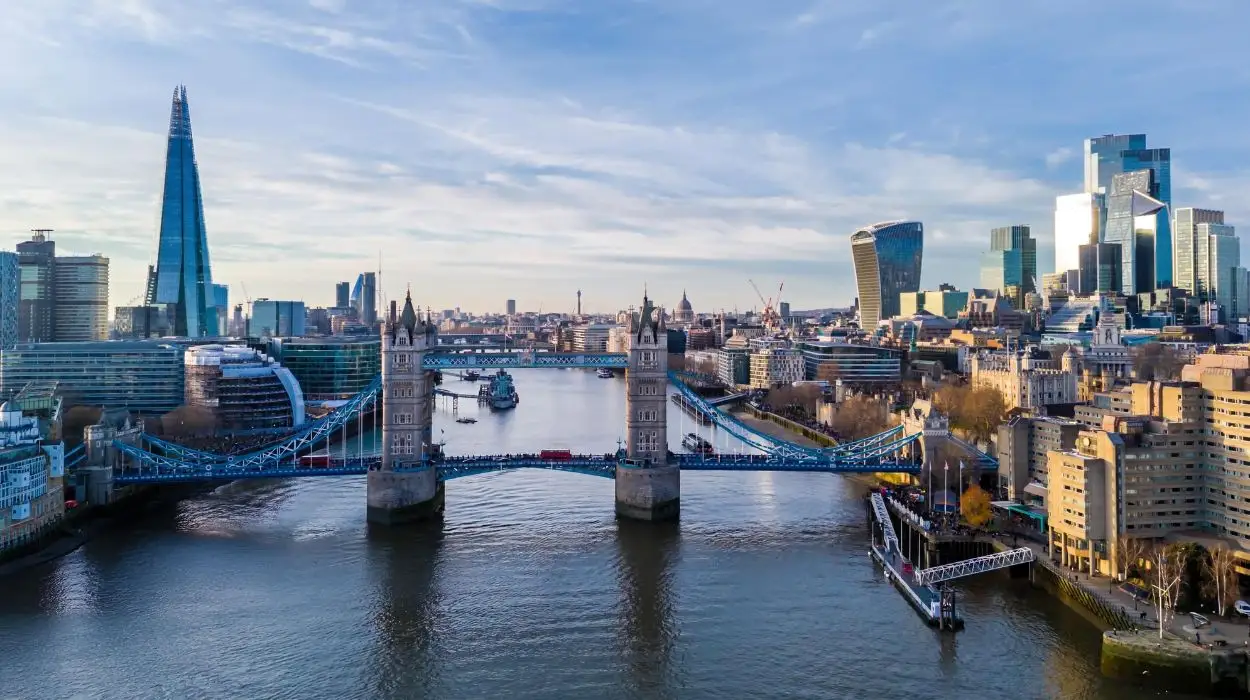
The Gherkin transformed London’s skyline after opening in 2004. Its energy-efficient aerodynamic form reduced wind turbulence while demonstrating advances in structural engineering.
The Shard, completed in 2012, became Western Europe’s tallest building at the time. Mixed-use vertical development combined offices, hotels, restaurants, apartments, and public observation facilities within a single structure.
The Walkie Talkie, Cheesegrater, and Scalpel collectively demonstrate contemporary approaches to high-density commercial development while respecting protected views of St Paul’s Cathedral.
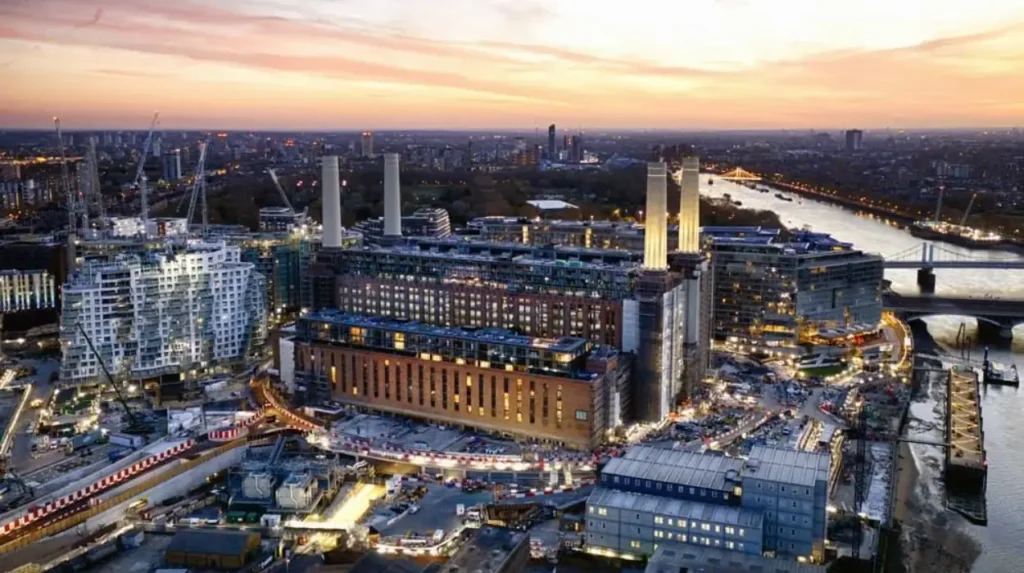
Adaptive reuse projects have also become central to London’s architectural identity. Battersea Power Station, King’s Cross, Coal Drops Yard, and Tate Modern illustrate how historic industrial structures gained entirely new purposes without losing their heritage significance.
These projects demonstrate that architectural continuity depends on thoughtful adaptation rather than permanent preservation alone.
How did the Great Fire of London permanently reshape the city’s architecture?
The Great Fire of 1666 destroyed approximately 13,200 houses, 87 parish churches, St Paul’s Cathedral, and numerous civic buildings. Reconstruction introduced improved building regulations, wider streets, fire-resistant materials, and Christopher Wren’s influential architectural designs.
Beginning on 2 September 1666, the fire spread rapidly through timber-framed buildings packed within narrow medieval streets.
Although only a small number of people died directly from the fire, around 80,000 residents lost their homes.
Reconstruction fundamentally changed London’s urban fabric.
New regulations encouraged brick and stone construction instead of timber. Building standards became stricter, reducing future fire risks.
Christopher Wren proposed ambitious redesigns inspired by continental Baroque planning. Property ownership complexities prevented complete implementation, but many principles influenced rebuilding.
Wren ultimately designed 52 parish churches alongside St Paul’s Cathedral.
The rebuilt city demonstrated improved fire resistance while preserving much of London’s medieval street pattern.
Modern architecture tours frequently explain how traces of pre-fire London remain alongside Wren’s rebuilding programme, allowing visitors to compare medieval survival with Restoration planning.
Which neighbourhoods provide the richest architecture walking tours?
The City of London, Westminster, South Bank, Bloomsbury, Greenwich, Kensington, Clerkenwell, and King’s Cross provide exceptional architecture walking experiences because each district preserves distinctive historical development, planning traditions, landmark buildings, and urban design from different historical periods.
The City of London combines Roman archaeology, medieval churches, Wren masterpieces, Victorian banking halls, and internationally recognised skyscrapers within one square mile.
Westminster concentrates royal, governmental, and ecclesiastical architecture including Parliament, Westminster Abbey, Whitehall, and Buckingham Palace.
Bloomsbury showcases Georgian residential planning through elegant squares, terraces, educational institutions, and museums.
South Bank illustrates industrial redevelopment through cultural institutions including Tate Modern, the National Theatre, and riverside regeneration.
Greenwich preserves maritime architecture connected with Britain’s naval history, scientific advancement, and global navigation.
King’s Cross demonstrates successful urban regeneration through restored industrial warehouses, railway infrastructure, and contemporary mixed-use developments.
Clerkenwell contains medieval religious foundations, Victorian workshops, converted factories, and modern creative industries.
Each district represents a distinct chapter in London’s architectural evolution while contributing to the city’s broader historical narrative.
Who were the architects that shaped London’s built environment?
Architects including Christopher Wren, Nicholas Hawksmoor, John Nash, Charles Barry, Augustus Pugin, Norman Foster, Richard Rogers, and Renzo Piano transformed London’s appearance through churches, public buildings, transport infrastructure, government institutions, commercial towers, and urban masterplans.
Christopher Wren dominated post-fire reconstruction during the late seventeenth century.
Nicholas Hawksmoor extended English Baroque architecture through distinctive churches characterised by dramatic massing and classical symbolism.
John Nash reshaped Regency London by designing Regent Street, Regent’s Park, and improvements connected with royal urban planning.
Charles Barry collaborated with Augustus Pugin on the Palace of Westminster, combining Gothic Revival aesthetics with modern governmental requirements.
Victorian architects expanded museums, railway stations, schools, libraries, and civic institutions across rapidly growing suburbs.
Norman Foster introduced internationally recognised sustainable engineering through projects including City Hall and the Gherkin.
Richard Rogers promoted high-tech architecture emphasising flexibility, transparency, and structural expression.
Renzo Piano designed the Shard, creating a landmark that symbolises twenty-first-century London’s global economic role.
Studying these architects reveals how individual vision interacted with technological innovation, political priorities, and changing public expectations.
How does architectural preservation protect London’s historical identity?
Architectural preservation safeguards London’s historical identity through listed building protection, conservation areas, archaeological management, planning controls, restoration programmes, and adaptive reuse. These measures balance urban growth with long-term protection of nationally and internationally significant heritage assets.
England introduced formal listing systems after the Second World War to identify buildings possessing special architectural or historic interest.
Buildings receive Grade I, Grade II*, or Grade II status according to their significance.
Conservation areas protect entire historic neighbourhoods rather than individual structures alone.
Historic England, local planning authorities, heritage charities, academic institutions, and specialist conservation professionals collaborate on restoration projects.
Modern conservation prioritises minimal intervention while preserving original materials whenever practical.
Adaptive reuse has become increasingly important because occupied buildings generally receive better long-term maintenance than abandoned structures.
Examples include warehouses converted into residential developments, industrial power stations transformed into museums, and historic railway infrastructure integrated into commercial districts.
These strategies preserve architectural authenticity while allowing historic buildings to remain economically sustainable.
What can visitors learn from architecture tours beyond building design?
Architecture tours explain London’s economic development, social hierarchy, religious history, political institutions, engineering progress, migration patterns, industrialisation, environmental planning, and cultural identity by interpreting buildings within their wider historical, geographical, and societal contexts.
Architecture reflects every aspect of urban life.
Churches explain religious transformation following the English Reformation.
Markets reveal commercial expansion driven by international trade.
Railway stations illustrate nineteenth-century industrialisation and technological progress.
Public housing demonstrates changing government approaches to social welfare.
Financial districts document London’s emergence as a global economic centre.
Memorials and reconstruction projects explain the impact of warfare, particularly bombing during the Second World War.
Urban parks reveal nineteenth-century public health reforms, while modern sustainable developments illustrate changing environmental priorities.
Architecture also records demographic change. Immigration introduced new religious buildings, commercial districts, educational institutions, and cultural centres that enriched London’s urban identity.
For students, educators, family historians, and cultural visitors, architecture tours therefore function as interdisciplinary historical investigations rather than simple sightseeing experiences.
Why will London’s architecture remain historically significant for future generations?
London’s architecture will remain historically significant because it preserves continuous evidence of urban development across two millennia while demonstrating successful integration of heritage conservation, sustainable innovation, technological advancement, and evolving civic identity within one globally influential capital city.
Few world cities preserve such an uninterrupted architectural timeline.
Roman foundations survive beneath medieval streets.
Norman fortifications stand close to Gothic churches.
Georgian terraces overlook Victorian infrastructure.
Contemporary skyscrapers rise beside seventeenth-century domes protected through carefully managed planning policies.
Future generations will continue studying London’s buildings to understand changing construction technologies, political institutions, environmental adaptation, and urban governance.
Digital surveying, laser scanning, Building Information Modelling (BIM), and archaeological documentation increasingly support long-term conservation while improving public access to architectural knowledge.
Climate resilience has also become a defining challenge. Historic buildings require sensitive adaptation to withstand changing environmental conditions without compromising heritage value.
As London’s population continues to grow, successful integration of preservation with sustainable development will remain central to planning policy.
Architecture tours therefore provide more than an appreciation of beautiful buildings. They offer direct engagement with nearly two thousand years of British history preserved in stone, brick, steel, timber, glass, and concrete. Every district contributes another chapter to this continuing story, allowing visitors to understand how successive generations built, rebuilt, protected, and reimagined one of the world’s most historically significant cities.
Frequently Asked Question
What is the best architecture tour in London for seeing historic and modern buildings together?
A top architecture tour in London combines routes through the City of London, Westminster, and South Bank because these areas showcase historic landmarks alongside modern masterpieces. Visitors can explore buildings such as St Paul’s Cathedral, the Tower of London, the Palace of Westminster, the Gherkin, the Shard, and Tate Modern while learning about architectural changes from Roman times to the twenty-first century. These tours explain how preservation, urban planning, and contemporary design coexist within London’s evolving cityscape.