Key Points:
- Hundreds of affordable homes promised in major Camden regeneration schemes have been lost or are at risk.
- Developers have sought cuts to affordable housing quotas, citing worsening economic conditions and rising construction costs.
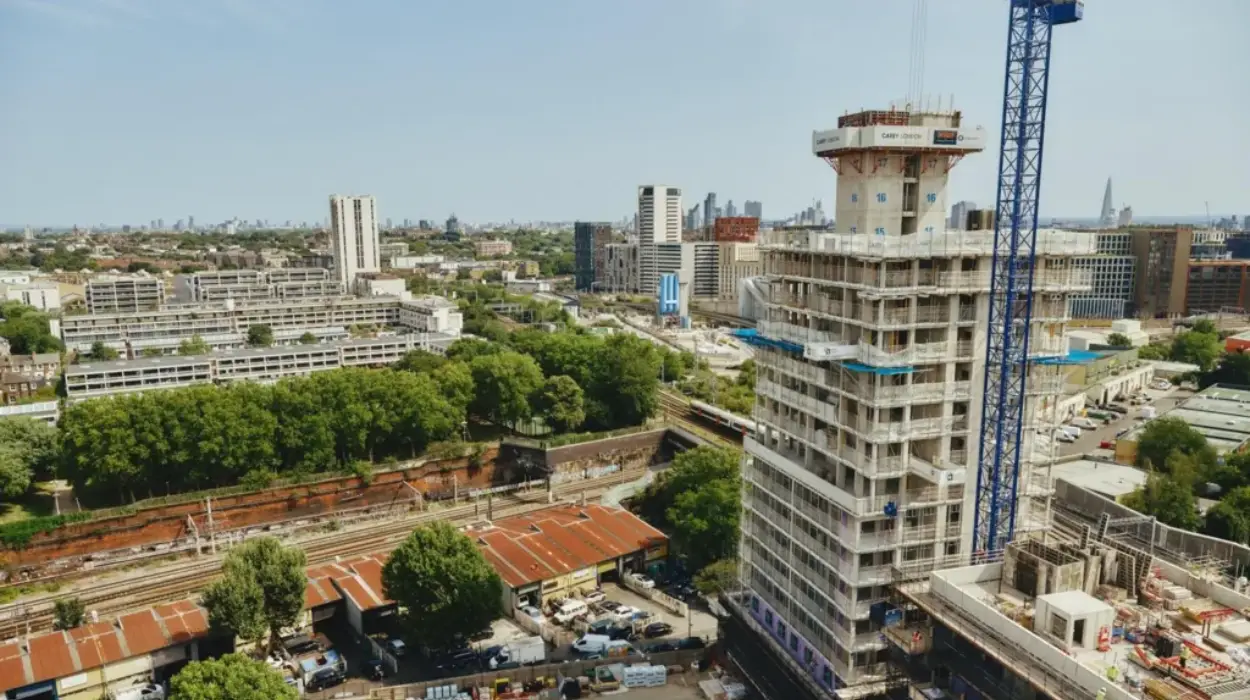
- At the eight-acre Camden Goods Yard development on Chalk Farm Road, the number of affordable homes fell from 203 to 83 after developers won an appeal in May.
- Camden Council approved revised plans for the O2 Centre site on Thursday, cutting affordable housing from 570 to 330 homes in the 1,800-home development.
- Residents and businesses affected by the regeneration projects have reported financial hardship and displacement.
- Mark, 56, said prolonged construction had affected his health, including from inhaling cement dust.
- He described the relationship between the local community and the council as a “broken social contract,” saying the projects continue to change in ways that benefit developers.
- A Camden Council report said the authority is facing a “unique crisis of affordability,” adding to the area’s housing emergency.
London (Extra London News) August 24, 2026 – Camden Council has found itself at the very sharp end of an escalating housing crisis as hundreds of affordable homes, initially promised as part of major urban regeneration developments, have been either lost entirely or placed at severe risk. This significant reduction in community-focused housing allocations comes after private developers successfully sought sweeping reductions to their statutory housing quotas. These construction firms have consistently cited worsening economic conditions, including skyrocketing material costs and inflation, as the primary catalysts rendering their original proposals financially unviable. As reported by James Smith of BBC News, these strategic changes have sparked a profound sense of disenfranchisement among local residents and small businesses. Many within the borough are currently describing severe financial hardship, ongoing displacement, and a mounting conviction that the municipal planning system is fundamentally failing the local communities it was originally designed to protect and serve.
- Key Points:
- Why Are Developers Reducing Affordable Housing Commitments in Camden?
- How Were the Housing Quotas Altered at the O2 Centre Development?
- What Happened to the Camden Goods Yard Regeneration Project?
- How Is Construction Impacting the Health of Local Residents?
- Has the Social Contract Between Camden Council and Residents Been Broken?
- Are Local Businesses Facing Displacement Due to Regeneration?
- What Is the ‘Unique Crisis of Affordability’ Identified by Camden Council?
- What Are the Broader Implications for the UK Planning System?
Why Are Developers Reducing Affordable Housing Commitments in Camden?
The provision of affordable housing in the capital has long been a complex balancing act between municipal requirements and private sector profitability. Across London, local authorities rely heavily on Section 106 agreements—legal requirements tied to planning permissions that compel developers to contribute to the community, most notably by providing a set percentage of affordable housing. However, as the broader UK economy continues to face significant headwinds, developers argue that rising costs have made their initial commitments financially impossible to honour.
As reported by James Smith of BBC News, affordable housing commitments on two of Camden’s absolute biggest regeneration schemes have recently been drastically reduced or placed under urgent review. The core argument presented by developers is that rampant inflation, increased borrowing costs, and supply chain disruptions have severely compromised the baseline viability of these multi-million-pound projects. By deploying “financial viability assessments,” developers can legally argue that delivering the originally agreed-upon number of affordable units would render the entire project unprofitable, thus stalling development altogether. This loophole has forced Camden Council into a precarious corner, having to choose between accepting fewer affordable homes or risking the total collapse of these much-needed housing schemes.
How Were the Housing Quotas Altered at the O2 Centre Development?
The O2 Centre redevelopment is one of the most significant and heavily scrutinised urban regeneration projects in recent Camden history. The sprawling site was initially hailed as a transformative opportunity to deliver a substantial volume of much-needed housing to the borough. The original masterplan promised an ambitious 1,800-home development, with a firm commitment to providing a large proportion of affordable units for local families on the council’s waiting list.
However, that initial optimism has recently been severely curtailed. On Thursday, the council officially approved revised plans that drastically cut affordable housing at the O2 Centre site from the originally promised 570 homes down to just 330. As reported by James Smith of BBC News, this decision represents a staggering loss of 240 affordable units—homes that were desperately needed by low- and middle-income families in the area. The council’s reluctant approval underscores the difficult concessions local governments are currently being forced to make when confronted by well-resourced developers wielding viability assessments.
Explore more Camden News:
Kentish Town Station Gym Plans Submitted in London 2026
Camden Artists Face Eviction From Lifeline Studios, London 2027
What Does This Mean for the 1,800-Home Masterplan?
While the overall number of dwellings planned for the O2 Centre site remains at 1,800, the composition of those homes has now shifted significantly towards luxury and private-market sales. This gentrification of the site’s masterplan means that the development will cater predominantly to higher-income brackets, largely locking out the very demographics who are most vulnerable to the ongoing housing crisis. For many community activists, the loss of these 240 affordable units is not just a statistical adjustment; it represents a generational loss of opportunity for working-class Londoners to remain in their home borough.
What Happened to the Camden Goods Yard Regeneration Project?
The narrative of shrinking community benefits is not isolated to the O2 Centre. A similar situation has unfolded at the Camden Goods Yard, an expansive eight-acre development situated on Chalk Farm Road. This site was supposed to be a shining example of mixed-use urban regeneration, seamlessly blending commercial spaces with a robust residential offering.
Yet, as reported by James Smith of BBC News, in a revised plan that proved successful on appeal in May, affordable homes at the Camden Goods Yard were slashed from 203 to a mere 83. This dramatic reduction of 120 affordable units was pushed through the planning inspectorate despite fierce opposition from local residents and housing campaigners. The fact that the developers were able to overturn the original quota on appeal highlights the immense power imbalances inherent within the current national planning framework, where financial viability for private entities frequently supersedes the urgent social needs of the local populace.
How Is Construction Impacting the Health of Local Residents?
The consequences of these sprawling regeneration projects extend far beyond statistics on a planning document; they are having acute, tangible impacts on the daily lives and well-being of those living in their immediate shadows. For many residents, the promise of neighbourhood improvement has instead brought years of disruption, noise, and environmental hazards.
One prominent voice in this struggle is Mark, a 56-year-old local resident who currently lives in social housing adjacent to the Chalk Farm Road site. As reported by James Smith of BBC News, Mark stated that his health had significantly suffered from the heavy cement dust he has been forced to breathe during the extensively delayed construction work at the nearby Camden Goods Yard.
What Specific Environmental Hazards Are Communities Facing?
The prolonged nature of these construction projects—often delayed by the very financial negotiations that result in fewer affordable homes—means that communities are subjected to industrial-level disruption for years on end. Mark’s experience with airborne cement dust highlights a severe lack of environmental mitigation by developers. Continuous exposure to such particulate matter can lead to chronic respiratory issues, exacerbating the health inequalities already present in lower-income urban communities.
Has the Social Contract Between Camden Council and Residents Been Broken?
The physical toll on residents is closely mirrored by a deep, growing psychological and civic disillusionment. The systematic paring back of community benefits in favour of developer profits has bred a profound sense of betrayal among Camden’s citizenry. They see their neighbourhoods being transformed, not for their benefit, but for international investors and high-net-worth individuals.
Expressing this widespread frustration, the 56-year-old resident, Mark, delivered a scathing assessment of the local authority’s role. As reported by James Smith of BBC News, Mark stated that the relationship between Camden Council and its residents was now one of “a broken social contract,” bitterly noting that “projects mutate for developer benefits.”
Why Do Residents Feel the Planning System Is Failing Them?
Mark’s poignant statement encapsulates the precise grievance held by many in Camden: that the local government, meant to act as a steward of the public good, has been rendered impotent by a planning system skewed heavily towards private capital. When developers can fundamentally alter the terms of a massive regeneration scheme midway through the process—slashing affordable housing while maintaining their private market yields—residents are left feeling that the statutory consultation processes are merely performative. The perception is that local communities are subjected to the negative externalities of construction (dust, noise, displacement) without reaping the promised rewards of affordable housing and improved public amenities.
Are Local Businesses Facing Displacement Due to Regeneration?
It is not merely residential tenants who are feeling the immense pressures of Camden’s aggressive redevelopment; the local commercial ecosystem is also under severe threat. The ongoing changes come as businesses and residents affected by regeneration projects describe financial hardship, displacement, and a growing sense that the planning system is failing local communities.
As these multi-acre developments take shape, the land values and commercial rents in the surrounding areas inevitably spike. Long-standing local businesses, ranging from independent grocers to family-owned cafes, often find themselves priced out of the very neighbourhoods they helped build. Furthermore, the extensive delays and road closures associated with mega-projects like the Camden Goods Yard and the O2 Centre site severely throttle foot traffic, leading to insurmountable financial hardship for small retailers. As reported by James Smith of BBC News, this aggressive gentrification and commercial displacement serve to erode the unique cultural fabric that has historically defined Camden, replacing it with sterile, homogenous retail spaces designed for corporate chain stores.
What Is the ‘Unique Crisis of Affordability’ Identified by Camden Council?
Camden Council is not entirely blind to the catastrophic situation unfolding within its borders. The local authority is acutely aware of the systemic failures that are pricing thousands of people out of the borough.
According to an internal Camden Council report, the local authority formally acknowledges that it is trapped in a “unique crisis of affordability.” As reported by James Smith of BBC News, this official designation reflects a perfect storm of socio-economic factors: soaring private rents, stagnant real wages, a chronic shortage of social housing stock, and now, the systematic failure of the private sector to deliver on its affordable housing commitments.
How Is Camden’s Crisis Different from the Rest of London?
While the housing crisis is a pan-London issue, Camden’s situation is particularly acute due to its geography. Situated in inner London, the land values in Camden are astronomically high. This makes the borough an incredibly lucrative target for luxury developers, but equally makes it nearly impossible for the council to purchase land for its own municipal housing projects. Consequently, the council is entirely dependent on private developers delivering affordable units through Section 106 agreements. When those agreements are broken or renegotiated down—as seen at the O2 Centre and Camden Goods Yard—the council has very few alternative mechanisms to house its most vulnerable residents.
What Are the Broader Implications for the UK Planning System?
The grim reality unfolding in Camden serves as a stark microcosm for the wider failures of the national urban planning framework in the United Kingdom. If developers can successfully weaponise economic downturns and viability assessments to back out of their social obligations in one of London’s most prominent boroughs, a dangerous precedent is set for the rest of the country.
The loss of 120 affordable homes at Camden Goods Yard and 240 affordable homes at the O2 Centre represents hundreds of families who will remain trapped in substandard, overcrowded, or unaffordable temporary accommodation. It highlights a critical legislative failure wherein the risks of property development are effectively socialised—borne by the local community through lost amenities and prolonged construction hazards—while the massive financial rewards remain strictly privatised.
As inflation continues to impact the global construction sector, it is highly likely that more developers will seek to renegotiate their affordable housing quotas. Without urgent reform to the planning system to ensure that viability assessments cannot be used to effortlessly override community needs, local authorities like Camden will remain at the absolute “sharp end of the housing crisis.” The broken social contract that residents like Mark have so clearly identified will only fracture further, leaving local communities displaced and disenfranchised in the wake of relentless, profit-driven urban colonisation.