Key Points
- Technological Integration: The lecture highlighted the changes brought about by technological innovations such as AI, 3D printing, laser scanning, thermal imaging, and digital surveying in the preservation of historic buildings.
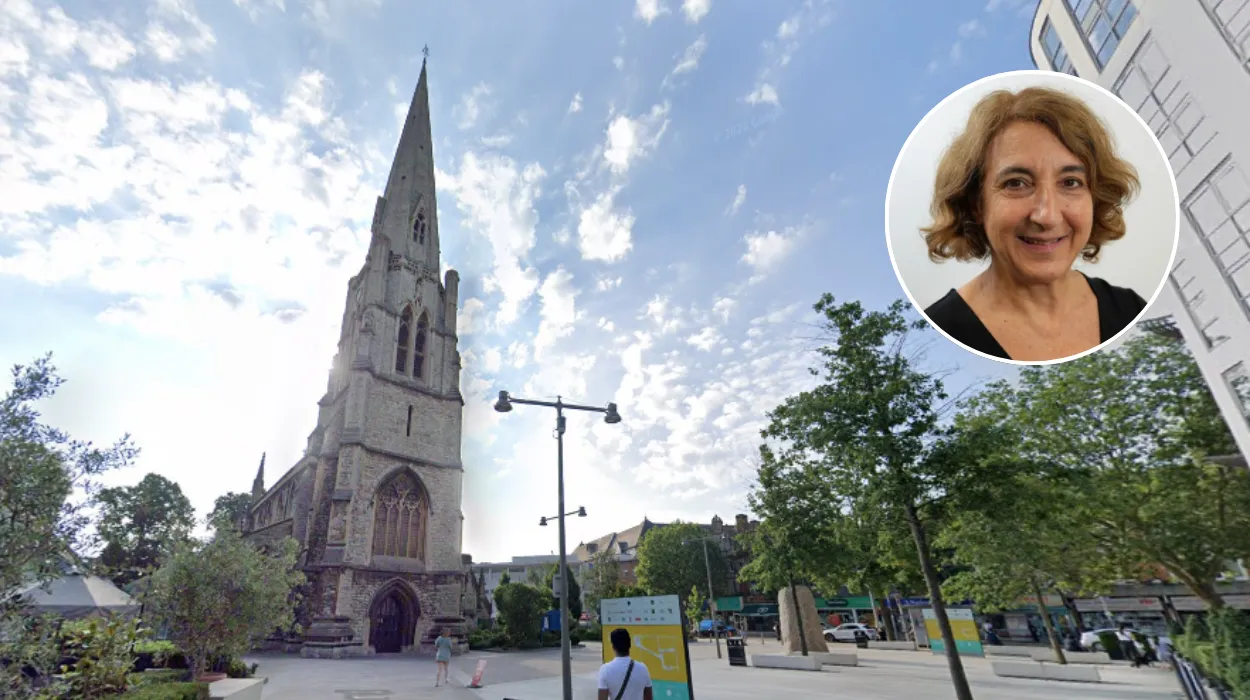
- Expert Speaker: The presentation was done by Dr Efcharis Balodimou, who is a senior lecturer in the Built Environment at the University of West London.
- Event Information: The talk was held on 12 May at Open Ealing in Dickens Yard.
- Strategic Usefulness: The use of these technologies helps identify the problems within structures and plan their restoration without altering their original architecture.
- Example: The restoration process of Notre Dame Cathedral in Paris (2019-2024) was used to show how technology and tradition were successfully combined.
- Supplementary Professionality: Dr Efcharis Balodimou stressed that even though technology is revolutionary, it is supplementary to human expertise and does not substitute it.
Ealing (Extra London News) August 8, 2026 – The landscape of historic building preservation is undergoing a significant transformation, driven by the integration of cutting-edge technologies like artificial intelligence and 3D printing, according to insights shared by a leading academic at a recent Ealing Civic Society event.
- Key Points
- How are modern technologies changing historic building conservation?
- Why is the Notre-Dame restoration considered a landmark example?
- Will artificial intelligence replace conservation professionals?
- What is the significance of the University of West London’s research in this field?
- What are the next steps for digital conservation?
How are modern technologies changing historic building conservation?
As reported by Ian Miller of Ealing.News, the intersection of historical preservation and modern innovation was the central theme of a presentation held at Open Ealing in Dickens Yard on 12 May. Dr Efcharis Balodimou, a senior lecturer in the Built Environment at the University of West London, provided attendees with a detailed overview of how her research in digital technology is being applied to monitor and maintain historic structures.
Dr Balodimou illustrated that the future of heritage conservation is no longer solely reliant on traditional methods. Instead, it is increasingly defined by “tools including laser scanning, thermal imaging and digital surveying,” which provide specialists with the capability to perform non-invasive examinations of aging infrastructure. These advancements allow conservationists to identify latent structural problems and formulate comprehensive restoration strategies without the need to physically disturb or risk damage to the original building materials.
Why is the Notre-Dame restoration considered a landmark example?
The practical application of these technologies was brought to life during the lecture through the high-profile case study of Notre-Dame Cathedral in Paris. The historic landmark suffered a devastating fire in 2019, sparking global concern about the possibility of losing centuries of architectural heritage.
As highlighted by Dr Balodimou in the report by Ian Miller, the five-year renovation process that led to the cathedral’s reopening in 2024 served as a masterclass in modern conservation. Dr Balodimou noted that the project’s success was not achieved by choosing between old and new; rather, it relied on the seamless integration of high-tech digital solutions alongside time-honoured traditional craftsmanship. This balanced approach proved that modern diagnostic tools could facilitate the work of traditional artisans rather than displace them.
Will artificial intelligence replace conservation professionals?
A critical concern addressed by Dr Balodimou during her lecture was the potential for automation to diminish the role of human experts in the field of heritage. Responding to queries regarding the encroachment of AI into technical sectors, she offered a perspective rooted in collaboration rather than competition.
As quoted by Ian Miller of Ealing.News, Dr Balodimou stated: “While digital technologies and artificial intelligence are transforming the way we preserve historic buildings, they complement rather than replace the expertise of architects and conservation professionals.”
Her statement underscores a philosophy of “human-in-the-loop” conservation. In this framework, AI serves as an analytical assistant—identifying patterns, simulating structural stresses, or mapping architectural details with precision—but the final judgment, ethical consideration, and nuanced decision-making regarding how to restore or preserve a structure remain the responsibility of qualified human professionals.
Explore more Ealing News:
£1.65m A&E Upgrade Begins at Ealing Hospital in Ealing 2026
New Adult Learning and Employment Hub Opens in Ealing 2026
What is the significance of the University of West London’s research in this field?
The research conducted by Dr Balodimou and her department at the University of West London is part of a broader shift in academic and professional circles toward “digital heritage.” This field seeks to document, interpret, and manage historic sites using the latest software and hardware.
By engaging with the Ealing Civic Society, the university is bridging the gap between high-level academic research and community interest. The society, which focuses on the preservation and improvement of the local environment, benefits from understanding the sophisticated tools now available to those tasked with protecting the built environment.
The implications for Ealing and similar urban areas are substantial. Many local conservation efforts often face the dual challenge of preserving aged, delicate structures while adhering to modern safety and sustainability standards. The technologies discussed—specifically 3D printing for replicating intricate missing details and thermal imaging for detecting damp or heat loss—provide local councils and heritage groups with a pathway to extend the lifespan of historic assets that might otherwise be deemed too expensive or difficult to maintain.
What are the next steps for digital conservation?
While the lecture focused on existing tools, the broader conversation initiated by Dr Balodimou points toward a future where digital twins—virtual replicas of physical buildings—could become standard for major historic sites. By creating a high-fidelity digital record, future generations will be able to monitor structural changes in real-time, effectively creating a “health dashboard” for our most precious landmarks.
As the industry continues to evolve, the consensus among experts, as reflected by Dr Balodimou’s address, remains that the value of human intuition remains paramount. Technology, no matter how advanced, cannot replace the cultural context or the historical sensitivity that architects bring to a project. However, by offloading the more tedious and dangerous aspects of building surveys to drones, scanners, and AI-powered data processors, the professionals of tomorrow will be free to focus on what matters most: the soul and story of the buildings they are tasked to protect.
By maintaining this dialogue between academia and the public, as seen in the Ealing Civic Society session, the hope is that both the public and private sectors will become more comfortable with adopting these innovative practices, ensuring that the architecture of the past has a secure place in the future.