Key Points
- A novel library program that helps children address environmental challenges through story-telling and STEM education is currently ongoing in all Camden libraries.
- This program is guided by the main theme “Once Upon an…Invention,” with the start point being the reading of a picture book related to plastic pollution.
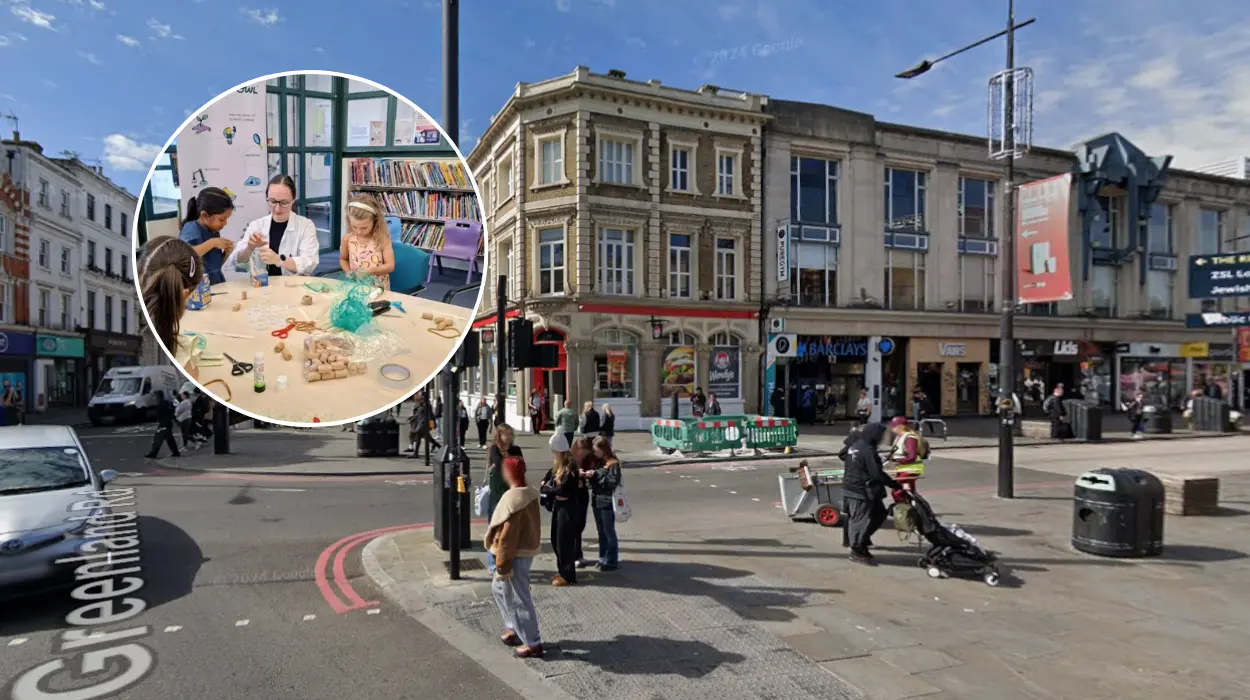
- After reading the book, the children go ahead and make their own robot boats to assist in cleaning the environment.
- The children have a chance to test their inventions in a mock-up mini-pool of the River Thames.
- Moreover, the children look at 3D-printed models of actual plastic clean-up technologies before making their inventions.
- The program is organized and coordinated by Science Owl, a firm set up to change the way conversations around environmental matters should be held.
- Some of the innovative inventions made by the children include conveyor belts, grabbers, and a catapult machine that removes plastic wastes from the water.
- Further information regarding the workshops can be found in the Eventbrite page of Science Owl.
London (Extra London News) August 6, 2026 – Libraries throughout the London Borough of Camden have transformed into hubs of environmental innovation, hosting an interactive educational scheme that pairs classic storytelling with hands-on STEM disciplines to teach young people about ecological conservation.
As reported by Robyn Bennett, community reporter for London Now, the educational programme runs across multiple Camden library branches under the engaging theme “Once Upon an…Invention”. The initiative is specifically structured to introduce complex environmental concepts—such as waterway contamination and plastic waste—to young minds through accessible literacy before transitioning them into practical engineering challenges.
How does the library scheme introduce environmental concepts to children?
The multi-staged educational workshops are carefully designed to capture children’s imaginations right from the outset. As detailed by Robyn Bennett of London Now, the learning session commences with participants reading a specially chosen picture book that highlights the growing crisis of plastic pollution. By grounding global ecological concerns in a narrative format, the scheme ensures that children can easily comprehend the human and environmental impact of waste before moving on to technical problem-solving.
Once the storytelling portion concludes, the children transition directly into hands-on engineering. Before physical construction begins, participants are given the opportunity to inspect 3D-printed miniature models of actual, real-world plastic clean-up technologies currently deployed in major waterways. This exposure bridges theoretical knowledge with tangible industry innovation, giving children a clear window into how modern science addresses environmental degradation.
What do children build during the Camden library workshops?
Equipped with inspiration from both picture books and real-world technology models, the children take on the challenge of designing and building their own functional robot boats. These miniature vessels are engineered specifically to simulate clearing waste and debris from aquatic environments.
To test the efficacy of their creations, the young inventors trial their mechanical models directly within a specially prepared, miniature version of the River Thames built inside the library space. According to findings published by London Now, the design ideas generated by the participants have been remarkably diverse and creative, ranging from automated conveyor belts and precision grabbers to an imaginative catapult-style apparatus engineered to flick plastic waste safely out of the water.
Explore more Camden News:
Yijing Zou’s ‘Bathroom’ at Camden Fringe, London 2026
Studio Moren Hotel Retrofit Approved in Camden 2026
Why are storytelling and STEM being combined for climate education?
The driving force behind these interactive sessions is Science Owl, an educational initiative dedicated to shifting how ecological conversations are framed for the younger generation. Explaining the core philosophy of the project, the founder of Science Owl stated, as reported by Robyn Bennett of London Now: “The programme is run by Science Owl, which I founded to switch up the conversation about environmental issues. We like to focus on getting kids involved and excited about environmental solutions so that they see that they can make a difference.”
Organisers emphasise that the workshops are structured to achieve a dual objective: they must entertain young participants while fundamentally empowering them. By allowing children to successfully engineer solutions to simulated ecological problems, the scheme builds early self-belief, ensuring that participants leave understanding that their individual and collective actions can yield a genuinely positive impact on the environment.
Where can families find information on upcoming library sessions?
The environmental workshops are currently being hosted at various branches across the Camden library network. Local families, parents, and guardians seeking to get children involved in upcoming sessions can access comprehensive scheduling details, timings, and registration forms through Science Owl’s official Eventbrite page. As local authorities continue to lean into sustainability initiatives, programmes like “Once Upon an…Invention” highlight the vital role that public community spaces, such as libraries, play in educating the next generation of environmental stewards.