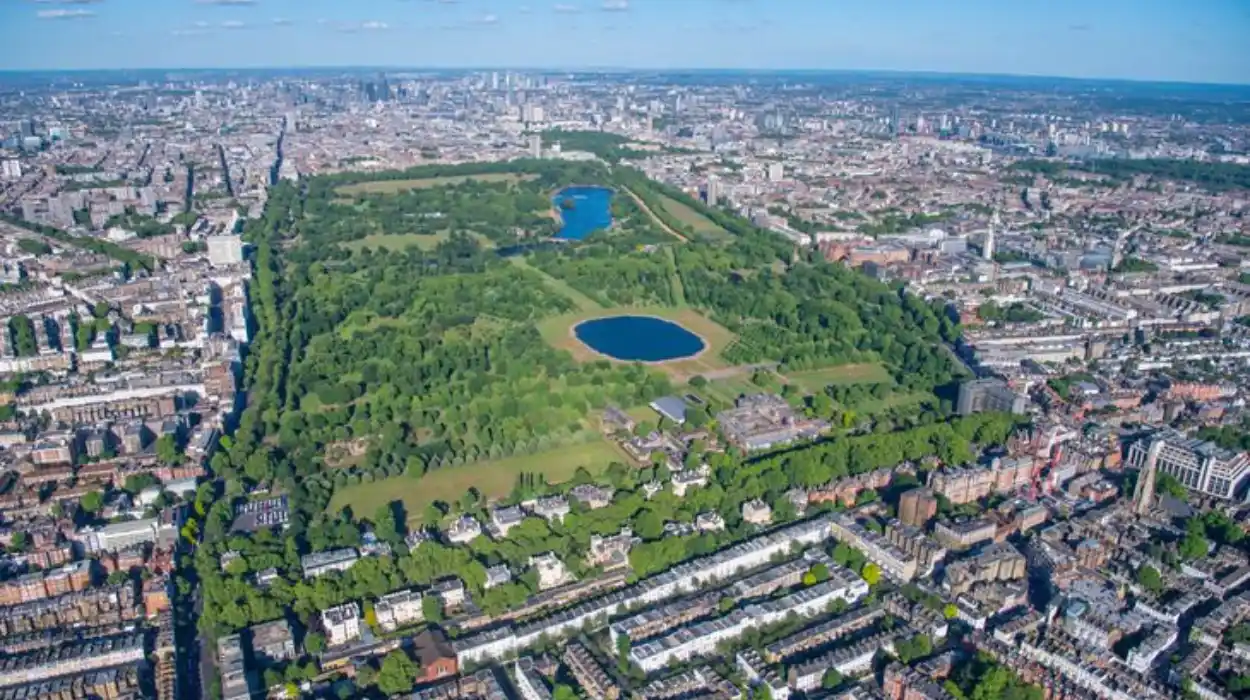
London is one of the world’s most historic urban landscapes, yet its identity is inseparable from parks, gardens, commons, woodland, riverside paths, and botanical collections. The capital contains around 3,000 parks and a wider green-and-blue landscape covering approximately 51.7 per cent of London according to the latest metropolitan green-cover mapping. Public green space accounts for around 20 per cent of the city. These figures explain why London’s outdoor spaces are not decorative additions to the city. They are a major part of its environmental, social, architectural, and historical structure.
- Why are London’s gardens and green spaces important to the city’s history?
- How did London’s historic parks develop from royal estates into public green spaces?
- Which London parks are best for scenic walks and historical landscapes?
- Hyde Park
- Kensington Gardens
- Greenwich Park
- Richmond Park
- The Regent’s Park and Primrose Hill
- Bushy Park
- St James’s Park
- The Green Park
- Why is Kew Gardens one of London’s most important historic gardens?
- How does Hampstead Heath preserve London’s common-land history?
- Which London gardens best combine formal horticulture with relaxation?
- What architectural features make London’s historic gardens significant?
- How have London’s green spaces changed during industrialisation and urban expansion?
- What evidence shows that London remains one of Europe’s greenest major cities?
- How are London’s historic gardens preserved for future generations?
- Why will London’s historic gardens remain important in the future?
The best gardens and green spaces in London for relaxation and scenic outdoor walks include Hyde Park, Kensington Gardens, The Regent’s Park, Greenwich Park, Richmond Park, Kew Gardens, St James’s Park, The Green Park, Bushy Park, Hampstead Heath, and several historic cemetery and community landscapes. Each place reflects a different phase of London’s development, from medieval religious land and Tudor hunting grounds to Georgian landscape design, Victorian public improvement, botanical science, and modern conservation.
Why are London’s gardens and green spaces important to the city’s history?
London’s gardens and green spaces preserve the capital’s environmental and historical development through royal estates, public parks, botanical institutions, commons, cemeteries, and designed landscapes that reveal how urban society changed over centuries.
London’s green spaces developed through several distinct historical processes. Medieval religious institutions controlled large areas of land around the growing settlement. After the English Reformation, the Crown acquired or reorganised former monastic estates. Tudor monarchs used large enclosed landscapes for hunting. Georgian planners reshaped parts of London into formal parks and residential districts. Victorian reformers expanded public access to open space during rapid industrialisation.
The modern meaning of a public park developed alongside urban growth. London’s population expanded rapidly during the eighteenth and nineteenth centuries. Housing density increased. Industrial pollution intensified. Public health reformers argued that access to open space improved urban living conditions.
The parks therefore represent more than leisure. Hyde Park records the transition from royal hunting ground to public forum. The Regent’s Park demonstrates early nineteenth-century town planning. Kew Gardens records the development of botanical science and imperial plant exchange. Richmond Park preserves a large deer landscape within the metropolitan area. Hampstead Heath represents the survival of common land against urban development.
The Royal Parks alone cover more than 5,000 acres of historic parkland. The organisation manages eight Royal Parks, including Hyde Park, Kensington Gardens, Richmond Park, Greenwich Park, Bushy Park, St James’s Park, The Green Park, and The Regent’s Park and Primrose Hill. Brompton Cemetery and Victoria Tower Gardens are also managed within the same wider portfolio.
This historical layering makes London particularly valuable for history enthusiasts, educators, cultural tourists, students, and researchers studying land ownership, urban planning, architecture, ecology, and social change.
How did London’s historic parks develop from royal estates into public green spaces?
London’s historic parks developed from medieval estates and royal hunting grounds into public landscapes through changes in land ownership, urban planning, social reform, and government policy between the sixteenth and nineteenth centuries.
Several major London parks trace their origins to the Tudor period. King Henry VIII expanded royal hunting landscapes during the sixteenth century. The Crown acquired land associated with former religious institutions after the Reformation. Hyde Park, Kensington Gardens, and The Regent’s Park formed part of this broader transformation of land ownership. Greenwich Park and Richmond Park also retained strong royal associations.
The original function of these spaces was not public recreation. Royal parks served hunting, private leisure, ceremonial purposes, and the display of political authority. Access was restricted or controlled.
The eighteenth century introduced new landscape principles. Designers created formal avenues, lakes, plantations, terraces, and carefully framed views. Landscape architecture became a major element of aristocratic and royal estate culture. The work of designers such as André Le Nôtre influenced formal garden traditions, while later designers developed more naturalistic landscape styles.
The nineteenth century changed the relationship between Londoners and open space. Industrialisation produced crowded neighbourhoods and severe environmental pressures. Public parks became part of urban improvement programmes. The Regent’s Park opened to the public from 1835 after its earlier development as an early nineteenth-century landscape park associated with John Nash. Historic England recognises the site as a Grade I registered park and garden.
This transition created the modern London park. Historic landscapes retained royal, architectural, or aristocratic origins while becoming part of everyday public life.
Which London parks are best for scenic walks and historical landscapes?
The best historic parks for scenic walking include Hyde Park, Kensington Gardens, Greenwich Park, Richmond Park, The Regent’s Park, Bushy Park, St James’s Park, and The Green Park because each combines distinctive landscapes with documented historical development.
Hyde Park
Hyde Park is one of London’s most important historic public landscapes. Henry VIII acquired the land from Westminster Abbey in 1536 and incorporated it into his hunting grounds. The park later became associated with public recreation, political expression, major events, and urban culture.
The Serpentine provides a central scenic feature. The lake was created in the eighteenth century during major landscape improvements. The park also contains formal gardens, mature trees, monuments, and broad avenues.
Hyde Park is historically significant because it became associated with public speech and assembly. Speakers’ Corner developed into one of the best-known locations for public debate in Britain. This connection between landscape and political expression gives the park importance beyond horticulture.
For a long walk, visitors can combine the Serpentine, the Rose Garden, formal avenues, and connections towards Kensington Gardens. The landscape changes from open grassland to ornamental planting and water features.
Kensington Gardens
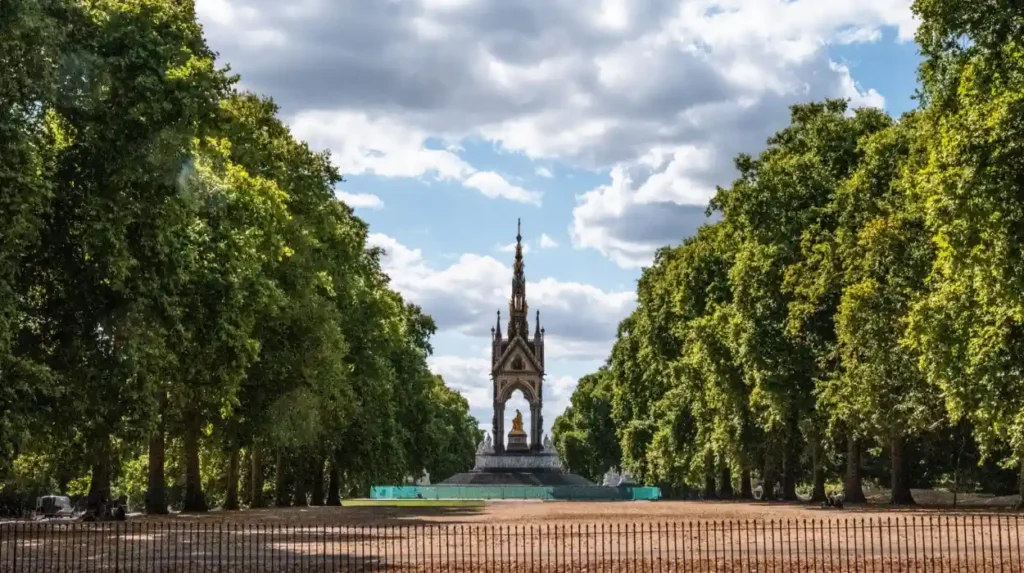
Kensington Gardens developed from part of Hyde Park and became a separate royal garden associated with Kensington Palace. The landscape includes formal avenues, ornamental gardens, water features, mature trees, and historic structures.
The Royal Parks identifies Kensington Gardens as covering 265 acres. The site combines older parkland with newer green spaces and formal gardens.
The gardens demonstrate the transformation of royal landscapes into public heritage spaces. Their design reflects changing ideas about royal residence, landscape architecture, and public access.
The Long Water and Italian Gardens provide distinctive walking environments. The Italian Gardens contain formal basins and architectural features. The broader parkland provides quieter routes away from the central formal areas.
Greenwich Park
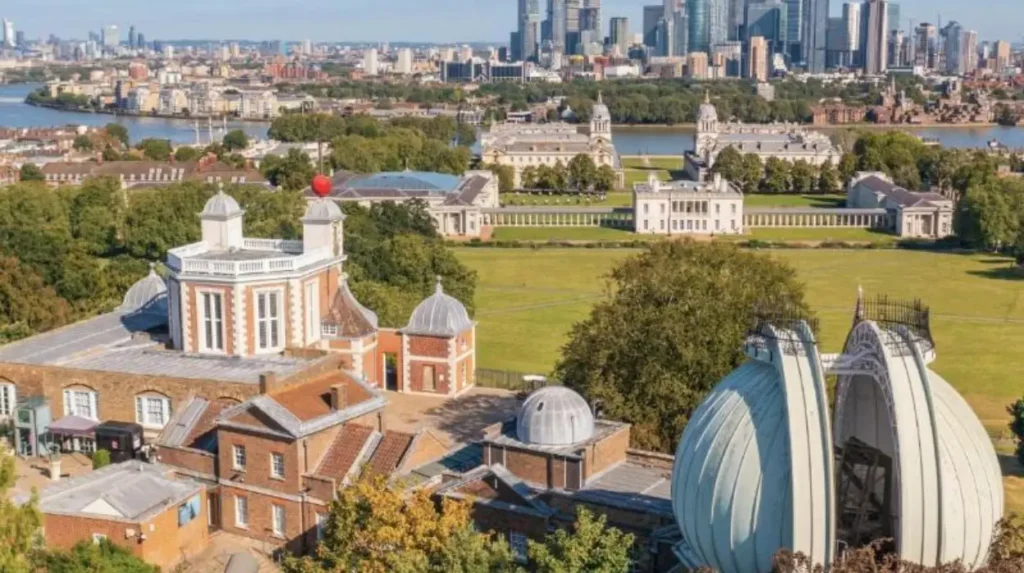
Greenwich Park combines royal history, scientific heritage, landscape design, and panoramic views across London. The Royal Parks describes the park as a landscape with a history reaching back to Roman times and a major seventeenth-century design associated with André Le Nôtre.
The park forms part of the Greenwich World Heritage Site. The Royal Observatory stands on the hill, where the Prime Meridian became associated with global systems of longitude and timekeeping.
The hilltop landscape creates one of London’s most important scenic viewpoints. The view towards the River Thames and the City of London connects the historic park with the modern capital.
Greenwich Park also preserves formal gardens, open grassland, avenues, and wooded areas. Its historical importance comes from the combination of royal land management, scientific institutions, and urban expansion.
Richmond Park
Richmond Park is one of London’s largest historic landscapes. The Royal Parks records the park as covering approximately 2,500 acres and identifies ancient trees, deer herds, and the Isabella Plantation among its major features.
The park originated as a royal hunting landscape. Its scale distinguishes it from central London gardens. Wide grasslands, woodland, ponds, and elevated viewpoints create a landscape that retains strong historic character.
The deer herds are a defining feature of the park. Their presence reflects the continued connection between the modern landscape and its historic role as a managed royal deer park.
The Isabella Plantation provides a more concentrated horticultural experience. Its seasonal planting and woodland paths offer a different environment from the open parkland.
Richmond Park is also important for conservation. Ancient trees preserve ecological continuity within one of the world’s largest urban areas.
The Regent’s Park and Primrose Hill
The Regent’s Park represents one of the most important examples of nineteenth-century urban landscape planning. John Nash designed the early nineteenth-century landscape park as part of a wider development scheme involving villas, roads, and royal land. Public access expanded from 1835.
The park contains formal gardens, broad lawns, tree-lined routes, sports facilities, and the Queen Mary’s Gardens. Primrose Hill rises to the north and provides a major view across central London.
The park demonstrates how landscape architecture became connected to urban development. The park was not simply preserved countryside. It formed part of a planned relationship between residential architecture, roads, gardens, and open space.
The result is a landscape with both designed geometry and naturalistic planting. Visitors walking through the park encounter different historical layers within a single connected area.
Bushy Park
Bushy Park is one of London’s largest Royal Parks and lies north of Hampton Court Palace. The Royal Parks describes it as the second-largest of London’s eight Royal Parks, covering more than 1,000 acres. It contains open parkland, woodland, waterways, gardens, and deer.
The park has strong royal associations and retains a spacious landscape character. The Long Water and Diana Fountain provide important features for walking routes.
Bushy Park demonstrates how historic royal landscapes can retain extensive ecological space despite metropolitan growth. Its broad scale supports walking, wildlife observation, and historical study.
St James’s Park
St James’s Park is the oldest Royal Park in London and occupies a central position beside major royal and governmental buildings. Its lake, formal planting, bridges, and views create one of the capital’s most carefully composed historic landscapes.
The park’s location makes it particularly important for understanding the relationship between green space and political power. Buckingham Palace, the Palace of Westminster, and Whitehall sit within the broader ceremonial landscape of central London.
The park’s compact size makes it suitable for shorter scenic walks. Its formal design contrasts with the expansive open spaces of Richmond Park and Hampstead Heath.
The Green Park
The Green Park covers 40 acres and connects St James’s Park with Hyde Park. King Charles II acquired land between the established royal parks in 1660 to create a continuous route across royal territory.
The park is distinctive because it has fewer formal flowerbeds than several neighbouring Royal Parks. Mature trees and open grassland create a quieter landscape.
Its historical importance comes from its position within the royal chain of parks. The landscape shows how royal geography shaped central London before modern public access transformed the meaning of these spaces.
Why is Kew Gardens one of London’s most important historic gardens?
Kew Gardens is one of London’s most important historic gardens because its 1759 foundation developed into a national botanical institution combining royal history, scientific research, global plant collections, conservation, architecture, and public education.
The Royal Botanic Gardens, Kew began in 1759 when Princess Augusta founded a nine-acre botanic garden within the royal pleasure grounds at Kew. King George III later united the Richmond and Kew estates. In 1840, the gardens transferred from Crown control to the government and opened as a national botanical garden.
Kew’s history reflects the development of modern botany. Plant collectors, scientists, horticulturalists, and explorers expanded the collections. Joseph Banks became a major figure in the institution’s development after receiving plants and seeds from global expeditions.
The Great Pagoda, completed in 1762 by William Chambers, represents eighteenth-century garden architecture. The Palm House, completed in 1848, demonstrates the nineteenth-century development of iron-and-glass construction for botanical cultivation.
Kew became a UNESCO World Heritage Site in 2003. The gardens cover approximately 132 hectares and combine historic landscapes with scientific collections and conservation work.
The site also contains the Herbarium, which holds more than seven million specimens after successive expansions. This makes Kew important for researchers studying plant taxonomy, biodiversity, environmental change, and conservation.
Kew is therefore both a scenic garden and a major research institution. Its historical importance extends from Georgian royal culture to modern global conservation.
To experience this historic landmark in person today, consult our comprehensive [How London’s Royal Parks Were Created and Preserved Throughout British History] for itineraries and visiting parameters.
How does Hampstead Heath preserve London’s common-land history?
Hampstead Heath preserves London’s common-land history through surviving open countryside, woodland, ponds, elevated viewpoints, and public access shaped by centuries of customary use and nineteenth-century preservation campaigns.
Hampstead Heath differs from the Royal Parks because its historical identity is rooted in common land rather than a single royal estate. Common land refers to land where defined rights of use, such as grazing or gathering resources, were historically recognised for local communities.
The heath contains extensive open landscapes within north London. Its highest points provide long views across the capital. Woodland, ponds, grassland, and paths create a complex environment for walking and environmental study.
The nineteenth century brought increasing pressure from urban development. Preservation campaigns became important because London’s expanding population threatened open land. Hampstead Heath survived as a major public landscape and became one of the most significant examples of preserved open countryside within the metropolitan area.
Its history is valuable for understanding the conflict between private development and public access. The heath also demonstrates how local activism influenced the preservation of landscapes that now serve environmental and recreational functions.
Which London gardens best combine formal horticulture with relaxation?
The best London gardens for formal horticulture and relaxation include Queen Mary’s Gardens, the Italian Gardens, the Rose Garden at Hyde Park, Kew Gardens, Chelsea Physic Garden, and the Isabella Plantation because each combines designed planting with historic cultural purpose.
Formal gardens differ from open parkland through planned geometry, ornamental planting, controlled views, architectural features, and specialised horticulture.
Queen Mary’s Gardens in The Regent’s Park provide one of London’s best-known formal garden landscapes. The garden contains extensive rose planting and carefully managed ornamental spaces.
The Italian Gardens in Kensington Gardens demonstrate the influence of formal water features and architectural design. Their layout reflects the historical relationship between royal landscapes and European garden traditions.
The Rose Garden at Hyde Park provides another formal horticultural setting within a much larger public park. Its design creates a concentrated garden environment while remaining connected to the wider historic landscape.
The Isabella Plantation in Richmond Park combines woodland and ornamental planting. Its historic development demonstrates how a large royal park can contain specialised horticultural landscapes within extensive naturalistic surroundings.
Chelsea Physic Garden has a different history. Founded in the seventeenth century by the Worshipful Society of Apothecaries, it developed as a place for the cultivation and study of medicinal plants. Its history connects gardening with medicine, education, trade, and scientific knowledge.
These gardens show that London’s green spaces have never served a single purpose. They have supported royal display, scientific research, public recreation, education, medicine, conservation, and cultural heritage.
What architectural features make London’s historic gardens significant?
London’s historic gardens are significant because their landscapes contain palaces, observatories, glasshouses, pagodas, fountains, bridges, monuments, avenues, and designed vistas that preserve changing architectural ideas from the seventeenth century to the modern era.
Architecture gives historic gardens a visible record of changing social priorities.
Kew’s Great Pagoda represents eighteenth-century garden architecture and the influence of global design traditions. The Palm House demonstrates Victorian engineering and the development of controlled environments for tropical plants.
The Royal Observatory at Greenwich represents the relationship between scientific institutions and historic landscapes. Its location on the hill connected astronomical measurement with the geography of the capital.
Kensington Gardens contains structures associated with royal residence and public heritage. The Italian Gardens demonstrate the integration of water, stone, planting, and formal geometry.
The Regent’s Park provides one of the clearest examples of landscape architecture integrated with urban development. John Nash’s plan linked parkland with villas and the expansion of nineteenth-century London.
These structures are not separate from the gardens. Their placement defines movement, views, symbolism, and the historical interpretation of each landscape.
How have London’s green spaces changed during industrialisation and urban expansion?
London’s green spaces changed during industrialisation as open land became increasingly valuable for housing, transport, industry, public health, recreation, and conservation, producing conflicts that shaped the modern distribution of parks and gardens.
Industrial London created intense pressure on land. Population growth increased demand for housing. Railways and roads divided historic landscapes. Factories and dense housing changed environmental conditions.
The preservation of open space became a major public issue during the nineteenth century. Campaigners, landowners, municipal authorities, and national institutions developed different strategies for protecting landscapes.
Public parks became part of urban improvement. They provided space for exercise, recreation, social interaction, and exposure to vegetation.
The survival of Richmond Park, Hampstead Heath, Epping Forest, and other large landscapes reflects different legal and political histories. Some areas remained protected through royal ownership. Others survived through common rights, charitable campaigns, public acquisition, or legislation.
The result is a fragmented but extensive green network. London’s parks are connected by streets, waterways, ecological corridors, cemeteries, private gardens, and smaller public spaces.
Explore More Things To Do
Best Shopping Streets for Fashion and Local Finds | London
Latest London Weather Forecast and Climate Trends in Greater London
What evidence shows that London remains one of Europe’s greenest major cities?
London remains exceptionally green because approximately 51.7 per cent of its mapped area is covered by green infrastructure, while the capital contains around 3,000 parks and a major network of rivers, canals, reservoirs, trees, gardens, and wetlands.
The Greater London Authority’s green-cover mapping uses high-resolution aerial imagery and land-use data. The 2024 update, based on 2022 data, estimated London’s green cover at approximately 51.7 per cent. The measurement includes trees, private gardens, green roofs, road verges, and other vegetated areas.
Public green space represents approximately 20 per cent of London. The capital also contains around 3,000 parks alongside canals, reservoirs, riversides, and other blue spaces.
These statistics demonstrate the scale of London’s environmental infrastructure. The city’s green character does not depend only on a few famous parks. It depends on a connected system of large historic landscapes, small gardens, street trees, cemeteries, allotments, waterways, and private vegetation.
In July 2019, London became the world’s first National Park City. The initiative established a long-term ambition to make more than half of the city green by 2050.
This policy direction gives historical parks a new role. They are not only preserved monuments. They form part of future climate, biodiversity, public health, and urban planning strategies.
How are London’s historic gardens preserved for future generations?
London’s historic gardens are preserved through heritage listing, conservation management, horticultural programmes, ecological monitoring, restoration projects, public funding, scientific research, and long-term planning that balances historical character with changing environmental conditions.
Historic England registers significant parks and gardens according to their special historic interest. Kew Gardens is listed as a Grade I registered park and garden. The site’s history includes an early eighteenth-century foundation and major nineteenth-century expansion under Sir William Hooker.
The Regent’s Park is also recognised as a Grade I registered park and garden. Its designation reflects the historical importance of John Nash’s early nineteenth-century landscape design and its continuing development.
The Royal Parks uses management plans to guide conservation and future development. These plans consider historical changes, current conditions, and park-wide policies. Management plans are reviewed on a defined cycle, with full redrafts generally published every ten years.
Kew combines heritage preservation with scientific research. Its collections support research into plant diversity, conservation, and environmental change. The institution’s mission focuses on understanding and protecting plants and fungi for the future of life on Earth.
Preservation therefore involves more than maintaining old buildings. It includes protecting historic planting patterns, restoring water systems, managing ancient trees, conserving archaeological evidence, maintaining views, and adapting landscapes to climate pressures.
Why will London’s historic gardens remain important in the future?
London’s historic gardens will remain important because they combine cultural heritage, public access, biodiversity, climate resilience, education, scientific research, and urban history within landscapes that continue to serve the capital’s growing population.
The historical value of London’s green spaces increases as urban development intensifies. Each preserved park records decisions about land ownership, public access, architecture, science, social reform, and environmental management.
Future historical research will continue to examine how these landscapes changed. Archaeological surveys, historic maps, estate records, botanical collections, municipal documents, and conservation plans provide evidence for reconstructing earlier landscapes.
The gardens also provide a direct connection between past and present. A Tudor hunting ground can become a public park. A royal botanical garden can become a global scientific institution. A nineteenth-century urban landscape can become part of modern climate adaptation.
London’s green spaces therefore represent a continuous historical process rather than a fixed collection of monuments.
The best gardens and green spaces in London for relaxation and scenic outdoor walks are valuable precisely because their beauty is supported by documented history. Hyde Park preserves royal and political traditions. Greenwich Park links landscape with science. Richmond Park preserves a vast deer landscape. The Regent’s Park records planned urban development. Kew Gardens connects royal history with botanical science. Hampstead Heath preserves common-land traditions. St James’s Park and The Green Park retain the geography of ceremonial London.
Together, these spaces explain how the capital developed from medieval estates and royal landscapes into a modern city where public access, heritage preservation, biodiversity, and environmental planning coexist. Their future historical relevance depends on continued conservation, accurate research, and public understanding of the landscapes that have shaped London for centuries.
What are the best gardens and green spaces in London?
The best gardens and green spaces in London include Hyde Park, Kensington Gardens, Kew Gardens, Richmond Park, Greenwich Park, The Regent’s Park, Hampstead Heath, Bushy Park, St James’s Park, and The Green Park.